
News
Discover all the service and opportunities offered by Ca' Foscari to study and live a unique experience: why Ca' Foscari, what we offer, how to apply.

Expand your horizons with Ca' Foscari
Ca' Foscari University offers students numerous opportunities to gain international experience. From study programs to internships, there are many ways to enrich your personal and professional growth. Discover what you can achieve during your academic journey!

Spazio Ascolto - Counselling for Ca’ Foscari students
If you’re feeling particularly anxious about your studies or your relationships with others, if everything is beginning to feel overwhelming or you're lacking motivation, please get in touch with Spazio Ascolto, the “listening space”.
With the help of a psychologist, you will be able to identify the challenges you are facing and discover ways to move forward in a safe space where your privacy and confidentiality are honoured.
Tutoring service at the Treviso Campus
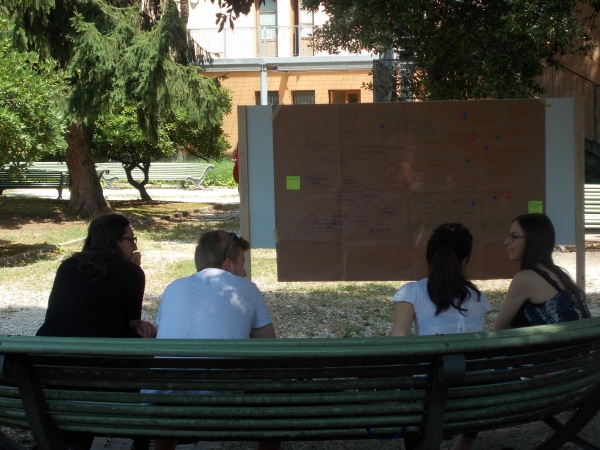
The Information Tutoring Service is dedicated to Bachelor’s and Master’s degree students at Campus Treviso. You can reach out to the tutor for information regarding your academic path, including administrative procedures and deadlines, courses, exam sessions and professors, as well as assistance with filling out your study plan.
If you need help, contact tutor.campustreviso@unive.it or book an appointment.
Agenda
02
November
at: 10:30
Aula 2, Palazzo San Paolo - Campus Treviso
Josep Carner and Juan Ramón Jiménez: Two Exiled Poets Nominated for the Nobel Prize in Literature
05
November
at: 14:00
Aula 10 - Palazzo San Paolo, Campus Treviso
19
November
at: 14:00
Laboratorio informatico - Campus Treviso
Beyond Words: Audio Description and Sensory Translation in the Hispanic Context.
Ca’ Foscari and Treviso: 30 years between history and the future
Ca’ Foscari was founded in 1868 as the Business School (Scuola Superiore di Commercio), the first in Italy and the second in Europe. In 1954, the Faculty of Foreign Languages and Literatures was established in Venice; today, with over 40 languages taught, it offers one of the most comprehensive language programs among Italian universities. These two historical academic disciplines of Ca’ Foscari have also been developed in Treviso, a city that for over 30 years has hosted unique and cutting-edge degree programs.
The Ca’ Foscari experience in Treviso began in the 1993/1994 academic year with the launch of two university diplomas in Foreign Trade and in Business Statistics and Computer Science, welcoming an initial cohort of 116 students. In 1998, the program for translators and interpreters was introduced. The student body has steadily grown, reaching a total of 1,500 students, 10% of whom come from abroad.
In 2018, a new curriculum in Tourism Economics was introduced within the Bachelor’s degree in Foreign Trade and Tourism. Concurrently, CISET (International centre for Studies on the Tourism Economy) was established at the Ca’ Foscari Campus in Treviso, strengthening advanced education and applied research to meet the local area's needs for innovation and international openness.
In 2020, the academic offering was further enriched with the new English-Spanish-LIS (Italian Sign Language) curriculum within the Master’s degree in Translation and Interpreting, alongside the Master’s degree in Biotechnology for the Environment and Sustainable Development. In 2026, the Campus offers five degree programs, one of which is taught entirely in English.
Mission
The SELISI centre enhances and develops advanced skills applicable across the local region, business enterprises, global markets, national, international and transnational relations, as well as interlinguistic and intercultural interactions.
Furthermore, the centre aligns its educational offerings with research commitments tailored to the emerging needs of the metropolitan and business environment, offering useful and innovative tools for the environmental, economic, and social development of the surrounding territory.
Vision
Among the fields of study and research at Ca' Foscari University of Venice, the Treviso Campus includes Economics and Management, Languages and Cultures, and International Studies and Globalization. It thus presents itself as a multidisciplinary campus capable of responding to the key demands of civil society, business, and institutions.
Continuous dialogue with stakeholders allows the campus to regularly update its degree programs and research areas, delivering timely and effective solutions to the needs of the local region, companies, and public institutions, as well as promoting the impact of research through major public events (the so-called 'third mission'). With the collaboration of local stakeholders, this goal aims to create a smart campus within a smart area, capable of offering the most attractive social, economic, and cultural conditions.