
The Body, Outpost of the Mind
Corporeal Temporalities, Aging, Literature, and the Arts
14-15 May 2026, Venice
Conference
When, at the start of the new millennium, Jean-Luc Nancy published his provocative book Corpus (1992; 2008), he challenged us to confront the bare body, the body unburdened of the vestments of representation and language. The body, Nancy argued, has been “ex-written,” obscured by layers of meanings. Do we really know what we talk about when we talk about the body? Since then, inquiry into the body has evolved and flourished in new multi- and interdisciplinary directions, with wide-ranging edited collections (Hillman and Maude 2009; Hall 2024), new critical series (Gender and the Body in Literature and Culture, Edinburgh University Press) and noteworthy monographs (Boxall 2020; Esposito 2015; Davidson 2019). Simultaneously, research in neurobiology has illuminated the profound alignment of mind and body in life’s homeostatic regulation (Damasio 2003; 2010), and philosophers and humanities scholars are now spotlighting a primary cerebral “auto-affection” – a constant, invisible internal “auto-interpellation” that constitutes the very unconscious of subjectivity (Malabou 2008; 2012).
These approaches have raised anew the question of the self, presenting it as inherently temporal and precarious, fundamentally changing also our perception of aggressive diseases like Alzheimer’s (see Malabou’s “New Wounded” 2012). Rather than solely being destructive, these conditions become unexpected gateways to new understandings of the self, revealing it as unstable and always on the brink of redefinition. Acknowledging fragility as a primary experience has become central, and scholars are increasingly looking outside of the human for new intellectual and ethical resources. At this critical juncture, feminist thinkers take us to a limit zone of thought marked by the poverty of the body, a stark scenario of bodies “naked and poor”, wherefrom it might be possible to cast a new gaze on the self and others beyond the impasse of biopolitics (Putino 2011). Parallel to this, new theoretical perspectives are re-examining the inherent tension between language and the body.
Any inquiry into the body cannot be done by leaving out its condition in time. Yet, although the body stands at the very center of any discourse about aging, a critical reflection on the historical and theoretical significance of bodies has paradoxically entered the debate on aging only recently (Katz 2010; Öberg 1996). Whereas functionality has grown into a paradigm through which to interpret and handle the aging process and aging subjects (Katz 2010), the aging body lends itself to other interpretive dimensions. For example, the experience, in aging, of becoming a “mere body […] intransigent materiality […] mass rather than energy” (“the most extreme human authenticity”) deserves further reflection (Améry 2010; Hamilton 2019).
Our conference keys into these vital discussions by combining research on the body and research in age studies. We wish to encourage a reflection on the body as the challenging limit or outpost of thought in ways that will help explore how mind and body adapt to each other over time, and contribute to creating different corporeal temporalities. How do these temporalities mediate between the subjective and the collective, between the old and the young? How does our changing experience of the body determine us and our relationship to human and non-human others? How do others define us in connection with our body changes? We wish to address these issues from the vantage point of literature (fiction, poetry, memoirs etc.), the performing and visual arts (cinema, photography, dance, theater etc.), and critical theory in the Anglophone context. We invite interdisciplinary papers that focus on the body while branching out into aging, intergenerational relations, and illness. Our aim is to explore how the body challenges the boundaries of thought, pushing us to forge a new ethos for our collective future.

Programme

Keynote speakers

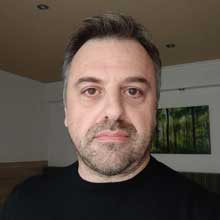
Liz Barry
Liz Barry is Professor of Modern Literature at the University of Warwick, UK. She has published widely in medical humanities and ageing, including “Literature and Ageing” (2020), and an issue of the journal “Age Culture Humanities” (both with Margery Vibe Skagen). She also has articles on ageing in “Textual Practice”, “Poetics Today”, “European Journal of English Studies”, and elsewhere. Her monograph on ageing and time is under contract with Bloomsbury. Prof Barry has also published widely on Samuel Beckett, including the monograph “Beckett and Authority” (2006). She has been the recipient of age studies grants with the Arts and Humanities Research Fund and Norwegian Research Council.

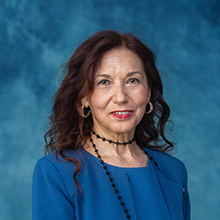
Jean-Michel Rabaté
Jean-Michel Rabaté, Professor of English and Comparative Literature at the University of Pennsylvania, co-editor of the “Journal of Modern Literature”, co-founder of Slought – Public Trust Foundation, is a fellow of the American Academy of Arts and Sciences. He is the author or editor of fifty books on modernism, psychoanalysis, philosophy and literary theory. Recent titles include “Beckett and Sade”, 2020, “Rires Prodigues: Rire et jouissance chez Marx, Freud et Kafka”, 2021, “James Joyce, Hérétique et Prodigue”, 2022, “Lacan l’irritant”, 2023, and “Jacques Lacan against psychoanalytic obsolescence”, Routledge, 2025.
Call
We welcome contributions that key into the following strands. We understand these strands to be rather capacious and encourage prospective participants to interpret them in line with their research interests:
- theories of the body and the body/mind relation in time;
- aging or/and ill bodies as shaping forces of literary/artistic forms;
- the aging body as affected by/affecting the social context (shame/bodyshaming, embarrassment etc.), the non-human context (human-animal kinships etc.), and the material context (objects aiding/replacing/surviving the body);
- the body beyond itself: history (bodies at work, bodies as machines, the aging body at work, resisting-protesting bodies) and transcendence (mystics, saints, and their corporeal practices etc.);
Venue
The conference will be held in:
- Ca’ Foscari (Aula Baratto), Dorsoduro 3246, Venice on 14th May 2026
- Ca’ Bernardo (Sala B), Dorsoduro 3199, Venice on 15th May 2026
Getting to Venice by plane
Arrival at "Marco Polo" airport in Venice (VCE)
From the airport you can reach Mestre or Venice (Piazzale Roma) by land (on a bus or taxi) or take the water route to Venice (Alilaguna boat or water taxi).
Getting to Venice by train
The Venice railway station is “Venezia Santa Lucia”. The main train companies in Italy are Trenitalia and Italo. You can purchase the tickets at the train station or online, directly from the relevant websites.
Getting to Venice by car
Piazzale Roma and Tronchetto are the two areas in Venice that can be reached by car and where you can find the following park terminals:
Getting around Venice
For more tourist information please visit Venezia Unica, the Official City of Venice Tourist and Travel Information website.
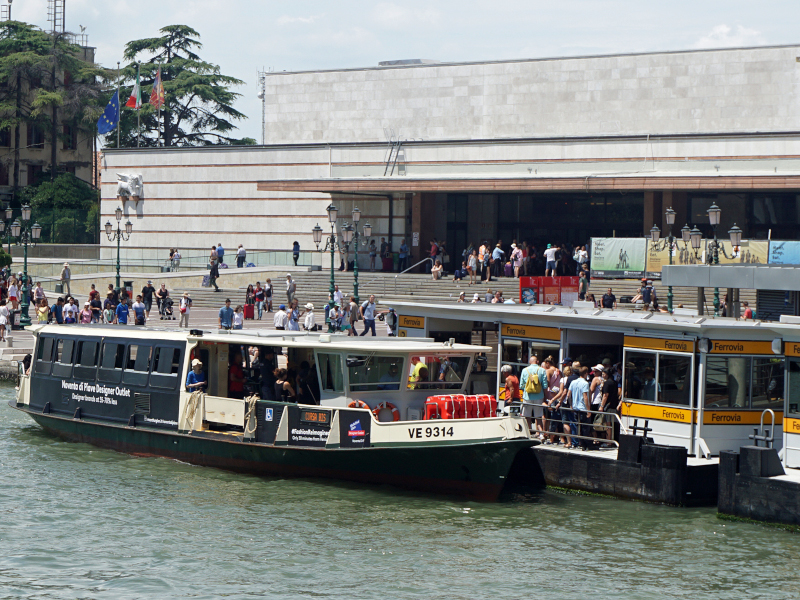
Photo "Vaporetto stop Stazione di Venezia Santa Lucia 07 2017 4038.jpg" by Mariordo (Mario Roberto Durán Ortiz) CC BY-SA 4.0.