

This section presents all past projects related to Ca' Foscari's Global Challenges. To discover the on-going projects, please visit the page Projects.

EUMEPLAT - European media platforms
The project EUMEPLAT (European media platforms: assessing positive and negative externalities for European culture) aims at analyzing the role of media platforms in fostering or dismantling European identity. The assumption taken is that European dimension has rarely been dominant in media history. In most cases – i.e., movie – market shares are mainly divided among national productions and importations from the most influential country. In broadcasting both regional and national patterns emerge, with properly European exchanges being the exception more than the rule. Web platforms are usually owned by US companies, with a new threat appearing in our media landscape. The project focuses on the "platformization" process in three fields: news, video sharing, media representations, as the rise of new closed Web architectures, so as to inquire its positive and negative externalities, functional and dis-functional consequences. The research question is whether or not new platforms – YouTube, Netflix, NewsFeed - are making European culture more European, based on indicators related to production, consumption and representation. Patterns will be detected by comparing national, regional and European and level. Advanced methods will be applied for data analysis, so as to provide guidelines for decision-makers (i.e. fake news prevention; best practices in co-productions).
Project website / EU Cordis database
Researcher: Fabiana Zollo
Duration: 01/03/2021 - 29/02/2024
Funding: Horizon 2020 Societal Challenges: Europe In A Changing World
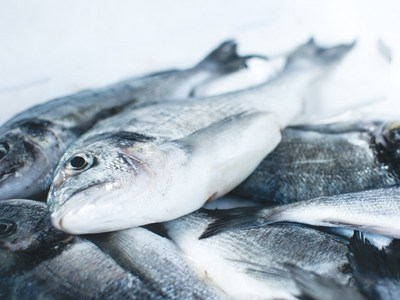
FISH-MeeTing: Sustainable recovery and valorisation of fish wastes processing
FISH-MeeTing (FMT) aims at establishing a cross-border network for "brain circulation" amongst researchers of the Italian-Montenegrin academies (Ca’ Foscari University of Venice; Venice, Italy and University of Donja Gorica, Podgorica, Montenegro) in the field of sustainable recovery and valorization of fish processing waste. As a further target, FMT is finalized at creating the premises for an involvement of local small-medium enterprise (SME) including fish-processing/aquaculture factories, as well as waste management companies operating in coastal areas of the Adriatic-Ionian basin. After an initial qualitative and quantitative assessment of the fish waste valorization strategies already in place, FISH-MeeTing will propose sustainable, integrated innovative marine growth strategies by promoting sustainable treatments and valorization of fish processing residues, following a circular model of modern biorefinery units (BUs).
Researcher: Maurizio Selva
Duration: 01/10/2018 - 30/09/2020
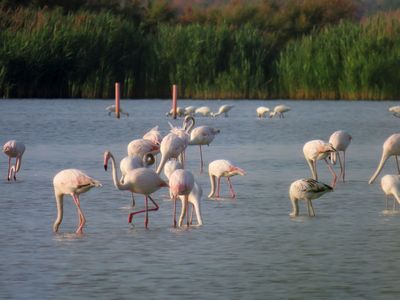
LIFE FORESTALL: Restoration of alluvial forests and cladium mariscus habitats
The objective of the action "LIFE FORESTALL - Restoration of Alluvial Forests and Cladium
mariscus habitats in Ramsar and Natura 2000 sites" is to assess the impacts of the project conservation actions on the ecosystems functions and related ecosystems services (ES) in the study area, thus
contributing to meet to goals of the EU Biodiversity Strategy 2020, Target 2, which requires that ecosystems
and their services are maintained and enhanced. The action will apply the principles and methods of the EU initiative Mapping and Assessment of Ecosystems and their Services (MAES), according to which ES are classified into (i) provisioning, (ii) regulating and maintenance, (iii) cultural services In Valle Averto Oasis. These ES, selected based on a consultation with local experts, correspond to the ES potentially provided by the project’s target habitats; their actual relevance will be verified during the course of the project.
Website
Researcher: Fabio Pranovi
Duration: 27/11/2020 - 30/11/2023
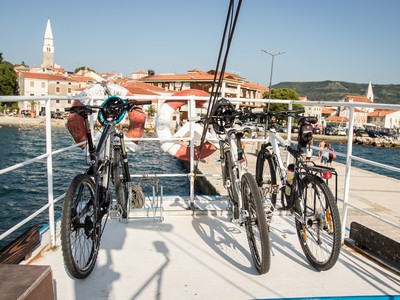
CROSSMOBY: planning intermodal, cross-border and sustainable public transports
CROSSMOBY aims to improve sustainable mobility planning and provide cross-border public transport connections, while also reducing transport emissions by testing new rail passenger services as well as other pilot services for passengers; thus creating a new approach to mobility planning based on the existing PUMS (Urban Sustainable Mobility Plans) methodology. The project contributed to the reactivation of the cross-border rail passenger services and the creation of several pilot services for passengers, and the cross-border strategic action plan on sustainable mobility. It is the first project bringing such results in the Italy-Slovenia cooperation programmes.
Website
Researcher: Andrea Stocchetti
Duration: 01/09/2018 - 31/08/2021
Funding: Interreg V-A ITALIA SLOVENIA 2014-2020

EMERGE - Environmental impacts of shipping emissions
The objectives of "EMERGE - Evaluation, control and Mitigation of the EnviRonmental impacts of shippinG Emissions" are to quantify and evaluate the effects of potential emission reduction solutions for shipping in Europe for several scenarios, and to develop effective strategies and measures to reduce the environmental impacts of shipping. EMERGE objectives are achieved through real-world test cases involving measurements and modelling on actual vessels, along main shipping routes and in sensitive European marine regions. EMERGE collects and synthesizes experimental evidence on waste streams to water and emissions to air originating from ships, for different emission control technologies. The measurements will focus on abatement techniques and will include emissions to, and concentrations in water, air and marine biota.
Project website / EU Cordis database
Researcher: Antonio Marcomini
Duration: 01/02/2020 - 31/12/2024
Funding: Horizon 2020 Excellent Science - Research Infrastructures
VULNER - Vulnerabilities under the global protection regime
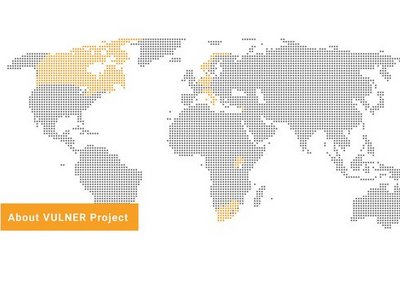
How does the law assess, address, shape and produce the vulnerabilities of the protection seekers? 'Vulnerability' is increasingly used as a conceptual tool to guide the design and implementation of the global protection regime, as illustrated by the 2016 New York Declaration for Refugees and Migrants and the subsequent adoption of the Global Compact for Safe, Orderly and Regular Migration and of the final draft of the Global Compact on Refugees. However, 'vulnerability' lacks a sharp conceptualisation and still needs to be accompanied by a thorough understanding of its concrete meanings, practical consequences and legal implications. This research project aims to address these uncertainties from a critical and comparative perspective, with a focus on forced migration. It will provide a comprehensive analysis of how the ‘protection regimes’ of select countries address the vulnerabilities of 'protection seekers’' The select countries are in Europe (Belgium, Germany, Italy, Norway), North America (Canada), the Middle East (Lebanon) and Africa (Uganda and South Africa).
Project website / EU Cordis database
Researcher: Sabrina Marchetti
Duration: 01/02/2020 - 31/01/2023
Funding: Horizon 2020 Societal Challenges - Europe In A Changing World

GREENART - GREen ENdeavor in Art ResToration
European Cultural Heritage (CH) is a crucial resource that must be maintained, preserved and accessible, to counteract degradation enhanced by unfavorable environmental conditions and climate changes. Conservation methodologies lack durability, sustainability and cost-effectiveness, and are typically based on energy-consuming processes or non-environmentally friendly materials. Coping with these issues, GREENART proposes new solutions based on green and sustainable materials and methods, to preserve, conserve and restore CH: 1) Protective coatings based on green materials from waste and plant proteins, with self-healing and reversibility character, possibly functionalized with organic/inorganic nanoparticles to impart VOC capture, anti-corrosion and barrier behaviors; 2) Foams and packaging materials made by biodegradable/compostable polymers from renewable sources (polyurethanes and natural fibers) to control T/RH; 3) Consolidants based on natural polymers from renewable sources, to mechanically strengthen weak artifacts; 4) Gels and cleaning fluids inspired by the most advanced systems currently available to conservators, improving them according to green and circular economy; 5) Green tech solutions for monitoring CH assets non-invasively against pollutants and environmental oscillations. Life cycle Assessment and modeling will favor the “safe-by-design” creation of affordable solutions safe to craftspeople, operators and the environment, and minimize energy-consumption in monitoring museum environments.
Project website / EU Cordis database
Researcher: Elena Semenzin
Duration: 1/10/2022 - 30/09/2025
Funding: Horizon Europe - Culture, creativity and inclusive society

EXIT - Sustainable strategies to counteract territorial inequalities
The redrawing of social inequalities across Europe during the last few years includes both a retrenchment of longstanding inequalities among countries, and the emergence of new disadvantages, together with an erosion of the status and protections previously enjoyed by most citizens within them. This is particularly prominent from a geographical perspective as spatial inequality grows within regions. Despite overall country level economic growth, certain regions are experiencing long-term socioeconomic stagnation or decline. These areas have been often characterised as 'left-behind'. Yet, little is known of what drives ‘left-behindness’. The project EXIT (Exploring sustainable strategies to counteract territorial inequalities from an intersectional approach) will provide an in-depth analysis of "left-behind" as a concept used for characterising territorial inequalities faced by certain areas and, grounded on this, identify strategies to address it. EXIT proposes a bottom-up, interdisciplinary and mixed-methods research with a community-based and intersectional approach from the analysis to the transferability of practices. Addressing how different axes of inequality intersect in perceptions and experiences of "left-behindness" is crucial to understand the gap between the development of policies to redress territorial inequalities and their impact on the ground. In this regard, EXIT proposes to take a place-based approach to delineate the role of different forces, and how they interplay to produce uneven effects among communities.
Website
Researcher: Fabio Perocco
Duration: 01/11/2022 - 31/10/2025

DANUBIUS - Implementation Phase Project
DANUBIUS-IP is a 36-month Coordination and Support Action to support the ongoing development of DANUBIUS-RI – an environmental research infrastructure linking rivers and seas – as it proceeds towards its Operational Phase. DANUBIUS-IP is coordinated by GeoEcoMar (Romania) and brings together 25 experienced partners from 14 countries from across Europe in a consortium with complimentary areas of multi-disciplinary expertise across the freshwater and marine research fields. The project specifically seeks to address recommendations from the recent ESFRI and High-Level Expert Group reports (on DANUBIUS-RI) and make a significant contribution to the expected outcomes and wider impacts of the Horizon Europe Programme. As such the project considers the importance of sustainability of financial commitments, the need to test the funding model and to enhance the visibility of the RI. DANUBIUS-IP will further demonstrate the efficacy of an integrated and interdisciplinary approach embracing a 'river-sea continuum' perspective to fill current gaps in the Research and Innovation landscape to address key societal challenges in these environments impacted by anthropogenic pressures and climate change.
Project website / EU Cordis database
Researcher: Nicola Camatti
Duration: 01/10/2022 - 30/09/2025
Funding: Horizon Europe Excellent Science - Research Infrastructures