

This section presents all past projects related to Ca' Foscari's Global Challenges. To discover the on-going projects, please visit the page Projects.

Italian-Slovenian ecosystem for electronic and mobile healthcare
The main overall objective of the project ISE-EMH ("Ecosistema italo-sloveno per la sanità elettronica e mobile") was to strengthen cross-border cooperation and knowledge transfer in the field of e-health and mobile (EMH). Collaboration and knowledge transfer were facilitated by the creation of a cross-border ecosystem of EMH which allowed the joint and synergistic development of new solutions and the knowledge transfer of multiple stakeholders (companies, research institutes, health institutions, etc.).
Website
Researcher: Flavio Rizzolio
Duration: 01/03/2020 - 01/03/2022

DURASOFT: Enhancing traditional wooden structures durability
DuraSoft ("Tecnologie innovative per migliorare la durabilità delle strutture tradizionali in legno in ambienti socioecologicamente sensibili") aims to give indigenous coniferous woods and swamp straws such durability to make their use sustainable and compatible with the conservation of environment and with the safeguard of the Wood cultural Heritage. In this way there would be an economic impact on businesses both direct (production and marketing of products) and indirect (promotion of fishing, agriculture, maritime and tourist transport).
Website
Researcher: Anna Volpi Ghirardini
Duration: 01/03/2020 - 01/03/2022
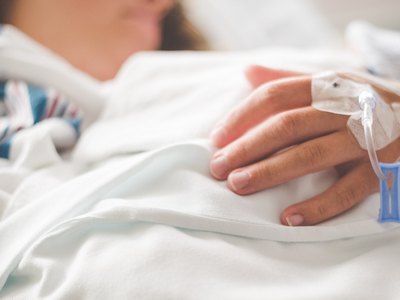
UR_Beira: reinforcing emergency helthcare services in Beira district
The project aims at strengthening emergency health services managed by local authorities in the district of Beira (Portugal), with a focus on obstetric and paediatric emergencies, through the adoption of a centralised emergency management model endorsed by the district and national authorities. Thus shall contribute to the reduction of mortality and morbidity related to medical emergencies.Target Groups: 30 staff part of the Serviço Distrital de Saúde, Mulher e Acção Social di Beira (health district authority), the management 4 team of Central Hospital of Beira and the personnel of the Serviço de Emergência Medica em Moçambique (Medical Emergency Service in Mozambique), that will benefit from the improvement of capacities of management of emergencies and referral system; 270 healthcare staff including: personnel of the healthcare facilities of Beira (Hospital and Health Centres), paramedic personnel and the staff of the emergency central line; 12.000 residents in the city of Beira that are estimated to need first medical aid and referral, around 5.000 pregnant women and 3.000 children under five who are expected to access quality emergency and obstetric care without any delay.
Researcher: Andrea Stocchetti
Duration: 13/01/2020 - 13/01/2023
POW-BRIDGE - Bridging the gap between legislation and practice in the Posting of Workers
POW-BRIDGE studied the gap between procedures (legal basis) and practices (experiences) in posting rule enactment, identified challenges, developed and shared effective ways of addressing these challenges for posting companies and implementation agencies. It particularly investigated how the Directive interplays with other EU and national legislation in terms of social security, health insurance, temporary agency work, and company law. The geographical scope of the action included: Austria, Slovenia, Italy, Slovakia, Hungary, Poland, Serbia, and North Macedonia.
Website
Researcher: Fabio Perocco
Duration: 01/01/2020 - 31/12/2021
ADRIACLIM: adaptation strategies in Adriatic coastal areas
AdriaClim - Climate change information, monitoring and management tools for adaptation strategies in Adriatic coastal areas is a research project funded by the Italy-Croatia Interreg Cooperation Programme, which is dedicated to supporting the development of science-based regional and local climate change adaptation plans. AdriaClim will address climate change threats by developing regional and local adaptation plans based on up-to-date meteorological and oceanographical information acquired through newly implemented observing and modelling systems for the Adriatic Sea.
Website
Researcher: Andrea Critto
Duration: 01/01/2020 - 30/06/2023
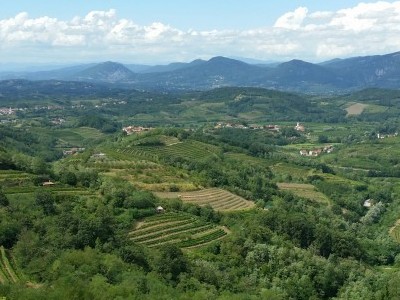
Acquavitis - Efficient use of water in cross-border viticulture
ACQUAVITIS ("Soluzioni innovative per l’uso efficiente dell’acqua in viticoltura transfrontaliera") aims at developing and testing joint innovative technologies and solutions for the sasfeguard and efficient use of water resources in viticulture, for the risk planning associated with extreme events, to face climate change and to transfer knowledge and have exchange of experiences from research centres to grapevines companies in the cross-border area. The project actively involves at least 15 companies in order to implement effective economic management models.
Website
Researcher: Barbara Stenni
Duration: 01/01/2020 - 31/08/2022
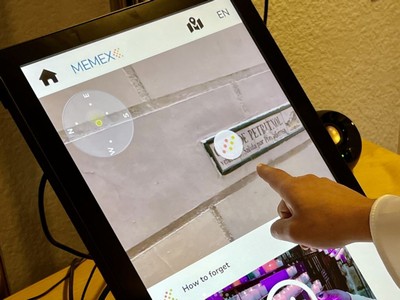
MEMEX: MEMories and EXperiences for inclusive digital storytelling
MEMEX promotes social cohesion through collaborative, heritage-related storytelling tools that provide access to tangible and intangible Cultural Heritage (CH) for communities at risk of exclusion. The project implements new actions for social science to: understand the needs of such communities and co-design interfaces to suit their needs; develop the audience through participation strategies; while increasing the inclusion of communities. The fruition of this will be achieved through ground breaking ICT tools that provide a new paradigm for interaction with CH for all end user. MEMEX will create new assisted Augmented Reality (AR) experiences in the form of stories that intertwine the memories (expressed as videos, images or text) of the participating communities with the physical places / objects that surround them. MEMEX will be deployed and demonstrated on three pilots with unique communities: Barcelona’s Migrant Women, which raises the gender question around their inclusion in CH, giving them a voice to valorise their memories; Paris’s XIX district, one of the largest immigrant settlements of Paris, to digital heritage repositories of over 1 million items to develop co-authored new history and memories connected to the artistic history of the district; and first, second and third generation Portuguese migrants living in Lisbon will provide insights on how technology tools can enrich the lives of the participants.
Project website / EU Cordis database
Researcher: Marcello Pelillo
Duration: 01/12/2019 - 30/11/2022
Funding: Horizon 2020 Societal Challenges - Europe In A Changing World - Inclusive, Innovative And Reflective Societies
Cohesion in further developing and innovating SHARE across all 28 member countries
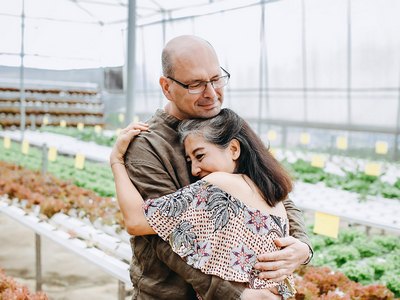
The population ageing issue represents a key challenge in the EU since it affects ageing-related policies such as those for pensions, healthcare and long-term health reforms. The EU-funded SHARE-COHESION project is a research infrastructure that aims to better understand the challenges of the ageing process in the EU Member States. The main purpose of the project is to collect excellent data combining transdisciplinary, longitudinally and strict cross-national comparability that can be used for research. The results will allow a cross-national comparison of the social, health and economic status of EU citizens over 50 years of age and permit a comparative estimation of ageing-related policies that will support development and innovation programmes.
Website
Researcher: Agar Brugiavini
Duration: 01/10/2019 - 30/09/2023
Cultural-E: Plus Energy Buildings
Cultural-E is a EU-funded project, which aims to define modular and replicable solutions for Plus Energy Buildings (PEBs), accounting for climate and cultural differences, while engaging all key players involved in the building life cycle. Cultural-E will develop technologies and solution sets that are tailorable to specific contexts and energy demands, as well as performing a comprehensive optimisation of the value/cost ratio of Plus Energy Buildings. Sets of design-for-assembly technologies will be developed through a careful mapping of European climates, building archetypes, and cultural energy habits. We are going beyond the state-of-the-art by maximising the share of the demand covered by renewable sources, towards zero emissions in the operational phase.
Project website / EU Cordis database
Researcher: Wilmer Pasut
Duration: 01/10/2019 - 30/09/2024
Funding: Horizon 2020 Industrial Leadership - Leadership in enabling and industrial technologies - Advanced manufacturing and processing