

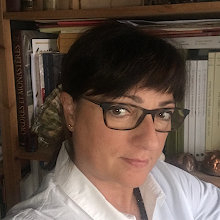
Flavia DE RUBEIS
- Position
- Full Professor
- Roles
-
Member of the Academic Senate
Member of the Senatorial commission for institutional relations with non-European countries
Coordinator of the Venice inter-university Centre for initial teacher training
Department's Delegate for Teacher Training
- Telephone
- 041 234 9839
-
flaviadr@unive.it
- Academic discipline
- Palaeography [HIST-04/D]
- Website
-
www.unive.it/people/flaviadr (personal record)
- Office
-
Department of Humanities
Website: https://www.unive.it/dep.humanities
Where: Malcanton Marcorà
Flavia De Rubeis
She graduated in Humanities at the University of Rome “La Sapienza” in 1987. From 1996, she began teaching Medieval Epigraphy and Latin Palaeography on a contract basis at universities in Rome (Roma Tre), Naples (Suor Orsola Benincasa), Padua, and Siena (Arezzo campus), Venice (Ca’ Foscari). In 2003, she was appointed to the post of associate professor in Palaeography and in 2005 took up her post at Ca’ Foscari University of Venice, where she teaches Latin Palaeography and Medieval Epigraphy as an associate professor and, since 2017, as a full professor.
Institutional activities
Academic appointments and organisational activities
Academic appointments and positions:
- President of the Ca’ Foscari Humanities Library from 2022 to the present;
- Member of the Senate Commission for Institutional Relations with Non-European Countries from 2026 to present;
- Coordinator of the Venice Inter-University Centre for Initial Teacher Training from 2024 to present;
- Departmental Delegate for Teacher Training from 2023 to present;
- Member of the Academic Senate of Ca’ Foscari University of Venice from 2020 to 2023; from 2026 to present;
- Deputy Head of the Department of Humanities from 2017 to 2020;
- University Delegate by Rector’s decree for teacher training, TFA, PAS, PF24CFU in the linguistic, humanities, scientific and general areas from 2014 to 2020;
- Member of the Executive Committee of the Doctoral College in Historical, Geographical and Anthropological Studies, University of Padua – Ca’ Foscari University of Venice, from 2022 to the present;
- Member of the Teaching Committee, Ca’ Foscari University of Venice, Department of Humanities, Teaching Committee from 2011 to 2020;
- Member of the Doctoral College in Historical, Geographical and Anthropological Studies, University of
Padua – Ca’ Foscari University of Venice, from 2010 to present;
- Coordinator of the Inter-university master’s degree Programme in History and Management of Archival and Bibliographic Heritage, Ca’ Foscari University of Venice, Department of Humanities – University of Padua, Department of History, Geography and Anthropology, from 2008–09 to 2020;
- Head of CeDoDi, Department of Humanities, from 2008 to 2020.
Participation in research and training evaluation activities
- ERC 2018 Advanced Referee
- CEV 2018: participation in CEV training courses
- Referee for the PRIN 2013 and SIR 2014 projects
- Evaluation of research outputs for the VQR 2011–2014
Participation in journal editorial boards
- Member of the International Scientific Committee of the Corpus Inscriptionum Hispaniae Mediaevalium (ES);
- Member of the scientific committee of TELMA, Traitement électronique des manuscrits et des archives, IRHT – Institut de Recherche et d’Histoire des textes (FR);
- Member of the scientific committee of Nuovi Annali della Scuola Speciale per archivisti e Bibliotecari (journal. Class A, area 11/A4) La Sapienza University – Rome;
- Editor (with Dorit Raines, DSU) of the Ca’ Foscari Editions series, ‘Studies in Archival Science, Library Science, Palaeography’, Ca’ Foscari University.
External activities and appointments
- Chair of the PO competition committee, SSD M-STO/09, University of Bologna, 2023
- Chair of the RTDB competition committee, SSD M-STO/09, Roma Tre University, 2019;
- Member of the PO competition committee, SSD M-STO/09, University of Cremona, 2020;
- Member of the PA selection committee, SSD M-STO/09, Scuola Normale Superiore di Pisa, 2020;
- Chair of the doctoral committee for Elodie Lévèque’s thesis “Les reliures romanes de la bibliothèque de Clairvaux. Étude archéologique et biocodicologique”, University of Paris Nanterre, 27 May 2020;
- Chair of the PhD final examination committee – Committee 59-2018 PhD in Historical, Geographical and Anthropological Studies – Historical Studies Curriculum (Cycle XXXII), Dr Desi Marangon (2020);
- Supervisor for the Marie Skłodowska-Curie programme: Andrea-Bianka Znorovszky, PhD Marie Skłodowska-Curie Research Fellow, Research Project “MARIA – Marian Apocryphal Representations In Art: From Hagiographic Collections to Church Space and Liturgy in Fourteenth to Sixteenth-Century France”.
Research
Research Areas
a) Epigraphic script in the Romanesque period. This research area focused on the study of epigraphic script in the Romanesque period in Italy during the 11th and 12th centuries. The aim of the research was to identify the origins of the various stylisations of Gothic epigraphy in Italy, as seen through the study of the graphic forms of Romanesque capitals, and to identify areas where the coexistence of Romanesque and Gothic script prevented the full development of Gothic script.
b) Epigraphic script in the Lombard period. The study of Lombard epigraphic script was conducted in areas where the coexistence of writing systems—defined from a morphological perspective—and those in a state of continuous evolution is well documented. This research enabled an examination of epigraphic production in northern Italy within territories under Lombard and Carolingian scriptural influence. It has thus been possible to identify certain common features in epigraphic production, with particular reference to the Veneto and Upper Adriatic regions; features that make this territory distinct and, graphically speaking, seemingly quite different from Ravenna’s or fully Lombard production.
c) Early medieval epigraphic stone-carving workshops. Building on studies of epigraphic script during the Lombard period in northern Italy, and more specifically in the Upper Adriatic area, it has been possible to identify certain graphic markers of potential epigraphic stone-carving workshops. This theme will be developed in the course of future research, with particular reference to certain graphic stylisations that do not appear to be the result of random choices by stone-carving workshops, but rather the conscious use of carefully selected forms. This topic is of particular importance because studies on epigraphic production, as things stand, have not focused on the role of stone-carving workshops in the graphic transformations that affected writing during the early Middle Ages, and it could also enable the identification of epigraphic stone-carving workshops active in the Upper Adriatic area.
d) Book scripts and epigraphic scripts in the Middle Ages. The research has highlighted the close relationships that have existed over the centuries between both epigraphic and book production, and in particular their mutual influences. The theme of the relationship between manuscript books and epigraphic production, only recently highlighted in the specialist literature, has contributed not only to identifying script forms common to both contexts, but also to the identification of cultural flows not always observed. These relationships have been clarified in particular in the production of Southern Italian books during the early Middle Ages, and subsequently with specific reference to Gothic script production across the whole of Italy.
e) Graffiti in the early Middle Ages. The study of early medieval graffiti offers a different approach to the issue of literacy in the early Middle Ages, with particular reference to non-professional scribes. In particular, autograph signatures will be examined and compared with northern Italian graffiti. The aim of this line of research is to attempt a reconstruction of the early medieval graphic landscape unrelated to professional scribes. The research will focus on the site of Santa Maria in Stelle and its relationship with contemporary Northern Italian book scripts.
f) Graffiti from the Romanesque period to the 21st century. The research programme focuses on graffiti found in the city of Venice and the lagoon area, dating from the 11th century onwards. This theme is linked to the project Tourist in Venice across the Centuries, a branch of Time Machine, Ca’ Foscari University, Venice, now known as VeLA Venezia Libro Aperto, website velave.eu. The project, launched in 2019, examines the graffiti left over the centuries by occasional writers throughout the city of Venice and the major islands, and has produced the website: velave.eu, based on a database from which to extract transcriptions, graphic reconstructions, and search options by theme, name, chronology, and type of writing, using QGIS.
National and international projects:
- Principal Investigator of the VeLA, Venezia Libro Aperto project, PRIN, Projects of Significant National Interest 2022, Ministry of University and Research (2022–2025), website https://velave.eu/.
- Principal Investigator of the VeLA project, Venezia Libro Aperto, Biblissima+, Observatoire des cultures écrites de l’argile à l’imprimé, IRHT-FR, 2022–2025, website: https://velave.eu/.
- Member, with the VeLA Monastica project, of the research group for the National Recovery and Resilience Plan, Mission 4 “Education and Research” – Component 2, project: “CHANGES – Cultural Heritage Active Innovation for Sustainable Society”. Implementing Entity: Sapienza University of Rome, CUP: H53C22000850006, spoke 1, Unive (2023–2026), website: https://velave.eu/.
- Member of the Time Machine research group H2020-FETFLAG-2018-2020, European Commission, H2020 – Excellence Science – FET.
- Member of the Venice Time Machine research group, funded by Ca’ Foscari University, 2019–2021.
- Member of the PRIN 2012 core unit, Venice, Poetic Memory and the Poetry of Memory. Lexical and Thematic Recurrences in Epigraphic Versification and the Literary System.
- Coordinator and scientific director of section f, Inschriften, Wittgenstein Project 2005–2009, III. Texte und Identitäten. Quellenstudien zur Identitätsbildung, Austrian Academy of Sciences, Vienna.
Publications.
Author of 85 publications:
- https://www.unive.it/data/persone/5592421/pubblicazioni.
- Principal Investigator of the PRIN website: https://velave.eu/.
Participation in conferences and study seminars by invitation and with publication
She has participated in 52 conferences by invitation:
https://www.unive.it/data/persone/5592421/curriculum
Organisational activities
Organisation of national and international conferences:
- She is a member of the scientific committee and co-organiser of the “European Summer School in Epigraphy Poitiers (ESSEP) Erasmus Intensive Programme”, academic years 2009–10, 2010–11. She is the coordinator and organiser for the 2012–13 academic year of the medieval session on the history of graphic and epigraphic traditions for the same ESSEP programme, at the Université de Poitiers, August 2013.
- In collaboration with the Department of Historical, Geographical and Classical Studies at the University of Padua, Prof. Nicoletta Giovè, and the Department of Philosophy and Cultural Heritage at Ca’ Foscari University of Venice, Dr Stefano Riccioni, she is organising the conference “Medieval Epigraphy: writings, spaces and patrons. International Meeting” on 21–22 March 2013.
- Organisation of the International Conference, in collaboration with D. Raines (Department of Humanities, Ca’ Foscari University of Venice) and the École Polytechnique Fédérale de Lausanne, Digital Humanities Lab and Collège des Humanités, entitled: Digital Palaeography. Projects, Prospects, Potentialities. An International Workshop, 10–11 April 2014.
- Organisation at the International Medieval Congress 2014, University of Leeds (UK), Session 213, 7 July 2014, Medieval Epigraphy, I: Emperor’s and King’s Death – Epigraphic Approaches.
- Organisation of the International Conference “The Consequences of Conservation”, Mantua, Teatro del Bibiena, 20–21 March 2015.
- Organisation of and participation in the conference “Protection, Conservation and Restoration. What Future for the Book and Archival Heritage”, Venice, Auditorium Santa Margherita, Ca’ Foscari University, Venice, 6 May 2015.
- In collaboration with the German Centre for Venetian Studies, and participation in the international conference Epigraphy between South and North: Influences, parallels and differences in late medieval inscriptions, Epigraphik zwischen Süd und Nord: Einflüsse, Parallelen und Unterschiede spätmittelalterlicher Inschriften, Venice, 28–29 November, Department of Humanities, Sala Cozzi – German Centre for Venetian Studies, Venice, 2016.
- Organisation of the seminar “Manuscript restoration: history, experiences, the contribution of chemistry”, DSU, Venice, 29–30 September 2017.
- Organisation of the conference ISMI – International Standard Manuscript Number for the identification and interoperability of manuscripts: Third international meeting, Venice, Ca’ Foscari University, 15–16 November 2018, in collaboration with IRHT-CNRS in Paris and the Bayerische Staatsbibliothek in Munich, at the Department of Humanities.
- Member of the Scientific Committee of the International Colloquium on Rome in the 10th Century, organised by the University of Rome “La Sapienza” and the École Française de Rome, Rome, 30 March – 4 April 2020 (conference postponed to 2022 due to the Covid-19 health emergency).
- Member of the scientific committee of the international conference Salve Regina Conference, part of the Marie Skłodowska-Curie Research Fellow Research Project ‘MARIA-Marian Apocryphal Representations in Art: From Hagiographic Collections to Church Space and Liturgy in Fourteenth to Sixteenth-Century France’, DSU, Venice, 22–24 April 2020. (conference held on 29 September 2020, due to the Covid-19 health emergency).
referee:
- has served and continues to serve as a referee for:
- “Hortus Artium Medievalium”;
- the University of Naples “L’Orientale” journal, “L’Orientale”;
- AION-Linguistica;
- Journal “Segno e Testo”.
Further academic activities
- Coordinated and curated, on behalf of the Umbria Region, SAAAB, the epigraphic section of the Municipal Art Gallery of Bettona (Perugia), with catalogue.
- Coordinated and curated the medieval epigraphic section for the Civic Museums of Brescia, with catalogue.
- Curated the medieval epigraphic section of the National Roman Museum “Crypta Balbi” in Rome, on behalf of the Archaeological Superintendence of Rome, with catalogue.
- Is the scientific director of the epigraphic section of the archaeological excavation mission at San Vincenzo al Volturno (IS).
- Coordinated and curated the section “Written Culture: Documents, Manuscripts and Inscriptions” for the exhibition “The Future of the Lombards” held at Santa Giulia in Brescia from 18 June to 19 November 2000
- Conceived, planned and coordinated the series of international seminars “Monasteries in the Early Middle Ages”: 1st International Seminar “Monasteries in the Early Middle Ages: A Comparison of Archaeology and History”, Venice, 18–19 May 2001; 2nd International Seminar “Monasteries in the Early Middle Ages: Writings from the Monasteries”, Rome, Institutum Romanum Finlandiae, 9–10 May 2002; 3rd International Seminar “Monasteries in the Early Middle Ages: Topography and Structures of Monastic Settlements from the Carolingian Period to the Reformation”, Castel San Vincenzo (IS), 23–26 September 2004.
- Curated the “written culture” section of the exhibition “Ezzelini. Lords of the Marca in the Heart of Frederick II’s Empire”, Bassano del Grappa, Palazzo Bonaguro, 16 September 2001–6 January 2002.
- In collaboration with the Department of History at the University of Padua, organised the seminar “Verba volant scripta manent. Written Sources of the Middle Ages: Projects, Methods and Research Perspectives” (Venice, 4–5 May 2009).
- She participated as a collaborator in the international project Les élites dans le haut Moyen Age occidental (Ve-XIe siècle): formation, identité, reproduction, directed by Régine Le Jan, University of Paris 1, which concluded in 2010.
- She is a member of the scientific committee and co-organiser of the “European Summer School in Epigraphy - Poitiers (ESSEP) Erasmus Intensive Programme”, academic years 2009–10 and 2010–11. She is the coordinator and organiser for the 2012–13 academic year of the medieval session on the history of graphic and epigraphic tradition for the same ESSEP programme, at the University of Poitiers, August 2013.
- In collaboration with the Department of Historical, Geographical and Ancient Sciences at the University of Padua, Prof. Nicoletta Giovè, and the Department of Philosophy and Cultural Heritage at Ca’ Foscari University - Venice, Dr Stefano Riccioni, organised the conference “Medieval Epigraphy: Scripts, Spaces and Patrons. International Meeting” on 21–22 March 2013.
Publications.
Author of 96 publications:
https://www.unive.it/data/persone/5592421/pubblicazioni
Participation in conferences and study seminars by invitation and with publication:
1. Study Day on the theme Franciscanism in Abruzzo: historical and artistic aspects, Franciscan Convent in Castelvecchio Subequo (AQ), 8 October 1988.
2. National conference Cosimo Fanzago and inlaid marble between Abruzzo and Campania in the Baroque era, Pescocostanzo and Sulmona (AQ), 25–27 October 1992.
3. Conference San Vincenzo al Volturno in Molise, a thirteen-century-old abbey in a thirty-year-old region. Conference on the monastic city, Castel San Vincenzo and Rocchetta a Volturno (Isernia), 8 and 9 October 1994.
4. Seminar of the Italian Institute for Philosophical Studies “Medieval monastic cities in Europe: the case of San Vincenzo al Volturno”, Pescocostanzo (AQ), 23–27 August 1995.
5. Seminar of the European Science Foundation, Isernia – San Vincenzo al Volturno – Montecassino, 28 June to 3 July 1997.
6. International seminar on the theme “San Salvatore in Brescia: new interpretations”, Brescia, 9–10 November 1997.
7. International Conference “Paolo Diacono. A writer between Lombard tradition and Carolingian renewal”, Cividale del Friuli-Udine, 6–9 May 1999.
8. 2nd Euroconference “Poetry in early Medieval Europe. Manuscripts, language and music of the Latin Rhytmical Texts”, Ravello, 9–12 September 1999.
9. 8th International Colloquium on the theme “Carolingian Europe”, International Research Centre for Late Antiquity and the Middle Ages, Motovun, and Museum of Croatian Archaeological Monuments, Pore – Split, 23–27 May 2001.
10. International Conference “Die Langobarden. Herrschaft und Identität. Internationales Symposium”, Vienna, 2–4 November 2001.
11. Conference Culto e arte in Santa Giulia, Brescia, 9 November 2001.
12. International Conference “Salvarsi l’anima, perpetuare la famiglia. Les transfers patrimoniaux en Europe occidentale, IV (VIIIe-Xe siècle)”, Padua, 3–5 October 2002.
13. International Conference “Paolino di Aquileia and the Italian contribution to Carolingian Europe”, Cividale del Friuli-Premariacco, 10–13 October 2002.
14. 16th International Congress of Studies on the Early Middle Ages “The Lombards of the Duchies of Spoleto and Benevento”, Spoleto 20–23 October 2002–Benevento 24–27 October 2002
15. 7th Conference on Historical Studies of Benedictine Italy “Italian Monasticism from the Lombard to the Ottonian Period (8th–10th Centuries)”, Nonantola Abbey, 9–13 September 2003.
16. International Colloquium “La vengeance. 400–1200”, Rome, 18–20 September 2003.
17. International Conference “Les élites au haut moyen age. Crises et renouvellements”, Rome, 6–8 May 2004.
18. International Conference “Unequal Opportunities. The Representation of Women’s Actions in the European Early Middle Ages as a Tool for Political Assessment (6th–10th Centuries)”, Padua, 18–19 February 2005.
19. 12th International Colloquium of the IRC for Late Antiquity and the Middle Ages, on the theme “The Town in the Middle Ages”, Motovun, Croatia, 26–29 May 2005.
20. 12th Seminar on Late Antiquity and the Early Middle Ages “Archaeology of Social Structures in Early Medieval Italy (5th–9th Centuries)”, Padua, 29 September–1 October 2005.
21. International Seminar “774. Hypotheses on a Transition”, Poggibonsi (Siena), 16–18 February 2006.
22. 2nd International Colloquium on Medieval Epigraphy, 11–19 September 2006, León.
23. Conference of the Italian Association of Palaeographers and Diplomatists “The Alps: Gateway to Europe. Writings, People, Ideas from Justinian to Barbarossa”, Cividale del Friuli, 5–7 October 2006.
24. International Conference “La culture du Haut Moyen Age, une question d’elite”, 6–8 September 2007, Cambridge, Trinity College.
25. Third International Congress of Medieval Epigraphy “Medieval Epigraphy and Manuscript Culture”, Poitiers, 2–4 September 2009.
26. Conference “Fama e publica vox nel Medioevo”, Ascoli Piceno, December 2009.
27. International conference “Strategies of Identification: Early Medieval Perspectives”, Vienna, 8–10 December 2010.
28. International Colloquium, Agôn. Performance and Competition (5th–12th Centuries), Frankfurt am Main, 16–18 June 2011.
29. Congress: 32nd International Conference on Merovingian Archaeology “Around the Reign of Clovis. The Death of the Great in Early Medieval Europe. History and Archaeology”, 3–5 November 2011.
30. Symposium “Change and Continuity in Churraetia. Political and Cultural Changes between Lake Constance and Lombardy in the Time of Charlemagne”, Muestair 13–16 June 2012
31. International Conference “The Papal Court and its Environment in Epigraphic Sources (700–1700)/ The Papal Court and its Environment in Epigraphic Sources (700–1700)”, German Historical Institute in Rome / Istituto Storico Germanico di Roma, in cooperation with the Epigraphic Research and Documentation Centre of the Historical Seminar at the University of Munich and the Historical Seminar at the University of Zurich, Rome, 5–7 July 2012.
32. International Conference “Charlemagne: Times, Places, People. Construction and Deconstruction of a Reign”, at the German Historical Institute in Paris, Paris, 26–28 March 2014.
33. Study Day “Epigraphic Writing and Book Writing: Between East and West”, University of Cassino and Southern Lazio, 9 April 2014.
34. International Conference, in collaboration with D. Raines, Department of Humanities, Ca’ Foscari University of Venice, and the Swiss Federal Institute of Technology in Lausanne (EPFL), Digital Humanities Lab and Collège des Humanités, “Digital Palaeography. Projects, Prospects, Potentialities. An International Workshop, 10–11 April” – Ca’ Foscari University of Venice.
35. International Medieval Congress 2014, University of Leeds (UK), Session 213, 7 July 2014, Medieval Epigraphy, I, “Emperor’s and King’s Death-Epigraphic Approaches” .
36. Study Day Digital Resources and Collaborative Tools for the Classical Sciences, DSU, Ca’ Foscari University of Venice, 2–3 December 2015.
37. International Conference “The Consequences of Conservation”, Mantua, Teatro del Bibiena, 20–21 March 2015
38. Conference “Protection, Conservation and Restoration. What future for the book and archival heritage”, Venice, 6 May 2015, Venice, Auditorium Santa Margherita, Ca’ Foscari University.
39. International Conference “Italy and its rulers in the Ninth Century: Was there a Carolingian Italy?”, Institute for Medieval Research, Austrian Academy of Sciences, Vienna, 25–26 April 2016.
40. International conference “Inschriftenkulturen im kommunalen Italien: Traditionen, Brüche, Neuanfänge. Epigraphic cultures in communal Italy: Traditions, ruptures, new beginnings”, German Historical Institute in Rome, Rome, 19–20 May 2016.
41. International Conference: 20th Annual International Scientific Symposium of the International Research Centre for Late Antiquity and the Middle Ages, University of Zagreb, Zagreb, 2–7 June 2016.
42. International Conference “Epigraphy between South and North: Influences, parallels and differences in late medieval inscriptions, Epigraphik zwischen Süd und Nord: Einflüsse, Parallelen und Unterschiede spätmittelalterlicher Inschriften”, Venice, 28–29 November 2016, Department of Humanities – German Centre for Venetian Studies, Venice.
43. International Conference “Documentum-monumentum, ‘The Epigraph as Monument’”, University of Siena, Siena, 23–24 November 2017.
44. Seminar “The Restoration of Manuscripts: History, Experiences, the Contribution of Chemistry”, Venice, 29–30 September 2017.
45. Study Day “Torcello and the Lagoon Horizon: History, Archaeology and Memory”, Centro Studi Torcellani, San Servolo (VE), 20 October 2021
46. DSU International Seminar, Masculinity in the Early Middle Ages: Tradition and Innovation, 450–1050, 7–9 November 2019, Venice
47. International conference 12th European Round Table on Luxovian Monasticism, Luxovian Writing and Manuscript Production, Saint-Colomban Abbey, Luxeuil-les-Bains, 2 October 2021.
48. International Conference “Metamorphoses and Continuities of Inscriptionality – Papal Epigraphy between Late Antiquity and the Renaissance”, International Conference on Inscriptionality between the Early and Late Middle Ages. The Case of Rome. Epigraphic Practices between the Early and Late Middle Ages. The Case of Rome. Epigraphic Habit between Early and Late Middle Ages. The Case of Rome, Heidelberg 2–3 December 2021.
49. International conference ‘videas illic quasi quosdam fluvios ire pulvereos: an interdisciplinary approach to the history of natural disasters, Cimitile and Santa Maria Capua Vetere, 18–19 April 2024
50. International conference ‘Normes et pratiques au Haut Moyen Âge (5th–9th century): Appliquer le droit ?’, Tours – Paris, 20–21 March 2025.
51. International conference 'Earning Paradise. History and archaeology of Christian pilgrimage', Cimitile-Santa Maria Capua Vetere, 22–23 May 2025.
52.
52. International conference VeLA: Venezia Libro Aperto. La storia e i graffiti, Conferenza Convegno Nazionale Mappe e scenari per il futuro del Patrimonio Culturale. Tre anni di ricerche del Partenariato PNRR CHANGES 14-16 gennaio 2026 Sapienza - Università di Roma.
53. Colloque international "Épigraphie et latinité au Moyen Âge", 18-23 Mai 2026 Poitiers, France
The information above has been uploaded on Ca' Foscari website directly by the person this webpage refers to. The correctness and the truthfulness of the published information are the responsibility of the relevant person.