

CLab - Treviso


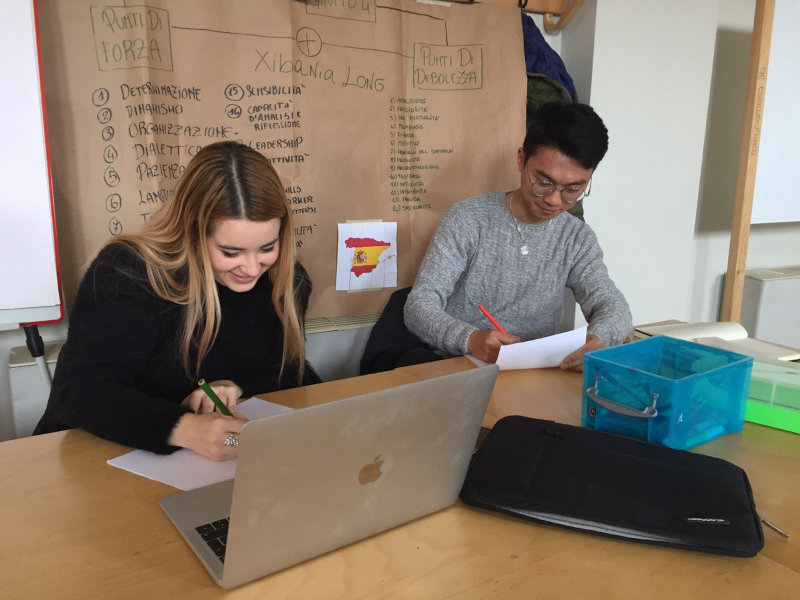
CLabs are interdisciplinary laboratories typically structured in 6/8 weeks, addressing university students and graduates with different disciplinary backgrounds, in a process of developing original projects on real challenges and problems, through the enhancement of their creativity and using innovative methodologies such as Design Thinking and the Business Model Canvas.
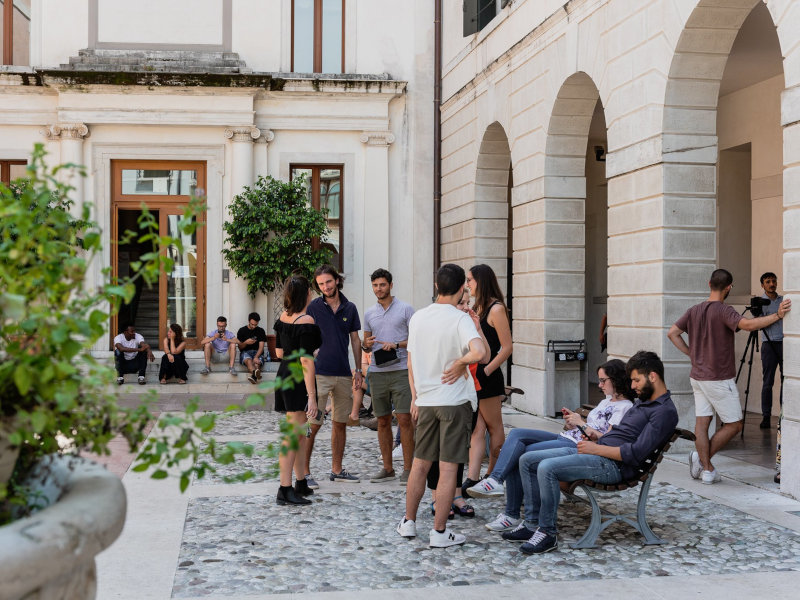
Recipients
Ca' Foscari CLabs are open to:
- Ca’ Foscari undergraduate student;
- Ca’ Foscari postgraduate students;
- Ca’ Foscari graduated;
- Other Universities undergraduate, postgraduate and graduated students;
- High school students and Italian technical institutions (ITS) students;
Admission to single laboratories is defined via call for admission, which regulate the contents and organisation of the laboratory, application procedure and selection criteria.
Teaching methods
Group innovation methodology developed by the d.School of Stanford University. It promotes creativity and collaboration between disciplines and encourage the exploration and reformulation of problems starting from people's needs, fostering empathy and creative trust to overcome the failure.
The difference from the usual creative process (problem > idea > solution) is the attitude itself towards the design and creation phase. The focus is on the word "thinking", highlighting the fact that every project comes out to respond to a human need. It is therefore a process focused on the person (human-centered), on his/her needs and on the solutions that are devised.
Business Model
- It describes how a company earns and makes profits. The business model outlines the logic behind the value of a company, i.e. the strategy that the entrepreneur develops to make a profit by providing value to his customers. According to the standard definition, the business model "describes the logic of how an organization creates, distributes and captures value". This definition is by Alexander Osterwalder, creator of the Business Model Canvas, a strategic model used for the creation and development of business model. Basically, it is a visual template that shows the infrastructure, products, customers, suppliers and other elements that identify a company. The business model can be easily build up using the business model canvas, a visual framework presented by Alexander Osterwalder that identifies the 9 key elements of the business model.
- Business Model Kit - from Board of Innovation
This tool allows to create models and visualise the relationships at the basis of the new project proposal.
Social research
Dissemination of the basics of social research on consumption: theories on the subject, concrete examples of research and a synthesis of the qualitative-quantitative methodologies that can be used. To follow, field research both to test what was said in the first part and to find useful data for the proposals of the students, who are called to define personas and consumption contexts in order to support their project proposal.
Marketing
Techniques and approaches theme-oriented for each laboratory, for effective communication of projects.
Effective communication skills: Storytelling and Public Speaking
Communicating effectively means knowing how to express yourself in every situation with any interlocutor both verbally and non-verbally (facial expressions, voice and posture), clearly and consistently with the message we want to convey.
Public speaking is the discipline that provides a speaker with communication tools and strategies to present concepts in front of an audience in a clear and effective way.
Storytelling is a form of communication with very ancient origins. In fact, first oral and then in written form, man has used it for millennia to pass on stories, knowledge, memories and traditions. Storytelling is the art of telling by enriching the narration with details and emotions in order to fully involve those who are listening or reading you. Also used at a corporate level, it allows, for example, to communicate in an exciting way with your customers, make yourself known, communicate your mission effectively or advertise your brand in the best possible way.
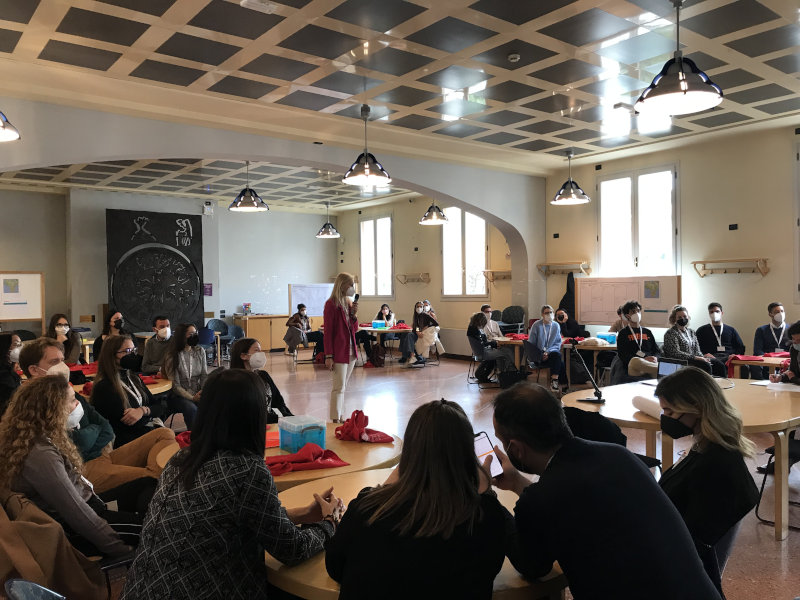
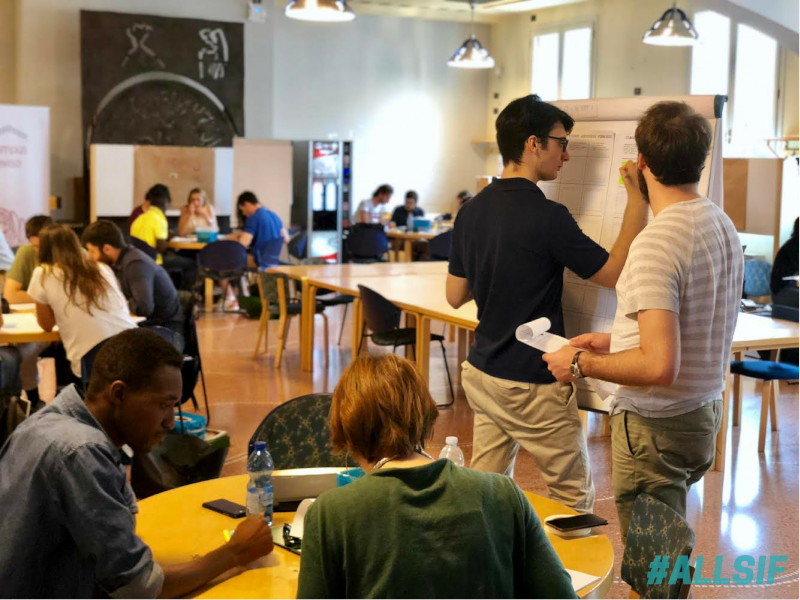
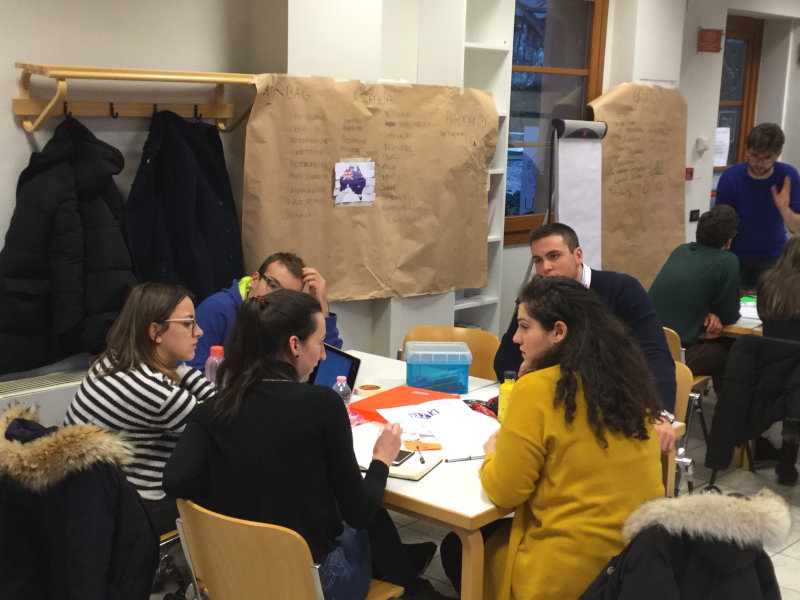
Testimonial
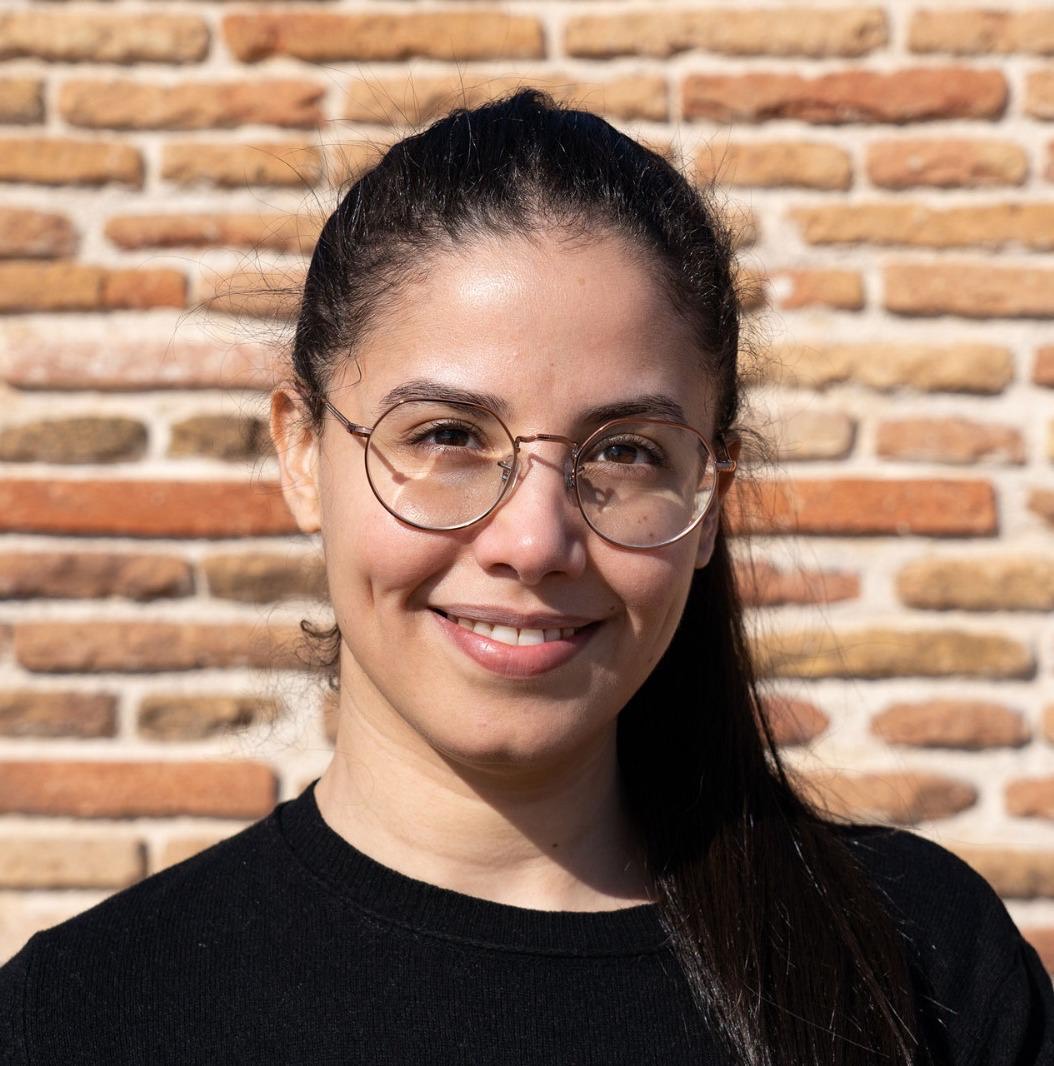
“Participating in the CLab has been a unique and enriching learning experience. The high profile of the teachers, always prepared and available, is undoubtedly one of the strengths of the laboratory. The central aspect of the CLab is the collaboration with local companies and the search for solutions to the challenges that the market presents. This practical experience makes the laboratory an ideal training ground for my professional future, offering me the opportunity to apply the knowledge and skills acquired and to deal with the dynamics of the world of work. Furthermore, the CLab is a place of continuous dialogue, where the exchange of ideas and opinions creates a collaborative and lively learning environment. These interactions have helped me to broaden my perspectives, improve and increase confidence in my skills.”
Soumia Abbad, participated in the CLab InterESG
Concluded laboratories
CLab GeoRisk – Risks and Opportunities for Business Internationalisation in ASEAN Markets
- Duration and dates: 8 weeks (11 March–31 May 2026)
- Workload: 150 hours – 6 ECTS credits
- Objective: The lab examines the growing impact of geopolitics on business internationalisation strategies. Using specialised business assessment and market analysis tools, students work with companies on practical case studies. This rigorous training prepares students for the UNI 11823 EXIM Junior certification process. The lab focuses on ASEAN markets, exploring consolidation and diversification strategies to optimise the internationalisation of Italian companies.
- In collaboration with: Treviso-Belluno Chamber of Commerce | Dolomites, Seles, SACE, CISET, T2i, IBC, CMZ Sistemi Elettronici, Galdi and Martini Occhiali.
- Award-winning team and project: “The Last Chip” for CMZ Sistemi Elettronici. The project involved developing an export plan for the Vietnamese market by establishing commercial relationships with distributors. During the programme, the team successfully initiated direct business contacts and took part in a business meeting with a potential partner in the motion-control sensor sector.
CLab AI – New Digital Technologies for Business Internationalisation
- Duration and dates: 8 weeks (13 March–29 May 2025)
- Workload: 150 hours – 6 ECTS credits
- Objective: The CLab AI Treviso 25 edition focused on applying artificial intelligence as a strategic tool to support companies expanding into international markets. Particular emphasis was placed on practical AI applications to support export managers. Topics included the use of chatbots and virtual assistants to facilitate entry into new markets; the development of highly personalised virtual stores for customised products; and the adoption of predictive maintenance systems for the sale of complex machinery, combined with remote training services.The participating companies were selected based on their ability to set specific challenges for the lab’s students, with the aim of developing innovative AI-based services to support business growth in international markets. Participants had the opportunity to work directly with companies interested in implementing advanced international trade solutions, developing practical ideas and strategies to address the complexities of internationalisation.
- In collaboration with: Treviso-Belluno Chamber of Commerce | Dolomites, Seles, SACE, CISET, T2i, IBC, Diemme Caffè, Garda Hotels Italia, Zilio Industries, Aton, Jampaa and Digital Automations.
- Award-winning team and project: Purple Horizons. The winning project proposed expanding the Diemme Caffè brand into Saudi Arabia and the United Arab Emirates through a new café model combining Italian tradition, technological innovation and retail media. Its aim was to create modern, welcoming spaces offering personalised experiences through AI, apps and interactive tablets used for customer profiling and loyalty-building. Jeddah was selected as the strategic starting point, with new cafés planned for shopping centres and the international airport. The concept combines a food and drink offering adapted to the local culture with a design that balances Italian identity and respect for the Saudi context, with the aim of establishing Diemme as a symbol of Italian coffee in the Arab world.
CLab – ESG and Sustainability from a Business Internationalisation Perspective
- Duration and dates: 8 weeks (14 March–15 May 2024)
- Workload: 150 hours – 6 ECTS credits
- Objective: The lab provided participants with specialist knowledge and tools for business assessment and market analysis, enabling them to develop an internationalisation project and work directly with companies. The specific theme of the lab, CLab – InterESG, was framed within the European Green Deal (2019) and the United Nations 2030 Agenda. These initiatives underpin the European Union’s major transition towards sustainability, which draws on the exceptional investment required for post-pandemic recovery. This transition encompasses several dimensions, with the environmental pillar of sustainability playing a central role in economic activity. The lab offered an effective learning experience and provided participants with specialist training recognised by Italy Bureau of Certification S.r.l., preparing them for the UNI 11823 EXIM Junior certification process.
- In collaboration with: SELES–Everap SpA, Treviso-Belluno Chamber of Commerce | Dolomites, Assindustria Veneto Centro, Venice Promex, T2i and SACE.
- Award-winning team and project: Exotic Team – “Thema Optical”. The export project for Thema Optical aimed to support the company’s expansion into Nordic markets through a detailed, data-driven assessment of opportunities, underpinned by in-depth research. It included an analysis of competitors, demand and market dynamics in the target countries.The project proposed a market-entry strategy covering the identification of the ideal partner, the selection of products for export, pricing and the choice of distribution and logistics channels. A crucial added-value element was the emphasis on product sustainability, reflecting the high level of environmental awareness among Nordic consumers.

Partners















Last update: 10/09/2026