

This section presents all past projects related to Ca' Foscari's Global Challenges. To discover the on-going projects, please visit the page Projects.

EXIT - Sustainable strategies to counteract territorial inequalities
The redrawing of social inequalities across Europe during the last few years includes both a retrenchment of longstanding inequalities among countries, and the emergence of new disadvantages, together with an erosion of the status and protections previously enjoyed by most citizens within them. This is particularly prominent from a geographical perspective as spatial inequality grows within regions. Despite overall country level economic growth, certain regions are experiencing long-term socioeconomic stagnation or decline. These areas have been often characterised as 'left-behind'. Yet, little is known of what drives ‘left-behindness’. The project EXIT (Exploring sustainable strategies to counteract territorial inequalities from an intersectional approach) will provide an in-depth analysis of "left-behind" as a concept used for characterising territorial inequalities faced by certain areas and, grounded on this, identify strategies to address it. EXIT proposes a bottom-up, interdisciplinary and mixed-methods research with a community-based and intersectional approach from the analysis to the transferability of practices. Addressing how different axes of inequality intersect in perceptions and experiences of "left-behindness" is crucial to understand the gap between the development of policies to redress territorial inequalities and their impact on the ground. In this regard, EXIT proposes to take a place-based approach to delineate the role of different forces, and how they interplay to produce uneven effects among communities.
Website
Researcher: Fabio Perocco
Duration: 01/11/2022 - 31/10/2025

DANUBIUS - Implementation Phase Project
DANUBIUS-IP is a 36-month Coordination and Support Action to support the ongoing development of DANUBIUS-RI – an environmental research infrastructure linking rivers and seas – as it proceeds towards its Operational Phase. DANUBIUS-IP is coordinated by GeoEcoMar (Romania) and brings together 25 experienced partners from 14 countries from across Europe in a consortium with complimentary areas of multi-disciplinary expertise across the freshwater and marine research fields. The project specifically seeks to address recommendations from the recent ESFRI and High-Level Expert Group reports (on DANUBIUS-RI) and make a significant contribution to the expected outcomes and wider impacts of the Horizon Europe Programme. As such the project considers the importance of sustainability of financial commitments, the need to test the funding model and to enhance the visibility of the RI. DANUBIUS-IP will further demonstrate the efficacy of an integrated and interdisciplinary approach embracing a 'river-sea continuum' perspective to fill current gaps in the Research and Innovation landscape to address key societal challenges in these environments impacted by anthropogenic pressures and climate change.
Project website / EU Cordis database
Researcher: Nicola Camatti
Duration: 01/10/2022 - 30/09/2025
Funding: Horizon Europe Excellent Science - Research Infrastructures

The Starch Food Niche: Human Adaptation, Genes, and Culture Ressources
The Starch4Sapiens project aims to analyze and compare the biological and behavioral changes that made possible efficient starchy food metabolization which occurred in Eurasia between the Upper Pleistocene and Neolithic (from ca 126 ka to 12 ka, 6). The hypothesis is that regular consumption of large amounts of dietary carbohydrates required molecular adaptations to permit positive selection under constraining environmental conditions and this favored Homo sapiens expansion. The project aims to read the history of genotypic changes from genomes, which are also noticeable in fossil remains and cultural behavior, in order to determine the extent to which they were introduced by regular starch-rich food consumption well before the Neolithic transition. Thus, the project risk-hypothesis is to show that continuous and massive dietary carbohydrate consumption was only possible due to co-evolution between genetic adaptation, which allowed the effective digestion of starch-rich foods contained in dietary carbohydrates, and lifestyle transformations, on the level of socially-learned culture and behavior patterns (mechanical processing of starchy plants into staple food by means of ground stones and probably associated to thermal treatment, namely wet-cooking). These modifications may have led to better health conditions (visible by change in bones, teeth and pathology from EAHS and HS) necessary and essential for a constant increase in the HS population and, consequently, to the disappearance of other humans (notably Neandertals and Denisovans).
Website
Researchers: Laura Longo, Elena Badetti
Duration: 01/12/2020 - 30/11/2023
ESG Factors and Climate Change for Credit Analysis and Rating
The aim of the ESG-Credit.eu project is to implement a methodology to include ESG (Environmental, social, and corporate governance) criteria and climate change factors into credit analysis and ratings. Given that ESG factors measure the firm’s sustainability and its ethical skills, the project investigates how those factors affect the creditworthiness of a firm measured by credit ratings over time. Moreover, we include in the analysis the impact that climate change could exert over a firm belonging to a certain industry. The expected result of the ESG-Credit.eu project is to introduce augmented credit ratings which include ESG factors and climate change scenarios.
Website
Researcher: Monica Billio
Duration: 01/12/2019 - 30/11/2022
REBALANCE - Reframing the mutual influence among large companies and democracies
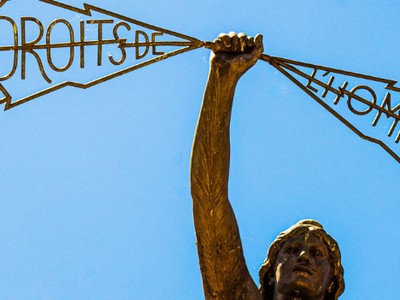
Rebalance project seeks to provide new insights, resources, events, and learning materials to help foster a rebalancing of capitalism and democracy. Democracy is under threat from capitalism. Companies are undermining democratic processes both at home and abroad. Among other things, they engage in excessive lobbying, violations of basic human rights, and collusion with repressive governments. But businesses and their leaders can also help promote democracy. Indeed, companies can have a positive influence on authoritarian governments, they can protect minorities, or even produce democracy-enhancing products and services. Big and small companies can therefore play a significant part in enabling democratic participation and restoring the rights of citizens.
Project website / EU Cordis database
Researcher: Francesco Zirpoli
Duration: 01/10/2022 - 30/09/2025
Funding: Horizon Europe - Culture, creativity and inclusive society

Monitoring and preventing online hate speech
"IMSyPP – Innovative Monitoring Systems and Prevention Policies of Online Hate Speech" aims to automatically detect hate speech in several languages, to identify triggers, to recommend effective counter narratives, and to propose policies to the European communication regulators. The data will be manually annotated for types of hate speech, and quality carefully controlled. We will develop hate speech models by applying advanced machine learning methods. The models will be deployed in online settings and used to analyze the large amounts of data already collected. This will allow to analyze mechanisms and trends in hate speech, and identify different types of triggers. We will conduct a pilot study on possible counter narratives and develop recommendations.
Website
Researcher: Fabiana Zollo
Duration: 01/03/2020 - 28/02/2022

PollinAction - Actions for boosting pollination in rural and urban areas
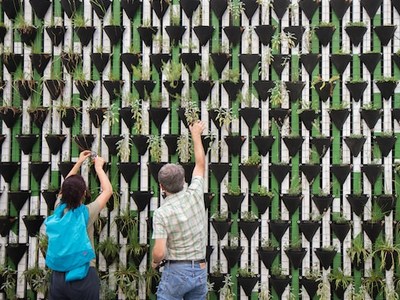
The objective of the LIFE funded project PollinAction is to mitigate the pollination crisis by creating a green infrastructure (GI) network, made up of natural and semi-natural areas, in rural and urban landscapes in North-East Italy. This will involve habitat restoration and the implementation of nature-based solutions. The project is mainly aimed at converting arable crops and rural or urban marginal areas into key habitats for pollinators. To reach this objective, it will improve species-poor grasslands and landscape heterogeneity by creating connectivity among rural and urban areas as well as along road infrastructure and riverbanks. LIFE PollinAction will assess the ecosystem conditions and services and will implement payments for ecosystem services (PES) schemes. The definition of an urban planning of compensation measures at local scale will be also considered as well as the design of circular economy processes and close-to-market solutions to boost farmer competitiveness. The project will be replicated in a marginalised and abandoned area in the Aragon region of Spain. This will allow the effectiveness of GI to be evaluated in two areas with opposite dynamics (i.e. specialisation/intensification vs. marginalisation/abandonment).
Project website / EU LIFE Public database
Researcher: Gabriella Buffa
Duration: 01/09/2020 - 31/03/2025
Funding: LIFE

Optimised personalised drug therapies for renal pathologies in type II diabetes
Diseases, co-morbidities, and patients responses to certain therapies are the result of a complicated interplay of numerous factors. The relationships defining how this intricate network of inputs leads to various outputs is extremely difficult to derive using conventional means. Thanks to Big Data, high-level applied mathematics and computers, the EU-funded DC-Ren project (Drug combinations for rewriting trajectories of renal pathologies in type II diabetes) is developing a tool that will take all this and more into account, and enable optimised personalised drug therapies for significantly enhanced outcomes. The team is focusing on diabetic kidney disease, a common co-morbidity of type 2 diabetes often accompanied by cardiovascular disease. Currently, the drug cocktails targeting it produce highly varied responses. Thanks to its vast patient database, advanced experimental techniques and dynamical systems theory, DC-ren is developing a completely new and widely applicable computational framework for decision support.
Website
Researcher: Debora Slanzi
Duration: 01/01/2020 - 31/12/2024
EeMMiP - Energy efficient Mortgage Market Implementation Plan
EeMMIP responds to the objectives of the EU in the areas of sustainable finance and climate change and aims to influence the entire value chain, from consumer to bond investor, stimulating mentality change and securing energy efficiency in market attitudes and best practices both in Europe and globally. The Project conducts an analysis of the current market systems relevant to the development of an EEM market and establishes demonstrators to support the demonstration of the end-to-end customer journey and EEM life-cycle. It will establish market-based governance and an EEM Label to support recognition of and confidence in EEM and facilitate access to quality information for market participants.
Website
Researcher: Monica Billio
Duration: 01/09/2020 - 31/08/2022