

Marie Curie Fellows - bando 2025
Nicolò Ardenghi

CAVEFLAME - Cave Archives for VEgetation, Fire, and LAndscape Magnetic Evolution
CAVEFLAME will reconstruct Holocene fire-climate dynamics using speleothems as innovative multiproxy archives. Fire strongly shapes ecosystems and climate, yet most long-term reconstructions rely on lakes or peat, limiting resolution. Speleothems can preserve organic biomarkers and magnetic minerals, offering a unique archive of fire history. At University of São Paulo, Brazil (partner organisation), the researcher will transfer expertise in organic biomarker analysis, adding fire and vegetation proxies (PAHs, n-alkanes) to ongoing isotope and geochemical work on Brazilian speleothems led by Prof. Stríkis. This exchange will unlock the potential of Brazil’s exceptional collection of tropical speleothems. Complementary training in paleomagnetism will be carried out at the Observatório Nacional (Rio de Janeiro), while a secondment at the Max Planck Institute (Germany) will focus on GDGT paleothermometry. Collaboration with Northumbria University (UK) will extend the multiproxy approach to Siberian permafrost speleothems, enabling tropical-boreal comparisons. In the reintegration phase, Ca’ Foscari (beneficiary) and CNR will embed these combined methods in Italy and apply them to Mediterranean archives.
Arash Azizi
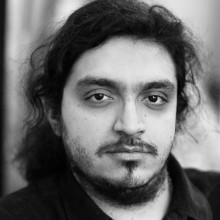
IIPGHCD – Iran, Israel, and the Persian Gulf in Historical and Contemporary Dynamics
The project offers a new reading of Middle Eastern history from 1971 to 2025 by a triangular study of Iran, Israel and the Arab states of the Persian Gulf. Histories of the Arab-Israeli conflict are often viewed in isolation from Iran but this work seeks to overcome this barrier, offering an integrated account that situates them within broader global history, from Cold War to multipolarism of today. By a longer historical view, the work avoids an essentialist view of the 1979 Iranian revolution and seeks the roots of today’s dynamic in the pre-1979 regional order. The project is based on multi-lingual sources (Arabic, Persian and Hebrew) and newly available archives including diplomatic records, oral history interviews, and Middle Eastern periodicals. It seeks to integrate diplomatic, cultural, social and intellectual perspectives and thus goes beyond the classical state-to-state histories which don’t capture the contestations that help shape every position at every stage. For this research, Arash Azizi will be hosted at the Department of Economics of Ca’ Foscari University of Venice under the supervision of Professor Matteo Legrenzi.
Francesca Bassani

C-METABnG - Catchment METAbolism of Blue and Green fluxes
C-METABnG will develop the first integrated framework to quantify whole-catchment metabolism, explicitly linking terrestrial (“green”) metabolism driven by vegetation productivity with aquatic (“blue”) metabolism arising from biogeochemical processes in rivers. By combining observations and measures at different scales with process-based modelling, the project will reveal how carbon is fixed, transformed, and transferred across land and water under hydroclimatic variability. Francesca Bassani will conduct her project at Ca’ Foscari University of Venice in the Department of Environmental Sciences, Informatics, and Statistics under the supervision of Prof. Enrico Bertuzzo, and will include a secondment at the École Polytechnique Fédérale de Lausanne, Switzerland, with Prof. Sara Bonetti.
Carlo Berardi

VIDICHI13th - Visual Dialects of Chivalry. Aristocratic Strategies of Cultural Exchange in the Thirteenth-Century Mediterranean
The project examines cultural mechanisms of elite integration and the emergence of a distinctive chivalric aesthetic in the Eastern Mediterranean from about 1200 to 1300 CE. Rather than treating chivalry as a single model exported from Western Europe, the project’s central hypothesis is that chivalric imagery functioned as a set of visual dialects: locally inflected versions of a common aristocratic language. These chivalric dialects allowed warrior elites of different ethnic, linguistic, and religious backgrounds to communicate status, legitimacy, and belonging across political and cultural boundaries while adapting to local figurative traditions and contingent representational needs. By following key maritime routes from Cyprus to Venice, this study also highlights how commercial networks intensified the circulation and incentivized the diffusion of chivalric formulas across the Mediterranean world. Berardi will conduct his research in the Department of Philosophy and Cultural Heritage at Ca' Foscari University, under the supervision of Prof. Simone Piazza.
Caterina Borelli
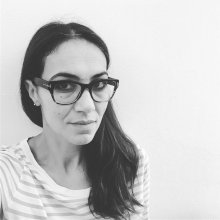
DefrostingHOME - Rethinking Home in Volatile Worlds
What defines "home" in an era of precarity and volatility? DefrostingHOME explores the interplay between unstable dwelling conditions and evolving notions of home, challenging mainstream Western narratives which often prioritise stability and ownership. The project follows current critiques of normative conceptions of inhabitation and expands their scope by bringing to the fore everyday practices of homemaking in volatile settings and subtle, often neglected forms of care, agency, and resistance. It will also develop a decolonial hybrid methodology that combines ethnography with participatory visual methods, co-creating knowledge with research participants. Through diverse case studies in Argentina and Italy, in contexts such as urban slums and informal migrant settlements, and leveraging insights from phenomenological anthropology, decolonial studies, ecofeminism and multimodal methodologies, DefrostingHOME interrogates volatile dwelling as a condition for reimagining lighter ways of inhabiting the world. The project will be carried out at the Department of Humanities of Ca’ Foscari University, under the supervision of Prof. Valentina Bonifacio, with an outgoing phase at the Universidad Nacional de General Sarmiento in Buenos Aires (Prof. María Cristina Cravino) and a secondment at the Polytechnic of Turin (Prof. Michele Lancione).
Daphné Esquivel-Sada
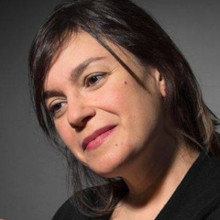
GEtGut - Gene Editing Human Gut Microbes: Knowledge, Ethics & Responsibility Through a Multispecies Lens
GEtGut builds on a multispecies approach to investigate the gene editing of microorganisms inhabiting the human gut. Through ethnographic research in two laboratories, GEtGut examines how the human gut microbes are defined and studied in gene editing research; how ethical questions are framed in the field, and how responsibility is understood in the context of emergent models of bodies and health. Bridging biomedical research, social sciences, and environmental considerations, GEtGut will generate interdisciplinary knowledge that will foster theoretical, policy, and democratic debate on the governance of gut microbiome gene editing. Daphne Esquivel-Sada will carry out her project at the Department of Philosophy and Cultural Heritage of under the supervision of Prof. Roberta Raffaetà.
Mattia Fumagalli
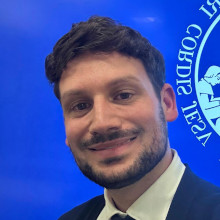
ENTANGLEDHOA – Entangled Faiths and Contested Powers: Christian–Muslim Relations, Slavery and Political Pluralism in the Horn of Africa
The project develops a transregional and long-term historical analysis of Christian–Muslim relations, slavery, and political authority in the Horn of Africa. Moving beyond interpretations that treat interreligious dynamics and coerced labor as localized or static, it examines how religious pluralism, legal hybridity, and political fragmentation emerged through transregional connections linking the Horn to the Red Sea and Indian Ocean regions. By tracing the circulation of people, legal norms, and religious practices from the early modern period to decolonization, the project repositions the region as a space of layered sovereignties and negotiated authority. It also investigates the historical transformation of slavery and coerced mobility within religious and legal frameworks, offering a historically grounded perspective on contemporary debates over governance, identity, and migration.
The outgoing phase will take place at Harvard University, hosted by the Center for African Studies, under the supervision of Prof. Zoe Marks. The return phase will be hosted by Ca’ Foscari University of Venice, within the Department of Economics, under the supervision of Prof. Matteo Legrenzi.
Isidora Grubački
GENERA1933-1939 - Gendering European Antifascism: A Transnational History of Women’s Antifascist Activism in East Central Europe (1933–1939)
This project explores how women built alliances across political, national, and ideological divisions in response to fascist threats. It focuses on the involvement of East Central European women in the Women’s World Committee Against War and Fascism (1934–1941), a Paris-based hub of antifascist activity. Although antifascist movements have been widely studied, the role of women remains largely overlooked. By analysing organizational networks, informal solidarities, and the ideas that shaped antifascist alliances, the project offers a timely contribution to the study of antifascism and women’s activism across borders. The research will reveal the reciprocal influences between local activism in ECE and broader European movements, ultimately offering a more inclusive history of resistance in twentieth-century Europe. Isidora Grubački will conduct her research at the Department of Humanities of Ca’ Foscari, under the supervision of Prof. Chiara Bonfiglioli.
Emre Kaymakçı
ICEVEC- The Socio-Economic Impacts of the Little Ice Age on Venice and Venetian Crete between 1453-1571
This research project investigates the socio-economic impacts of the Little Ice Age on Venice and Venetian Crete from 1453 to 1571. The Little Ice Age, which occurred approximately between 1300 and 1850, was characterised by the expansion of glaciers across Europe, Alaska, and New Zealand, as well as a significant decline in average annual temperatures in the Northern Hemisphere of approximately 0.6 °C. The project is based on the analysis of a wide range of archival documents, including those from the Senate Mar, Senate Dispacci Provveditori da terra e da mar, Senate Terra, Duca di Candia, and Notai di Candia, as well as Venetian chronicles. These historical records reveal that during periods of climatic instability between 1453 and 1571, Venice relied heavily on essential resources supplied from Crete, particularly wheat, wine, and timber, which were crucial for the Republic’s economic stability and subsistence. This study integrates history, palaeography, climate science, and digital humanities. By linking historical and climate science, this study aims to bridge the past and present. The project will be carried out by Emre Kaymakçı at the Department of Humanities of Ca’ Foscari under the supervision of Prof. David Gentilcore.
Francesca Masiero
RenEdu - Renaissance Education: Medical and Mathematical Treatises from the Veneto, 1350-1600
The project explores the production and cultural impact of medical and mathematical pedagogical treatises from the Veneto in Latin and Italian. These manuscripts and early printed treatises were produced in Italy between 1350 and 1600 before eventually being sold to collections in the United States. By analysing the content of scientific educational texts, this project shows how manuscripts and printed books contributed to advancing medical and mathematical studies, as well as professional practices. By exploring a textual corpus that received little attention from linguists, historians, and teachers, the project establishes for the first time a detailed analysis of rare medical incunabula, mathematical manuscripts, and early printed texts for pedagogical use, identifies the use professionals made of these materials, and creates descriptive catalogue entries in international repositories (Material Evidence in Incunabula, Manus Online, and HPB-Provenance). The results will help scholars studying early modern history, history of science, and history of education to assess the impact of these texts on how individuals engaged in scientific professions were trained, and in the production and circulation of scientific knowledge at a crucial time of transition between the late Middle Ages and the early Renaissance. Masiero will spend the first year of the project at the Department of the History of Science at Harvard University in Cambridge, (including a secondment at the Boston Medical Library) under the supervision of Professor Hannah Marcus, the second year at the Department of Humanities at Ca’ Foscari University in Venice under the supervision of Professor Eugenio Burgio, and the last semester in Rome at the Central Institute for the Union Catalogue of Italian Libraries and Bibliographic Information (ICCU), via the Consortium of European Research Libraries (CERL), under the supervision of Professor Cristina Dondi.
Hamid Moein Ziaei
Z-INK - Contours of Contact: A Zoroastrian Lens on Interfaith Theological and Philosophical Exchanges in Early Modern India
This project examines theological and philosophical interactions in Mughal India (1526–1858) through the understudied Zoroastrian (Parsi) corpus, proposing a nuanced theory of interreligious contact in a pluralistic society and conceptual blending. Drawing on a dual analysis of courtly and non-courtly texts, it develops an analytical typology distinguishing overt and covert forms of syncretism, intentional and unintentional processes, and top-down versus bottom-up mechanisms. The study analyzes textual strategies such as analogical substitution, doctrinal omission, intertextual citation, theological reframing, and metaphysical blending (e.g., Zoroastrian-Sufi cosmologies), while also exploring how religious relationships are enacted through shared manuscript circulation, ritual practices, and scribal devotional work. It highlights Parsi contributions to Mughal interfaith dialogues, including courtly participation, translation roles, and co-construction of epistemologies, metaphysics, and ethics, particularly alternative frameworks for reasoning, causality, inference, and the limits of knowledge across Muslim, Hindu, Jain, and Zoroastrian traditions. Methodologically, the project integrates philological analysis, textual comparison, discourse analysis, and manuscript history to trace networks of interaction and interpretive translation as catalysts of religious transformation. By introducing and refining new categories, it addresses historiographical gaps and offers a multi-dimensional model for understanding interreligious dynamics and hybridity in pluralistic historical settings. The project will be carried out at the Department of Asian and North African Studies of Ca’ Foscari University of Venice, under the supervision of Prof. Stefano Pellò, with the co-supervision of Prof. Antonio Rigopoulos.
Giada Pellicari

FWAM - Between Art Fairs and Art Markets: The Role of Women at the Beginning of the Contemporary Art Ecosystem
FWAM focuses on the role of women at the dawn of the contemporary art ecosystem, analyzing their presence in art fairs and the art market, as their significance has often remained unrecognized.
The project investigates the participation of female gallerists and artists in Art Basel, the leading European and international contemporary art fair, from 1970 to 1989. The 1970s marked a critical shift in the art world, characterized by the rise of contemporary art fairs, the proliferation of galleries, the development of the art system and curated exhibitions, alongside the growth of "Women's Studies".
This timeframe concludes with the Fall of the Berlin Wall, which symbolized a new geopolitical structure for Europe and a more globalized art system within the New Economy.
Situated at the intersection of the History of Contemporary Art and Art Market Studies, this interdisciplinary research combines qualitative and quantitative methodologies, to address the gender gap and identify the most influential figures who shaped the origins of contemporary art markets in Europe.
FWAM is being developed by Giada Pellicari at the Department of Humanities, Ca' Foscari University of Venice, under the supervision of Prof. Portinari; at Yale University under the guidance of Prof. Goetzmann (Outgoing phase), and at Erasmus Universiteit Rotterdam with Prof. Vermeylen (Secondment).
Miriam Rose Pensack

Credible Fear - Credible Fear: Terror, Security and Asylum in the Inter-American Cold War (1948-1995)
CREDIBLE FEAR examines the "well-founded fear" principle foundational to international refugee and asylum law, established by the 1951 United Nations Convention on the Status of Refugees and the 1967 UN Protocol Relating to the Status of Refugees, defining a refugee as someone with a "well-founded fear of persecution" in their home country. State signatories implemented these pacts with flexibility. For example, within the inter-American system, both asylum and refugee protections were generally aligned with the geopolitical logic of the global Cold War. To explore the personal and political dynamics of terror and asylum during the inter-American Cold War, the project combines archival, oral historical, and ethnographic methods with literature from history of emotions, Latin American and US political history, and anthropology of migration. It aims to challenge existing concepts of security, terror, and fear, urging a collective reconsideration of what makes a human being worthy of asylum. Miriam Rose Pensack will carry out this fellowship at the Department of Linguistics and Comparative Cultural Studies, supervised by Prof. Vanni Pettinà.
Francesco Pisanu

OPTItree - advanced models, methods, and algorithms for phylogenetic estimation
OPTItree project seeks to enhance the scalability of mathematical models for computational phylogenetics, ensuring either provable correctness of the inferred phylogeny or certified solution quality. Determining the correct phylogeny is of crucial importance when studying the evolution of bacteria, viruses, and tumoral cells—especially in sensitive scenarios such as pandemics and tumorigenesis. To this end, this project investigates fundamental mathematical properties at the core of computational phylogenetics—a field at the intersection of mathematics, computer science, and molecular biology that develops models and algorithms to infer evolutionary relationships (phylogenies) from inherited traits such as DNA or genomes. These relationships are typically represented by OPTImal tree structures that are solutions to high-dimensional nonlinear optimization problems. Determining these optimal solutions is often very computationally expensive, and this severely limits the size of datasets that can be processed. OPTItree focuses on a promising exact method based on the balanced minimum evolution criterion, known for its statistical consistency and cutting-edge theoretical foundations. The project will be carried out by Francesco Pisanu at the Venice School of Management of Ca’ Foscari University under the supervision of Prof. Raffaele Pesenti.
Jasmine Pisapia
ECOFEM - From Toxic Embodiment to Ecofeminist Practice: Approaching Gendered Ecological Violence through the Performance Arts
This ethnographic project investigates how gendered ecological violence is lived and contested through the body in southern Italy, near Mount Vesuvius, where toxic contamination and volcanic risk coexist on the same ground. Across Europe’s sacrifice zones, environmental harm is often experienced imperceptibly in everyday life, unfolding slowly, unequally, and across generations. In these landscapes materially marked by fire and buried waste, women frequently stand at the forefront of grassroots environmental movements, navigating the intersecting burdens of toxicity, care, and social reproduction. Bringing together ecofeminist frameworks and collaborative research-creation, the project develops an anthropology of the thresholds inherent in dwelling on a poisoned, unstable earth, between visibility and invisibility, life and death, slow toxicity and eruptive events, which include the eventfulness of social mobilization. Through performance and multimodal ethnography, it explores how embodied practices can render perceptible the cross-scalar temporalities that shape contemporary disaster, linking what lies beneath the earth (contamination, seismic volatility, and the dead) to what unfolds above it in everyday collective life. Jamine Pisapia will conduct this project at the Department of Humanities of Ca’ Foscari University under the supervision of Prof. Valentina Bonifacio.
Ilenia Pittui
knOttS - Digital Iconographic Routes through the Ottoman and Safavid Worlds
knOttS aims to provide the first systematic iconographic and iconological analysis of portraits and images of the Ottomans/Turks and Safavids, as well as their culture, society, and ideas. Focusing on the period 1400-1762, and supported by a dedicated digital system, it addresses three interrelated specific objectives: to reconstruct the Ottomans’ and Safavids’ iconographic legacy by collecting, labelling, and systematising a representative sample of a larger data set; to propose a new periodisation to highlight key points in the development of these representations by following the (art-)historical issue of their truthfulness, thus mapping the metamorphoses of this iconographic phenomenon; to critically assess the visual and cultural assumptions underlying the construction of these images from a transcultural perspective, tracking their flow within the Mediterranean basin. The project will be hosted by the Department of Asian and North African Studies at Ca’ Foscari University of Venice and supervised by Prof. Simone Cristoforetti. It includes an outgoing phase at the University at Buffalo, SUNY and a secondment at the University of Vienna, under the supervision of Profs. Marco Faini and Gisela Procházka-Eisl respectively.
Abdelmagid Basyouny Sakr
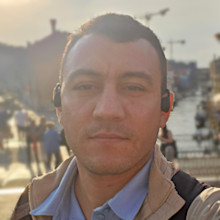
DECODE – Sacred Words, Secular Policies: Cross-Cultural Analysis of Metaphor and Discursive Strategies of Gender Representation in Arabic-Italian Discourses
DECODE investigates how Arabic- and Italian-language public and institutional discourses, especially those drawing on Islamic and Catholic references, use metaphor and other discursive strategies to frame gender and shape (or clash with) gender-equality policies. Pairing parallel institutional voices (e.g. Al-Azhar and the Vatican) and shared value vocabularies (dignity, honour, protection), the project fills a cross-cultural research gap at the intersection of language, religion and gender. Hosted by the Department of Humanities of Ca’ Foscari University of Venice, under the supervision of Prof. Davide Mastrantonio, and with an outgoing phase at the University of Toronto under the supervision of Prof. Amira Mittermaier, DECODE brings together linguistics, gender studies and religious studies to offer new insights into how religiously inflected language can both support and resist gender-equality agendas, and to inform more culturally sensitive policy communication.
Elena Emma Sottilotta
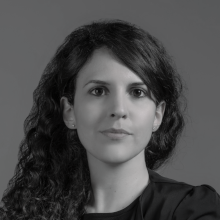
WAVES – Women’s Agency in Visionary Eco-Aquatic Storytelling: A Transnational Study of British and Italian Fairy Tales, 1840-1910
WAVES is an interdisciplinary research project that investigates women and water’s entanglements in the nineteenth-century British and Italian fairy-tale traditions. Situated at the crossroads of comparative literary studies, environmental humanities, gender studies and cultural history, WAVES reframes fairy tales as visionary responses to socio-historical pressures, examining how water mediates ecological anxieties and shifting gender roles in the cultural contexts under scrutiny. By exploring the flourishing of fairy-tale narratives and the birth of ecological thinking in the nineteenth century, WAVES repositions fairy tales as key expressions of environmental consciousness, contributing to the historicisation of eco-gendered imaginaries within a transnational framework. Elena Emma Sottilotta will develop her research in the Department of Linguistics and Comparative Cultural Studies at Ca’ Foscari, under the supervision of Prof. Laura Tosi. The project will also include a secondment at Dartmouth College in the United States, with Prof. Nancy Canepa.
Timothy Tiggeloven
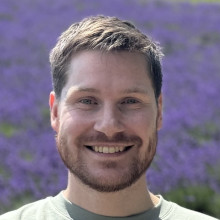
WARN2RESIL - Towards Resilient Communities: Understanding triggers of Multi-Hazard Early Warning Systems with Comprehensive Risk Metrics
Natural hazards often occur simultaneously or trigger one another, such as droughts leading to wildfires or earthquakes causing landslides. Despite the interconnected nature of these hazards, policy and research traditionally focus on single hazards in isolation, overlooking the cascading effects of multi-hazard scenarios. Recognizing this gap, WARN2RESIL aims to develop a comprehensive framework to address and scale early warning systems (EWS) for multi-hazard events. It also aims to create robust risk metrics to inform policymakers, thereby enhancing risk mitigation strategies. The state-of-the-art approach integrates AI with traditional monitoring systems, providing a holistic and adaptive framework. AI-driven models analyze vast datasets to offer precise predictive insights, allowing for better preparedness and response strategies. This research supports global policy initiatives like the 2030 Agenda for Sustainable Development and the Paris Agreement on Climate Change, promoting integrated approaches to address significant societal challenges and enhance community resilience. Timothy Tiggeloven will carry out his research at the Department of Environmental Sciences, Informatics and Statistics, under the supervision of Prof. Andrea Critto.
Last update: 03/04/2026