
“Am I Building Their Future or Losing Them?”: 'Marie Curie' Fellow Syed Imran Haider Explores the Hidden Emotional World of Migrant Fathers



What does it mean to be a father when your parenting is confined to a smartphone screen? For thousands of migrant men in Italy, the end of a long work shift marks the beginning of a second, equally challenging role: navigating parenthood from the other side of the world.
While public discourse often reduces migration to economic data, labour statistics, and remittance flows, the deep emotional realities of the men behind these numbers frequently remain invisible.
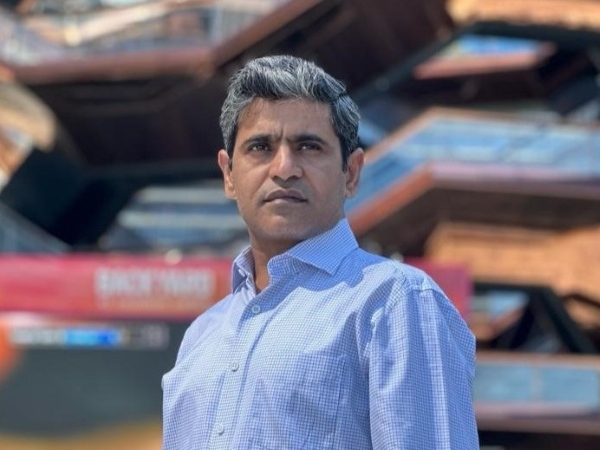
Exploring this complex landscape is the goal of Marie Skłodowska-Curie Fellow Syed Imran Haider: hosted by the Department of Philosophy and Cultural Heritage under the supervision of Professor Francesco Della Puppa, his research project "TFNMPC - Transnational Fatherhood, Negotiating Masculinity and Parental Care in the Digital Communication Era" delves into the lived experiences of Pakistani migrant men in Italy.
Using an intersectional perspective, the study investigates how these fathers navigate the delicate balance between family life, employment, and societal expectations across borders. It also explores how modern digital communication serves as a double-edged sword – offering a vital connection while creating new anxieties around parenting from a distance. Furthermore, the project sheds light on the unexpected hurdles that surface when families eventually reunite, and on the cultural and institutional challenges these fathers face as they try to rebuild their roles in a new country.
Dr. Haider, could you paint a picture of a typical day for one of the fathers in your study? How is it like to parent a child who is thousands of kilometres away?
A typical day begins before sunrise. Most fathers work 8- to 12-hour shifts in physically demanding blue-collar sectors (factories, warehouses, kitchens, or delivery). They live in communal housing, sharing apartments with 4 to 8 other men to minimise expenses.
Their parenting begins after work via smartphones, primarily using WhatsApp. However, these interactions are often transactional and directive rather than emotionally intimate. As one father described: "They say I am too strict, too assertive. But what choice do I have? I am far away, I cannot see their daily lives. I must ask, I must inquire, to ensure they are on the right path."
The daily routine, for many, concludes with prayer (salat) and supplication (dua) as a vital coping mechanism. A father in Naples shared: "I pray that Allah keeps them safe. That's all I can do from here."
What is a hidden emotional hurdle these men face? What is something that people back home in Pakistan, or locals here in Italy, might completely misunderstand about their experience?
The primary hidden hurdle is the "emotional labour of transnational fatherhood"—managing internal loneliness and guilt while projecting financial strength.
Upon family reunification, a new crisis of paternal competence often emerges due to a "linguistic-institutional lag." Fathers have functional Italian for work but lack the specialised vocabulary required to navigate the school system. One father noted: "I earn the money that keeps them in this expensive school... But the teacher only speaks to my wife, and my son asks her to read the report card. They respect my money, but they don't respect my knowledge. I feel like I'm just a cash machine for the school."
Families back home often reduce the father to a financial provider, missing his emotional void. One participant mentioned: "Sometimes I ask myself, am I a provider or a father? Because I feel like I can't be both from here." Children also perceive his protective questioning as oppressive control.
Society frequently views these men strictly as anonymous economic labourers, mistaking their emotional stoicism for indifference. There is also a false assumption that digital contact seamlessly preserves intimacy. A father in Bergamo revealed: "Every morning, I wake up with a smile for the world, but deep inside, I carry a constant ache—I haven't hugged my daughter in over two years."
Do we have an estimate of how many Pakistani men are currently living here while their families remain abroad? How many fathers did you involve in your project?
As of January 1, 2023, there were 138,884 legally residing Pakistanis in Italy (the 9th largest non-EU community). Demographically, 71.8% are men, making them the second-largest male diaspora in the country. 43.1% are under 30, and 47% are aged 30-50. The vast majority migrate from the central Punjab districts of Gujrat (24%), Mandi Bahauddin (12.7%), and Gujranwala (8.7%).
The research programme involved multiple participant groups across 5 distinct studies:
Study 1 (Transnational Fatherhood): 30 migrant fathers in Bergamo and Naples, residing in Italy for a minimum of 5 years (average of 8–9 years).
Study 2 (Adolescent Perspectives): The same 30 fathers, paired with 29 of their adolescent children (16 sons, 13 daughters) who remained in Punjab, Pakistan.
Study 3 (WhatsApp Study): 71 Pakistani migrants surveyed via an online group ("Family Reunion & Cohesion") containing over 400 members.
Study 4 (Re-paternalisation): 14 reunified families (14 mothers, 14 fathers) in Naples, living together for 2–5 years with children who arrived aged 5–10.
Study 5 (Methodology): A longitudinal analysis documenting the researcher's relational immersion with the participants over time.
During your interviews, was there a specific story or moment shared by a father that really stuck with you?
Several key moments highlight the painful trade-offs of transnational parenting. A father in Bergamo recalled the emotional fragmentation of missing his child's early development: "I held my son for the first time when he was five months old during a visit to Pakistan. That memory is what keeps me going, but it also breaks me every night. I remember the weight of my daughter in my arms when I visited, now she must have grown so much. And I wasn't there to see it."
Another father expressed the visceral helplessness of being physically absent during a domestic emergency: "My youngest got hurt on the stairs, needed stitches. I saw the pictures later, but I wasn't there to hold him, to tell him it's okay. I felt like a useless father."
For reunified families, the barrier shifts to an institutional level, causing a sense of domestic marginalisation. Two separate fathers shared: “The hardest part is the homework. My son asks for help and I look at the page and it's all Italian, all new methods. I feel stupid, and he goes straight to his mother for the answer. I cannot even help my own boy with his studies.” "They [the school] see me and immediately ask for my wife. The teacher said, 'We need someone who can translate back to the family quickly.' They don't offer a translator for me, so they just use her due to her habit of using the internet and AI for children’s study. I feel invisible there, like I am just the driver or the wallet."
How are digital tools fundamentally changing fatherhood for migrants? What apps do they utilise most to stay in touch or for parental control?
Digital tools have introduced an ambivalent "digital co-presence." While platforms facilitate "digital kinning" (maintaining family bonds), they also fuel a "paradox of remote protection," turning the technology into a digital panopticon for moral policing due to fears over peer influence and daughters' modesty.
Discipline is enforced through intense questioning, moral pressure regarding the father's financial sacrifices, and strict surveillance of digital activities. This often causes adolescents to emotionally withdraw due to a perceived lack of trust. True emotional support is difficult to convey online because the communication remains highly transactional. One daughter observed: "When I have a problem, especially something personal, I can't talk to him. He's a man, and he's so far away. He wouldn't understand."
WhatsApp is the absolute dominant digital bridge, used for video/voice calls and media sharing. Diaspora networks also utilise dedicated WhatsApp groups as information hubs to collectively navigate legal, housing, and family reunification hurdles. Ultimately, technology acts as a magnifying glass for suspicion rather than a smooth bridge for intimacy. A father reflected on his isolation during holidays: "On Eid, I wear new clothes, go for prayer, but I don't go to friends' gatherings anymore. It hurts too much."
Traditionally, there is a cultural expectation that men be the stoic "provider." How does parenting from afar challenge this?
Traditional Pakistani fatherhood relies on economic provision, direct physical authority, family protection, and emotional stoicism. Separation shatters this structure. While fathers successfully send remittances, they lose their daily supervisory role. One father lamented: "I am working twelve hours a day in a warehouse, but at what cost? My son calls me 'uncle' sometimes by mistake."
The definition of a "good dad" is undergoing a silent, tension-filled shift from purely economic provision to emotional provision. However, our research shows that for many families, this process results in “stalled re-paternalisation.” When fathers finally bring their families to Italy, structural, linguistic, and cultural barriers in Western institutions keep them marginalised, preventing them from reclaiming their traditional head-of-household authority. Paternal strength is thus painfully redefined as the capacity to quietly endure long-term emotional isolation and minimised domestic influence.
Does their parenting look different depending on whether they are raising a boy or a girl?
Parenting remains rigidly gendered, and the anxieties of long-distance parenting frequently cause fathers to double down on traditional, restrictive expectations rather than liberalising them.
When raising a son, the primary focus is on academic performance, behavioural compliance, and avoiding "bad company" (drugs or delinquency). Sons are frequently subjected to "premature adultification," pressured to act as the head of the household in Pakistan. A 16-year-old son stated: “I feel this pressure to be 'the man of the house' now, even though I'm still in school. It's stressful, and sometimes I just want to escape.”
With daughters, The focus is intensely honour-centric (izzat), revolving around family reputation, strict social media surveillance, and future marriage trajectories. One father shared: "The biggest fear is that my daughter might get involved with someone unsuitable... I try to control their phone use... but these things happen so fast." Daughters report feeling deeply suffocated by this remote monitoring. One countered: "It's like he thinks I'll just forget everything we've been taught. It makes me feel like he doesn't know me at all."
This structural pressure is further reinforced locally by extended family members (grandparents and uncles) who monitor the children on the ground, creating a double layer of surveillance that restricts daughters far more than it does their peers.
How do their interactions with Italian locals shape their experience of fatherhood?
Direct social interactions with Italian locals are highly limited due to language barriers, demanding blue-collar work schedules, and the tendency to live within dense diaspora enclaves. However, fathers experience indirect influence through observation, which often induces guilt. One father admitted: "When I see other men with their children in the park, I turn my face away. The guilt is too heavy."
The biggest cultural and institutional collision occurs within the Italian school system. Reunified fathers expect a school structure based on their memories of Pakistan (rote learning, rigid discipline, absolute parental authority). Instead, they face Italian pedagogical norms that favour interactive parent-teacher dialogue and active student participation. A mother illustrated this friction: "He went to the first parent meeting, but he didn't know the system... The teacher got confused. I told him afterwards, 'You stand outside, I will talk next time.' He doesn't know the rules here."
While your focus is specific, the reality of men moving for work to support families is a global story. How does understanding the emotional lives of these migrant fathers help us build a better, more inclusive future?
Understanding these emotional realities allows us to move past treating migrant men purely as economic tools or remittance units, recognising them instead as active parental figures with distinct psychological vulnerabilities.
A truly inclusive framework requires structural shifts across several policy and community areas:
Policy Reforms: Streamlining family reunification protocols to mitigate the severe psychological trauma caused by multi-year family separations.
Institutional School Support: Creating targeted language and cultural mediation programmes within schools to resolve the "linguistic-institutional lag" that alienates reunified fathers.
Targeted Mental Health Care: Establishing specialised counselling frameworks to help migrant men process chronic isolation, identity fragmentation, and paternal guilt.
Youth Interventions: Introducing mental health and social support systems in origin countries to assist left-behind adolescents dealing with premature adultification or intense honour-based surveillance.
Ultimately, addressing these dynamics directly confronts the central human dilemma of global labour migration, as summarised by one of the participants: "I left to build their future, but what if I'm losing them in the process?"