

US Midterms: Democratic victory and its impact on the global balance of power



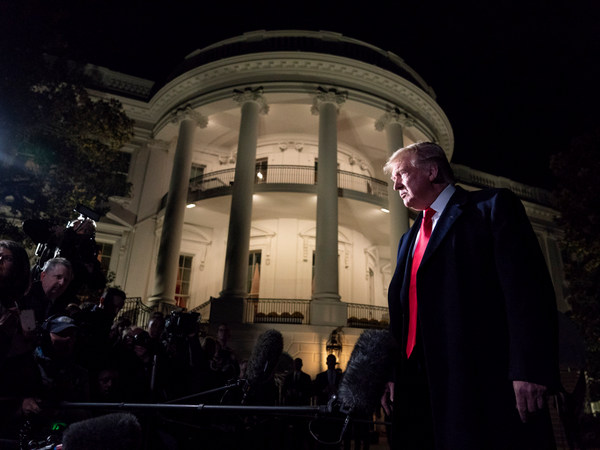
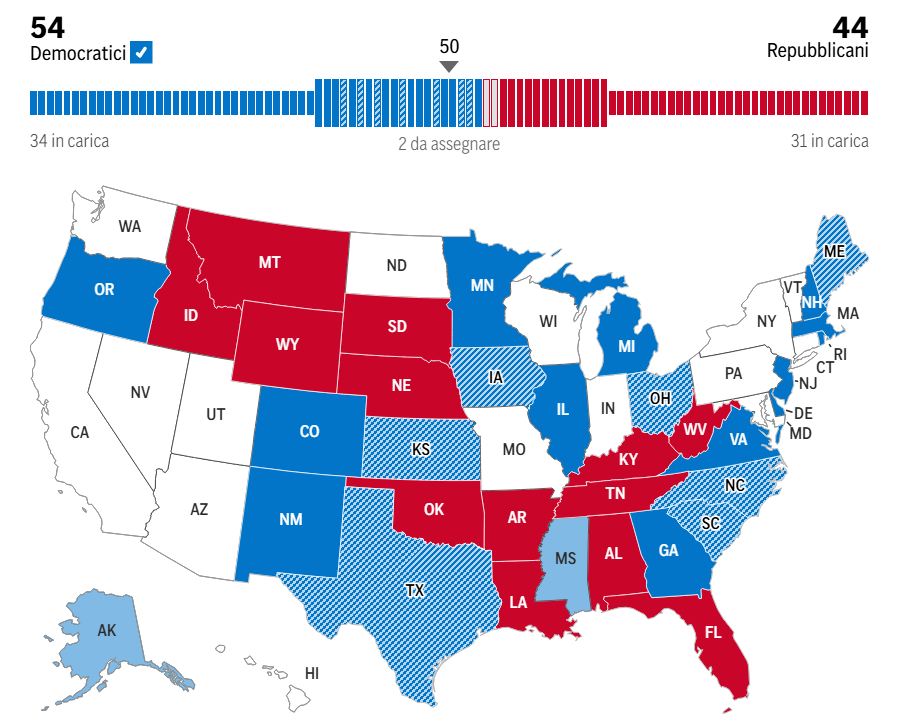
A decisive, widespread victory that has overturned traditionally conservative strongholds such as Texas and Kansas: the US midterm elections have handed the Democrats majorities in both the House of Representatives and the Senate. The Republicans' setback was so clear that even Donald Trump was forced to acknowledge his opponents' victory. The end of his political ‘honeymoon’ with voters and growing frustration over unfulfilled promises also contributed to the result. The new balance of power in Washington is shifting the focus from lawmaking to congressional oversight, giving Congress the power to launch investigations and block key appointments. To understand the significance of this political turning point, both within the United States and beyond its borders, we spoke to Professor Duccio Basosi, who teaches History of International Relations and US Foreign Policy, and Professor Luiza Bialasiewicz, who teaches Political and Economic Geography and Geopolitics.
Professor Basosi, following the outcome of these midterm elections, the main threat to the White House has shifted from legislative gridlock to the very real prospect of losing control over congressional investigations and Senate confirmations. From a historical and institutional perspective, how has the system of checks and balances – which distributes power among the executive, legislative and judicial branches to safeguard democratic equilibrium – evolved to the point where Congress has shifted from being primarily a legislative body to an instrument of investigation and accountability against the executive?
This question touches on a fundamental issue concerning the functioning of the contemporary American institutional system. I would describe it as a gradual shift in how checks and balances are applied, rather than Congress abandoning its legislative role.
The figures show that the number of individual laws passed has declined compared with the middle decades of the twentieth century. This is partly due to extreme political polarisation, which has made it harder to pass far-reaching reforms or to overcome the Senate filibuster on ordinary legislation. But it is also partly a matter of perception: Congress now concentrates much of its legislative activity in large, consolidated spending packages, known as omnibus bills, which are negotiated as single packages shortly before funding deadlines to prevent a government shutdown. This is certainly far from ideal in terms of democratic quality and transparency. Nevertheless, Congress has clearly not stopped legislating. At the same time, the political use of congressional investigations is nothing new. From the anti-communist witch-hunts of the 1950s to Watergate in the 1970s and the Iran-Contra affair in the 1980s, investigations have long been an important weapon in Congress's arsenal. What is different today is the systematic way this tool is used. In a highly polarised political environment, particularly under divided government, congressional investigations have become a routine means for the majority party in Congress to weaken an administration controlled by the opposing party.
The impact of congressional oversight also depends on which chamber is controlled by the opposition. While the House of Representatives holds significant investigative powers and controls public spending, the Constitution gives the Senate the exclusive power of advice and consent over judicial appointments, government officials and treaties. When the White House lacks a Senate majority, the inability to secure the votes needed for confirmation severely limits the President's ability to appoint federal judges and members of the administration.
Constitutional checks and balances have therefore not been fundamentally transformed but have adapted to political polarisation. When legislative compromise becomes more difficult and hostility between the two parties intensifies, congressional power generally shifts away from lawmaking towards aggressive oversight and the systematic use of its powers to constrain the executive.
Midterm elections almost always result in losses for the party holding the presidency, a pattern confirmed by this election. What have been the historical consequences of such setbacks for Washington's global influence and for an administration's ability to shape international affairs?
The midterm backlash against President Donald Trump could have several consequences for US foreign policy. At the very least, allies and adversaries alike now know that, over the next two years, the White House’s commitments and declarations will have to contend with a Democrat-controlled Congress, which will be able to influence, delay or even undermine executive action. This inevitably creates greater uncertainty.
Historical experience also shows that when the President's opponents control the House of Representatives, financial leverage – the power of the purse – becomes a direct means of influencing international policy. We saw this, for example, between 2023 and 2024, when funding for military assistance to Ukraine was held up for months, with Republicans delaying the aid that Joe Biden had promised.
When the Senate is controlled by the party opposing the President, however, the scope for ratifying major international treaties becomes more limited. We need not go as far back as the rejection of the Treaty of Versailles in 1919: the failure to ratify the 1997 Kyoto Protocol is another example. Presidents are consequently pushed towards more fragile executive agreements that can be reversed, as happened with the Iran nuclear deal and the Paris climate agreement, both concluded under Obama and swiftly abandoned by Trump.
Defeat in the midterm elections will not, however, paralyse the Trump administration's foreign policy. As Commander-in-Chief, the President retains operational command of the armed forces and control over diplomatic initiatives. An opposition-controlled Congress can pass symbolic resolutions or attempt to block operations that are clearly unpopular, such as the war launched against Iran alongside Israel.
Trump could, however, respond by exercising his presidential veto, and the Democrats would not, at least on paper, have the two-thirds majority required in both chambers to override it. Their measures would therefore serve primarily as instruments of political pressure in the eyes of public opinion, rather than as immediate legal constraints on the administration's foreign policy. The Democrats' real leverage lies in the budgetary power to say no: they could refuse to fund the policies that Trump wants to pursue.
It must also be said that the Democrats have shown little courage in opposing the President's foreign policy over the past two years. On the war against Iran, for example, we have heard procedural objections and complaints about the costs of failure, rather than any principled criticism of the administration's violent and unilateral actions.
Professor Bialasiewicz, the verdict delivered by American voters inevitably has implications for the international balance of power. From the perspective of geoeconomics and security, what scenarios now lie ahead for the European Union in light of the new balance of power in Washington?
Most commentators have been cautious about celebrating the 'blue wave' as though it might also bring about a radical change in relations between the United States and the European Union. Indeed, many have pointed out that obstacles to implementing Trump's domestic agenda could make the international arena the only sphere in which the President can still act with almost unlimited freedom. As Professor Basosi notes in his analysis, despite their new majorities in the House and Senate, the Democrats still have very few effective means of curbing presidential initiatives.
The EU will therefore have to continue working with this administration as it is.
On the question of economic security – or, more precisely, the weaponisation of economic and financial instruments – we should not expect any significant change.
As several exit polls confirmed, two-thirds of voters believed that Trump's tariffs had damaged the US economy. The election therefore also represented a rejection of the administration's signature economic policy, as a headline in The Washington Post suggested. Tariffs played a decisive role in elections in two key states, Michigan and Maine, as well as in Kansas, Iowa and Nebraska, where farmers turned against the Republican Party after the collapse of their export markets caused by Trump's trade wars. This, however, does not mean that tariffs are about to disappear.
The most likely scenario is that tariffs and other non-tariff barriers will remain in place but become more targeted and selective, with the aim of protecting strategic industries. In the weeks leading up to the midterms and immediately afterwards, several commentators, including former trade negotiators from the Obama and Biden administrations, made it clear that an assertive trade policy prioritising US interests is here to stay. This applies to friends and competitors alike, assuming that distinction still means anything.
Indeed, in several House and Senate races, including those in Ohio, Democratic candidates emphasised to voters that they took their demands for economic protection seriously.
This is something we need to bear in mind: pursuing economic security through every available instrument – from tariffs and non-tariff barriers to chokepoints, the critical issues over which the United States can exercise control thanks to its dominant position in the global financial system – has become a bipartisan objective shared by four successive administrations, beginning with Obama's. This approach is here to stay, and the EU and European businesses, including those in the Veneto region, need to recognise this reality and adapt their strategies accordingly.
When an influential publication such as Foreign Affairs, the journal of the Council on Foreign Relations and certainly no supporter of Trump, puts on the cover an article entitled 'The Case for Economic Espionage: America Should Spy on Foreign Companies to Help Its Own', in which even allies are treated as legitimate targets, the message is clear: we are living in a different world. The real question is how European and national leaders can respond without becoming trapped in an economic war of mutual retaliation.
As Edward Fishman warned a few months ago in the same journal, in an article titled 'How to Fight an Economic War', the only reasonable response is for the EU to fully acknowledge that the United States, while remaining a crucial trading partner – particularly for an export-driven economy such as Italy's – must be one partner among many.
How do the election results reflect economic concerns, which may differ considerably between urban and rural communities?
We can say with certainty that economic issues were decisive in these elections, though they took different forms across local contexts. However, if there is one economic factor that unites the 'blue wave', it is the rejection of the economic vision Trump has promoted over the past two years: a vision that determines who matters and where. It is no coincidence that the slogan 'America is Back' featured in several election campaigns, in contrast to Trump's 'America First', which clearly meant putting a very narrow group of economic interests and actors first. The battle over data centres, which completely overturned election results in traditionally Republican strongholds such as Texas, is a perfect example. Here, the Democrats won every race, despite Elon Musk pouring hundreds of millions of dollars into election campaigns.
The fundamental question was: who has a place in America's economic future? Only the tech oligarchs? I was particularly struck by the sight of previously staunch Republican voters in House and Senate races across the West and Midwest, in both rural and suburban areas, turning against this administration's economic policies because they had suffered as a result. These included livestock and crop farmers, as well as small business owners. I believe this is an essential point to remember. It is true that these elections brought victory to several candidates who are far more 'radical' than the Democratic Party mainstream and who come from an extraordinary variety of social backgrounds and personal experiences. In most cases, however, these candidates won by promising a return to a 'better America', rather than a revolution: an America where everyone has the chance to improve their circumstances and where opportunities and resources are not reserved for a privileged few. The prominence of the debate over data centre construction is particularly revealing.
Gina Hinojosa, the newly elected Democratic Governor of Texas, made an immediate moratorium on their construction one of her main campaign promises. But data centres were also a crucial issue in Senate races in Michigan and Ohio, as well as House races in New York and Pennsylvania, despite the tens of millions of dollars spent trying to win public support for them.
It would, however, be a mistake to interpret this opposition through a European lens, viewing it primarily as an environmental or regulatory issue. Rather, it reflects widespread opposition to state-backed monopoly capitalism. The fact that data centres create very few jobs, bring about profound changes to local areas, and divert scarce resources away from agriculture, livestock farming, and other economic activities has made them a central concern for a broad spectrum of voters, including conservatives. Gina Hinojosa's campaign promises perfectly capture these concerns: restoring local authorities' say in whether and how data centres should be built; requiring companies to demonstrate that their projects will not increase electricity or water costs for local residents, including infrastructure-related costs; and, above all, ending the substantial subsidies that have enabled major technology companies, the so-called hyperscalers, to build data centres.
Beyond the numbers and the seats won in Washington, who is the real winner of these midterm elections? Is it a new generation of governors emerging in key states, or can we speak of a more profound victory for democratic resilience and civic participation?
Rather than identifying the 'real winner', Professor Basosi replies, I think it is easier to identify the 'real loser' of these midterm elections: undoubtedly the President. The message from the ballot box was not one of enthusiastic support for the Democratic Party, but a clear rejection of the White House. Voters rejected the military adventurism of the war against Iran, economic policies perceived as favouring the tech oligarchy and Trump's personal enrichment, the aggressive actions of paramilitary-style agencies such as the notorious ICE, and the administration's constant attempts to stretch the conventions and constitutional framework of the United States beyond their limits.
At the same time, describing the Democratic result as a 'triumph' risks creating a misleading impression. Although the party has secured decisive majorities in Congress, opinion polls suggest that overall public approval of the Democrats remains very low, indicating that the vote was driven primarily by a desire to punish the incumbent administration. Moreover, the Democratic Party remains deeply divided internally between a centrist establishment and an emerging left wing calling for radical change, particularly in economic and social policy.
Over the next two years, the Democrats will need to define their political identity ahead of the presidential election. The biggest mistake they could make would be to confuse an electoral victory driven by rejection of the President with a blank cheque from voters, and to rest on their laurels rather than build a strong, united and credible alternative programme for government.