
Serbia, student list victory: ‘Restoring hope to those who thought nothing could ever change’



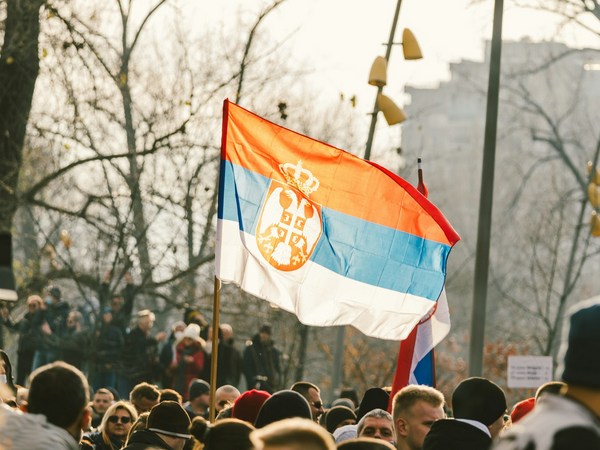
From university occupations to the ballot box: Serbia’s student movement wins a parliamentary majority with 53% of the vote, putting the fight against corruption back at the heart of the political agenda. Professor Marija Bradaš, who has just returned from Serbia, discusses the origins of the protests, the power of civic participation and the challenges facing the movement.
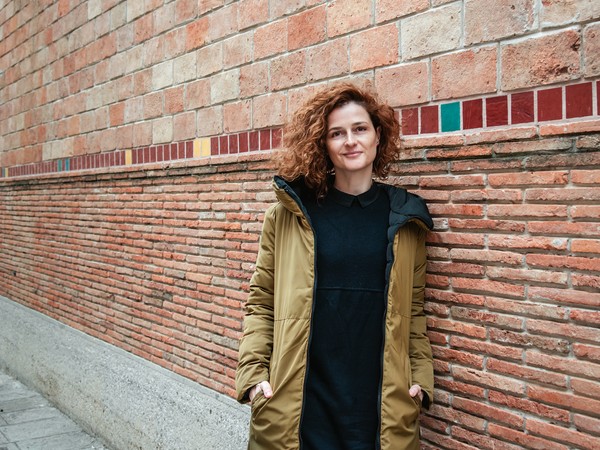
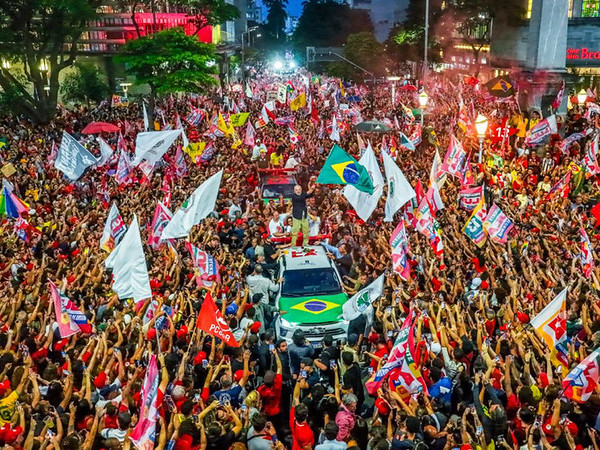
In the week leading up to the elections, the atmosphere in Serbia was one of tension and uncertainty, with fears of possible clashes but also hopes for change. This is how Marija Bradaš, Associate Professor of Serbian and Croatian Language and Literature at the Department of Linguistics and Comparative Cultural Studies at Ca’ Foscari University of Venice, describes the mood in the country. Initially sceptical about the student movement’s chances of victory, she began to change her mind during the major demonstration held in Slavija Square in Belgrade on 22 October: ‘The energy I experienced there helped to ease my scepticism.’
Three days later, on 25 October, ‘Studentska lista’, the electoral list representing the student movement that emerged in 2024, secured a decisive victory in the early parliamentary elections. According to preliminary results from Serbia’s Electoral Commission, it won 53.01% of the votes counted, securing 141 of the 250 parliamentary seats. The result marks a turning point in the country’s recent political history, bringing into Parliament a movement that began in universities, grew through street demonstrations and succeeded in mobilising broad sections of society.
‘It is undoubtedly a turning point and an extraordinary achievement for a movement that did not even exist two years ago,’ the professor observes. The student list dealt a significant blow to the political forces associated with Aleksandar Vučić and pushed the Socialist Party of Serbia, founded by Slobodan Milošević, out of Parliament. For the first time since the 1990s, the party will have no representatives in the National Assembly.
For Marija Bradaš, however, the most important achievement goes beyond the numbers. ‘I believe the movement’s greatest success lies in its ability to help transform the social climate, convincing citizens that their vote matters and that participation can bring about real change.’ In a society marked by corruption and a widespread belief that nothing can change, she adds, ‘restoring hope to people who had resigned themselves to the status quo is, in my view, a heroic achievement’.
From the Novi Sad tragedy to a nationwide movement
To understand the significance of this victory, we need to go back to November 2024, when the collapse of a canopy at Novi Sad railway station killed 16 people. The tragedy sparked protests that, within a few months, developed into a nationwide student movement demanding transparency and accountability.
The initial demands were specific: to make public the documentation relating to the station’s renovation; to identify and prosecute those responsible for attacks on demonstrators; to drop the charges against students arrested or detained during the protests; and to increase funding for public education by 20%.
‘As the protests evolved, the demands broadened and civil society became increasingly involved, but the fight against corruption remained the movement’s guiding principle and main objective,’ the professor explains.
The movement also stood out for the way it organised itself. Decisions were discussed and taken collectively in university assemblies, without a single leader or a rigid hierarchical structure. This approach soon spread beyond university campuses, giving rise to ‘zborovi’, citizens’ assemblies where people come together to discuss issues affecting their communities. The same assembly-based approach also guided the selection of the electoral list: candidates were nominated and voted on through assemblies, in keeping with a grassroots model of participation. The movement thus developed a form of participation that goes beyond demanding answers from institutions, seeking instead to put democratic practices into action. ‘Another important feature is precisely the absence of a single leader, both within the movement and on the electoral list, and the rejection of a top-down organisational model based on hierarchical relationships.’ The core of its activities consists mainly of university students aged between 18 and 25. The protests began particularly at Belgrade’s Faculty of Dramatic Arts before spreading to secondary schools and involving increasingly broad sections of the population.
How did the movement manage to reach beyond the university community? ‘The fight against corruption was a cause that many citizens could readily identify with. The quality of the organisation and the extraordinary creativity of its communication also played a significant role in securing such widespread public support.’
The power of ideas and the challenge of politics
Communication is one of the aspects that particularly impressed Bradaš, not least because of her own research interests. ‘I was especially struck by the ingenuity of the slogans and the creative use of popular culture in promotional videos.’
The presence of thousands of young people on the streets also took on a significance that went beyond the movement’s specific demands: ‘It was about reclaiming public space and the possibility of imagining a different future.’
The electoral victory now marks the beginning of a new phase. The transition from protest to institutional representation brings with it the need to turn demands into concrete political decisions. The composition of the electoral list also reflects an attempt to bring together different areas of expertise and perspectives. Most candidates are university academics and experts from civil society, alongside figures from the entertainment and sporting worlds, including the celebrated basketball player Dejan Bodiroga. According to figures cited by the professor, 146 of the 250 candidates hold a PhD.
‘This highlights the central role of knowledge within the movement, but also the attempt to develop a political platform capable of moving beyond traditional political divisions.’ Different perspectives are united by a number of shared priorities: fighting corruption, restoring trust in institutions and demanding greater social justice. What remains to be seen, however, is how these shared priorities will translate into a coherent political programme. The movement’s various groups do not necessarily share the same vision for the country’s future, and the professor notes that it will be interesting to see how internal differences are addressed, particularly on foreign policy. There is also an organisational challenge: how will a movement that did not emerge as a traditional political party, and whose defining features include collective decision-making and the absence of a single leader, function within political institutions? This model has been central to the movement’s strength and ability to mobilise people, but it will now have to adapt to the demands, responsibilities and dynamics of parliamentary representation.
The victory, then, does not mark the end of the mobilisation. Instead, it opens up the movement’s most difficult challenge yet: turning electoral support into institutional change. Expectations are high, as are the responsibilities facing a political force that has made participation and transparency its guiding principles.
The significance of a collective choice
Bradaš’s impressions from her recent stay in Serbia offer further insight into the significance of the vote. During the final week before the elections, she recalls, there was a sense of tension and uncertainty, but also growing confidence that victory was possible.
‘What particularly struck me was the determination with which people sought to exercise their civic right and duty to vote, despite the authorities’ attempts to obstruct them in every possible way.’
Among the episodes she recalls is the story of a Belgrade resident who discovered that his polling station had been moved to Banja Luka, in Bosnia and Herzegovina, and decided to travel abroad in order to cast his vote. Another involved students from a Belgrade secondary school who were away on their final-year school trip during election week and arranged to vote at the Serbian Embassy in Rome.
These stories illustrate the practical meaning of democratic participation: not simply a principle, but a choice that requires commitment and determination.
For Marija Bradaš, this is where one of the most important aspects of the movement becomes clear. The victory of ‘Studentska lista’ represents more than the success of a new political force. It signals a society that has rediscovered its ability to act collectively and, after months of protests, has chosen to bring that participation into political institutions.