

Research
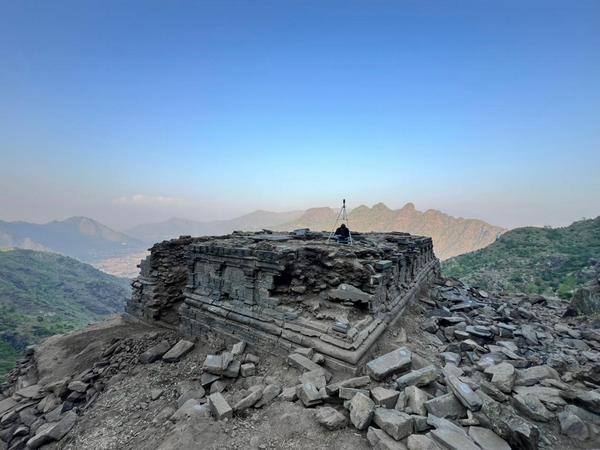
On 25 October, the city of Saidu Sharif in Swat, Pakistan, hosted the celebration of the 70th anniversary of the Italian Archaeological Mission in Pakistan — today jointly managed by ISMEO (the International Association for Mediterranean and Oriental Studies) and Ca’ Foscari University of Venice.
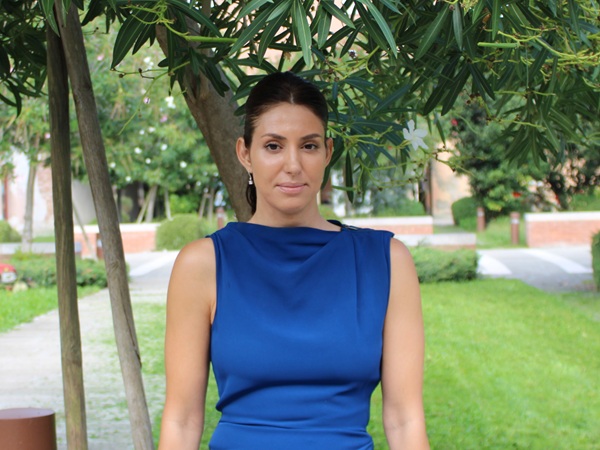
Coming from the Federal Reserve Bank of New York, Katerina Petrova has arrived at Ca' Foscari University of Venice, where she has taken up her position as an Associate Professor of Econometrics in the Department of Economics. Her arrival and her research are supported by a prestigious ERC (European Research Council) Starting Grant, a highly competitive European funding award that recognizes the scientific excellence of emerging researchers.
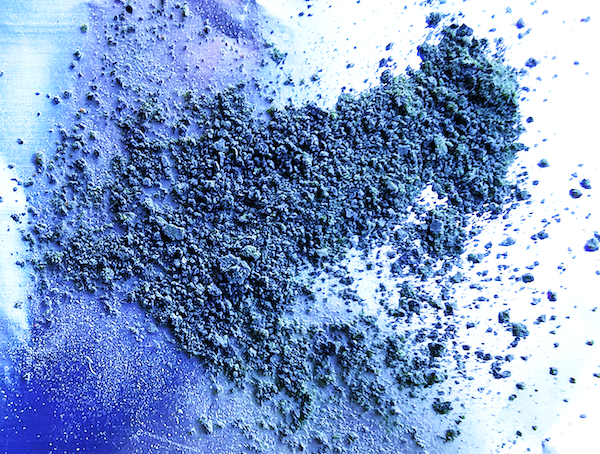
The Oldest Traces of Blue Indigo 34,000-year-old Grinding Tools
Study coordinated by Ca’ Foscari opens new perspectives on the complex behaviour of prehistoric human populations. It’s the first time that the indigotin molecule has been found on such ancient artefacts, demonstrating the processing of Isatis tinctoria L., a non-edible plant: hypotheses are open on its use as a dye or medicine.

Cooling Poverty: the Hidden Cost of Air Conditioning in a Warming World
As global temperatures continue to rise, a new study published in the Journal of Environmental Economics and Management reveals that the increasing adoption of air conditioning as an adaptation strategy will significantly drive up residential electricity consumption worldwide, creating both economic and equity challenges, as well as environmental concerns.

Alternative materials to rare earths? RARA Factory spinoff makes it possible
The new RARA Factory laboratory has officially opened. It is Italy's first company solely focused on researching, developing, and prototyping sustainable materials to substitute rare earths and other critical substances. The launch event took place at the VEnice GAteway for Science and Technology, where the facility is located. Attendees included regional and municipal officials, universities, companies, investors, and strategic partners.

From brewery to pharmaceuticals: yeast transforms into a “factory” for compounds
A team of scientists from Ca’ Foscari University of Venice, in collaboration with researchers from Japan, China, Switzerland and Italy, has developed an innovative method to quickly produce and analyse a wide range of macrocyclic peptides — molecules increasingly used in modern medicine. The research, published in Nature Communications, utilises common brewer’s yeast, transforming billions of these microorganisms into tiny fluorescent factories, each capable of producing a unique peptide with potential therapeutic applications.

Bridging Time and Technology: the DIGITALIA Project Brings Cultural Heritage into the Future
DIGITALIA is a cutting-edge European project coordinated by Istanbul University and supported by Ca’ Foscari University of Venice, which proposes innovative digital solutions for the management of cultural heritage that ensure sustainability and responsiveness to contemporary challenges.

On 14 May, Donald Trump announced the potential lifting of economic sanctions against Syria, followed by a similar decision from the European Union. Immediately afterwards, he met Ahmed al-Sharaa (al-Julani), the post-Assad Syrian leader. But is the civil war in Syria truly over? We discussed this with Antea Enna, a scholar of conflict dynamics in the Levant and a Marie Curie fellow.

First machine learning model developed to calculate the volume of all glaciers on Earth
An international study led by Ca’ Foscari researchers aims to become a benchmark for future glacier melt projections.