

Adaptation and Adaptability in Phraseography
International conference 18-20/11/2026, in collaboration with EUROPHRAS
Conference
Within the framework of the 2023-2027 Project of Excellence, the Department of Linguistics and Comparative Cultural Studies of Ca' Foscari University of Venice, in collaboration with the EUROPHRAS Association, is organising the international conference “Adaptation and Adaptability in Phraseography”.
The conference primarily seeks to advance the study of the diverse manifestations of adaptation within phraseography.
By framing adaptation as ‘a form of repetition without replication’ (Hutcheon & O’Flinn 2013: 8), this phenomenon emerges as inherent to both language and communication. Consequently, the study of adaptation necessarily encompasses all forms of linguistic variation, as well as the shifts observed when communication is tailored to the medium, the recipient, and the communicative purpose.
Understood in these terms, adaptation is prominently visible within phraseography. This field of study connects lexicography and phraseology and pursues two main goals: the first, primarily theoretical, involves examining the presence of phraseological units in dictionaries. The second, more applied, concerns the development of lexicographical projects and tools dedicated to the lemmatisation of phraseology (Hallsteinsdóttir 2006, Giacoma 2012).
Considering these points, this conference aims, on the one hand, to explore the diverse manifestations of adaptation in existing phraseographical works. On the other hand, it seeks to contribute to the development of innovative studies and new research projects focused on adapting dictionaries to the languages, cultures, and users of the 21st century.
Call
Call for papers
Proposals for presentations should address one or more of the following thematic areas, focusing on the study of adaptation in relation to phraseography:
- Processes of change and innovation: investigating phraseological evolution in dictionaries from diatopic, diachronic, diaphasic, or diastratic perspectives.
- Linguistic variation: analysing orthographical, morphosyntactic, semantic, and lexical variations within specific phraseological units, as observed across successive editions of one or more lexicographical works.
- Lexicographical practice and user needs: examining strategies for the lemmatisation of phraseology and the inclusion of data tailored to the communicative needs of native and non-native speakers.
- Design and development: conceptualising and creating new phraseological dictionaries or resources that incorporate phraseology.
- Pedagogical applications: exploring the utility and implementation of phraseological dictionaries in foreign language teaching (FLT).
The official languages of the conference will be English, Italian, and Spanish. Presentations may also be delivered in French and German.
Submission
The deadline for the submission of abstracts (max. 500 words) for a presentation at the conference is 30th April 2026.
The presentation formats are:
- oral presentation (20 minutes)
- workshop (60 minutes)
Submissions should be made by e-mail to europhras2026@unive.it, stating the format, language and thematic area of the presentation.
Acceptance or rejection will be communicated by 30th May 2026.
Registration and fees
Registration and payment for the conference open on 1st July and close on 30th September 2026:
- early bird fee (1st July-15th August 2026): €130.00
- early bird fee for EUROPHRAS members (1st July-15th August 2026): €100.00
- full rate fee for all participants (15th August-30th September 2026): €150.00
The registration fee can only be paid online at the time of registration, thus no cash payments will be accepted at the conference.
Programme

Keynote speakers
- Carmen Mellado Blanco (University of Santiago de Compostela)
- Luisa Giacoma [ITA] (University of Valle d’Aosta) and Fabio Mollica (University of Milan)
- Erica Autelli (University of Innsbruck)
Venue
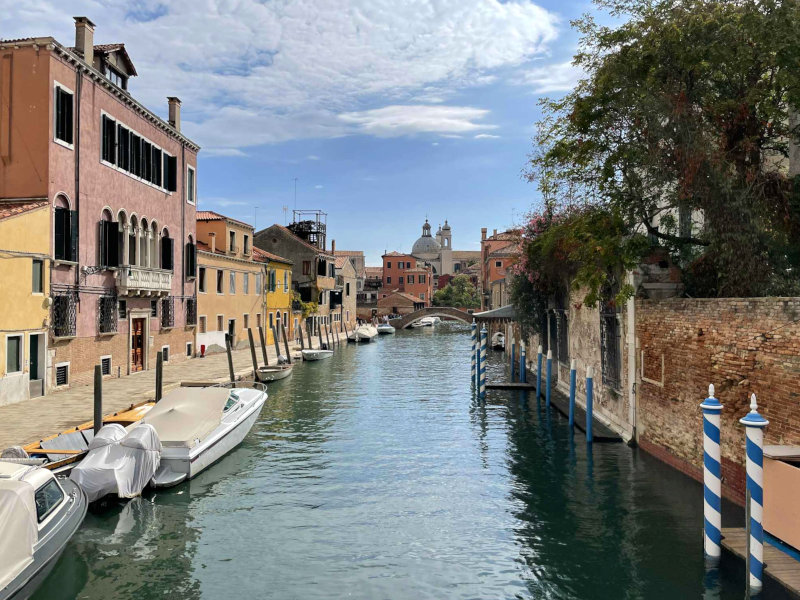
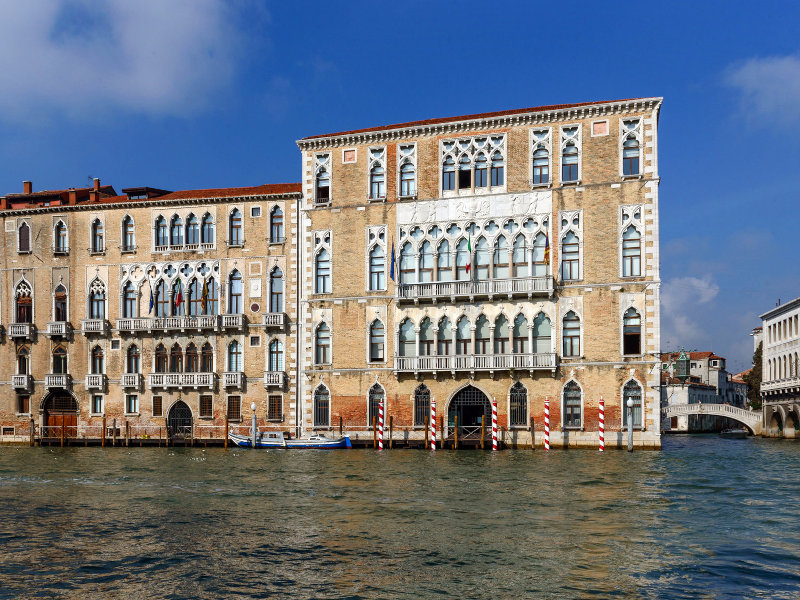
The conference will be held at Ca’ Foscari (Dorsoduro 3246, 30123 Venice), the main seat of Ca’ Foscari University of Venice in the historical center of the island, and can be easily accessed on foot or by waterbus from Piazzale Roma and the railway station, the main transportation hubs in Venice.
You can search for accommodation directly in Venice or in the nearby city of Mestre, which has excellent bus, tram, and train connections.
There are two airports available to reach Venice: Marco Polo Airport, which offers various transport options to the city, and Treviso Canova Airport, which offers bus lines to get to the city of Venice.
Team
Partners
EUROPHRAS - European Society of Phraseology is an international and interdisciplinary academic association of researchers working on formulaic language and multiword units. The society was founded in Germany in 1999 and has members from a wide range of different research disciplines from about 50 countries around the world.






Ca’ Foscari University of Venice (Chair)
Florencio del Barrio de la Rosa
Ca’ Foscari University of Venice
Ca’ Foscari University of Venice

Ca’ Foscari University of Venice

Ca’ Foscari University of Venice

Ca’ Foscari University of Venice
- Mariangela Albano, University of Cagliari
- Erica Autelli, University of Innsbruck
- Andreas Buerki, Cardiff University
- Marios Chrissou, National and Kapodistrian University of Athens
- Jean-Pierre Colson, UCLouvain
- Gloria Corpas Pastor, University of Malaga
- Dmitrij Dobrovol’skij, Stockholm University, Russian Academy of Sciences
- Natalia Filatkina, University of Hamburg
- Luisa Giacoma, University of the Aosta Valley
- Erla Hallsteinsdóttir, Aarhus University
- Riccardo Imperiale, University of Innsbruck
- Ai Inoue, Toyo University
- Salud María Jarilla Bravo, Complutense University of Madrid
- Tamás Kispál, Georg August University of Göttingen
- Christine Konecny, University of Innsbruck
- Outi Lauhakangas, University of Helsinki
- Chen Lian, University of Orléans
- Ivana Lončar, University of Zadar
- Miguel Lucena Romero, University of Granada
- Concepción Maldonado González, Complutense University of Madrid
- Carmen Mellado Blanco, University of Santiago de Compostela
- Fabio Mollica, University of Milan
- Katie Ní Loingsigh, University College Cork
- Antoni Nomdedeu-Rull, Universitat Rovira i Virgili
- Antonio Pamies Bertrán, University of Granada
- Inmaculada Penadés Martínez, University of Alcalá
- Zuriñe Sanz Villar, University of the Basque Country
- Julia Sevilla Muñoz, Complutense University of Madrid
- Kathrin Steyer, University of Mannheim
- Dessislava Stoeva-Holm, Uppsala University
- Sören Stumpf, Ludwig Maximilian University of Munich
- Joanna Szczęk, University of Wrocław
- Joanna Szerszunowicz, University of Białystok