MILE conference 2026
Cultivating Plurilingual Education across Different Learning Contexts through the Arts and Museums
Venice, 15-17 October 2026
Conference
The MILE project - Museums and Innovation in Language Education [ITA] organises an International Conference dedicated to exploring the powerful intersection of plurilingual communicative and pedagogical practices with arts- and museum-based pedagogies.
Contemporary education demands a shift away from monolingual biases toward flexible plurilingual practices that reflect the reality of our multilingual societies. Plurilingual education posits that communicative competence is not a collection of separate skills, but a single, complex competence where languages interrelate and interact. This dynamic view of communication extends beyond verbal language to include meaning-making practices that are both multimodal and plurilingual. It challenges us to look 'beyond' linguistic systems and explore how plurilingual actors utilise their full communicative potential to navigate complex environments. This process resonates deeply with the sensory and material nature of arts- and museum-based pedagogies (Wünsch-Nagy 2024).
This conference seeks to highlight how the synergistic connection between the arts, museums, and (language) classrooms can create third spaces (Bhabha 2010) or, in Li’s terms, “translanguaging spaces” (Li 2011, 2018). In such spaces, language users actively draw on their full range of resources and modalities (including visual, embodied, sensory, and social) to construct meanings in interaction, embracing their inner spaces, personal journeys, and aesthetic sensibilities (Anderson et al. 2018; Bradley et al. 2018; Lytra et al. 2022; Abdelhadi et al. 2020). Research has shown that promoting plurilingual communicative and pedagogical practices across different learning contexts (e.g. museums, botanical gardens, city spaces, etc.) and in integration with various art and creative methods (e.g. collage making, drama, creative writing, a/r/tography, etc.) can have a positive impact on learners’ deep and meaningful engagement with content, metalinguistic awareness, creativity, self-expression, and democratic citizenship (Bradley 2025; Meneghetti and Fazzi 2025; Macleroy and Shamsad 2020; Arshavskaya 2021; Futro 2022). Moreover, promoting plurilingualism in public spaces can help challenge linguistic and social hierarchies by integrating new narratives and perspectives, promoting the inclusion and empowerment of often marginalised communities, and supporting intercultural understanding (Meneghetti 2024; Fazzi 2025; Deroo 2022; Matras 2023; Lehman et al. 2018).
Call for papers

We thus welcome proposals for:
- full presentations (20-minute presentation plus 10 minutes for discussion)
- pitch presentations (5-minute individual presentations followed by a discussion moderated by the organising/scientific committee)
that showcase compelling research, innovative case studies, and bold theoretical perspectives that demonstrate the transformative potential of plurilingual education across these vital domains. In addition, we strongly encourage that presenters share any artefacts produced during their research or practical activities, either by bringing physical samples or displaying them through images and QR codes.
Presentations should be bilingual (i.e. slides in one language and oral presentation in another). For the oral presentation, we suggest using romance languages or English. For the slides, any language can be used but if it's not a romance language then it should be accompanied by an English translation. To ensure a rich exchange of ideas and intelligibility, we invite speakers to explore proactive mediation techniques that bridge potential language gaps and make their work resonate across our diverse audience.
Topics
Suggested topics for submission include, but are not limited to:
- Plurilingual Practices in Museum Education: strategies for making exhibitions and programmes inclusive, accessible, and engaging for plurilingual visitors; challenging dominant cultural and linguistic norms; impacting visitors’ linguistic, social, emotional, and cultural connections
- Arts-Based Plurilingual Pedagogies: using art and creative methods to promote learners’ linguistic and (inter-)cultural experimentation across different learning contexts. These include, but are not limited to, art-based lessons (e.g. collage-making, a/r/tography), drama and improv-focused activities, language arts lessons (e.g. creative writing, digital storytelling, podcasting, etc), and linguistic landscaping.
- Multimodal and Multiliteracies Pedagogies: research on how multimodal orchestration of teaching and learning can be applied to arts-based approaches; investigation of students’ multimodal meaning-making as part of their learning experience; investigation of students’ engagement with plurilingual/translingual literature.
- Curriculum Development: designing integrated curricula that connect language education, art appreciation, and cultural heritage across the classroom and the region.
- Professional Development: training formal and non-formal educators to implement plurilingual practices in multilingual arts and museum contexts effectively; fostering the collaboration between schools and other institutions/practitioners to promote plurilingualism.
- Social and Educational Impact: research on how plurilingual approaches in public spaces contribute to social justice, identity construction, and community engagement.
We are particularly interested in submissions featuring practical applications and best practices from diverse international contexts and actors, including researchers, educators, teachers, and artists.
- Abstracts should be in English and no more than 300 words (excluding references)
- All submissions must adhere to the APA citation style
- Please submit your abstract by 15th March 2026
Notification of acceptance: 12 April 2026.
Programme
The conference will be held at the Department of Linguistics and Cultural Comparative Studies of Ca’ Foscari University of Venice on 15-17 October 2026. Participation in the conference is free of charge. Due to limited venue capacity, registration for non-presenting attendees is currently unavailable.
Full programme
- 8.30-10.10 Ca’ Dolfin, Aula Magna Silvio Trentin
- 8.30-9.00 Registration
- 9.00-9.20 Opening
- 9.20-10.10 Keynote by Silvia Maria Melo Pfeifer (University of Hamburg, Germany)
- 10.10-10.40 Coffee break
- 10.50-13.20 Parallel sessions (Ca’ Dolfin, Aula Magna Silvio Trentin; Ca’ Bernardo, Sala B; Ca’ Foscari, Sala Archivio)
- 13.20-15.00 Lunch break
- 15.00-17.30 Parallel Sessions (Ca’ Dolfin, Aula Magna Silvio Trentin; Ca’ Bernardo, Sala B; Ca’ Foscari, Sala Archivio; Ca’ Foscari, Aula Mario Baratto)
- 19.30 Social dinner
- 8.30-10.00 Ca’ Bernardo, Sala B
- 8.30-9.00 Registration
- 9.00-9.10 Opening
- 9.10-10.00 Keynote by Dobrochna Futro (University of Glasgow, Scotland)
- 10.00-10.30 Coffee break
- 10.40-12.40 Plenary session (Ca’ Bernardo, Sala B)
- 12.40 -15.00 Lunch break
- 15.00-17.00 Plenary Session (Ca’ Bernardo, Sala B)
- 17.00-18.00 Workshop café
Keynote speakers
In this contribution, I will explore the aesthetic and reflective potential contained in poetic translanguaging practices. I will begin with a reflection on the potential of artistic practices for the development of linguistic and critical plurilingual awareness in students and future teachers in Higher Education, and then focus on the analysis of translanguaging in poetic texts crafted by university students. I will show how the poetic text can be seen as a “translanguaging space” (Li, 2018) that illustrates not only the composition of students’ repertoires, but also their beliefs about translanguaging, in general, and about what constitutes translanguaging practices in this specific space of creativity and self-expression, more specifically.
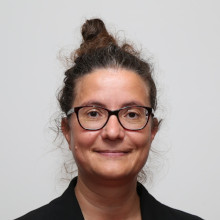
Sílvia Melo-Pfeifer is a full professor at the University of Hamburg (Germany) and a member of the research center LIDS (Language in Diversity Settings). Among her research interests are language teacher education and identity, arts-based approaches in Applied Linguistics and multilingual pedagogies in language education. She co-edited, with Paula Kalaja, the volumes “Visualising Multilingual Lives. More Than Words” (2019) and “Visualising Language Students and Teachers as Multilinguals: Advancing Social Justice in Education” (2024), by Multilingual Matters.
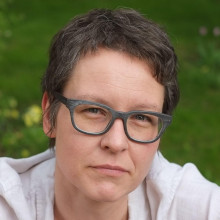
This lecture will start with considering what language education could look like if it was taught in an art school. After briefly reviewing recent developments in language education and linguistics (Bradley 2025, Harvey et al 2022, Maijala 2025, Warner 2024) I will discuss the implications of moving research into language learning and teaching into the field of art. Drawing on Spivak’s conceptualisation of aesthetic education as the ‘act of training our imagination for epistemological performance’ (2010) I will discuss Li’s concept of translanguaging and translanguaging space (2018) and present selected examples of artworks that engage with translanguaging (Futro 2022, 2025a, 2025b). I will situate these works within Bauman’s framework of cognitive, moral and aesthetic spacings (1993) and reflect on broader implications of using art in language learning (Levine&Levine 2011, LeBaron 2018). To embed my thinking in practice I will present examples from projects in which art and art-making were used to develop pluri/multilingual approaches to language teaching in Scotland, English language teaching in Vietnam and in the design of the most recent project in which art and permaculture are used in the process of embedding multilingualism into learning for sustainability (Phipps 2025). I will share learners and teachers’ testimonies, draw on examples from the classroom and provide links to toolkits with pedagogical activities (Futro at al, 2024, Hirsu at al, 2023, 2025). I will conclude by emphasising the importance of language education in the contemporary society in light of the insights brought by research that explores language in and as-art. Finally, I will invite the audience to reflect on how the presented arts-based approach can be used in their contexts to support learners in building restorative relationships with themselves, with the others, and with the Earth.
Dobrochna Futro is a Lecturer in Education at the University of Glasgow. She is an interdisciplinary scholar with a background in art, education and language teaching. Her research focuses on translanguaging, multilingualism, art-based inquiry, language learning, teaching, and use in multilingual, often migratory contexts. She has led and co-led several funded projects exploring the relationship between art practice and language learning and currently is a Co-Investigator on the AHRC-funded “Sustainable Designs for Living and Learning (SDLL): Embedding Multilingualism into Learning for Sustainability”, and the British Council-funded "Teaching English Multilingually through Art" projects (with Dr Lavinia Hirsu PI). She has worked with teachers in Scotland and internationally, co-developed a number of CPD courses and teaching resources. Dobrochna has co-edited the Special Issue of the “Applied Linguistics Review on Assessment and Creativity through a Translingual Lens”, published in the “English Language Teaching (ELT) journal”, the “Multilingual Matters’ New Perspectives on Language and Education” series, and the “Palgrave Advances in Language and Linguistics” series. She is a director of the “Multilingualism Across the Disciplines ArtsLab” at the University of Glasgow, leads the ELIPRO “Language Education and Multilingualism SIG" and moderates the "ENROPE Language Teachers Development SIG”.
Venue
The conference will be held at:
Ca' Dolfin
Ca' Bernardo
Ca' Foscari
All venues are in the historical centre of the island, and can be easily accessed on foot or by waterbus from Piazzale Roma and the railway station, the main transportation hubs in Venice.
There are two airports available to reach Venice: Marco Polo Airport, which offers various transport options to the city, and Treviso Canova Airport, which offers bus lines to get to the city of Venice.
You can search for accommodation directly in Venice or in the nearby city of Mestre, which has excellent bus, tram, and train connections.
Committees
- Valentina Carbonara, University of Perugia
- Maria Nayr de Pinho Correia Ibrahim, Nord University
- Fabiana Fazzi, Ca’ Foscari University of Venice
- Karine Lichtenauer, University of Fribourg
- Laura Loder Buechel, Zurich University of Teacher Education
- Marcella Menegale, Ca’ Foscari University of Venice
- Claudia Meneghetti, Ca’ Foscari University of Venice
- Danièle Moore, Simon Fraser University
- Josh Prada, University of Groningen
- Graziano Serragiotto, Ca’ Foscari University of Venice
- Vander Tavares, University of Inland Norway
- Nóra Wünsch-Nagy, Eötvös Loránd University
- Katarzyna Žák-Caplot, Museum of Warsaw