

Research

Ongoing projects
Valorising Brewer’s Spent Grain (BSG) for sustainable biocomposites
Recovery and recycling of agro-industrial waste (beer spent grain, oil and orange pomace) for the production of packaging, active coatings and additives
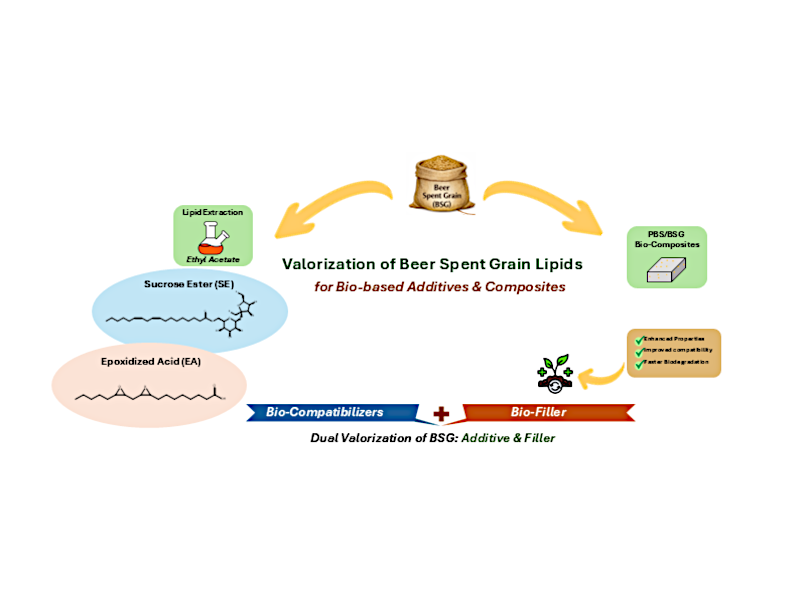
Research Framework led by Gioele Foltran at the University of Campania "Luigi Vanvitelli", this project pioneers agro-industrial waste valorisation. Within the National PhD in DeMIT, the research addresses circular economy needs by transforming Brewer’s Spent Grain (BSG)fractions into high-value bio-additives. This effort bridges the gap between ecological sustainability and industrial excellence.
Objectives and methodology: these bio-additives are integrated into Poly(butylene succinate) (PBS) to create advanced biocomposites. Technical results demonstrate that a 6 wt% concentration of these additives significantly enhances interfacial adhesion, thermal stability, and mechanical strength. Furthermore, specific chemical modifications impart pronounced hydrophobicity, ideal for moisture-sensitive industrial uses.
Industrial impact and LIFE RESTART: by replacing petroleum-based chemicals with waste-derived alternatives, the project promotes high-performance biodegradable materials. This approach directly supports the chemistry, textiles, and packaging sectors. Crucially, the study is actively implemented within the framework of the LIFE RESTART project, contributing to the development of industrial-scale circular bio-based solutions for a more sustainable future.
- A. Visco, N. Bardella, C. Scolaro, H. Belhamdi, S. Brahimi, V. Gatto, R. Samiolo, V. Beghetto* Reuse of beer spent grain for the industrial production of biodegradable bio-composites, Ind. Crops and Products, 2025, 235 121684.
- Visco, A., Scolaro, C., Facchin, M., Brahimi, S., Belhamdi, H., Gatto, V., and Beghetto, V. (2022). Agri-Food Wastes for Bioplastics: European prospective on possible applications in their second life for a circular economy. “Polymers”, 14 (13), 2752.
Bioplastics production from seaweeds
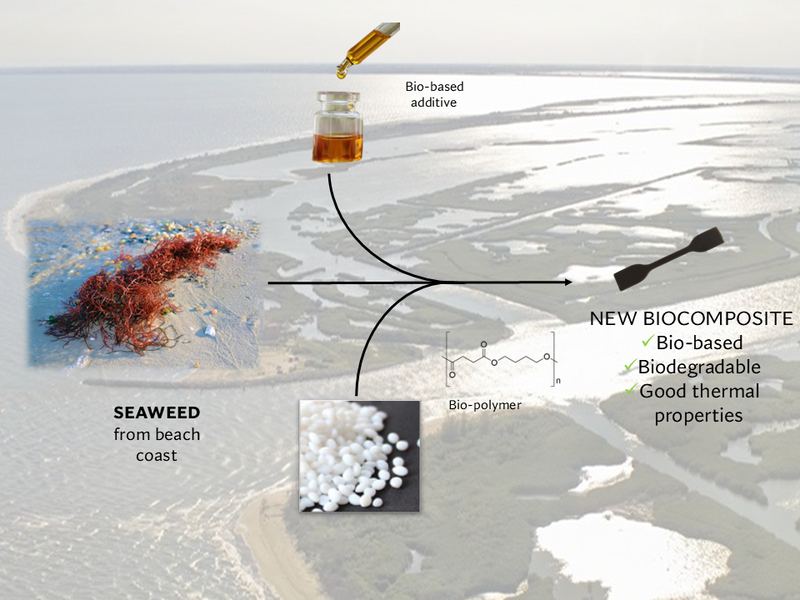
The growing global production of plastics, estimated at approximately 450 million tons annually, has made the transition to a Circular Economy model crucial. In this context, fossil-based plastics represent a complex and hardly biodegradable waste, with high potential environmental impact if not managed correctly.
Biocomposite materials emerge as a promising replacement for fossil-based materials, especially if based on biodegradable polymer matrices such as polybutylene succinate (PBS), whose thermomechanical properties are comparable to polypropylene and whose monomers can be bio-based. The addition of natural fillers, derived from waste biomass, can reduce costs, polymer content and modifying the final material's properties. Notably, algae that accumulate as waste along marine coastlines represent a sustainable biomass source to be used as filler. Their growth does not compete with the food supply chain, and their use contributes to the reduction of eutrophication phenomena, while also helping to clean up beach environments.
The addition of a bio-based additive was evaluated to enhance the compatibility between the filler and the polymer matrix.
The biocomposites were characterized using DSC, TGA, ATR-FTIR, SEM, and tensile tests. Finally, we also evaluated their biodegradability in soil.
- Valentina Beghetto, Vanessa Gatto, Riccardo Samiolo, Cristina Scolaro, Salim Brahimi, Manuela Facchin, Annamaria Visco, Plastics today: Key challenges and EU strategies towards carbon neutrality: A review, Environmental Pollution, Volume 334, 2023, 122102, ISSN 0269-7491.
Development of innovative photoluminescent compounds and flame retardants for the plastic industry and artistic manufacts
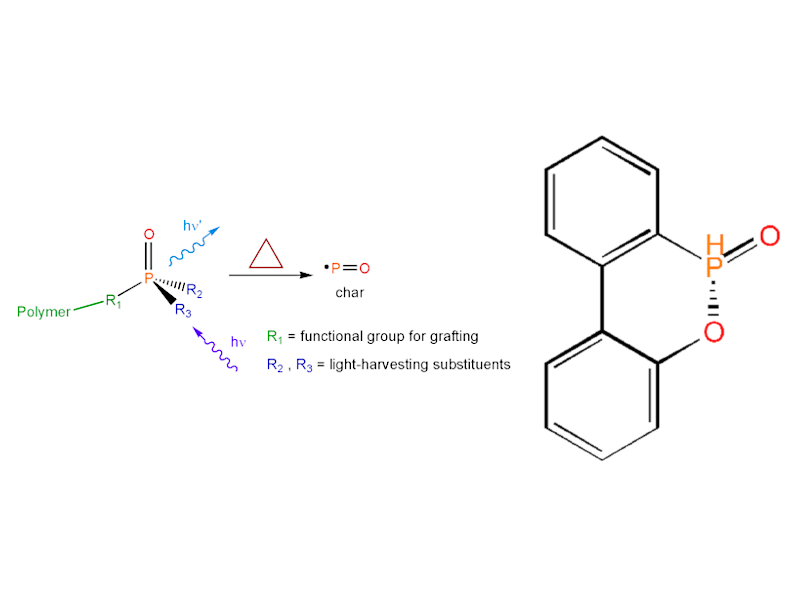
The objective of the PhD project is the synthesis of new multifunctional compounds to be used as flame retardants and luminescent sources for bio-based polymers or paper coating. The experimental investigation will focus on organophosphorus compounds (OPC). The presence of flame retardants into polymeric matrices and coatings allows to slow down the combustion process through several mechanisms, acting both in condensed and gas phases. The phosphorus-based flame retardants are therefore among the most studied halogen-free alternatives, with tunable activity and reactivity depending on OPC structure and the choice of the substituents. Another field of research concerning organophosphorus compounds focuses on the photophysical properties exhibited, such as fluorescence and phosphorescence, making them suitable for anticounterfeiting applications, as for example traceability of material, and optical applications, e.g. whitening agents. Several examples of doping of fossil-based polymers with multifunctional OPC are present in the recent literature. On the other hand, the functionalization of bio-based polymeric materials or paper coatings with multifunctional OPC is still scarcely investigated.
Alongside, other organophosphorus compounds are investigated: exploring the synergism of the P-N bond in multiple 9,10-diidro-9-ossa-10-fosfafenantren-10-ossido derivatives (DOPO).
- Luminescence of the Conjugate Bases of [2-(2-Hydroxyphenyl)phenyl]phosphinic Acid and Single-Crystal X-Ray Structure Determination of Sodium [2-(2-Hydroxyphenyl)phenyl]phosphinate, Organics, 2025, 6, 10.
- Synthesis and characterization of 6-(1,3-dimethylureido) dibenzo[c,e][1,2]oxaphosphinine 6-oxide, Chem. Proc, 2025, 18(1), 45.
Reduction of microplastics from industrial activities in Alpine water bodies
First of the kind study on the recovery and recycling of microplastics
The overall objective of the MICRO-ALPS project is to raise awareness among local communities and companies about one of the emerging problems of the 21st century, microplastics, with a special focus on Alpine areas, where this pollutant is still little studied. Microplastics are generated by the process of degrading or processing plastics and can have very different sizes, as defined by the UNEP classification. This will be possible by taking one part of the eyewear industry as a reference point and example, the lens cutting and grinding workshops that produce high quantities of microplastics during lens processing.
As part of the project, we are investigating which possible solutions can be adopted to recover microplastics and test their recyclability to produce new and innovative 3D-printed objects, which is the first study of the kind. We are mixing the microplastics with different bio-compatible polymers (ie PLA or PBS) in different amounts, using the extrusion process. The materials obtained is employed in the 3D printing process at the Carinthia University in Villach.
Microplastics and the relative mixture developed are in depth characterized by thermal and physical-chemical analysis.
All experimental work and the information collected on the nature and production of microplastics will be used to transfer knowledge to people in the programme area in order to prevent the production of microplastics and their release into the environment.
Bio-based film for highly biodegradable packaging
Studies on the modification of carboxymethyl cellulose for packaging production or water purification
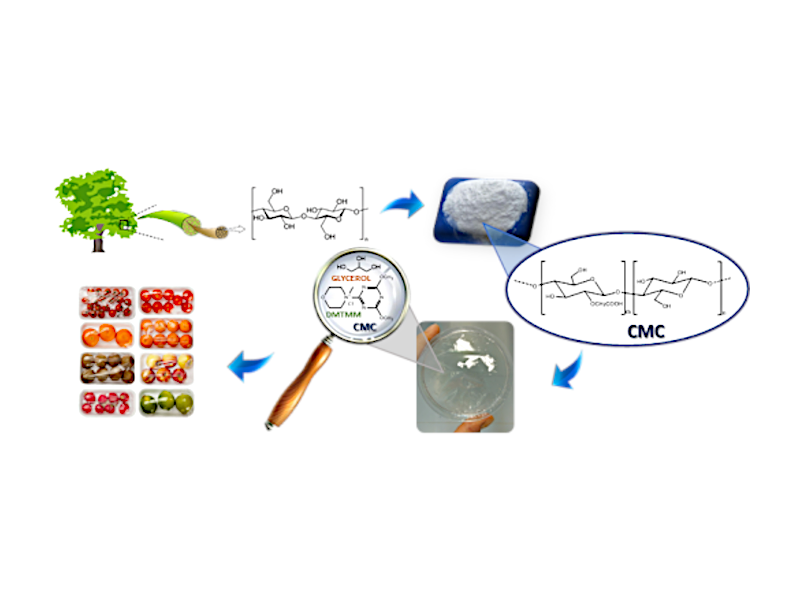
To reduce the environmental impact of plastics deriving from fossil fuels resources, the European Green Deal has recently emphasized the importance of the development and applicability of natural biopolymers. The global market for sustainable packaging is estimated to reach $ 51.2 billion in 2023. In this context, carboxymethylcellulose (CMC) and chitosan (CS) play a primary role in the design of new biomaterials for packaging. Thus, new formulations for eco-sustainable films based on CMC and CS were developed, which guarantee the obtainment of materials suitable for packaging. These new biomaterials have shown good mechanical properties and excellent barrier properties to water vapor and UV rays. Biodegradability tests showed complete degradation of all films in a time ranging from 15 to 21 days. All these characteristics make these bio-based films excellent candidates for applicability in the highly biodegradable packaging sector.
Further studies are underway to increase the performance of food packaging materials by anchoring antimicrobial molecules to CMC and CS. The improvement of the chemical-physical properties of the packaging and the increase of shelf life of the food will be verified.
- D. Santandrea, J. Caldato, V. Beghetto. Amidated carboxymethylcellulose: synthesis, characterization and evaluation of their performance in paper coating application. Cellulose, 2026, 33, 505-507.
- D. Santandrea, C. Sillard, V. Beghetto, J. Bras. Aqueous-Phase Surface Amidation of TEMPO-CNF Films for Improved Adsorption of Organic Pollutants in Water. ChemPlusChem 2025, 90, e202500398.
- D. Santandrea, V. Beghetto. 4-(4,6-Dimethoxy-1,3,5-triazin-2-yl)-4-methylmorpholinium chloride-assisted amide crosslinking of carboxymethyl cellulose for high-performing films. RSC Adv., 2025, 15, 34846.
- R. Sole, C. Buranello, A. Di Michele, V. Beghetto. Boosting physical-mechanical properties of adipic acid/chitosan films by DMTMM cross-linking. International Journal of Biological Macromolecules, 2022, 209, 2009-2019.
- V. Beghetto, V. Gatto, S. Conca, N. Bardella, C. Buranello, G. Gasparetto, R. Sole. Development of 4-(4,6-dimethoxy-1,3,5-triazin-2-yl)-4-methyl-morpholinium chloride cross-linked carboxymethyl cellulose films Carbohydrate Polymers (2020) 249 116810.
- Sole, R., Buranello, C., Di Michele, A., and Beghetto, V. (2022). Boosting physical-mechanical properties of adipic acid/chitosan films by DMTMM cross-linking. International Journal of Biological Macromolecules, 209(Pt B), 2009-2019.
The tanning industry: toward innovative sustainability
Development of innovative tanning agents for the leather industry
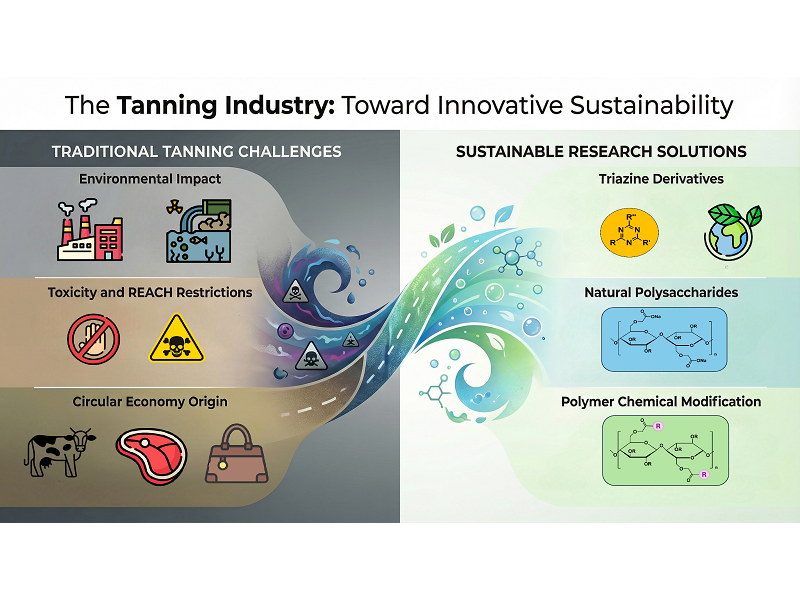
The leather industry is an example of a circular economy: an unwanted putrescible byproduct of the meat industry can be transformed into a high added-value, stable product. To do so, hide collagen fibers need to be chemically stabilized by a tanning agent, but this process employs a huge amount of water and chemicals (some of them hazardous) and generates a considerable quantity of solid, liquid sludge and volatile emissions. Most of the leather produced today is tanned with chromium (III) salts, and various alternatives to chrome tanning, such as aldehydes and phenol-based synthetic tannins, are suffering from REACH restrictions due to their toxicity. Thus, the scientific research is focused on the development of innovative and more sustainable tanning agents. Triazine derivatives are examples of alternative and sustainable tanning agents being extensively explored by the research group since 2014. The use of polysaccharides such as sodium alginate or cellulose derivatives is known in the literature, but the study for their industrial application is still a topic of great relevance today. In fact, the research group aims to expand it by chemically modifying these polymers to enhance their performance for further applications and tests.
To minimize the use of hazardous substances and reduce industrial waste, the industrial application of an innovative zero-length cross-linking tanning agent, previously patented by Professor Beghetto’s research group, has been studied. The main goal was to develop a sustainable tanning and post-tanning protocol specifically designed for the automotive and upholstery industries. The tanning tests were performed using the zero-length cross-linking agent, and the retanning, dyeing, and fatliquoring tests were carried out using standard formulations for footwear and for the automotive and upholstery sectors. The resulting crust leathers obtained were characterised by measurement of the shrinkage temperature, physical-mechanical tests, thermal stability tests, colour fastness, and impermeability tests, and then compared to glutaraldehyde-tanned leather. Finally, to evaluate the effectiveness of this new technology, the obtained leathers were compared to glutaraldehyde-tanned leather, the current industry standard. This comparison highlights the potential of the new agent to provide high-performance results within an eco-friendlier framework.
The possible development at an industrial scale of biobased renewable biopolymers from polysaccharides has been carried out also thanks to the "REWASTER" project, supporting the transition toward more sustainable industrial tanning processes, funded by PR Veneto FESR 2021-2027.
- V. Beghetto*, V. Gatto, S. Conca, Could Fostering Alternative Plant Feedstocks Improve the Sustainability of Leather Manufacturing? A Critical Review. Materials 2025, 18, 3759.
- S. Conca, V. Gatto, R. Samiolo, S. Giovando, A. Cassani, E. Tarabra, V. Beghetto*. Characterisation and tanning effects of purified chestnut and sulfited quebracho extracts. Collagen and Leather 2024, 6, 28.
- M. Facchin, V. Gatto, R. Samiolo, S. Conca, D. Santandrea, V. Beghetto*. May 1,3,5-Triazine derivatives be the future of leather tanning? A critical review. Environmental Pollution 2024, 345, 123472.
- Gatto, V., Conca, S., Bardella, N., Beghetto, V.*, Efficient triazine derivatives for collagenous materials stabilization. Materials, 2021, 14(11), 3069.
- L. Agostinis, S. Conca, V. Gatto, N. Bardella, A. Morandini, C. Buranello, V. Beghetto*. Synthesis of Amidation Agents and Their Reactivity in Condensation Reactions. Synthesis (Germany) 2021, 53, 1672-1682. DOI: 10.1055/a-1334-6916
- R. Sole, V. Gatto, S. Conca, N. Bardella, A. Morandini, A., V. Beghetto*. Sustainable Triazine-Based Dehydro-Condensation Agents for Amide Synthesis. Molecules 26, (2021), 191.
- V. Beghetto*, L. Agostinis, V. Gatto, R. Samiolo, A. Scrivanti, Sustainable use of 4-(4,6-dimethoxy-1,3,5-triazin-2-yl)-4-methylmorpholinium chloride as metal free tanning agent, Journal of Cleaner Production, 2019, 220, 864-872.
- R. Sole, L. Taddei, C. Franceschi, V. Beghetto*. Efficient Chemo-Enzymatic Transformation of Animal Biomass Waste for Eco-Friendly Leather Production. Molecules, 2019, 24, 2979.
Studies on the biodegradability of plastic manufacturing
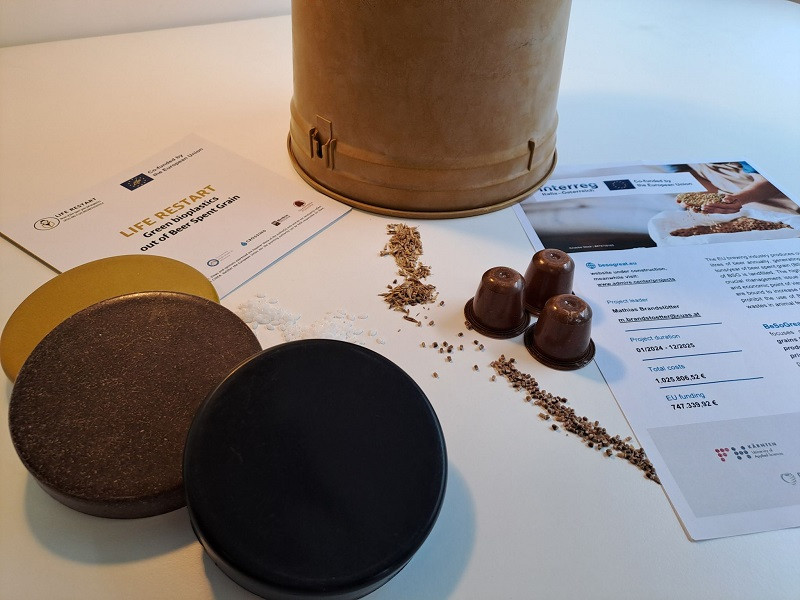
Agro-industrial residues such as beer spent grain (BSG), olive pomace (OP), and coffee silver skin (CSS) represent abundant lignocellulosic by-products with significant potential for valorisation in sustainable polymer systems. Within the framework of the LIFE RESTART project and the BeSoGreat initiative, these residues are incorporated into biodegradable polymer matrices to develop innovative biocomposites aligned with circular bioeconomy principles.
The resulting biocomposite granules are produced via melt compounding and subsequently processed and later analysed for biodegradation tests.
In particular, aerobic soil biodegradation tests are conducted according to ISO 17556 and ASTM D5988, enabling the quantification of mineralization kinetics through CO₂ evolution measurements. In parallel, disintegration assays are performed to assess physical fragmentation and mass loss during soil exposure, providing insight into structural breakdown mechanisms. Furthermore, Differential Scanning Calorimetry (DSC) and Thermogravimetric Analysis (TGA) were applied to investigate the influence of different fillers on crystallization behaviour, melting transitions, and thermal stability.
This activity has been carried out with the contribution of LIFE RESTART, Food4LIFE [ITA], and RixAA [ITA] projects supporting the transition toward more sustainable industrial tanning processes, funded by PR Veneto FESR 2021–2027.
- A. Visco, N. Bardella, C. Scolaro, H. Belhamdi, S. Brahimi, V. Gatto, R. Samiolo, V. Beghetto* Reuse of beer spent grain for the industrial production of biodegradable bio-composites, Ind. Crops and Products, 2025, 235 121684.
New technologies for the valorisation of waste cooking oil
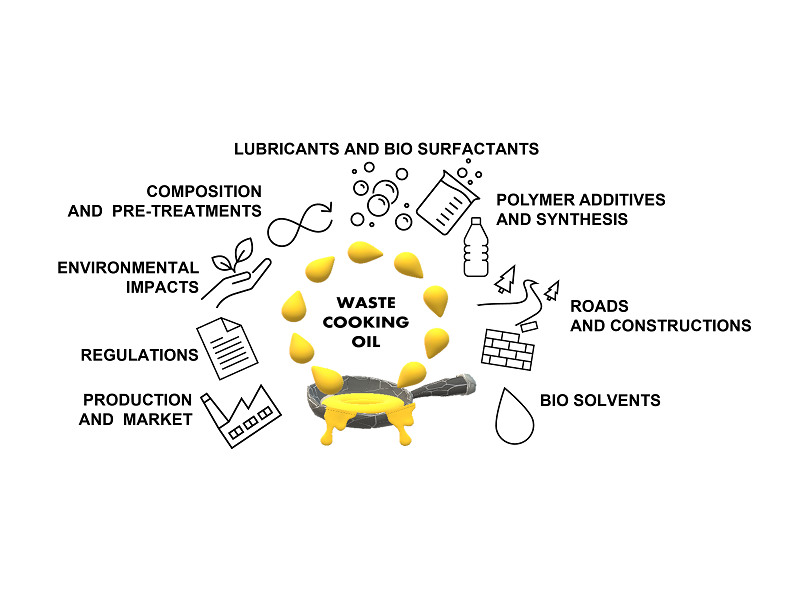
The hospitality sector, one of the fastest-growing global industries, significantly contributes to economic development but is simultaneously responsible for substantial environmental impacts, particularly waste generation. Waste cooking oil (WCO) emerges as a critical environmental and economic issue within this industry, presenting challenges and opportunities. Our work explores the transformative role of circular economy principles in hospitality through the reutilization of WCO, showcasing its conversion from an environmental burden into valuable industrial resources, such as biofuels, polymers, and industrial additives. It further examines regulatory frameworks, innovative recycling pathways, and sustainable business models that leverage WCO within regional hospitality contexts.
The work has been financed also with the fundings of i-Nest PNRR project.
- V. Beghetto*, Waste Cooking Oils into High-Value Products: Where Is the Industry Going?. Polymers 2025, 17(7), 887.
- Beghetto, V., Strategies for the Transformation of Waste Cooking Oils into High-Value Products: A Critical Review, Polymers 2025, 17, 368.
- Bardella N., Facchin M., Fabris E., Baldan M., Beghetto V.* Waste Cooking Oil as Eco-Friendly Rejuvenator for Reclaimed Asphalt Pavement. Materials 2024, 17, 1477.
Valorisation of orange waste for industrial and biomedical application
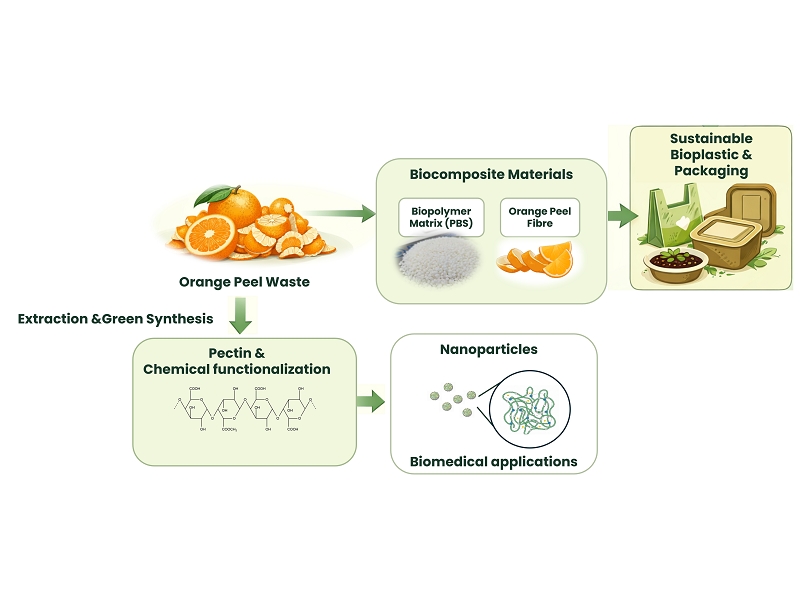
In recent years, increasing attention has been directed toward sustainability and the transition from linear “take-make-dispose” production models to circular economy systems that promote resource efficiency, material regeneration, and waste valorisation. Within this framework, the agri-food sector plays a central role, as it generates large quantities of organic residues that can be converted into high-value products.
In Italy, fruit and vegetable processing produces substantial amounts of waste biomass, particularly citrus residues, which are rich in structurally and functionally valuable biopolymers such as pectin. Orange peel waste represents a promising resource to produce sustainable materials through multiple valorisation pathways.
In this work, orange peel residues were exploited through two complementary strategies. First, powdered orange peel was incorporated as a filler into poly(butylene succinate) (PBS) matrices to produce biodegradable biocomposites suitable for industrial applications. The resulting materials exhibited improved functional properties while maintaining biodegradability. Second, pectin was extracted from orange peel powder and employed in the formulation of polymeric nanoparticles for the encapsulation and delivery of bioactive compounds. These nanoparticle systems demonstrated good stability, controlled size distribution, and potential suitability for biomedical applications.
The combined use of agri-food waste in biocomposite engineering and nanostructured delivery systems highlights the versatility of citrus biomass as a sustainable raw material. By integrating waste valorisation with functional polymer design, this approach enables the development of multifunctional materials for biodegradable packaging, antibacterial coatings, and drug delivery platforms. Overall, the results underline the potential of orange peel waste as a key resource for advancing circular economy strategies while delivering both environmental and technological benefits.
Development and large-scale synthesis of triazine-derived antimicrobials
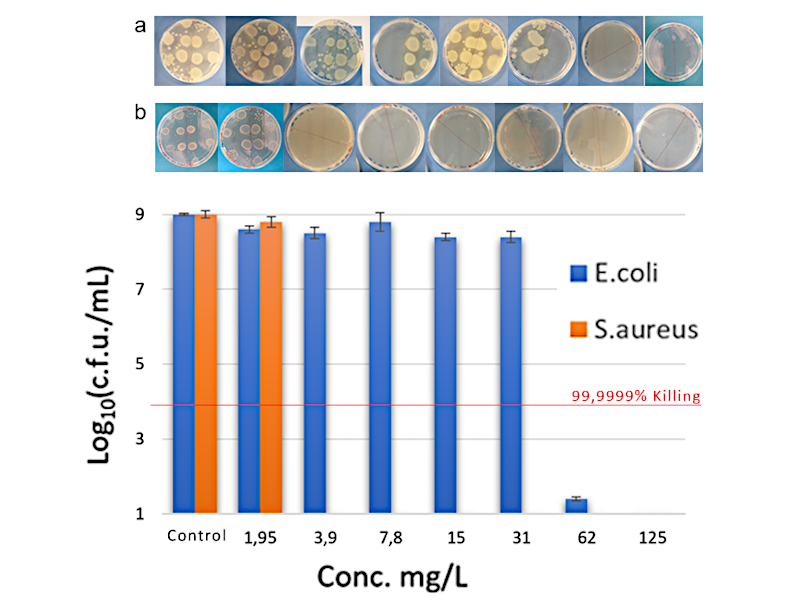
Our research group has developed stable, sustainable triazine-derived bis-quaternary ammonium salts (bis-TQAS) as highly efficient alternatives to traditional disinfectants. Unlike earlier triazine-based compounds like DMTMM, which were unstable and decomposed rapidly in solution, these new variants utilize a 1,3,5-triazine core reacted with either N-alkylmorpholines or imidazolium groups to achieve long-term stability. The synthetic methods prioritize environmental safety by avoiding toxic alkyl halides and utilizing atom-efficient processes at room temperature. Notably, the imidazolium-based synthesis has proven industrial viability, having been successfully scaled up to batches exceeding 500 grams.
The antimicrobial effectiveness of these salts is primarily governed by their alkyl chain length, with optimal inhibition of pathogens like S. aureus and E. coli consistently observed in compounds with 12 to 14 carbon atoms. Imidazolium-based versions reached remarkable potency with minimum inhibitory concentrations (MIC) below 10 mg/L, while morpholine derivatives achieved total disinfection against Gram-positive and Gram-negative strains at low concentrations. Crucially, these derivatives exhibit a superior safety profile, with significantly lower cytotoxicity toward human cells than traditional agents like benzalkonium chloride.
- A. Morandini, B. Leonetti, P. Riello, R. Sole, V. Gatto, I. Caligiuri, F. Rizzolio, V. Beghetto*. Synthesis and Antimicrobial Evaluation of Bis-morpholine Triazine Quaternary Ammonium Salts, ChemMedChem, 2021, 16, 3172-3176.
- A. Morandini, E. Spadati, B. Leonetti, R. Sole, V. Gatto, F. Rizzolio, V. Beghetto*. Sustainable triazine-derived quaternary ammonium salts as antimicrobial agents, RSC Advances, 2021, 11, 28092-28096.
Sustainable Venericulture: Turning Algae into Bio-Based Resources
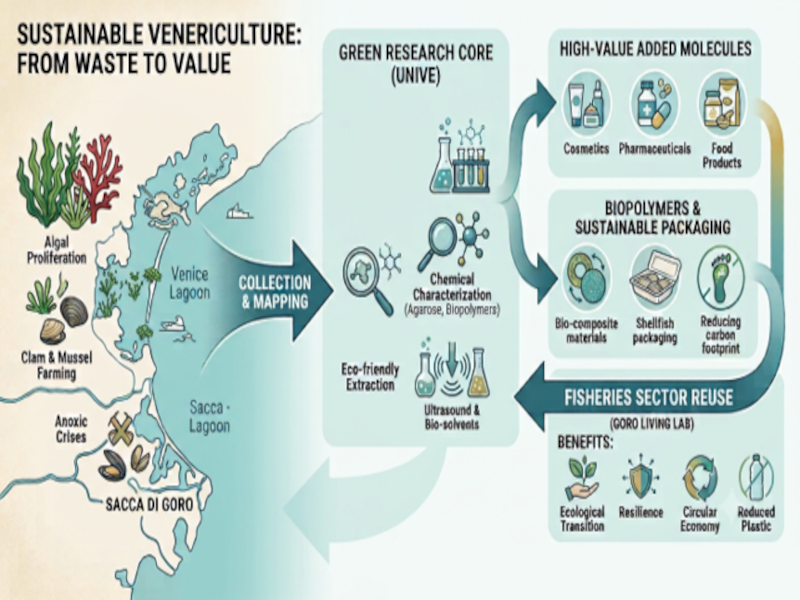
The Department of Molecular Sciences and Nanosystems and the Department of Environmental Sciences, Informatics and Statistics of Ca' Foscari University of Venice are actively participating in a research project focused on sustainable clam farming (venericoltura), under the scientific supervision of Prof. Valentina Beghetto. This initiative addresses a major environmental and economic emergency in the lagoon areas of the Upper Adriatic, particularly in the Sacca di Goro and the Venice Lagoon, where the uncontrolled seasonal proliferation of green and red macroalgae seriously threatens clam and mussel farming. The accumulation and decomposition of this biomass cause periodic anoxic crises, leading to massive shellfish mortality and heavy financial losses for local fishermen, who currently manage the collected algae as simple waste to be disposed of on land. The Ca’ Foscari research group proposes a paradigm shift based on the principles of circular economy and green chemistry, transforming this critical issue into a high value-added resource. Project activities include the mapping and seasonal chemical-physical characterization of algal biomass to evaluate its composition, followed by the development of eco-friendly extraction processes assisted by ultrasound and low-impact bio-based solvents. This treatment will yield valuable molecules such as agarose, intended for the cosmetic, pharmaceutical, and food sectors, while the remaining algal residues will be converted into biofillers to formulate biocomposite materials and sustainable packaging. These materials can be reused by the fisheries sector itself, reducing carbon footprint and the reliance on fossil plastics. To maximize the local impact, the project includes the creation of a Living Lab in Goro, designed as a space for co-creation and technology transfer among the university, fishermen, and local businesses. This research program is fully funded by the European Union through the National Recovery and Resilience Plan (PNRR) - Mission 2 Component 1 Investment 3.4, dedicated to supply chain and district contracts for the agricultural, food, fishery, and aquaculture sectors. The project is funded through the Ministry of Agriculture, Food Sovereignty and Forests (MASAF). The total grant allocated to cover the university's eligible costs amounts to €758,240.00.
Innovative Solutions for Hydrogen Production and Material Upcycling
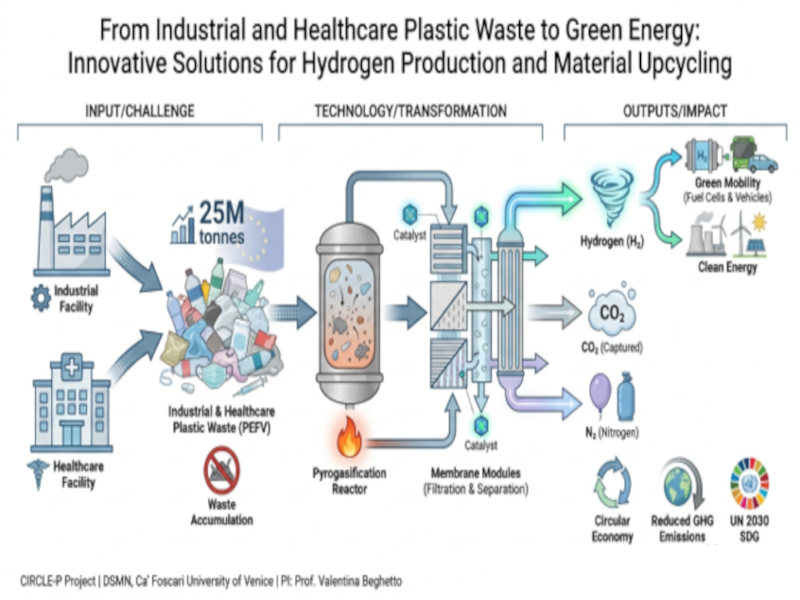
The "CIRCLE-P" project addresses one of today's major environmental challenges: the sustainable management of industrial and healthcare plastic waste. Indeed, the European Union generates over 25 million tonnes of plastic annually, a significant portion of which still ends up in landfills or is released into the environment. The project aims to apply the principles of the circular economy to transform these critical waste streams into valuable resources, thereby reducing reliance on virgin fossil sources and mitigating greenhouse gas (GHG) emissions. The project intends to develop an innovative technology for the production of hydrogen, CO₂, and nitrogen from industrial waste, specifically end-of-life heterogeneous plastics (PEFV), via pyrogasification followed by gas purification. This process yields high value-added products for green mobility, as well as the chemical and food industries, in alignment with the principles of the green transition, the circular economy, and the United Nations 2030 Agenda Sustainable Development Goals (SDGs). Under the scientific supervision of Prof. Valentina Beghetto, the Department of Molecular Sciences and Nanosystems (DSMN) at Ca' Foscari University of Venice plays a primary role in researching and selecting membranes for syngas filtration and purification, as well as identifying catalytic systems to optimize hydrogen production from plastic waste. This research project is co-financed by the European Union and the Veneto Region under the Italy 21-27 Cohesion Programme for Veneto region.