
Theorizing Gender Inequality
Renaissance and Early Modern Perspectives, 21-22/05/2026 Ca' Foscari University of Venice
Workshop
This workshop aims to explore Renaissance and early modern accounts of the genesis of gender inequality.
Contributions are welcome that examine how feminist writings explained the emergence of gender-based injustice and patriarchal oppression against women and other non-hegemonic genders. Were these thought to arise from a difference in temperament? From the preeminence of a particular passion over others? From a gendered “mauvaise éducation”? From disparities of strength that escalated into political domination?
The workshop also invites reflection on canonical political philosophers such as Hobbes, Locke, Montesquieu, Rousseau, and others, whose theories of natural rights and the social contract implicitly addressed, redefined, and, in some cases legitimized a gendered (unequal) distribution of power, providing a critical backdrop for later feminist analyses of the sexual contract.
Moreover, while some feminist authors denounced patriarchal tyranny and male-imposed subordination of women, other Enlightenment thinkers expressed optimism regarding the historical improvement of women’s living conditions through the progress of “civilization”. This tension reveals at least two contrasting views of gender inequality: one seeing it as emerging with societal organization and intensifying as the latter developed, the other as a vestige of a primitive state that modern civilization may progressively correct.
Presenters are invited to explore the conceptual transfers, refutations, and critical appropriations that occurred between canonical and non-canonical authors, thus tracing the impact of feminist philosophical literature in political thought at the time and the dialogues that shaped Renaissance and early modern debates on gender, power, and equality.
Programme and registration
You are welcome to attend:
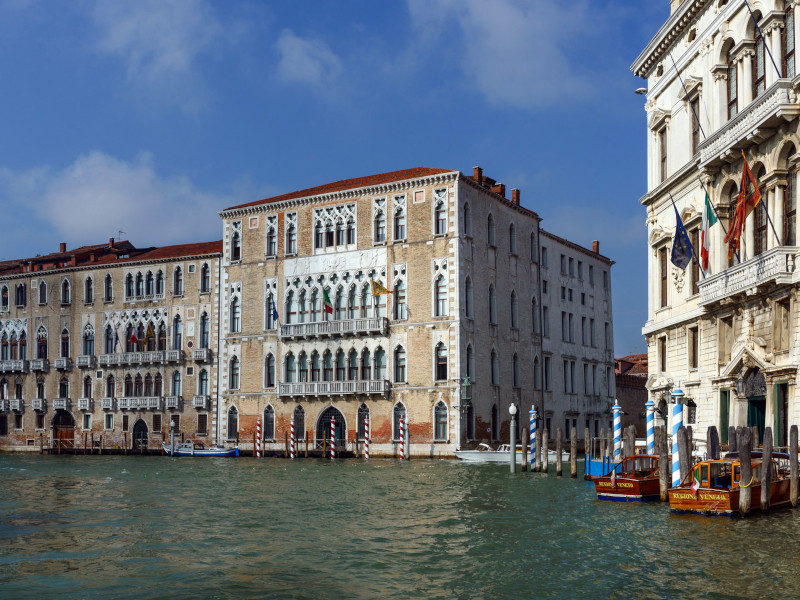
- in person at Ca' Foscari (Aula Mario Baratto), Dorsoduro 3246, 30123 Venice;
- via Zoom.


- 9.00-9.15
Welcome and Introduction - 9.15-10.30
Marguerite Deslauriers, McGill University
“Keynote Talk. Nature and Custom as Sources of the Subjection of Women” - 10.30-11.00
Coffee break - 11.00-12.30
Adrián Sáez García, Ca' Foscari University of Venice
“'De femme à femme': diplomatie feminine dans le thèâtre espagnol du Siècle d'Or”
Helena Taylor, University of Exeter
“Marie de Gournay on the Origins of Gender Inequality” - 12.30-14.00
Lunch
- 14.00-15.30
Carme Font Paz, Universitat Autònoma de Barcelona
“The ‘pleas of equity’ and ‘the moral fitness of things’ in Catharine Macaulay's A Modest Plea for the Property of Copy Right (1774)”
Elena Gordon, University College Dublin
“Macaulay, Feminism, and Sympathy” - 15.30-16.00
Coffee break - 16.00-17.30
Margherita Giordano, University of Eastern Piedmont
“«Männer und Weiber dürfen nicht gleich sein». Sophie Mereau on Gender Difference”
Rotraud von Kulessa, Universität Augsburg / Ca' Foscari University of Venice
“L'inégalité des sexes dans les littératures d'éducation au 18e siècle. Marie Leprince de Beaumont et Stéphanie Félicité de Genlis”
- 9.00-10.30
Eleonora Alfano, McGill University
“Louise Dupin et le regard des anatomistes: la fabrique des inégalités physiques entre les sexes”
Frédéric Marty, CY Paris-Cergy Université
“De la généalogie de l'inégalité des sexes au projet de réforme de la société: la pensée de Louise Dupin (1706-1799)” - 10.30-11.00
Coffee break
Team
Organizing Committee



Institutional partners