
Research and education
The Centre promotes and supports research through doctoral and postdoctoral grants, as well as fellowships for visiting scholars, that are awarded through competitive calls for applications.
The Centre also supports the Marco Polo – Studies in Global Europe–Asia Connections book series, published by Venice University Press. The series features original research on the historical, cultural, artistic, political, and economic interactions between Europe and Asia, with particular emphasis on transregional connections, exchanges, and mobility across time.
Book series "Marco Polo – Studies in Global Europe-Asia Connections"
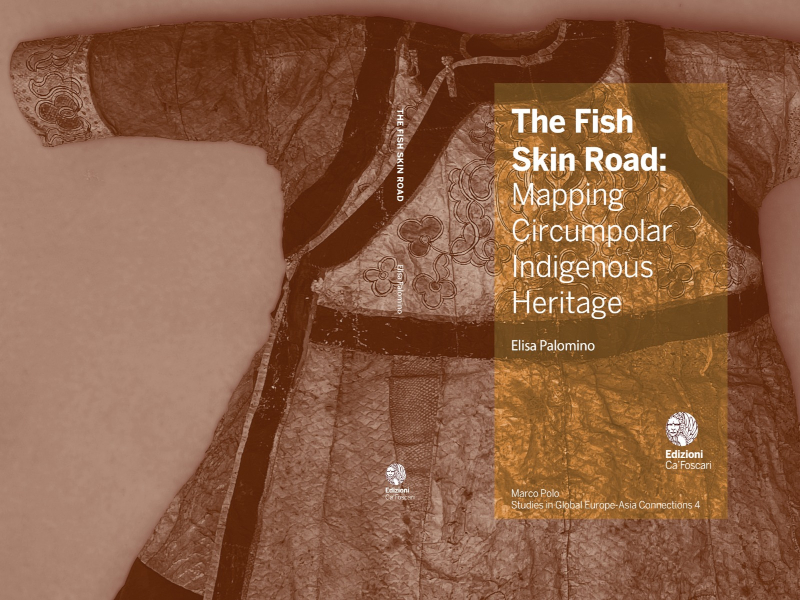
Author: Elisa Palomino
Edizioni Ca' Foscari - series Marco Polo
Publication year: 2026
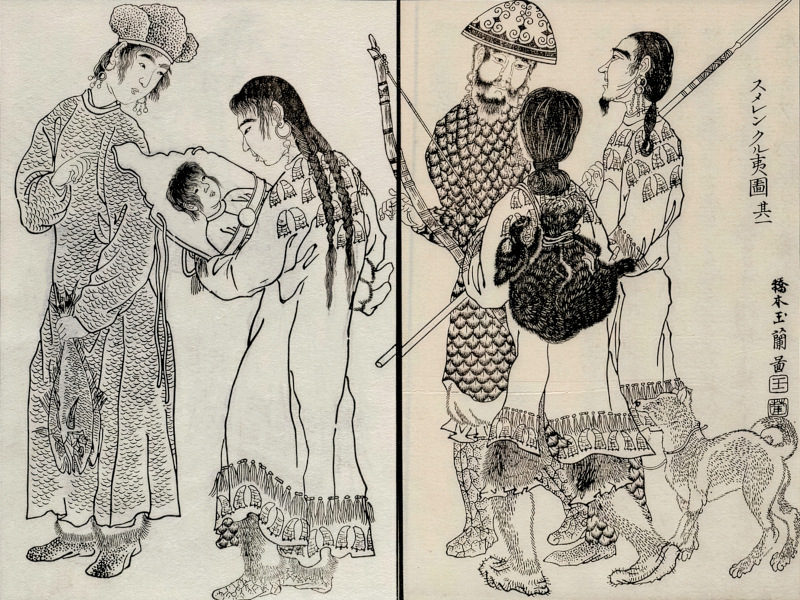
The book traces the historical circulation of fish skin garments and accessories and traditional production methods among Indigenous communities from the Lower Amur River to Sakhalin Island—the Nivkh, Nanai, Hezhe, and Ainu. Over centuries, trade, travel and salmon-based subsistence economies enabled the transmission of tanning, dyeing, and sewing practices. Although colonisation divided Native territories along Russian, Chinese, and Japanese borders and restricted access to resources, seasonal harvesting cycles and material use persisted.
Fish skin objects held in museum collections preserve knowledge of environmental adaptation, gendered labour, and material expertise. These Native belongings document enduring relationships between people, fish, and landscape. Recognition of their technical, social, and ceremonial roles highlights the expertise of Indigenous women artists and the knowledge embedded in their work. These garments stand as masterpieces of Native art, affirming the place of Arctic Indigenous women within art history and the history of dress.
Postoctoral grant recipients
The Fish Skin Road: Mapping Indigenous Knowledge from the Lower Amur River to Sakhalin Island
Year: 2025
Working with: Sabrina Rastelli
Fellow: Elisa Palomino
The project examines the historical circulation of fish skin garments and accessories among Indigenous communities from the Lower Amur River to Sakhalin Island, including the Nivkh, Nanai, Hezhe and Ainu. Drawing on museum collections, archival sources and collaborative research with Indigenous knowledge holders, the study traces the movement of tanning, dyeing and sewing practices across a region connected by salmon-based subsistence economies, seasonal mobility and exchange networks.
Doctoral grants
Starting from the 2026/2027 academic year, the Centre will offer a three-year doctoral scholarship on the topic ‘Uḍḍiyāna Studies, Gandhāran and Tibetan Buddhist traditions’ , as part of the Doctoral programme in Asian and African Studies at Ca’ Foscari University of Venice. The scholarship is funded by the Waksaw-Uddiyana Archaeological Alliance. The call is issued annually in the spring.

Visiting scholars
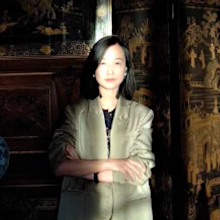
Xialing Liu
Chinese University of Hong Kong
Period of stay: 05/07-07/08/2026
Research title: “Mapping Coromandel Lacquer Screens: The Global Circulation of Kuancai Lacquer between Europe and Asia from 1635 to 1750.”
Working with: Sabrina Rastelli

Fariba Zarinebaf
UC Riverside
Period of stay: 2027
Research title: “Silk in Venetian-Safavid and Ottoman Exchange and Encounters in the Early Modern Period.”
Working with: Vera Costantini
Sandra Wabnitz
PhD candidate at the University of Vienna
Period of stay: September 2026 - February 2027
Research title: “Horse Lords of the Eurasian Steppe: A Historiographical Comparison, 4th-9th centuries”
Working with: Maddalena Barenghi

MaP Center Sponsored Panels at EACS conference, 21-25 July 2026, Venice
PANEL: Making Weather Knowledge in Modern China: Grassroots Observation, Folk Wisdom, and Transnational Exchanges
Xiao Liu (Tsinghua University), Beyond Plans and Failures: Grassroots Implementation of Rainfall Monitoring during the Republic of China
Xinyue Li (University of Manchester), The Discovery of Weather Proverbs in Republican China
Yifan Song (Durham University), Remaking Weather Science: Transnational Methods and Indigenous Knowledge in Early PRC China
CHAIR: Xi Liu (Xi’an Jiaotong-Liverpool University)
PANEL: Buddhist and Nestorian Texts as Multilingual Contact Zones: Phonological, Lexical, and Grammatical Evidence
Chia-Wei Lin (Université de Lausanne),Chinese Transcriptions of Syriac and Iranian Sources as Evidence for Northwestern Chinese
Longyu Zhang (Ghent University), Delayed grammaticalization of kǒng 恐 in Buddhist Chinese: Constraints from discourse-specific semantic Domai
Haoxue Yang (Seoul National University), Translation Correspondence and Discourse Functions of ji/biàn (即/便) and yòu/fù (又/復) in Korean Peninsula Translations of Buddhist Scriptures
CHAIR: Longyu Zhang (Ghent University)
DISCUSSANT: Wolfgang Behr (University of Zurich)
Education
Over the years, the Centre has organised summer schools, seminars and other educational opportunities.