

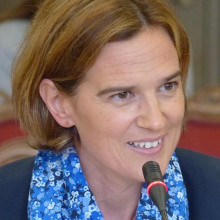
Paola CORO'
- Position
- Associate Professor
- Telephone
- 041 234 6325
-
coropa@unive.it
- Academic discipline
- Assyriology [STAA-01/C]
- Website
-
https://www.unive.it/people/coropa (personal record)
- Office
-
Department of Humanities
Website: https://www.unive.it/dep.humanities
Where: Malcanton Marcorà
Office hours
Student office hours usually take place on Tuesday at 2 pm, but only by appointment.
The appointment must be agreed upon via e-mail with the professor, with adequate advance notice (write to coropa@unive.it; subject: ricevimento studenti [student office hours]; emails without a clear indication of the subject, unsigned, and/or sent from non-institutional student addresses will not be taken into consideration; it is advisable to request the appointment at least 3-5 working days in advance, and please remember that the professor's institutional address is checked during working hours and on working days only).
Online office hours are not provided: as required by University regulations, the professor receives students in person in her office at Malcanton-Marcorà.
Office hours are suspended concurrently with research missions, institutional commitments, and during holidays and scheduled university closures.
Teaching activity current year
ANTROPOLOGIA CULTURALE, ETNOLOGIA, ETNOLINGUISTICA [FMR10]
Master's Degree Programme (DM270)
CONSERVAZIONE E GESTIONE DEI BENI E DELLE ATTIVITÀ CULTURALI [FT1]
Bachelor's Degree Programme
LETTERE [FT3]
Bachelor's Degree Programme
LETTERE [FTR3]
Bachelor's Degree Programme
SCIENZE DELL'ANTICHITÀ: ARCHEOLOGIA, LETTERATURE E STORIA [FMR2]
Master's Degree Programme (DM270)
STORIA [FT5]
Bachelor's Degree Programme
STORIA [FTR5]
Bachelor's Degree Programme
Teaching activity previous years
ANTROPOLOGIA CULTURALE, ETNOLOGIA, ETNOLINGUISTICA [FM10]
Master's Degree Programme (DM270)
SCIENZE DELL'ANTICHITÀ: LETTERATURE, STORIA E ARCHEOLOGIA [FM2]
Master's Degree Programme (DM270)
ANTROPOLOGIA CULTURALE, ETNOLOGIA, ETNOLINGUISTICA [FMR10]
Master's Degree Programme (DM270)
SCIENZE DELL'ANTICHITÀ: ARCHEOLOGIA, LETTERATURE E STORIA [FMR2]
Master's Degree Programme (DM270)
CONSERVAZIONE E GESTIONE DEI BENI E DELLE ATTIVITÀ CULTURALI [FT1]
Bachelor's Degree Programme
LETTERE [FT3]
Bachelor's Degree Programme
STORIA [FT5]
Bachelor's Degree Programme
LETTERE [FTR3]
Bachelor's Degree Programme
STORIA [FTR5]
Bachelor's Degree Programme
ANTROPOLOGIA CULTURALE, ETNOLOGIA, ETNOLINGUISTICA [FM10]
Master's Degree Programme (DM270)
SCIENZE DELL'ANTICHITÀ: LETTERATURE, STORIA E ARCHEOLOGIA [FM2]
Master's Degree Programme (DM270)
CONSERVAZIONE E GESTIONE DEI BENI E DELLE ATTIVITÀ CULTURALI [FT1]
Bachelor's Degree Programme
LETTERE [FT3]
Bachelor's Degree Programme
STORIA [FT5]
Bachelor's Degree Programme
ANTROPOLOGIA CULTURALE, ETNOLOGIA, ETNOLINGUISTICA [FM10]
Master's Degree Programme (DM270)
SCIENZE DELL'ANTICHITÀ: LETTERATURE, STORIA E ARCHEOLOGIA [FM2]
Master's Degree Programme (DM270)
CONSERVAZIONE E GESTIONE DEI BENI E DELLE ATTIVITÀ CULTURALI [FT1]
Bachelor's Degree Programme
LETTERE [FT3]
Bachelor's Degree Programme
STORIA [FT5]
Bachelor's Degree Programme
ANTROPOLOGIA CULTURALE, ETNOLOGIA, ETNOLINGUISTICA [FM10]
Master's Degree Programme (DM270)
SCIENZE DELL'ANTICHITÀ: LETTERATURE, STORIA E ARCHEOLOGIA [FM2]
Master's Degree Programme (DM270)
CONSERVAZIONE E GESTIONE DEI BENI E DELLE ATTIVITÀ CULTURALI [FT1]
Bachelor's Degree Programme
LETTERE [FT3]
Bachelor's Degree Programme
STORIA [FT5]
Bachelor's Degree Programme
ANTROPOLOGIA CULTURALE, ETNOLOGIA, ETNOLINGUISTICA [FM10]
Master's Degree Programme (DM270)
SCIENZE DELL'ANTICHITÀ: LETTERATURE, STORIA E ARCHEOLOGIA [FM2]
Master's Degree Programme (DM270)
CONSERVAZIONE E GESTIONE DEI BENI E DELLE ATTIVITÀ CULTURALI [FT1]
Bachelor's Degree Programme
LETTERE [FT3]
Bachelor's Degree Programme
STORIA [FT5]
Bachelor's Degree Programme
Activities and research skills
- Academic discipline
- Assiriologia [STAA-01/C]
- Settore Scientifico Disciplinare (SSD) affine
- STORIA DEL VICINO ORIENTE ANTICO [L-OR/01]
- Geographic areas in which the research experience mainly applies
- Internazionale: Medio Oriente,Europa
- Known languages
-
inglese
(scritto: avanzato parlato: avanzato)
francese (scritto: intermedio parlato: intermedio)
- Participation in editorial boards of scientific journals/book series
-
da gennaio 2024: Direttore della rivista scientifica internazionale. KASKAL. Rivista di storia, ambienti e culture del Vicino Oriente Antico
Nuova serie. (fascia A, open access, indicizzata in DOAJ)
- Participation as referees of national and international research projects
-
- referee di progetti ERC advanced grants e consolidator grants
- Main departmental research areas and fields
-
Area:
Filologia e Lingua Linea:
Epigrafia e paleografia
Area: Filologia e Lingua Linea: Filologia e storia delle lingue semitiche
Area: Informatica Linea: ARTIFICIAL INTELLIGENCE
Area: Storia e Antropologia Linea: Epigrafia e paleografia
Area: Storia e Antropologia Linea: Storia delle civiltà antiche
Area: Storia e Antropologia
- Assiriologia
-
- Description:
- Assyriology
- Keywords:
- Assyriology, Epigraphy, Ancient history
- ATECO code:
- [85.42] - istruzione universitaria e post-universitaria; accademie e conservatori
- Storia del Vicino Oriente antico
-
- Description:
- History of the Ancient Near East
- Keywords:
- Ancient history, Social history, Assyriology
- ATECO code:
- [85.42] - istruzione universitaria e post-universitaria; accademie e conservatori
- The Multimodality of Cadastral Plans in Babylonia
-
- SSD:
- L-OR/03
- Other members of the research group:
-
Massimo MAIOCCHI
- Archives et Scellement dans l'Antiquitè. CNRS-UMR 7041 (dir. F. Joannès)
-
- SSD:
- L-OR/01
- Aspetti dell'impaginato e della strutturazione del testo nelle tavolette cuneiformi di età ellenistica
-
- SSD:
- L-OR/03
- Edizione e commento di contratti cuneiformi di età ellenistica da Uruk
-
- SSD:
- L-OR/03
- Greek & Babylonian
-
- SSD:
- STAA-01/C
- HBTIN. Hellenistic Babylonia: Texts, Iconography and Names. UC, Berkeley
-
- SSD:
- L-OR/03
- Prosopography & professions in the Hellenistic period
-
- SSD:
- STAA-01/C
- Strategie patrimoniali delle elites urbane nella Babilonia di periodo achemenide ed ellenistico
-
- SSD:
- L-OR/01
- Studio delle marche scribali ("firing holes") nelle tavolette della Biblioteca di Assurbanipal attraverso l'Intelligenza artificiale
-
- SSD:
- L-OR/03
- Testi inediti di età achemenide dalle collezioni dell'Iraq Museum
-
- SSD:
- L-OR/03
- The structural and visual organization of knowledge in Mesopotamian libraries
-
- SSD:
- L-OR/03
- Exploring scribal minds: the structural and visual organization of knowledge in Mesopotamian archives and libraries
-
- Funding body:
- MUR
- Type:
- PRIN
- Role in the project:
- PT
- Starting date:
- Year: 2023 Length in months: 24
- LIBER The King's Librarians at Work. Applying Machine Learning and Computer Vision to the Study of Scribal Marks on Cuneiform Tablets
-
- Funding body:
- Università Ca' Foscari
- Type:
- Progetti di Ateneo
- Role in the project:
- LD
- Sito di progetto:
- www.unive.it/liber
- Starting date:
- Year: 2019 Length in months: 24
- Mapping and Annotating Plots (MAP): the Multimodality of Cadastral Plans in Antiquity (Babylonia and Rome)
-
- Funding body:
- MUR - PNRR
- Type:
- PRIN
- Role in the project:
- LD
- Starting date:
- Year: 2023 Length in months: 24
- Other members of the research group:
-
Massimo MAIOCCHI
Publication highlights
Paola CORO' A Glimpse into the History of Research: Figulla’s “Book C”, W. E. D. Allen, and the Remarkable Journey of a Hellenistic Tablet , Summoning People – The Egibis and Beyond. Festschrift for Cornelia Wunsch by Colleagues and Friends, Selbstverlag des Instituts für Orientalistik der Universitaet Wien, vol. 37, pp. 15-25 (ISSN 1015-3403)
2026,
Book Article - ARCA card: 10278/5122487
Paola CORO; Stefania Ermidoro Copying from Wooden Originals? Investigating the Materiality and Rationale for Holes in the Tablets from the Library of Ashurbanipal in KASKAL, vol. 1, pp. 241-264 (ISSN 2036-5845)
DOI 2024,
Journal Article - ARCA card: 10278/5089747
Corò, Paola; Ermidoro, Stefania Introduction. Scribes and Librarians at Work in KASKAL, vol. 1, pp. 203-204 (ISSN 2036-5845)
2024,
Journal Article - ARCA card: 10278/5094607
Paola CORO; Rocio Da Riva The cuneiform sources on the Seleucid king: negotiating new narratives on traditional supports in ORIENTALIA, vol. 93, pp. 110-146 (ISSN 0030-5367)
DOI 2024,
Journal Article - ARCA card: 10278/5048948
Paola CORO Fragments of Greek in Babylonian , Fragments of Languages: from 'Restsprachen' to Contemporary Endangered Languages, Leiden, Brill, vol. 23, pp. 26-39 (ISBN 978-90-04-69463-7; 978-90-04-69462-0) (ISSN 2211-4904)
DOI 2024,
Book Article - ARCA card: 10278/5048943
List of publications
Curriculum vitae
Paola Corò graduated in Classics with a dissertation in History of the Ancient Near East in 1997 at Ca' Foscari University Venice and earned a PhD in Semitic Linguistics in 2003 from the University of Florence. In 1998/1999 she was a research affiliate at the Dept. of Hebrew and Jewish Studies, UCL London.
In 2001 she was awarded by Ca' Foscari University Venice the Prize for Young Researcher and in the following years research fellowships at Ca' Foscari University Venice (2003-2005), at the School of Advanced Studies in Venice and Venice International University (2006-2007) and again at the Dept of the Humanities, Ca' Foscari University Venice in 2017-2018.
After working as adjunct professor at the University of Trieste (2002-2003 Assyriology for Beginners) and at Ca' Foscari University Venice (2003-2008 Sources for the study of the History of the ancient Near East; Assyriology 2009-2010), she was first appointed as fixed-term lecturer (RTD/a) in Assyriology (2012-2017) and then to a tenure track assistant professorship (RTD/b; 2019-2021) at Ca' Foscari University Venice, where she was promoted to Associate Professor of Assyriology in 2021.
Over the years, she taught a full range of courses, both at the BA and MA level, in Assyriology, Sumero-Akkadian Epigraphy, Semitic Philology, Literatures of the Ancient Near East. Part of these courses were also designed in blended format. She also taught courses focusing on Hellenistic Babylonia in Paris (Pantheon-Sorbonne: 2008), Vienna (Inst. für Orientalistik: 2015), Leiden (LIAS: 2019) for the TSM Erasmus+ Programme and for the Harvard Summer School in Venice (2017).
In 2015, she designed the first-ever introductory course to Cuneiform writing in MOOC format (Cunei-Lab), which run on the Eduopen platform (www.eduopen.org) until 2018 and was published by Contact North Ontario in their Pocket of Innovation Series as an example of best practice worldwide, and presented at the World Conference on e-learning in Toronto in 2018.
She organized numerous apprenticeships on the field for students, esp. focusing on how to read cuneiform tablets from the originals and on digital epigraphy, both at the British Museum (London), at the Civici Musei di Storia e Arte di Trieste and at Ca' Foscari.
She supervised and co-supervised numerous BA and MA thesis as well as PhD students in Assyriology and Ancient South Arabian Studies in Venice; she is also the co-supervisor (with C. Waerzeggers) of an international PhD students based in Leiden.
Her main research interests include the epigraphy, archives, culture, and socio-economic history of Hellenistic Babylonia; the diplomatics of cuneiform tablets (esp. the Library of Ashurbanipal and Hellenistic Babylonia); and digital epigraphy (esp. the application of ML and Deep learning to the study of the cuneiform tablets). On these topics she authored 2 monographs, 1 edited book, and numerous journal articles and book chapters.
Since 1998/1999 she worked as an epigrapher at different Museum and Institutions around the world: the Dept. of the Middle East, British Museum, London; the Iraq Museum (Baghdad); the Civici Musei di Storia ed Arte di Trieste; the Ashmolean Museum, Oxford, the Hermitage Museum, St. Petersburg, Museu de Montserrat. In 2019 she was appointed as epigrapher of the Wasit Regional Project – survey (Iraq) of the University of Venice Ca’ Foscari (dir. by L. Milano).
She participated in various international projects run by the Universities of Berkeley (HBTIN – Hellenistic Babylonia: Texts, Iconography and Seals), by the Consejo Superior de Investigaciones Cientificas -Madrid.
Since 2020 she is the PI of the project Liber: The king’s librarians at work. Applying machine learning and computer vision to the study of scribal marks on cuneiform tablets (www.unive.it/liber), in partnership with the Library of Ashurbanipal Project (British Museum, London) and the CCHT (Venice). In the framework of Liber she has directed the research of 4 research fellows working under the umbrella of the project
Since 2009 she took part in numerous international workshops and conferences and/or was invited as lecturer among others at the University of California, Berkeley; Wien, Inst. für Orientalistik ; Leiden, LIAS; KU, Leuven; UA, Barcellona; VU, Amsterdam; University of Toronto, Department of Near and Middle Eastern Civilizations (Canada); Paris I- Pantheon Sorbonne.
She organised international lectures series: “Between East and West: Babylonia and Beyond”, Dept. of Humanities, Ca’ Foscari Univ. Venice; the Neo-Babylonian Network annual workshop (2018) in Venice, Univ. Ca’ Foscari, Dept. of Humanities; and co-organised (with C. Waerzeggers, the Univ. of Leiden and K. Abraham, Univ. of Leuven) and hosted the Onomastics Training Week in Venice (2018).
Since 2020 she is part of the scientific board of the A-class journal KASKAL, for which from 2002 to 2019 she also served as the Scientific secretary. Since 2017 she is part of the scientific board of the SIe-L (Società Italiana per l’e-Learning) and until 2022 she was also part of the scientific board of the International Project Melammu.
She acted as expert peer-reviewer for journals and monograph series like Iraq, AsiAnA, Ricerche Ellenistiche, Near Eastern Archaeology, ECF -Studi Orientali; Melammu Workshop Monographs; RAI 67 Turin Proceeding, and is registered in REPRISE (the Register of Scientific Experts set up at the MUR) as an expert in the Fundamental Research section.
She is a member of the International Association for Assyriology (IAA), of the CUSTAA (Consulta degli Studi su Asia e Africa).
She served and still serves as a member of the counselling board for the MA in Antiquities and the Near East, of the BA in Humanities, of the BA in History. She is a memebr of the board of the Doctoral School in Humanities (Univ. of Venezia, Udine, Trieste). From 2014 to 2020 she was part of the University board for e-learning and appointed by the Rector to promote Ca’ Foscari’s participation in Eduopen. Since 2020 she is the Departmental delegate for e-learning.
The information above has been uploaded on Ca' Foscari website directly by the person this webpage refers to. The correctness and the truthfulness of the published information are the responsibility of the relevant person.