
The oldest church in the Venetian area unearthed at Altino by Ca' Foscari archaeologists



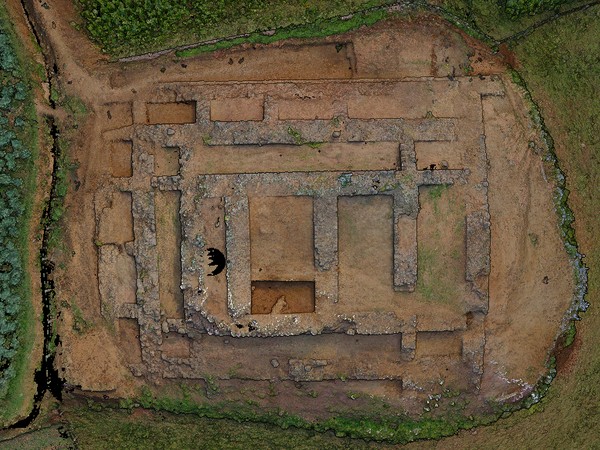
For centuries, written sources have referred to a large episcopal church at Altino. Yet no physical trace of it had ever been found. Now, archaeologists have almost certainly located it. The 2026 excavation campaign by Ca’ Foscari University of Venice, conducted between September and October at the Altino Archaeological Park, together with evidence collected in 2025, has identified the city’s Late Antique and early medieval episcopal church and probably the entire early Christian complex: the church and bishop’s palace, occupying a substantial part of an insula, or city block, of the Roman town.
The church is a rectangular hall measuring approximately 30 by 20 metres, without an apse, facing east, and founded between the late 4th and the first half of the 5th century AD. To the east stands a large porticoed building with a complex layout, internal partition walls and annexes, believed to be the bishop’s palace. Much of the foundation was built using paving stones taken from Roman roads, a striking indication of the public authority exercised by the bishop over the city.
The excavation is directed by Diego Calaon (Ca’ Foscari University of Venice) and co-directed by Elisa Possenti (University of Trento), with funding from Ca’ Foscari to support archaeological research and in collaboration with the Altino Archaeological Park – National Archaeological Museums of Venice and the Lagoon. The hypothesis that the building is the episcopal church emerged from a reassessment of archaeological evidence from the Roman and Late Antique periods, conducted by excavation supervisors Jacopo Paiano and Eleonora Delpozzo. The foundations were built largely from paving stones taken from Roman roads, a striking indication of the bishop's public authority over the city.
For the first time, the discovery provides a precise location and tangible physical evidence of Altino’s early Christian heritage, which had previously remained elusive. It also sheds new light on a period in the city’s history that was little understood until just a few years ago: the transformation of Altino and the subsequent transfer of the episcopal seat to Torcello.
The excavation is directed by Diego Calaon (Ca’ Foscari University of Venice) and co-directed by Elisa Possenti (University of Trento), with funding from Ca’ Foscari to support archaeological research and in collaboration with the Altino Archaeological Park – National Archaeological Museums of Venice and the Lagoon. The hypothesis that the building is the episcopal church emerged from a reassessment of archaeological evidence from the Roman and Late Antique periods, conducted by excavation supervisors Jacopo Paiano and Eleonora Delpozzo.
The church of Heliodorus in the letters of St Jerome
Written sources had already established that Altino had a bishop and an important monumental area dedicated to worship. References to the church appear in the letters of St Jerome to Heliodorus, the first bishop of Altino, and to his nephew Nepotian, which describe a thriving, populous city in Late Antiquity. In Letter 60, written in AD 396, Jerome describes the young priest’s care for the church, including its altar, walls, floors, curtained doorways and sacred vessels. This corresponds to the period when archaeologists date the foundation of the newly discovered church.

The Bishop's Church
The building’s size and orientation strongly suggest that it was the episcopal church. The hall does not align with the Roman street grid but faces east, consistent with liturgical practice. Its apse-less plan follows the northern Adriatic tradition found at Aquileia.
Archaeologists date the original building's foundation to between the late 4th and the first half of the 5th century AD. This dating is based on materials recovered during the excavation, particularly from the robber trenches left by the removal of building materials, and on an overall assessment of the surrounding neighbourhood.
The church stands almost opposite the former Altino Museum, now AltinoLab, in an Augustan-period neighbourhood that was reorganised as an early Christian quarter, along the road leading to the harbour gate and the Sioncello canal. Between the 6th and 7th centuries, a portico and a cemetery with brick-lined graves were built in front of the façade. These are currently being studied in collaboration with the University of Ferrara (Barbara Bramanti). Like the walls, the graves were subsequently stripped of their materials. The bricks lining the graves were removed for reuse, disarranging the human remains in the process. This combination of burials and spoliation makes the site a particularly valuable archaeological record. Anthropological analysis and radiocarbon dating will help establish the number of individuals buried, the phases of burial and the period when the complex was dismantled.
Findings from the area also include religious and Christian artefacts, notably a small container decorated with a cross. Together with the architecture and burials, these findings provide further evidence of the building’s religious function

The bishop’s palace?
The major discovery of the 2026 excavation campaign is that the church did not stand alone. On its eastern side, it was connected to a second large building, which, according to the latest excavation evidence, appears to have had a complex layout and a portico. The substantial foundations suggest that it was probably a two-storey building, interpreted as the bishop’s palace. The upper floor may have housed members of the clergy, while the ground floor may have contained spaces for the privileged burials of bishops or prominent individuals, as suggested by the remains of Late Antique mosaics. The baptistery has yet to be found and may lie in the unexplored areas of the insula.
Foundations built from roads: the bishop as a public authority
The foundations were constructed using trachyte paving stones taken from Roman roads and reused upside down. Late Roman law protected roads as public infrastructure. The fact that the bishop was able to dismantle them suggests that he exercised public authority, reflecting the growing role of the Church in governing the city.
Parts of this building had already been uncovered during excavations in the 1980s and earlier archaeological investigations, and some remains are still visible at the site. However, only by examining foundations and underlying structures at numerous locations through a rigorous stratigraphic approach has it been possible to connect the scattered evidence. The Altino Archaeological Park provided access to all areas available for investigation, allowing researchers to piece together the archaeological puzzle and identify where the church and palace once stood.
Why the cathedral had remained hidden
The Late Antique remains of Altino were destroyed by two successive processes: intensive agriculture, which removed the uppermost archaeological layers, and the systematic stripping of bricks and stones for reuse in construction projects at Torcello and Venice, which absorbed enormous quantities of building materials from the ancient city. As a result, excavations at Altino rarely uncover intact buildings or foundations. Instead, archaeologists generally find robber trenches: trenches dug to extract building materials, which preserve the outlines of vanished structures as negative impressions. Careful stratigraphic interpretation of these traces proved crucial to the discovery. Furthermore, provincial road SP 41 dir. (Via Sant’Eliodoro) cuts through the middle of the church.
From Altino to Torcello: a planned relocation, not a flight
According to tradition, the nobility of Altino fled the city to escape barbarian invasions. However, Ca’ Foscari’s excavations at Torcello have shown that the island served as Altino’s port, where a new religious building was established in the 7th century. The transfer of the episcopal seat appears to have been a deliberate decision, driven primarily by demographic and environmental factors. The abandonment of the church at Altino was equally intentional: it was dismantled piece by piece by the first half of the 7th century, consistent with the Torcello inscription dated AD 639 and with archaeological evidence from excavations of the island’s baptistery. From that point onwards, Altino became a major source of reusable building materials, while its population centre shifted towards the lagoon
Diego Calaon, direttore dello scavo, Università Ca' Foscari Venezia:
"Per la prima volta possiamo dire con ottima probabilità dove si trovavano la chiesa e il palazzo del vescovo di Altino. Le fonti ci dicevano che dovevano esistere; ora ne abbiamo le prove archeologiche. Questa analisi ci permette di raccontare in modo nuovo il passaggio da Altino a Torcello e a Venezia: non una fuga improvvisa, ma una trasformazione lunga e governata, in cui la città antica e i suoi abitanti diventano promotori di scelte economico e politiche, oltre che gli spazi dell’Altino antica diventare riserva di materiali da cui nasce un nuovo modo di abitare la laguna."
Elisa Possenti, co-direttrice, Università di Trento: ""Le ricerche in corso stanno scrivendo un capitolo nuovo nella storia della città di Altino che grazie a queste nuove scoperte si viene ad affiancare ad altri importanti centri episcopali dell'Italia nord-orientale tardoantica. Quanto potevamo immaginare dalle descrizioni delle fonti scritte sta finalmente acquisendo una sua materialità che aiuterà a rileggere con occhi nuovi la figura dei primi vescovi altinati le cui vicende sono per lo più avvolte nella leggenda". "
Marianna Bressan, Direttrice dei Musei archeologici nazionali di Venezia e della Laguna: “La collaborazione con l’Università Ca’ Foscari Venezia rientra nel progetto di ricerca complessivo del Parco archeologico di Altino, che prevede l'uso dello strumento della concessione di scavo agli Istituti di ricerca in funzione dello sviluppo coordinato delle conoscenze sulla città antica. La presenza dell'Università sul campo, inoltre, aggiunge al valore scientifico quello formativo delle nuove generazioni di archeologi e archeologhe.
Gli scavi in corso sono particolarmente significativi, perché si concentrano sulle fasi storiche post-antiche, più sfuggenti a causa delle bonifiche otto-novecentesche, e perché stanno recuperando dati di rilievo, del tutto ignoti precedentemente, relativi agli edifici ecclesiastici di Altino tardoantica e altomedievale. Per i Musei archeologici nazionali di Venezia e della Laguna, la ricerca ad Altino permette di inserire la storia della città in una prospettiva più ampia, capace di raccontare le trasformazioni del territorio veneziano dall’antichità alla formazione della laguna che conosciamo oggi”
Diego Calaon, excavation director, Ca’ Foscari University of Venice:
“For the first time, we can say with a very high degree of confidence where the church and the bishop’s palace of Altino stood. Written sources told us they must have existed; now we have archaeological evidence to support this. This analysis allows us to tell the story of the transition from Altino to Torcello and Venice in a new way: not as a sudden flight, but as a long, managed transformation in which the ancient city and its inhabitants actively shaped economic and political decisions. At the same time, the buildings and spaces of ancient Altino became a source of materials that helped create a new way of inhabiting the lagoon.”
Elisa Possenti, co-director, University of Trento:
“The ongoing research is opening a new chapter in Altino’s history. Thanks to these discoveries, the city can now be considered alongside other major episcopal centres in Late Antique north-eastern Italy. What we could only imagine from descriptions in written sources is finally taking physical form. This will help us reassess the lives and roles of Altino’s earliest bishops, whose histories have largely been shrouded in legend.
Marianna Bressan, Director of the National Archaeological Museums of Venice and the Lagoon:
“Our collaboration with Ca’ Foscari University of Venice forms part of the Altino Archaeological Park’s wider research programme, which involves granting excavation permits to research institutions to promote the coordinated development of knowledge about the ancient city. The University’s presence on site also adds an important educational dimension to the scientific value of the research, providing training opportunities for the next generation of archaeologists.
The ongoing excavations are particularly significant because they focus on the post-Roman phases of the city’s history, which are more difficult to investigate due to land reclamation works carried out during the 19th and 20th centuries. They are also revealing important, previously unknown evidence concerning the ecclesiastical buildings of Late Antique and early medieval Altino. For the National Archaeological Museums of Venice and the Lagoon, research at Altino provides an opportunity to view the city’s history in a broader context, tracing the Venetian area’s transformation from antiquity to the formation of the lagoon as we know it today.”
The project and research team
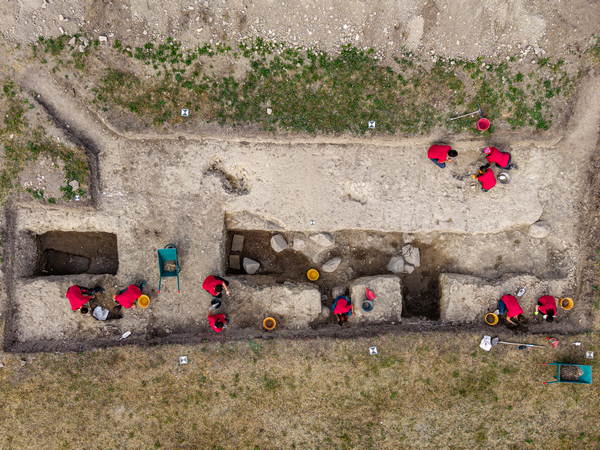
The 2026 excavation campaign builds on research initiated in summer 2025, when an initial investigation lasting approximately two months near the former museum along Via Sant’Eliodoro identified the south-western corner of a building with foundations made of Roman paving stones. The research originated from a systematic review of the Archaeological Park’s archives, previous excavations and associated finds, and is being conducted under a ministerial excavation permit.
The excavation is directed by Diego Calaon, professor of Landscape Archaeology and Ancient Topography at Ca’ Foscari University of Venice, and co-directed by Elisa Possenti of the University of Trento, in collaboration with Luigi Sperti of Ca’ Foscari University of Venice. The project is funded through Ca’ Foscari’s archaeological research support programme and carried out in collaboration with the Altino Museum and Archaeological Park – National Archaeological Museums of Venice and the Lagoon, which has made all accessible areas available for investigation.
Fieldwork is supervised by two early-career researchers trained at Ca’ Foscari: Jacopo Paiano, a subject expert and now a PhD student at the University of Trento, and Eleonora Delpozzo, also a subject expert. The excavation work itself is carried out by Ca’ Foscari students and postgraduate archaeology students.
Study of human remains – physical anthropology: Professor Barbara Bramanti and Jessica Mongillo, University of Ferrara.
Study of ceramic finds: Francesca Mombelli, University of Salento.
The next steps have already been planned: systematic analysis of the finds and human remains, radiocarbon dating and geophysical surveys in the unexplored areas of the insula, in search of the baptistery and the remainder of the episcopal complex.