

John Fante: Thirty Years After
December 11-12, 2025, Venice
Conference
Thirty years have passed since the legendary May 1995 John Fante Conference at California State University, Long Beach, which resulted in the collection of essays “John Fante: A Critical Gathering” (1999) edited by Stephen Cooper and David Fine, a groundbreaking pillar for Fante scholars and the U.S. letters.
During these three decades, John Fante’s legacy has accomplished two public outcomes: the John Fante Festival “Il dio di mio padre” in Torricella Peligna (Abruzzo) – Fante’s father’s hometown – since 2006, and the 2010 inauguration of John Fante Square at the corner of 5th Street and Grand Avenue in downtown Los Angeles.
But the 1995 Conference gave also a decisive impulse to Fante’s works’ spreading across the world and to its never-ending scholarship both in the U.S and Europe, until very recent times, whether in form of articles, monographs, miscellaneous collections, book chapters, and translations.
The reason for such prosperous research is that Fante’s literature, as for every classic, keeps changing with time and with new readers demanding for new understanding. Fante’s novels and short stories, which cover a period of 50 years, still hold as spaces of (dis)illusions, conflicts, and encounters, dealing with peoples, spaces, natural elements, and diverse cultures across the Mountains of Colorado, Southern California, and Los Angeles. They trace relevant Southern Californian geographies and histories: the degraded 1930s Bunker Hill, liminal neighborhoods such as Terminal Island with its docks and canneries, a then-isolated Malibu, the suburban Wilshire Boulevard, the countryside of Roseville, and the Mojave Desert.
Fante’s works are valuable multiethnic narratives which encompass interactions among diasporic, indigenous and segregated communities (Italian American, Jewish American, Asian American, Mexican American, African American), but also generational and political countercultures in 1930s and 1960s Los Angeles.
Fante’s relationship with Italy and Europe, his work as screenwriter, along with his late works – e.g., “My Dog Stupid” and “Bravo, Burro!” – still need deeper analysis.
This international conference seeks to investigate these new and unexplored themes, influences, and techniques in Fante’s prose while also re-examining the rich body of existing scholarship on his work.
Programme
Full programme

1995 Long Beach Conference
Keynote speakers

Stephen Cooper first read “Ask the Dust” in 1974. He is the author of “Full of Life: A Biography of John Fante” and editor of four other volumes by or about Fante.
For over forty years he taught literature, film, and creative writing at California State University, Long Beach, where he is Professor Emeritus of English.
“River of Angels”, a collection of his short stories, will appear later this year.
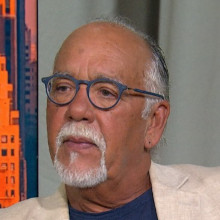
Fred L. Gardaphe is Distinguished Professor of English and Italian/American Studies at Queens College/CUNY and the John D. Calandra Italian American Institute. He is a Fulbright Fellow (University of Salerno, Italy, 2011) and past president of the Italian American Studies Association (formerly AIHA), MELUS, and the Working Class Studies Association. His books include “Italian Signs, American Streets”, “Dagoes Read”, “Moustache Pete is Dead!”, “Leaving Little Italy” and “From Wiseguys to Wise Men: Masculinities and the Italian American Gangster”. He has completed a study of humor and irony in Italian American culture that will be published by Penn State University Press.
Call for abstracts
Venue
The conference will be held in:
- CFZ - Ca’ Foscari Zattere (Aula Tesa 1), Dorsoduro 1392, Fondamenta Zattere, Venice on 11th December 2025
- Ca’ Foscari (Aula Baratto), Dorsoduro, 3246, Venice on 12th December 2025
Getting to Venice by plane
Arrival at "Marco Polo" airport in Venice (VCE)
From the airport you can reach Mestre or Venice (Piazzale Roma) by land (on a bus or taxi) or take the water route to Venice (Alilaguna boat or water taxi).
Getting to Venice by train
The Venice railway station is “Venezia Santa Lucia”. The main train companies in Italy are Trenitalia and Italo. You can purchase the tickets at the train station or online, directly from the relevant websites.
Getting to Venice by car
Piazzale Roma and Tronchetto are the two areas in Venice that can be reached by car and where you can find the following park terminals:
Getting around Venice
For more tourist information please visit Venezia Unica, the Official City of Venice Tourist and Travel Information website.
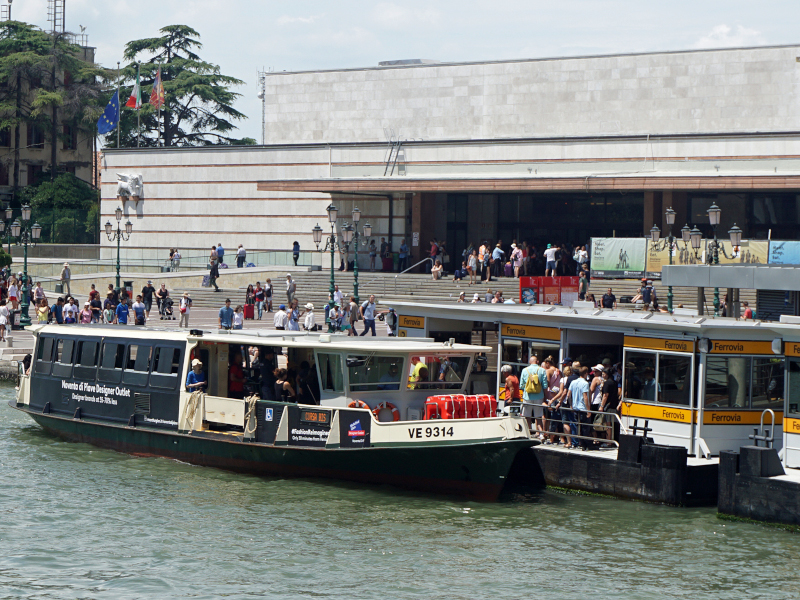
Photo "Vaporetto stop Stazione di Venezia Santa Lucia 07 2017 4038.jpg" by Mariordo (Mario Roberto Durán Ortiz) CC BY-SA 4.0.
Support


Scientific Committee
- Elisa Bordin, Ca’ Foscari University of Venice
- Enrico Mariani, Ca’ Foscari University of Venice
Organizing Committe
- Elisa Bordin, Ca’ Foscari University of Venice
- Enrico Mariani, Ca’ Foscari University of Venice
- Andrea Acqualagna, University of Bergamo
- Felicita Gelmini, Ca’ Foscari University of Venice