

Chemical Sciences and Technologies for Cultural Heritage
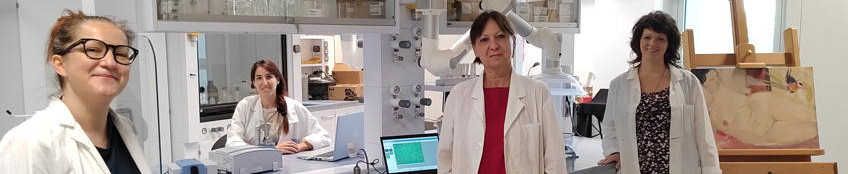
The laboratory is active at a national and international level in the study of the materials of art (traditional, modern and contemporary), archaeology and architecture, in the evaluation of natural and anthropic impacts on artefacts - with particular reference to coastal environments - and in the implementation of methodologies for conservation and degradation prevention. Special attention is devoted to the theme of conservation sustainability, as expressed through the proposal of materials and methodologies with reduced impact on the environment and the health of the operators.
As a point of reference for public and private institutions in the area, the group collaborates, among others, with Fondazione Musei Civici, the Superintendency, the Municipality of Venice and various companies in the area to develop specific methodologies for the study and protection of cultural heritage.
Lines of research
The research group works in the field of cultural heritage, studying materials and their behaviour in relation to environmental conditions and developing new technologies for the conservation of architectural, artistic and archaeological heritage.
Ours is an integrated approach, in which compatibility and sustainability play an essential role.
- Study of mobile works
- Non-invasive and micro-invasive diagnostics (paintings, historical textiles, paper and wood materials)
- Identification of constituent materials and their behaviour in relation to specific environmental parameters
- Study of modern and contemporary heritage
- Archaeometric studies
- Characterisation of archaeological materials (ceramic, metal, glass, bone, etc.)
- Production technologies, deterioration processes, provenance
- Evaluation of products and methods with reduced environmental impact for the conservation of archaeological finds
- Study of architectural heritage
- Non-invasive and micro-invasive diagnostics and monitoring of natural and artificial stone materials
- Evaluation of the effectiveness of methodologies, materials and techniques for intervening on the built environment
- Climate change and architectural heritage
- Research in the field of street & urban art, wall paintings
- Technologies for conservation and restoration
- Technologies for eco-friendly interventions
- Monitoring and preventive maintenance projects
- Formulation and optimisation of products and technologies for the conservation of movable and immovable assets
- Education and dissemination of science for cultural heritage
- Educational and dissemination workshops with private and public institutions
- Technical and scientific seminars with experts in the field
- Interactive paths to discover the connections between history, art and science
Collaborations and agreements
Collaborations:
- Collaboration with the Ca' Pesaro International Gallery of Modern Art [ITA]
- Collaboration with Universitat Politècnica de València, Spain
- Collaboration with Ateneo Veneto [ITA]
- Collaboration with Stanford University
- Collaboration with National Technical University Of Athens
- Collaboration with University of Èvora [POR]
- Collaboration with Padua's CNR-ICMATE and Bologna's CNR-ISAC [ITA]
Agreements:
- Research agreement with Superintendency of Archaeology, Fine Arts and Landscape for the Municipality of Venice and the Lagoon [ITA]
- Research agreement with Fondazione Musei Civici di Venezia [ITA]
- Research, scientific communication and teaching agreement with Fondazione Centro per la conservazione ed il restauro dei beni culturali “La Venaria Reale” [ITA]
- Agreement with Sincrotrone ELETTRA di Trieste [ITA]
- Research agreement with Italian Institute of Technology IIT [ITA]
- Research agreement with CESMAR7 [ITA]
Studies and projects
Equipment
The laboratory uses state-of-the-art equipment for its research for the study and non-invasive analysis of materials.
Available equipment
CSA "conservation of cultural heritage" equipment
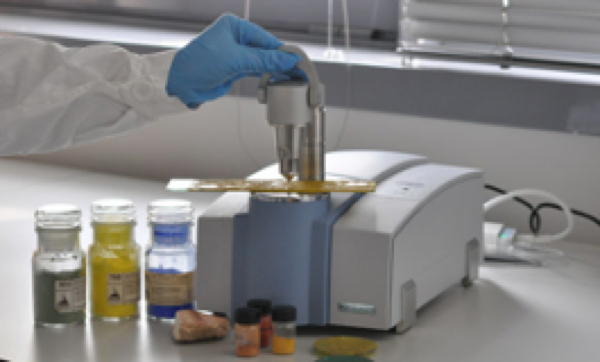
The group can access the University equipment for the conservation of cultural heritage managed by the CSA [ITA] and possesses the specialised skills to use, process and interpret data also on behalf of third parties of:
- Specim IQ and Specim spectral cameras VNIR- SWIR for spectroscopic imaging analysis in the VIS-NIR to SWIR spectral range
- FieldSpec 4 SR -Malvern PanAnalitical portable spectroradiometer in the spectral range 350 - 2500 nm for real-time reflectance, radiance or irradiance measurements Portable FT-IR-ATR spectrometer Alpha II Bruker
- BRAVO Bruker Hand-held Raman Spectrometer
- Thermo Scientific DXRTM3 Dispersive Raman Microscope
- CRONO Bruker X-ray fluorescence spectrometer for macro-area diagnostic investigations
- QSun Xe-3 Xenon Test Chamber
- Gas chromatography system with single quadrupole mass spectrometer (gc-ms) with pyrolyser
Benchtop FT-IR-ATR spectroscopy
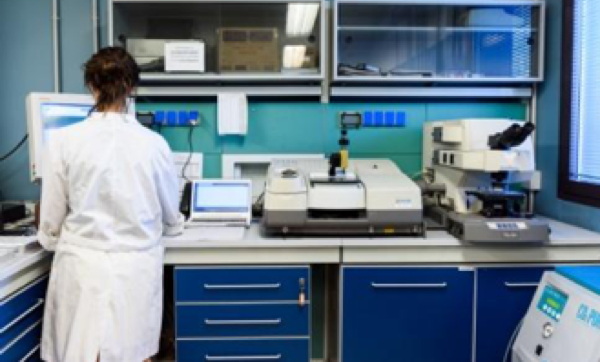
Acquisition of mid-infrared transmission or reflection spectra using diamond crystal ATR units for functional group analysis.
- Range 4000-400 cm-1
- Resolution 4 or 2 cm-1
Mercury intrusion porosimeter
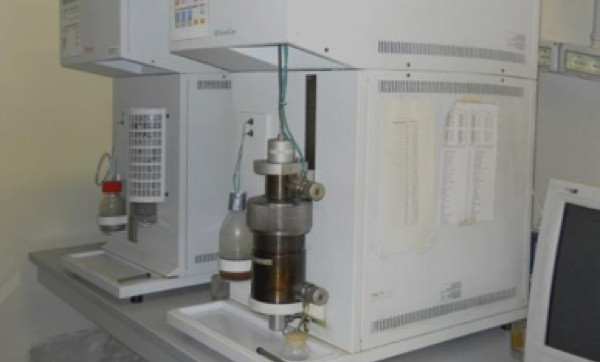
- Two-unit Pascal 140 and Pascal 240 for macro- and micropores and powders
- Diameter porosity in the 116 -3.8 µm (P140) and 15 -0.0074 µm (P240) ranges
- Particle diameters 330-15 µm (P140) and 40-0.015 µm (P240)
- Capacitive mercury intrusion detection system
- Pressure: 0.01 KPa- 400KPa and 0.1-200MPa
The mercury intrusion porosimeter enables the evaluation of the total open porosity and open pore distribution of non-compressible porous materials (ceramics, mortars, wood, clays, polymers). It offers the possibility of measuring the surface area and radius of granular materials and powders.
Thermal analyses
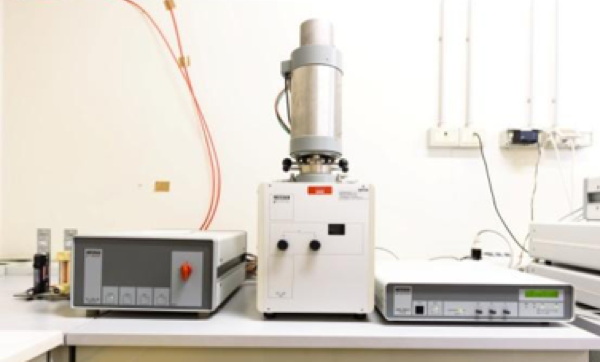
Thermogravimetry with Differential Scanning Calorimetry (TG-DSC)
- Instrument allowing for the simultaneous acquisition of the thermogravimetric and calorimetric curve
- Temperature range 25°C -1400°C
- Analysis possible in inert (N2) and oxidising (Air/ N2) atmospheres, possibility of agreement for other atmospheres
Information about the thermal behaviour of samples allows transformations such as glass transition, melting, dehydration, decarbonisation, oxidation, crystalline phase transitions (polymorphs), thermal degradation to be studied.
Dynamic Mechanical Analysis (DMA)
- Temperature range: -170°C a 600°C
- Frequency range: 0.01 a 100 Hz
- Force range: 24 N (12 N static and 12 N dinamic)
Dynamic Mechanical Analysis (DMA) records temperature-dependent visco-elastic properties and determines elastic modulus and damping values. It makes it possible to observe elastic and plastic behaviour, ductile or brittle fractures, polymer transitions.
Optical microscopy
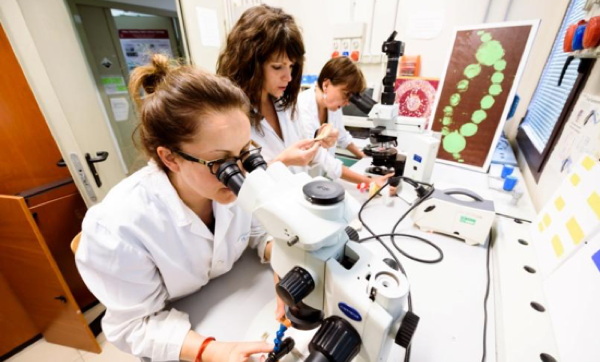
- Zeiss Stemi 508 trinocular stereo microscope, up to 100X magnification with apochromatic lens
- Olympus SZX16 binocular stereo microscope, magnifications up to 115X
- Olympus BX41 transmission microscope; magnifications up to 400X
- Dino-Lite hand-held digital microscopes in visible light and UV (400nm), magnifications 20-50X, 200X
Xantus-1TM Portable Raman Spectrometer
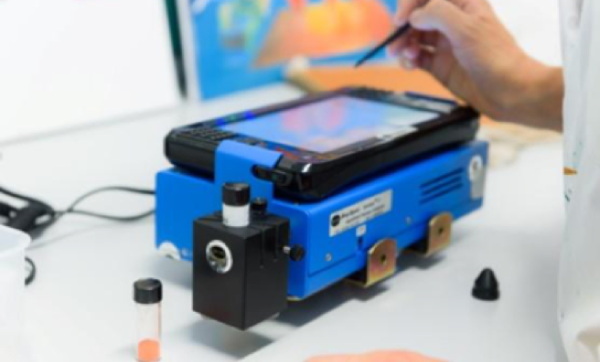
- Range 500-1800 cm-1
- Resolution 10-12 cm-1
- Laser at 785.59 n, 100-500 mW
Portable Raman spectrometer for non-invasive analysis of materials with Raman scattering in the range 500-1800 cm-1.
UV-Vis Konica-Minolta spectrophotometer
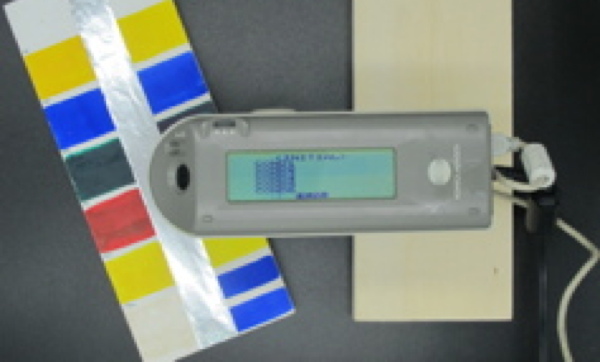
- Range 360-740 nm with 400 nm UV filter
- Illuminant D65 (colour temperature 6504° K)
- Standard observer at 10°
- Specular component included (SCI) or excluded (SCE)
Colour analysis with recording of colorimetric spectra in the range 360-740 nm and acquisition of CIE L*a*b* colorimetric parameters.
Photographic imaging, infrared reflectography and UV fluorescence
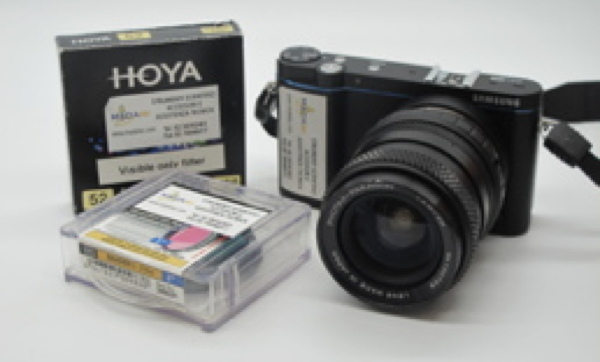
- NX500 Multispectral Digital camera BSI 28Mpxl Body s/n 8JFHCN8G300002F
- Camera body 20.3 MP APS-C CMOS sensor digital camera equipped with interchangeable lenses
- 32 mm lens
- HOYA Visible filter, 60 nm HBW/320-380 nm filter; infrared and ultraviolet filters
Visible light, infrared, ultraviolet and fluorescence-induced photography for analysing the surface of works in different spectral ranges.
Gas chromatography combined with mass spectrometry (GC-MS)
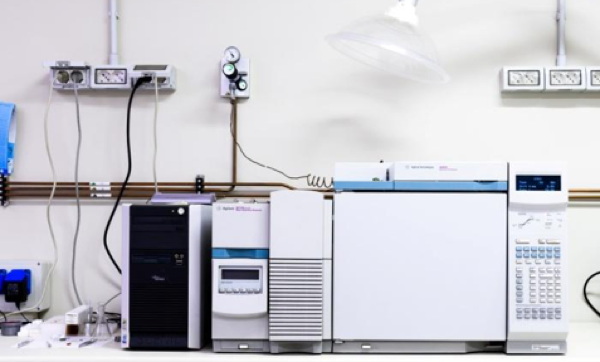
- Agilent 6890N chromatography gas consisting of injection system, oven, column
- Agilent 5975 electronic impact (EI) mass spectrometer
- equipment of several chromatography columns for separation of polar and apolar compounds
Gas chromatography coupled with mass spectrometry is used for the analysis of complex mixtures of organic compounds, such as oils, protein binders, saccharide compounds.