


Wilmer Pasut, Director of the Department of Environmental Sciences, Informatics and Statistics
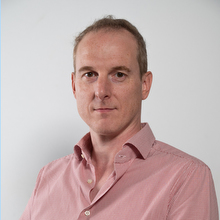
He is a Full Professor of Building Physics. A mechanical engineer by training, he obtained a PhD in Building Physics from the University of Padua. He began his research career as a postdoctoral researcher and later as a researcher at the University of California, Berkeley, before joining the European Academy of Bolzano (EURAC). Since joining Ca' Foscari in 2018, he has played a key role in the Department's organisation, contributing to accreditation and now coordinating both the Bachelor's degree programme in Environmental Engineering for the Ecological Transition and the Master's degree programme in Environmental Engineering for the Green Transition. He also served for several years as the Department's Delegate for Civic Engagement.
Our research
Research areas
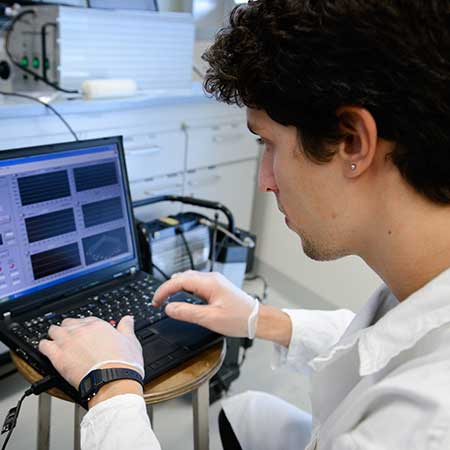
The activities carried out at the Department involve various fields of research, ranging from environmental sciences to informatics and statistics, but also to technologies for the conservation of cultural heritage.
Our research topics intersect the ones related to the ecological transition and to digital transformation, which today are considered essential to the creation of a new, sustainable development of our society and our economy.
Our research — which is often interdisciplinary in its approach — is developed also thanks to collaborations with public institutions and local businesses, and it is financed by public competitions on a regional, national and European level.
The research conducted at the Department of Environmental Sciences, Informatics and Statistics involves various areas, including biology, ecology, environmental chemistry, analytical chemistry, chemistry for cultural heritage, environmental engineering, informatics, Earth sciences, and statistics. The bibliographic information regarding the Department’s publications can be accessed through ARCA, Ca’ Foscari’s open-access archive.
Agenda
07
October
at: 10:00
M9 - Museo del ‘900, Via Giovanni Pascoli 11 Mestre (VE)
08
October
at: 08:45
Auditorium Danilo Mainardi, edificio ALFA - Campus Scientifico via Torino
09
October
at: 12:00
Selezione rappresentanti studenti CPDS e Gruppi AQ, biennio accademico 24/25 - 25/26 e 26/27 - 27/28
14
October
at: 10:00
M9 - Museo del ‘900, Via Giovanni Pascoli 11 Mestre (VE)
News
Ca’ Foscari Software Tool Claims a Spot on the Global Podium
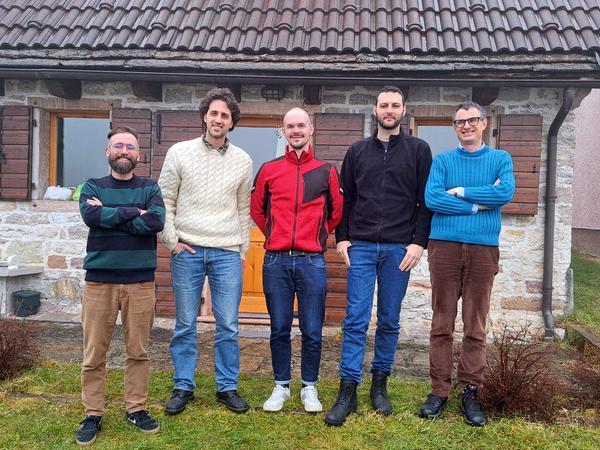
At the SV-COMP 2026 software verification competition, LiSA technology secured third place in the Java programs track, earning a bronze medal. This achievement is especially notable as it is the tool’s first participation in the contest.
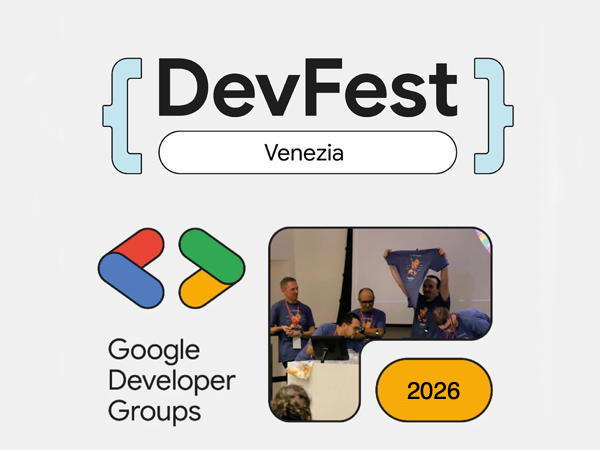
DevFest Venice 2026 will take place on Saturday, October 24, 2026, from 9:00 AM to 6:30 PM at the ALFA Building (Scientific Campus, Via Torino). We invite all students to take this opportunity to plan their internships. Don't miss out - your future starts here.
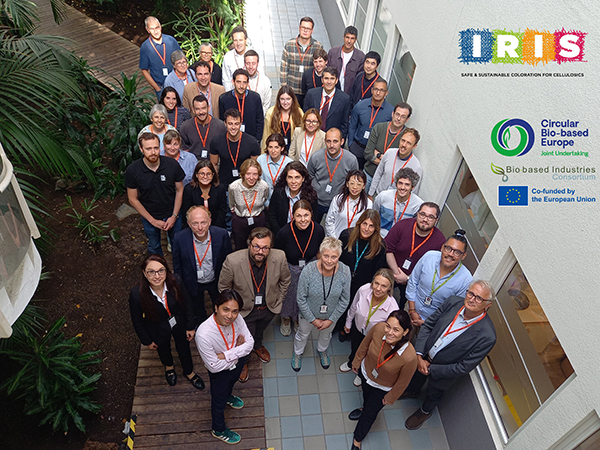
The Innovation Action IRIS - A Prism for Safe and Sustainable Colouration of Cellulosics started on 01 September in Goteborg (SE) and will last until August 2030, funded through the CBE JU (Circular Bio-Based Europe Joint Undertaking; GA 101292536).
IRIS aims at transforming cellulosic textile colouration by replacing hazardous dyeing and printing processes with safer and more sustainable bio-based colourants alternatives. Dyes and pigments will be derived from forestry and agriculture sidestreams and designed to enable circularity and recyclability of the final textile products.

Julia Prakofjewa wins the JEET Emerging Scientist Award in Ethnobiology
Julia Prakofjewa, Postdoctoral Researcher at Ca’ Foscari University of Venice, is an exceptional early-career scholar whose work fundamentally reshapes how ethnobiology understands local ecological knowledge (LEK).