
About
The Centre for Studies in Russian, Central Asian and Caucasian Art (CSAR) – officially inaugurated on March 6, 2011 – is one of the research centers of the Department of Philosophy and Cultural Heritage at Ca’ Foscari University of Venice.
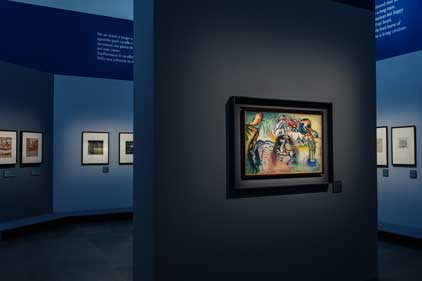
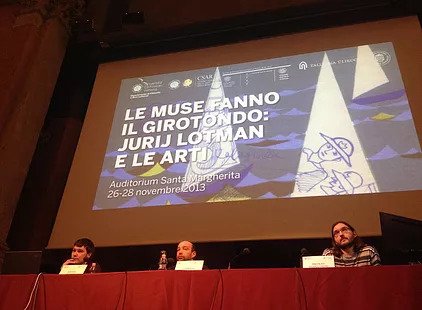
The Centre promotes interdisciplinary research activities and international scientific cooperation aimed at the study of the artistic cultures of its areas of focus. These activities take the form of conferences, academic meetings, scholarly publications, and exhibition projects, which have long established CSAR as a distinguished point of reference in the international field of art historical studies.
The Centre for Studies in Russian, Central Asian and Caucasian Art (CSAR) – officially inaugurated on March 6, 2011 – is one of the research centers of the Department of Philosophy and Cultural Heritage at Ca’ Foscari University of Venice.
The Centre serves as a permanent space for interdisciplinary dialogue and scholarly exchange, fostering interaction among researchers, students, museum professionals, and curators, and promoting new research perspectives on the artistic cultures that lie at the core of its institutional mission.
Over the years, CSAR has consistently and progressively developed a coherent trajectory through the reassessment of established cultural geographies, the strengthening of international scientific cooperation, and the production of rigorous and innovative knowledge on contexts that remain underexplored in Western scholarship.
The Centre’s activities are distinguished by an interdisciplinary approach grounded in the semiotics of culture: it integrates art history, visual studies, and cultural heritage studies with the collection of literary sources, historical studies, and archival documents. It also promotes direct engagement with works of art, with the aim of interpreting artistic production as an expression of broader social, political, and cultural dynamics. In doing so, it contributes to overcoming Eurocentric perspectives and advances a transnational and dialogical understanding of modernity.
Over fifteen years of activity, CSAR has established and consolidated a prominent international profile: more than 60 exhibitions have been organized or co-organized, many of them internationally touring; numerous film festivals and retrospectives have been hosted; over 40 volumes have been published, including exhibition catalogues, conference proceedings, and translations of sources and texts. The Centre has also participated in nearly 20 international conferences, often of significant scholarly relevance, and has promoted around twenty seminars, guest lectures, and study meetings addressed to both students and the general public. These achievements have also been made possible thanks to a well-established network of international partnerships. The Scientific Committee brings together art historians, museum directors, curators, critics, and Slavists from universities and institutions across several countries, including Italy, the United States, and Germany.
Venice, with its historic role as a crossroads between Europe and Asia, provides a natural and strategic setting for these activities, reinforcing the Centre’s vocation for intercultural exchange. Within this framework, CSAR positions itself as a platform for redefining research perspectives, enhancing previously underrepresented narratives, and promoting a cultural dialogue capable of crossing geographical and disciplinary boundaries.
Organigramma

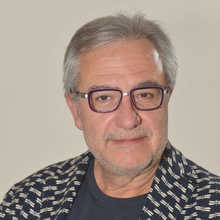


Scientific Secretariat



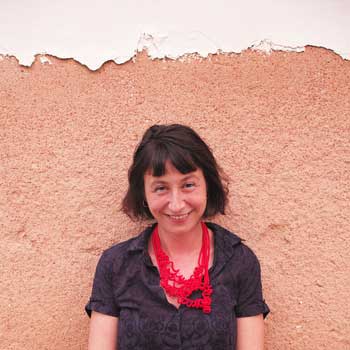
Scientific Committee
(State Institute for Art Studies, Moscow)
(University of Trieste)
(Sapienza Università di Roma)
(Ca' Foscari University of Venice)
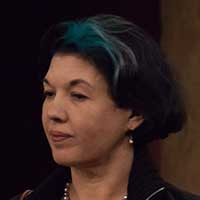
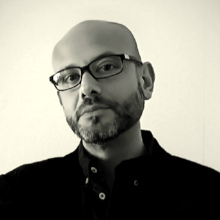
(Ca' Foscari University of Venice)



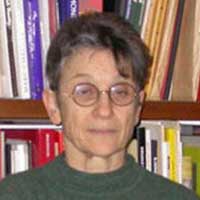
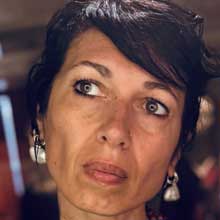
(Ghent University, Belgium)
(University of Bologna)
(Ca' Foscari University of Venice)
(Institut für Slavistik, Otto-Friedrich-Universität Bamberg)
(University of Pisa)
(Ca' Foscari University of Venice)

(University of Leeds)
(University of Pisa)