

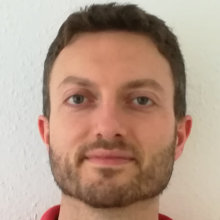
Massimo SGARZI
- Position
- Associate Professor
- Telephone
- 041 234 8566
-
massimo.sgarzi@unive.it
- Academic discipline
- General and Inorganic Chemistry [CHEM-03/A]
- Website
-
https://www.unive.it/people/massimo.sgarzi (personal record)
- Office
-
Department of Molecular Sciences and Nanosystems
Website: https://www.unive.it/dep.dsmn
Where: Campus scientifico via Torino
Room: room 609 (ALFA building, 6th floor) / research lab 8 (BETA building, 3rd floor), lab 4 (BETA building, 2nd floor)
Teaching activity current year
Teaching activity previous years
Publication highlights
Afiouni N.; Appiah A.P.; Barta K.; Brandt-Talbot A.; Calado V.; Castellan I.; Crestini C.; da Costa Lopes A.M.; Deuss P.J.; Galluccio L.; Gigli M.; Guizani C.; Hu C.S.Y.; Klajmon M.; Lange H.; Lindner J.-P.; Nejad M.; Ponnudurai A.; Rasaq S.A.; Rezende C.A.; Rinaldi R.; Samec J.S.M.; Schwartmann S.M.K.; Sgarzi M.; Singh S.; Suss R.; Westwood N.J.; Xiao L.-P. Lignin stabilisation and degradation in lignocellulosic fractionation processes: general discussion in FARADAY DISCUSSIONS, vol. 263, pp. 259-280 (ISSN 1359-6640)
DOI 2026,
Journal Article - ARCA card: 10278/5115537
Afiouni N.; Appiah A.P.; Argyropoulos D.S.; Brandt-Talbot A.; Bruijnincx P.C.A.; Calado V.; Crestini C.; da Costa Lopes A.M.; Deuss P.J.; Dieval L.; Dominguez J.C.; Elder T.; Galluccio L.; Gigli M.; Guizani C.; Klajmon M.; Krasodomski W.; Lange H.; Lindner J.-P.; Liu Z.; Luzardo J.; Nejad M.; Ponnudurai A.; Rajagopalan N.; Rasaq S.A.; Rinaldi R.; Samec J.S.M.; Sgarzi M.; Singh S.; Westwood N.J.; Wohlert M. Native lignin solvation and extraction: general discussion in FARADAY DISCUSSIONS, vol. 263, pp. 138-163 (ISSN 1359-6640)
DOI 2026,
Journal Article - ARCA card: 10278/5115542
Simonsen, Tor I.; Djajadi, Demi T.; Ponzecchi, Andrea; Crestini, Claudia; Gigli, Matteo; Sgarzi, Massimo; Thomsen, Sune T. Lignin Molar Mass Estimation by Dispersion Analysis in MACROMOLECULAR RAPID COMMUNICATIONS, vol. 46 (ISSN 1022-1336)
DOI 2025,
Journal Article - ARCA card: 10278/5099849
Langiano, Francesca; Fernandes, Sofia Moreira; Barrocas, Beatriz Trindade; Del Tedesco, Anna; Riello, Pietro; Ferreira, Maria João; Marques, Ana C.; Sgarzi, Massimo; Gigli, Matteo; Crestini, Claudia Rice husk silica derived MICROSCAFS® for a green solar-driven photodegradation of minocycline in aqueous media in JOURNAL OF WATER PROCESS ENGINEERING, vol. 70 (ISSN 2214-7144)
DOI 2025,
Journal Article - ARCA card: 10278/5099770
Sgarzi M.; Gigli M.; Babar S.; Pajer N.; Peroni G.; Crestini C.; Tverdokhleb N.; Dianat A.; Gutierrez R.; Cuniberti G. Supramolecular interactions in softwood kraft lignin nanoparticles in FARADAY DISCUSSIONS, vol. * (ISSN 1359-6640)
DOI 2025,
Journal Article - ARCA card: 10278/5105978
List of publications
Curriculum vitae
Massimo Sgarzi obtained his MSc degree in Photochemistry and Chemistry of Materials at University of Bologna, Italy, in 2008. He stayed at the Photochemical Nanosciences Laboratory for his PhD studies at University of Bologna, under the supervision of Professor Luca Prodi. He received his PhD degree in 2014, defending a thesis about the characterization of optical transduction-based molecular systems and nanoparticles for the development of chemical sensors. Subsequently, he obtained a one-year postdoctoral fellowship in the same laboratory, continuing the work on the photophysical characterization of fluorescent chemosensors and silica nanoparticles for biological and environmental applications.
In 2015, he moved to Dresden, Germany, where he joined the Nanoscalic Systems group guided by Dr. Holger Stephan at Helmholtz-Zentrum Dresden-Rossendorf. His research focused on the development and characterization of luminescent systems for use in bioimaging and sensor applications, dealing in particular with upconverting nanoparticles and ligands for lanthanide and actinide ions.
At the end of 2018, he joined the Chair of Materials Science and Nanotechnology at Technische Universität Dresden held by Professor Gianaurelio Cuniberti, working on the application of nanoparticles and chemosensors for wastewater treatment.
In August 2019, he became leader of the Environmental Nanotechnology group at the same Chair, dealing with the synthesis and characterization of nanostructured materials and nanocomposites for the photocatalytic degradation and the adsorption of organic and inorganic pollutants contained in wastewater. His research focused on supported photocatalysts, which avoid time-consuming filtration steps in wastewater treatment and can be easily regenerated and reused. In this context, active supports, such as photoactivatable polymers, play an important role, since they can work synergistically with the traditional inorganic photocatalysts. A very important topic in his independent research was the exploitation of solar light as an excitation source for new visible or near-infrared excitable photocatalytic materials.
In November 2021, he joined the Polyphenols Chemistry and Material Science group led by Professor Claudia Crestini at the Department of Molecular Sciences and Nanosystems at Ca’ Foscari University of Venice, Italy.
His research vision concerns the preparation of cost-effective and recyclable nanocomposites to be utilized in nanomedicine and water remediation. Ideal components of these nanocomposites are biopolymers, which are particularly interesting due to their low environmental impact and their high sustainability. The coupling of biopolymers with nanomaterials can create materials endowed with multifunctionality and a stimuli-responsive behaviour.
ORCID: https://orcid.org/0000-0001-6938-3909
ResearcherID: http://www.researcherid.com/rid/R-2038-2017
Scopus Author ID: http://www.scopus.com/authid/detail.url?authorId=57212375262
Google Scholar Citation Profile: https://scholar.google.com/citations?user=namBkAsAAAAJ
Researchgate: https://www.researchgate.net/profile/Massimo-Sgarzi
Linkedin: www.linkedin.com/in/massimo-sgarzi-b6b20245
The information above has been uploaded on Ca' Foscari website directly by the person this webpage refers to. The correctness and the truthfulness of the published information are the responsibility of the relevant person.