
RePAIR: Results and Future Prospects of the Project Integrating Robotics and Artificial Intelligence in the Reassembly of Frescoes at Pompeii



Launched in 2021, RePAIR – Reconstructing the Past: Artificial Intelligence and Robotics Meet Cultural Heritage – coordinated by Ca’ Foscari University of Venice and funded through a European grant, is a research project that has developed an integrated system combining artificial intelligence and robotics to support the reassembly of fragmented frescoes, working closely with archaeologists and conservators. With the project now complete, it is possible to evaluate the initial outcomes of this research.
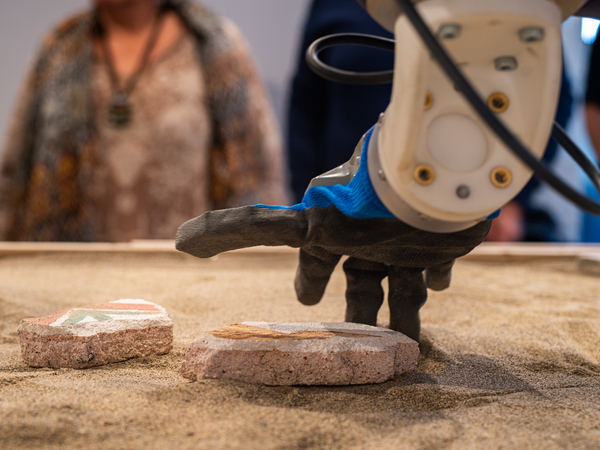
Thanks to cutting-edge artificial intelligence methods, a prototype robotic system was created to physically reassemble fragmented fresco sections. After acquiring and digitising images of the individual fragments, the system attempted to solve the ‘puzzle’, at times engaging with a team of archaeologists who could identify errors or offer suggestions. The identified solution was then sent to the hardware platform, which, using two robotic arms equipped with ‘soft hands’, automatically positioned the fragments in the desired locations. The project was conducted in collaboration with the Archaeological Park of Pompeii, and testing focused on the ceiling frescoes of the House of the Painters at Work in the Insula of the Chaste Lovers. These frescoes were damaged by the eruption of AD 79 and later shattered by bombing during the Second World War.
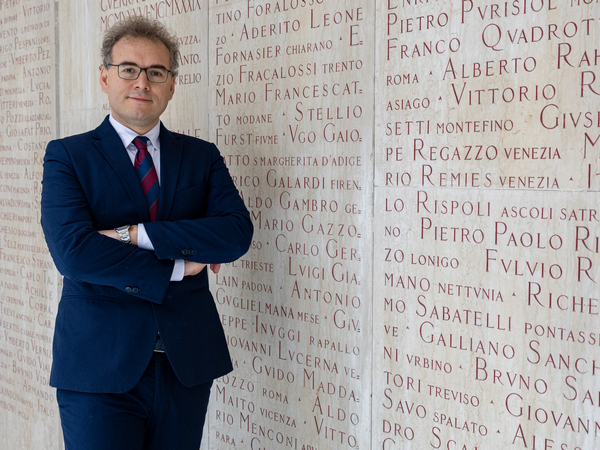
Marcello Pelillo, project coordinator and Professor of Artificial Intelligence at Ca’ Foscari University of Venice, believes that after four years of work, there is now a prototype capable of more accurately assessing which activities can genuinely be supported by robotic systems and which human skills remain indispensable. “It is a first step,” Pelillo observes, “that guides us in supporting reassembly activities, which are often lengthy and complex.”
The Director of the Pompeii Archaeological Park, Gabriel Zuchtriegel ,emphasises how artificial intelligence can assist in managing the complexity of archaeological materials, as long as its use is guided by scientific principles and a collective reflection on the role of these tools. “No technology can replace people’s work,” he states, “but it can provide valuable support when confronted with very large amounts of data.”
The project has therefore demonstrated the feasibility of an integrated digital and robotic approach used for reassembling complex painted artefacts. This offers a basis for conducting additional research, enhancing algorithms, and gaining a clearer understanding of which aspects of reassembly can be automated versus those that need direct human oversight.
The conclusion of RePAIR suggests the potential to expand experimentation to other contexts, evaluate the method's effect on different materials, and further foster collaboration between disciplines that, until recently, would have been unlikely to share the same working environment. In this regard, Pompeii remains an active site of research, where new technologies and cultural heritage are engaged in a careful and verifiable dialogue.
The project was coordinated by Ca’ Foscari University of Venice and involved universities and research institutes across Europe and Italy, including the Italian Institute of Technology (IIT) and the Archaeological Park of Pompeii, which served as both an exceptional venue and the project’s experimental field of application. International partners included Ben-Gurion University of the Negev (Israel), the Associação do Instituto Superior Técnico para a Investigação e Desenvolvimento (Portugal), and the Rheinische Friedrich-Wilhelms-Universität Bonn (Germany). Repair received funding from the European Union’s Horizon 2020 research and innovation programme.