
Compromise with the West or Resistance? Marie Curie Fellow Arash Azizi Examines the Conflict and Crisis in Iran



On 28 February 2026, the United States and Israel launched a joint attack on Iran. Operation ‘Roaring Lion’, characterised by massive air raids on command centres, missile sites and strategic infrastructure, led to the elimination of the upper echelons of the Islamic Republic, the killing of Supreme Leader Ali Khamenei and the loss of over 1,000 civilian lives.
Officially justified as a necessary measure to neutralize Iran’s nuclear threat and ballistic capabilities, the intervention has triggered a chain reaction involving several regional actors. Tehran's response was swift, with missile and drone strikes affecting several neighbouring countries, from the Gulf to the Mediterranean. This crisis is now entering a new phase with the appointment of Ali Khamenei’s son, Mojtaba, as the new Supreme Leader - a hereditary transition that his father had explicitly rejected as a viable path in recent years.
Beyond the military front, Iran has recently been shaken by a new wave of popular uprisings. Triggered by the collapse of the riyal and rampant inflation, the protests that began in January 2026 have turned into a direct political challenge to the system, despite a brutal crackdown that resulted in the slaughter of thousands of demonstrators and a near-total shutdown of communications.
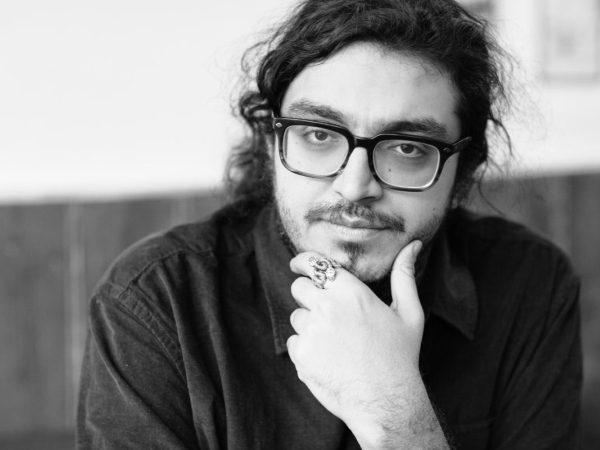
In this extremely complex scenario, we asked Dr Arash Azizi - writer, historian and expert on Iranian socio-political dynamics - to help us decipher what is happening in Tehran and what the consequences of this “point of no return” might be. Azizi, winner of a prestigious Marie Skłodowska-Curie European Fellowship, will be arriving at Ca' Foscari from Yale in the coming months to produce the first comprehensive overview of Iran-Gulf-Israel relations, contextualising them within the transformations of the global order from the Cold War to the current multipolar world. His supervisor will be Matteo Legrenzi, professor at the Department of Economics.
Did the United States-Israeli operation take Iran by surprise, or had the Iranian political and military establishment already anticipated such a scenario?
Iran had experienced the 12 Day War the year before. That conflict ended inconclusively and, while Iran had repeatedly hoped that Trump would change his mind about attacking, it had also prepared itself for the coming attacks and for many scenarios including elimination of its Supreme Leader. Iran was not taken by surprise. It also acted according to its threats and sought to ‘regionalize’ the conflict from day one by attacking several Arab countries in the region.
What political and symbolic significance does the death of the Supreme Leader, Khamenei, carry? How is Khamenei’s demise currently interpreted by public opinion and by the country’s various elites?
The fact that Khamenei didn’t hide, even though he was certain to be a target, and that he effectively courted ‘martyrdom’ at the age of 86, would surely reserve him a place in the annals of Shia history. But this might not be enough to ensure the continuity of his core policies following his demise, even though he has been replaced with his son, Mojtaba. He remains a highly unpopular leader whose demise was cheered on by many Iranians. In recent years, he had even lost the respect of many in the regime elite who were bothered by his tactical ineptness.
In light of these events, which political and social scenarios do you consider most plausible for Iran in the medium term? Do you foresee continuity within the system, or possible internal fractures?
Internal fractures are inevitable. Iran faces sharply different futures of compromising with the West or continuing to lead ‘resistance’ to it. Its own people are no constituency for the latter as they’ve made it abundantly clear. The most likely medium term future will be the Islamic Republic shunning its own main policies (Islamist puritanism and anti-Westernism) and picking a different path.
What consequences is this phase already producing for Iran’s relations with regional actors and the major powers? Does it alter the balance of power in the Middle East and, more broadly, globally?
For years, Arab countries had worried about living next to an adventurous extremist state like Iran. Iran has now showed them that they had very legitimate concerns. The strong ties between many Arab states, and with Turkey and Pakistan, might mean a teaming up against Iran that won’t be good news for it. The United Arab Emirates might move over to occupy and annex the Three Islands of the Persian Gulf which Iran considers its territory. Other similar moves might take place.
In recent years, you have written extensively about the transformations within Iranian society and its internal fractures. In light of recent developments, do you see new political or social actors emerging who could genuinely influence the balance of power?
The most powerful forces in Iranian society are still those inside the regime. Although they represent a minority, they are well-organized. The same is not true about the Iranian democratic opposition which has failed to organize its ranks adequately (partially due to the regime repression there) and thus affect the balance of power in the region.
What do you think is the main aspect that Western public opinion fails to understand when discussing Iran today?
There is often the lack of a serious attempt to understand other countries on their own terms and on the basis of their own history. This is why projects like the Marie Curie fellowship generously granted to me at Ca Foscari’ are crucial, because they seek to offer a historical and political grounding which explains the Middle East in the global context but also based on complex realities of the region itself. One common misconception in the West is to use Iran as a political football for their own internal political kerfuffles and thus miss its internal dynamics. The other is to not see the diversity of thought amongst Iranians and paint them with one brush.