
Songs from the Sanremo Music Festival deemed great ‘Ambassadors of Italy’



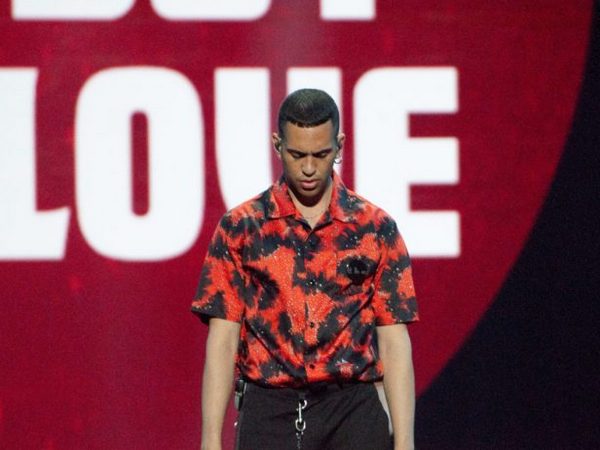
The Sanremo Music Festival reaches a global audience, and the response is unmistakable. Songs performed at Sanremo are among Italy's most beloved abroad, reaffirming the Festival's role as a powerful platform that turns songs into exportable cultural products.
This is the key finding from the latest edition of the survey “Canzoni ambasciatrici d’Italia” (Songs as Ambassadors of Italy), conducted by Professor Fabio Caon, who teaches at Ca’ Foscari University of Venice and is a singer-songwriter, and supported by the Società Dante Alighieri through its international network. The survey assesses the current state of Italian songs from the perspective of those who teach or learn Italian abroad, while also encouraging Italian language education worldwide through the most popular songs.
More than 800 people, aged 14 to 90, who teach or study Italian in 57 countries worldwide, took part by completing an online questionnaire.
Participants were asked to name their favourite Italian song, while teachers of Italian were asked which song they most like to include in their lessons and consider most useful for teaching. The six most frequently voted songs were all performed at the Sanremo Music Festival, including Con te partirò (brought to fame by Andrea Bocelli), Sarà perché ti amo (Ricchi e Poveri) and Nel blu dipinto di blu (Domenico Modugno).
Professor Fabio Caon explains that, besides historic hits, more recent and even current musical pieces are gaining prominence, including Zitti e buoni by Måneskin, Soldi by Mahmood, and Sinceramente by Annalisa. “These songs serve as tools for teaching contemporary Italian, allowing us to see the language's diachronic changes through slang, borrowings, and 'linguistic fashion’ traits common in songwriting, such as fragmented syntax.”
It’s not only about language but also about culture. Let’s take Mahmood as an example: how can a song become a tool for teaching not only the language but also today’s multicultural Italy?
“A song is authentic material (that is, not created for teaching purposes) and, for this very reason, it can offer a thematic, linguistic, and even generational snapshot of contemporary Italy (consider Mahmood or Ghali, singers and rappers born in Italy with migrant backgrounds). It is then up to the teacher of Italian abroad to use these elements to present a more complex and dynamic vision that goes beyond the persistent stereotyped image of Italians.”
What practical activities can be proposed for foreign (or native-speaking) students, starting from such rhythmic texts that are ‘close’ to spoken language, rather than the traditional textual analysis?
“One can propose activities centred on themes: for example, analysing a contemporary love song alongside one from 30 years ago and another from 60 years ago, and identifying similarities and differences. It is important to bear in mind that a single song does not represent a generation, and that within every generation there are more ‘revolutionary’ texts and others more anchored in tradition (for instance, in their use of swear words or slang).”
Will you also propose activities this year based on the winning song? What features would you like it to have to better suit foreign-language teaching?
“Yes. I would like the winning song to help us identify both innovative and ‘traditional’ textual elements, thereby showing the dynamic, layered and complex relationship within every language as it changes. In literature, for example, I have presented Petrarch at school, starting from a text by Laura Pausini. I would like to find similar echoes to demonstrate the value of both song and literature. Indeed, regardless of the varying artistic outcomes, songs often draw inspiration from literature in their forms, themes and rhetorical devices.”
The publication of the ranking of the most selected and most interesting songs on the Società Dante Alighieri website (www.dante.global - Culture section) and on the LABCOM website of Ca’ Foscari University of Venice (www.unive.it/labcom [ITA]), scheduled for May 2026, will be accompanied by a “teacher-friendly” version of the songs, which will remain freely downloadable for those who study, teach or love Italian.