
Ca’ Foscari’s international schools: intensive, interdisciplinary and global



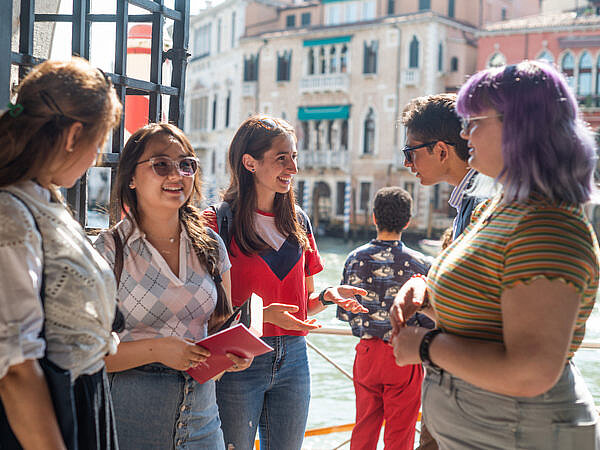
Ca' Foscari University of Venice organises numerous international winter, summer, and spring schools each year: platforms for intensive learning open to students worldwide. These initiatives combine innovative teaching, research, and a global outlook, often in collaboration with leading scientific and institutional partners.
An interdisciplinary laboratory on biodiversity
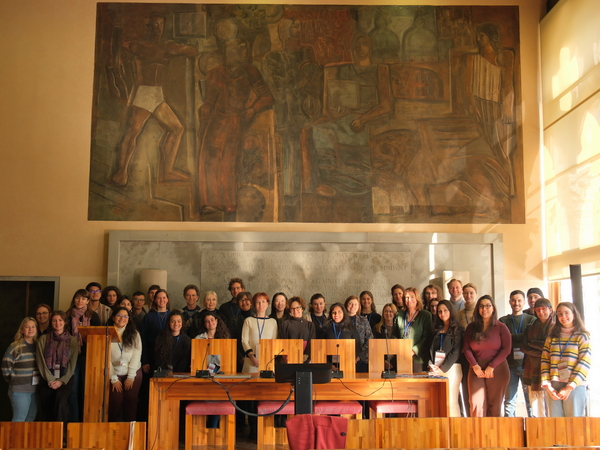
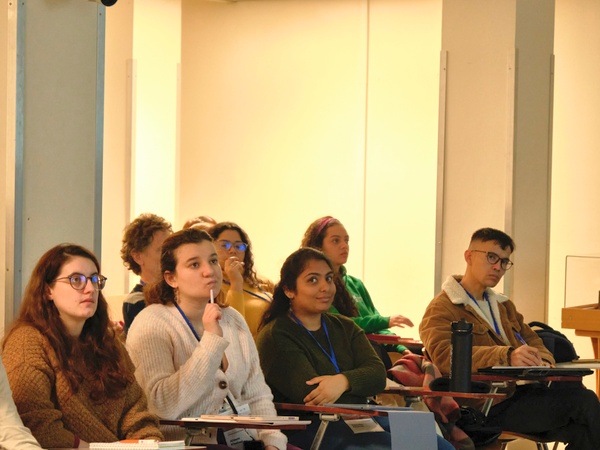
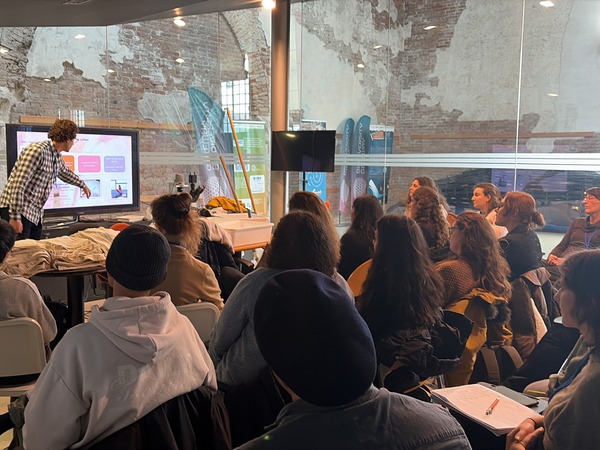
One of the most notable initiatives from the past year is the recently concluded Winter School in Interdisciplinary Biodiversity. Financed by the National Biodiversity Future Center (NBFC), this programme was organized in partnership with CNR ISMAR and managed by the Ca’ Foscari School for International Education (CFSIE). Its second edition demonstrated the international appeal of this format: despite an application window of just eight and a half working days, the organisers received 176 applications worldwide for a cohort of 30 participants.
The school involved 12 lecturers—five from the humanities and seven from scientific disciplines—and provided a gradually increasing curriculum, from basic to advanced levels. It was accessible to students starting from the bachelor’s level and welcomed participants from various disciplinary backgrounds. This cross-disciplinary, inclusive approach allows participants to develop intermediate tools for studying biodiversity by combining scientific and humanistic methods. The keynote lecture by Professor Sonia Sousa Pinto, a member of the Intergovernmental Science-Policy Platform on Biodiversity and Ecosystem Services (IPBES), enhanced the exchange between research and policy.
Schools and collaborations locally and internationally
Ca’ Foscari’s schools also stand out for their network of collaborations with institutions and partner universities, forming a rich and multifaceted ecosystem.
Summer School in Classical Chinese and Classical Japanese
6 July – 7 August 2026
Application deadline: 15 March 2026
Now in its fifth edition, this school is the result of a collaboration between Princeton University and the Department of Asian and North African Studies at Ca’ Foscari. The lecturers involved in teaching come from both universities.
Participants may choose between two tracks, each consisting of 75 hours of teaching delivered over five weeks: Classical Chinese or Classical Japanese/kanbun. Besides language courses, each track offers a series of lectures on topics related to Chinese or Japanese culture, such as history, literature, linguistics, thought, and religion. The programme is aimed specifically at those who want to improve their language skills to pursue advanced research in any field concerning premodern China or premodern Japan. Both tracks are open to beginners, with at least two years of university-level study in Chinese or Japanese, as well as to more advanced students.
Hindi and Urdu intensive course
31 August – 18 September 2026
Application deadline: 30 June 2026
The Department of Asian and North African Studies, in collaboration with Heidelberg University, provides a three-week intensive course in Hindi and Urdu. This course is available for both beginners and individuals with some previous knowledge.
The course offers an intensive learning pathway designed to give participants a solid foundation in both Hindi and Urdu, written and spoken. It provides the opportunity to study both languages while exploring their writing systems and communication practices. A dedicated module is also available for advanced students, enabling them to consolidate and expand their linguistic skills. Participants will be guided by a team of lecturers from Ca’ Foscari University of Venice, the University of Würzburg, and Heidelberg University.
European Spring School of Mongolian Studies
24 April – 1 May 2026
An international academic programme focusing on Mongolian Studies, with particular attention to the ethnographic, anthropological, linguistic, historical and social aspects of the region. The Spring School brings together scholars, researchers and students from a range of European and international universities. Designed to explore the linguistic, historical and cultural aspects of Mongolian Studies through a transdisciplinary approach, the programme is organised by the Department of Asian and North African Studies in collaboration with ISMEO (International Association for Mediterranean and Oriental Studies) and AISTHiM (Italian Association for Tibetan, Himalayan and Mongolian Studies).
Arts in Venice Summer School “Preserving for the Future”
22 June – 3 July 2026
Application deadline: 23 March 2026
Promoted within the Study in Venice network together with the Venice Academy of Fine Arts, the Benedetto Marcello Conservatory and IUAV University of Venice, the school focuses on the protection of cultural and environmental heritage. Now in its fourth edition, the programme will focus on the concept of protecting the city and its monumental and artistic cultural heritage. Venice and its lagoon serve as a prime example for observing, analysing, and tackling the impacts of climate change, rising sea levels, pollution, and overtourism. This inter-university project mainly targets students in the humanities.
Erasmo Castellani, a researcher from Ca’ Foscari and affiliated with NICHE Centre for Environmental Humanities, will lead the activity titled Anthropocene Water City: A Geo-Anthropological History: “The course presents Venice and its lagoon as a paradigm of the Anthropocene, viewing the city’s history as the result of ongoing interactions between human activity and environmental change. Days will include both an in-class seminar and a walk around the city to explore lesser-known artworks and buildings. We will examine how water both literally and metaphorically infiltrates the urban space and its artistic representations, providing insights and critical tools to understand the relationship between cultural heritage, environmental vulnerability, and historical development.”
During the two weeks in Venice, students will participate in a multidisciplinary workshop where they will have the opportunity to apply what they have learned during lectures and field visits.
The Venice School of Management organises and hosts, in collaboration with a global network of partner universities, intensive study programmes designed to explore themes such as sustainability, digitalisation and finance. These one- or two-week programmes offer a wide-ranging educational experience: activities take place both in Venice, at the San Giobbe Campus, and abroad at partner universities.
European Summer Academy: Cultural and Artistic Ecologies of Organizing
31 May – 5 June 2026
Application deadline: 5 March 2026
Location: Berlin
Partners: Copenhagen Business School; Leuphana University Lüneburg; University of St. Gallen
The Summer Academy explores how cultural and artistic elements influence organisational processes and settings. With generous support from the German Haniel Foundation, scholarships are available to cover accommodation costs and contribute towards travel expenses.
EUTOPIA Summer School: AI in Business and Healthcare
24-28 August 2026
Location: University of Gothenburg
Partners: University of Gothenburg and TU Dresden, both members of the EUTOPIA European University Alliance.
This is a Blended Intensive Programme (BIP), a new form of mobility within Erasmus+ that combines in-person and online teaching and awards 3 ECTS credits. It is aimed at students enrolled in bachelor’s or master’s degree programmes at the Venice School of Management.
ICMA Centre Summer School
Details to be confirmed
Partners: Department of Economics – Ca' Foscari University of Venice and Henley Business School – University of Reading.
Location: Venice School of Management, San Giobbe Economic Campus, Venice.
The programme is aimed at first- and second-year students enrolled in one of the Venice School of Management master’s degree programmes, as well as first- and second-year students enrolled in the following master’s degree programmes offered by the Department of Economics: Economics and Finance, Economics, Finance and Sustainability, Data Analytics for Business and Society, and Global Development and Entrepreneurship.
Hohenheim Summer School: Economics of Climate Change: Managing, Mitigating, Moderating
5–26 July 2026
Application deadline: 6 April 2026
Partner: University of Hohenheim
Location: Stuttgart
The Summer School explores how economic thinking can guide effective responses to a key challenge of our era: climate change. The three-week programme features lectures, company visits, and interactive sessions on markets, incentives, and policy instruments. For further information and to participate in the initiative, please contact: international.management@unive.it
Each year, the Department of Economics also organises and hosts Summer Schools designed to enrich students’ academic experience, providing unique opportunities to deepen their knowledge across a range of disciplines and topics in economics, finance and law. Some Summer Schools are organised and then hosted by partner universities and institutions.
Cross-Border Summer School in Šibenik, Croatia
5-9 May 2026
Application deadline: 30 March 2026
Location: Šibenik, Croatia
This Summer School is organised within the framework of the Interreg Italy-Croatia research project FORTIC – From Remains of the War to the Architecture of Peace in the Cross-Border Area of Italy–Croatia, by the Fortress of Culture Šibenik in collaboration with Juraj Dobrila University of Pula and Ca' Foscari University of Venice.
Venice Summer School on Inequality and Vulnerability
6-11 July 2026
Application deadline: 30 April 2026
Location: San Giobbe Economics Campus, Venice
The Summer School, organised in collaboration with the Max Planck Institute for Behavioral Economics in Bonn, is designed for PhD candidates, early-career researchers, and scholars interested in issues of inequality and vulnerability. It provides an opportunity to network, learn from leading academics, and explore research in behavioural economics related to these topics.
Each year, the Venice centre in Economic and Risk Analytics for Public Policies (VERA) of the Department of Economics organises two Summer Schools in collaboration with the Italian Econometric Association (SIdE), delivered both in person and online:
Network Econometrics
29 June-3 July 2026
Application deadline: 3 May 2026
This Summer School aims to provide models and tools from graph theory to analyse the different effects of social, economic, and political interactions. It will host leading scholars researching network modelling and inference, as well as their applications across various disciplines.
Advanced Bayesian Econometrics: Bayesian Multivariate Models and Forecasting in Economics and Finance
31 August – 4 September 2026
Application deadline: 3 May 2026
This advanced-level course covers state-of-the-art techniques and recent developments in Bayesian multivariate models for structural analysis and forecasting. Topics include Bayesian machine learning models, non-parametric methods and forecast combinations, with a wide range of applications in economics and finance illustrated through practical exercises using MATLAB and R.
The Department of Environmental Sciences, Informatics and Statistics is also planning two Summer Schools:
Advanced Algorithms Summer Course (coming soon online)
6-10 July 2026
Application deadline: 22 May 2026
Programming test dedline: 8 June 2026
Admission results: 15 June 2026
Enrolment confirmation deadline: 22 June 2026
An advanced algorithms course aimed at fostering interest in computer science and computational thinking among students in the final three years of upper secondary school.
Green Chemistry Postgraduate Summer School 2026
6-10 July 2026
Application deadline for on-site students: 30 April 2026 (Late application deadline for on-site students 30 May 2026)
Application deadline for online students: 25 June 2026
Ca’ Foscari partners with the Green Sciences for Sustainable Development Foundation to organise the eighteenth edition of the school, which will be held in Venice. The programme aims to share both fundamental and advanced scientific knowledge in Green Chemistry and equip participants with skills for their future careers. It welcomes postgraduate students and postdoctoral researchers worldwide. The schedule includes five days of lectures, with the final timetable to be confirmed in the coming months.
The Department of Philosophy and Cultural Heritage will host the twelfth edition of:
Summer School of Phenomenology and Phenomenological Philosophy: What is alive and what is dead in phenomenology?
29 June - 3 July 2026
Application deadline: 1 May 2026, Applicants should send a CV and a sample of writing (optional) to phenomenologysummerschool@gmail.com
The SSPPP2026 Summer School invites participants to reflect on the role and significance of phenomenology in contemporary philosophy and culture. The programme explores why phenomenology remains a vital philosophical current today, its place among the expanding fields of contemporary research, and whether its most radical project (Husserl’s transcendental investigation into the foundations of knowledge) still holds philosophical relevance. More broadly, the school considers how phenomenology, in its many developments since Husserl, can help address the pressing questions raised by science and technology and the challenges of the present historical moment.
The programme also includes a visit to the 61st International Art Exhibition of La Biennale di Venezia, on the afternoon of Friday 3rd July.
Venice Summer School in Digital and Public Humanities
6–10 July 2026
Application deadline: 13 April 2026
Organised by the VeDPH as part of the EUTOPIA DigIn Connected Community, the Summer School offers the opportunity to explore digital cultural heritage and the ‘public humanities’, working with cultural, archaeological, historical, literary and artistic materials from Venetian sites and local cultural institutions.
Participants will also have the chance to hone their skills in the digitisation of materials and sources, as well as in the modelling, analysis and visualisation of multimedia humanities data.
The programme includes lectures, practical workshops, guided tours and experimental performances, all conducted in English. The extensive programme also features sessions called ‘Pimp my Project’, which will allow participants to discuss their personal research projects with experts in the field.
The Department of Linguistic and Comparative Cultural Studies is organising online summer
courses in Italian Sign Language:
Online Summer Italian Sign Language Courses [ITA]
1–14 July 2026 (3 hours per day)
Applications open until 20 May 2026
The courses are open to both deaf and hearing participants as part of an intensive two-week programme designed to encourage the sharing of experiences and interaction.
They will provide participants with basic and intermediate-level knowledge of Italian Sign Language (LIS) and will be taught by teachers with specialised training in the field.
All these schools bolster Ca’ Foscari’s international reputation as a hub for innovative education, connecting research and teaching, and serving as a platform for worldwide collaboration.
Programmes offered by the Ca’ Foscari School for International Education (SIE)
The Ca’ Foscari School for International Education provides educational activities for both international and Ca’ Foscari students. These include Italian language and culture courses, foundation programmes that prepare students for university admission, Summer Schools, and short summer courses.
SUMMER@SIE
Summer courses cover a diverse range of topics, with the option to combine multiple courses into a personalised programme. Each course lasts one or two weeks and is held either in the morning or afternoon during July. Participants can also join a cultural programme designed to explore Venice and its lagoon through visits, excursions, workshops, and dragon boat activities. Applications are open until 31 May 2026.
Humanities
Contemporary Art & Curatorship
6–17 July 2026
Schedule: Full-time
Prerequisites: a Bachelor’s degree and previous or ongoing university-level study in one of the following fields: Art History; Fine Arts, Design and Architecture; Cultural and Media Studies; Exhibition and Curatorial Studies; Media Studies; Global Studies; Arts and Cultural Management.
This Summer School investigates the contemporary art system through the curatorial approach which seems to shape the “biennialisation” of today’s art scene. Created in partnership with the Biennale Sessions programme of La Biennale di Venezia, the Venice module explores the history of La Biennale and curatorial practice. The programme is organised around focused training activities on exhibition-making and curatorial practice, structured across five thematic areas: Sub-Saharan Africa; East Asia; Latin America; Russia, the Caucasus and Central Asia; and the Middle East, North Africa, and South Asia.
Inside the Art Market: Venice as a Global Hub from the Renaissance to Today
27–31 July 2026
Schedule: Morning
Venice provides a unique environment for studying the formation and growth of the art market, due to its long-standing tradition of artistic creation, collecting, and circulation of artworks, which has significantly influenced the European and global cultural landscape.
Since the Renaissance, the city has developed highly sophisticated systems of workshops, commercial networks, and collectors that helped define the artistic, economic, and symbolic value of artworks. The course explores the evolution of the Venetian art market from the fifteenth century to the present day, combining lectures with site visits to key institutions such as the Gallerie dell'Accademia, Palazzo Grimani, Ca' d'Oro, and the Museo Correr.
Shakespeare: the Page, the Stage, the World
27-31 July 2026
Schedule: Afternoon
This course invites participants to view William Shakespeare as our contemporary and to explore how his works, both on the page and on the stage, can provide tools for navigating a world facing profound crises. Each day combines close critical analysis of the texts with discussions that connect ecological stress, social fractures, and cosmopolitan responsibility to Shakespeare’s dramatic worlds.
Participants will collaborate closely with a professional theatre company, observing rehearsals and exploring how critical analysis and performance influence each other. The course will mainly concentrate on The Tempest, studied from an ecocritical perspective and performed in the heart of the Venetian lagoon. The course is delivered by lecturers from Ca’ Foscari and the University of Warwick.
Venetian Art History
20-24 July 2026
Schedule: Morning
This course offers an introduction to the history of Italian art against the backdrop of Venice's history. Through lectures and visits to major sites in the city, such as Ca' Rezzonico, Palazzo Grimani, and the Basilica di Santa Maria Gloriosa dei Frari, the course concentrates on analysing Venice’s most important artworks and the stories of its most celebrated artists.
Cultural Studies
Exploring the Tourist City: Venice and the Geography of Contemporary Tourism
6-10 July 2026
Schedule: Afternoon
This course uses Venice as a case study to investigate contemporary urban tourism from a geographical standpoint, incorporating aspects related to mobility, culture, and governance. It assesses global tourism trends, visitor flows and urban challenges before concentrating on key themes shaping tourist cities, such as urban imaginaries, overtourism, sensory mobilities, and tourism governance.
Festivalization and Urban Space: Events, Tourism, and Cultural Governance in Postcolonial Cities
20-23 July 2026
Schedule: Morning
This course explores how festivals and cultural events are increasingly shaping postcolonial cities through processes of “festivalisation”. Drawing on urban anthropology and critical tourism studies, it analyses the role of festivals as tools for city branding, tourism development, heritage promotion and urban regeneration, while also highlighting the new forms of spatial inequality and social tension they may generate.
Mapping Inequality: Gender and Intersectionality in Law and Society
13-24 July 2026
Schedule: Afternoon
This course combines philosophical, legal, sociological and anthropological perspectives to discuss the theoretical framework of intersectionality and its influence on our understanding of inequality, discrimination, and practices of resistance and empowerment. After examining the theoretical and epistemological bases of intersectionality, the course then focuses on its methodological and practical applications in the social sciences and public policy-making processes.
Environmental Studies
Climate Change, the Blue Economy and Coastal Resilience
6-10 July 2026
Schedule: Morning
This interdisciplinary course examines how global climate change is transforming oceans and coastal systems, with a particular focus on adaptation, resilience, and socio-economic value. Starting with the physical climate–ocean system, the course looks at sea-level rise, coastal dynamics, and ecosystem responses, highlighting the role of oceans as climate regulators and providers of essential services. Emphasis is placed on the blue economy and sustainable business strategies, demonstrating how climate risks and environmental changes affect coastal economies and value chains. The Venetian Lagoon is used as a key case study.
Critical Perspectives on the Green Transition: Geographies of Power and Futures
13-17 July 2026
Schedule: Afternoon
This course provides a crucial geographical perspective on the green transition. Rooted in political economy and global relations, it examines two key dynamics shaping current climate policies: the financialisation and digitalisation of nature.
The course combines essential theoretical concepts with a few targeted case studies and concludes with a discussion on debates about the future, utopias and dystopias, and sociotechnical imaginaries (including selected speculative texts), exploring how visions of “what is to come” influence political decisions and transition paths.
Preserving the Heritage of Water Cities: a Global Perspective
20-24 July 2026
Schedule: Afternoon
This course explores water as a central ecological force in the development of human civilisations, viewing it both as a vital resource and a potential environmental hazard. Using an interdisciplinary approach that integrates environmental studies, archaeology, and cultural heritage conservation, the course examines how water has shaped settlements, material culture, and the sustainability of water-based cities across various historical periods and geographical settings. Venice and its lagoon serve as the central case study for analysing the interactions between natural systems and the built environment, with particular attention to hydrogeology, climate pressures and conservation strategies.
Global Studies
Geopolitics and Geostrategy
13-17 July 2026
Schedule: Morning
This course explores the evolution of geopolitics and geostrategy over the past century, demonstrating how traditional ideas of war, conflict, and risk have been deeply transformed. In a period when “everything is geopolitical”, the course investigates what this phrase really means and how various approaches to geopolitics shape the understanding of risk and insecurity, as well as the strategies formulated to manage them. The course is organised and co-taught by lecturers from Ca’ Foscari, the University of Warwick, and the Istituto di Studi Militari Marittimi (ISMM).
AI, Cyberthreats and Cyberspies
13-17 July 2026
Schedule: Afternoon
This course investigates digital spaces and the actors of risk, analysing new forms of cyber warfare, including hybrid warfare and the so-called “grey-zone” conflict, as well as the increasingly central role of artificial intelligence in national security. It will explore how AI is transforming cognitive warfare and propaganda, along with emerging forms of cyber-espionage and surveillance. The course is organised and jointly delivered by lecturers from Ca’ Foscari, the University of Warwick, and the Istituto di Studi Militari Marittimi (ISMM).
Economic History Issues
6-10 July 2026
Schedule: Afternoon
Prerequisites: A general knowledge of general history at upper secondary school level is recommended.
The course broadly covers key themes in economic history, including the long-term evolution of trade and industry, the industrial revolutions, and focuses on the history of business and innovation. It introduces students to major debates in economic history, from social history to business history. Participants will also reflect on the limits of applying sociological, economic, and managerial theories across different historical settings.
Money Maps: Navigating Markets, Mathematics, and Misconduct
6-10 July 2026
Schedule: Morning
This course examines investment finance as a “landscape” to understand and analyse. It starts by exploring the fundamental principles of financial mathematics before covering different types of financial instruments, such as ETFs and mutual funds.
Italian Language Education for International Students – SIE (School for International Education)
In addition to its thematic schools, the Ca’ Foscari School for International Education provides programmes focused on Italian language and culture, aiming to enhance the university’s appeal to prospective international students and scholars.
Italian Language Pathway (ILP)
From September 2026
Applications: dates to be confirmed
A flagship initiative for the 2026/2027 academic year, this 13-week advanced programme acts as a linguistic and methodological bridge for international students. The programme will officially debut as the University’s primary pathway for developing Italian-language proficiency before enrolment.
The pathway is designed to ensure that participants achieve the language level required to enrol in degree programmes taught in Italian at Ca' Foscari University of Venice. Progressing from A1 to B2 level, the programme combines general language studies with modules in Academic Communication, focusing on analysing and producing a range of academic texts essential for successfully participating in university courses.
The programme also features short introductory lectures on university subjects and workshops dedicated to enrolment procedures, guiding participants through the process up to registration. The course is delivered entirely online, with an optional final week in Venice offering participants the chance to experience the university environment before classes start.
Schools of Italian Language and Culture (Winter and Summer Schools)
These intensive programmes combine language lessons with guided visits exploring the cultural heritage of Venice.
The 2026 winter edition hosted students from China, Germany, France, Switzerland, Malaysia, Morocco, Spain, Poland, and Brazil, showcasing a diverse mix of ages and academic backgrounds.
Summer School in Italian Language and Culture
6-31 July 2026
Applications: from 15 April to 29 May 2026
A four-week full immersion programme offering courses from level A1 to C2. The programme includes excursions, cultural visits and educational walks through the city’s sestieri, allowing participants to practise the language in real-life contexts.
Spring School – Italian for Academic Purposes
30 March - 3 April 2026
Application deadline: 15 March 2026
This specialised programme (20 or 30 hours) offers a “toolkit” for navigating university life, helping participants develop the core language skills needed to operate confidently in an academic setting. The programme covers all main language skills—listening, speaking, reading and writing—along with mediation and interaction skills, providing practical tools to master formal registers, specialised vocabulary and academic writing, as well as to manage oral interaction effectively. In addition to members of the Ca’ Foscari community, the class will also include scholars from other national and international universities.
Italian Summer Online Pathway
June - September 2026
Applications: 15 April - 4 May 2026
This summer program features a flexible online format tailored for students who must meet their Italian language requirements before the academic year begins. It offers intensive training, ranging from 40 to 70 hours per level, through standalone or combined modules from A1 to B2. By combining and successfully completing these progressive modules, participants can achieve B2 level during the summer, ensuring they fulfil the language prerequisites for enrolment.
All these initiatives reaffirm Ca' Foscari University of Venice's commitment to fostering international, intensive, and interdisciplinary education that can meet the needs of students from diverse backgrounds and with different goals.