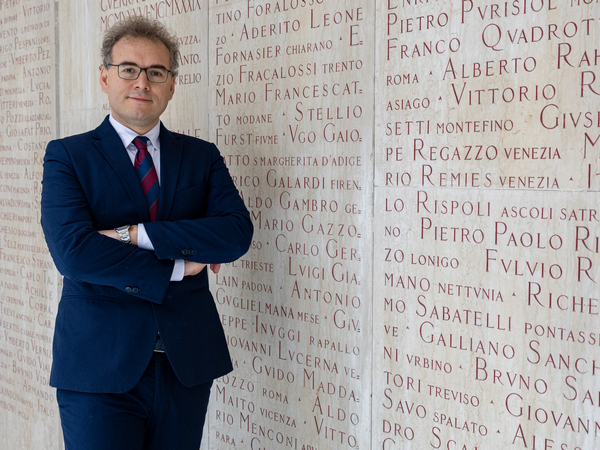

Marco Sgarbi Will Be the New Rector of Ca' Foscari. He Is the Youngest in the University's History



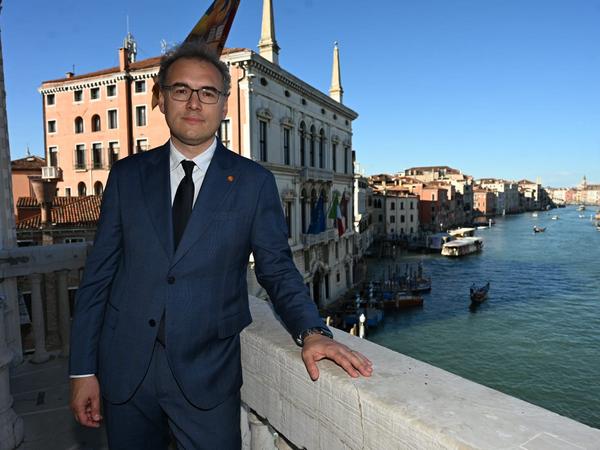
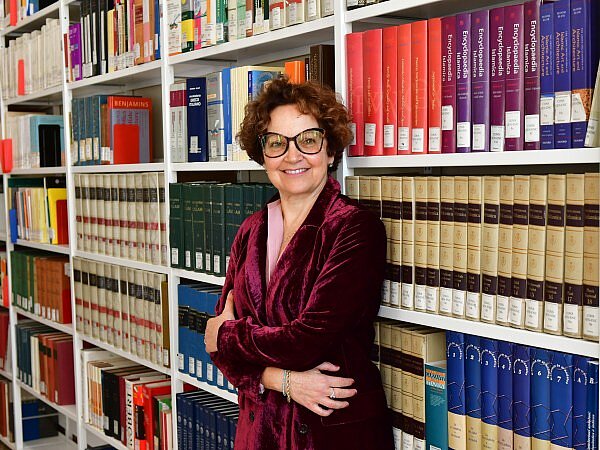
Today, Thursday 21 May, Ca’ Foscari University of Venice elected its new Rector at the end of the fourth round of voting: Marco Sgarbi is the 24th Rector of Ca’ Foscari. Born in Mantua in 1982, he is the youngest person ever to hold the position at the Venetian university. He was elected with 434 votes against the 303 obtained by Giacomo Pasini in the run-off. He succeeds the current Rector, Tiziana Lippiello. From 1 October, he will lead the university for the six-year term 2026-2032.
Alongside Sgarbi and Pasini, the candidates in this election were Carlo Bagnoli, Carlo Barbante and Filippomaria Pontani. In the first three rounds of voting, none of the candidates obtained the number of votes required for election. The two candidates with the highest number of votes in the third round therefore proceeded to today’s run-off.
The new Rector said: “I would like to thank all the voters, and everyone who has followed my journey. From today, I will be fully committed to the Ca' Foscari community. I do not want a university that merely chases the future, but one that is capable of building it and imagining it. It will not always be easy; we will face major challenges, but it is precisely these challenges that will give meaning to our commitment and our work. We will overcome these challenges if we can walk this path together, truly as a community. I want a university built on people, rooted in the local area and open to the world; above all, a university that seeks to empower the younger generations, to educate them, and to nurture and cultivate their talents."
Tiziana Lippiello, Rector of Ca’ Foscari University of Venice, declared: “I would like to congratulate Professor Sgarbi, who was elected today as the next Rector of Ca’ Foscari. An important mandate lies ahead of him: an extraordinary honour, but also a great responsibility. I would also like to express my heartfelt thanks to all members of our university community who took part in the vote. The exceptionally high turnout is the clearest sign of a community deeply connected to its institution and its values. My gratitude also goes to the Electoral Committee for its important work and to all the candidates in this election, whose contributions and ideas enriched the debate about the future of our university in a constructive way. I hope that Ca’ Foscari will continue to look ahead, drawing strength from its identity and distinctive character. To Sgarbi, who will lead the university from 1 October, I extend my best wishes as he prepares to face, with passion and determination, the major challenges awaiting our community."
Results of the run-off vote:
Giacomo Pasini: 303
Marco Sgarbi: 434
Blank ballot papers (weighted): 27,68
The electorate comprised academic staff (687), members of the Student Assembly (30), technical-administrative staff (749), and foreign language assistants (74).
Voter turnout in the fourth round of voting was 88,34% among academic staff, 83,33% among eligible students, and 77,52% among technical-administrative staff and foreign language assistants.
Votes cast by technical-administrative staff and foreign language assistants are weighted at 25% of those cast by academic staff.
Short bio of the Rector-elect Marco Sgarbi:
Marco Sgarbi (b. 1982) is a Full Professor of History of Philosophy at Ca’ Foscari University of Venice, with a focus on Renaissance and early modern philosophy. After completing his PhD in Philosophy at the University of Verona, he pursued an international academic career, serving as a visiting professor and research fellow at prestigious institutions and research centres across Europe. His research interests include Aristotelianism, Kantian philosophy, the history of logic, and the history of ideas. He has led and coordinated numerous national and international research projects, securing substantial competitive funding. He has authored numerous monographs and scholarly articles, actively contributes to contemporary philosophical debate, and serves on the editorial and scientific boards of academic journals and institutions.
The results can be consulted on the Elections page of the university website.