
Case studies
Chemical Sciences and Technologies for Cultural Heritage
Studies of mobile works
Jacopo Tintoretto's canvases in the Chapter Room of the Scuola Grande di San Rocco in Venice
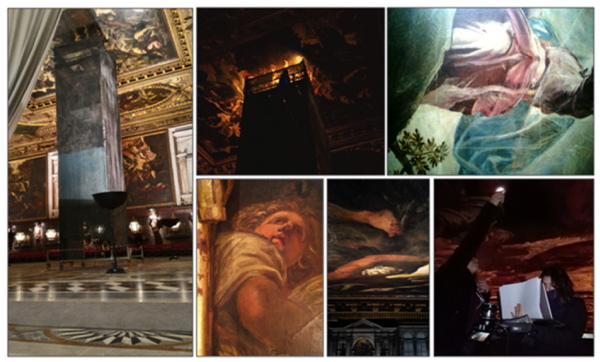
On the occasion of the 500th anniversary of the birth of Jacopo Robusti, known as Tintoretto (1519-1594), our research group is conducting a diagnostic and monitoring study of the state of conservation of the canvases and wooden ceiling in the Chapter Room of the Scuola Grande di San Rocco. Using mainly non-invasive methodologies, the project focuses on the study of the painting techniques used by Tintoretto and the assessment of the state of conservation of the materials, both original and restored; the development of a monitoring system to control the works in relation to environmental conditions. The study is an important insight into Tintoretto's painting technique and the first technical-scientific study on the ceiling of the Chapter Room.
The analytical diagnostic project is being carried out in collaboration with the Superintendency for Archaeology, Cultural Heritage and Landscape for the Municipality of Venice and the Lagoon, the Confraternity of the Scuola Grande di San Rocco, Fondazione Ca' Foscari and Venice in Peril. The project benefits from funding by the Scuola Grande di San Rocco and from the important support and interest of Venice in Peril.
The pictorial cycle "The Poem of Human Life" by Aristide Sartorio
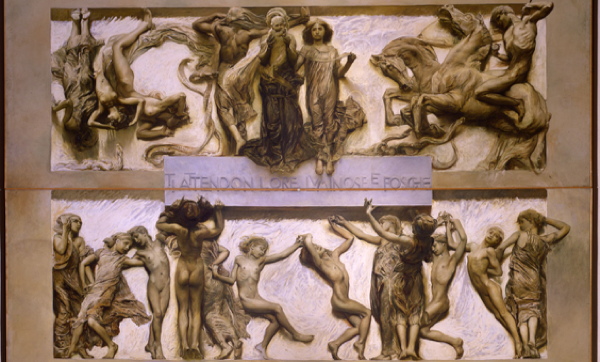
A study of the state of preservation and painting techniques of the paintings of the cycle "The Poem of Human Life" by Aristide Sartorio (1906-1907), in collaboration with the International Gallery of Modern Art of Ca' Pesaro. The large decorative panels of the cycle are painted using a very particular technique that can be considered as a modern encaustic painting based on a mixture of oils, waxes and turpentine, mixed with traditional and industrially produced pigments.
Website: Conservation science in cultural heritage
Francesca Caterina Izzo; Elisabetta Zendri; Matteo Piccolo; Henk van Keulen; Eleonora Balliana; Laura Falchi; Silvio Fuso The Materials And The Painting Techniques By Giulio Aristide Sartorio In The Pictorial Cycle "The Poem Of Human Life" (1906-07): Knowledge And Prevention For A Musealisation Project in CONSERVATION SCIENCE IN CULTURAL HERITAGE, vol. 13, pages 379-393 (ISSN 1973-9494)
Contemporary art and design materials
Picasso 1917: 4 pictorial works by Pablo Picasso from the Picasso Museum in Barcelona
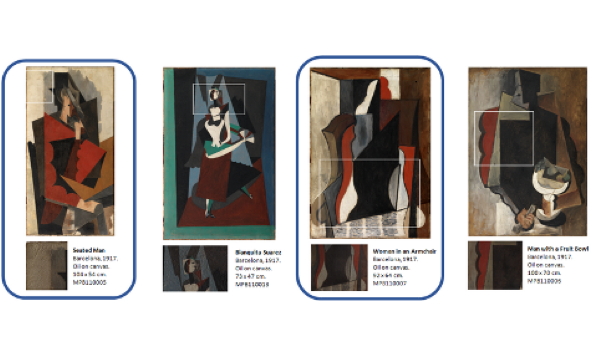
Analyses revealed that Picasso painted with oil colours containing both traditional linseed oil and less siccative oils such as safflower and sunflower oil. The canvases used by the artist were made of cotton, on which Picasso applied two different layers of preparation: one made with animal glue, the other with siccative oil. Both were mixed with different pigments (white lead, baryte, zinc oxide, etc.). The results obtained were combined with visual examination of the cracks and mechanical problems of the paintings to establish hypotheses on the differences in degradation. This is one of the first times that an approach based on non-invasive documentation techniques, chemical-physical analysis and observations of mechanical damage has been adopted to provide insight into the possible contribution each layer has on the observed degradation.
Web references: The mystery of the deteriorated Picasso unveiled by a team of scientists [ITA]
- L. Fuster-López, F. C. Izzo, C. K. Andersen, A. Murray, A. Vila, M. Picollo, L. Stefani, R. Jiménez & E. Aguado-Guardiola Picasso’s 1917 paint materials and their influence on the condition of four paintings in SN APPLIED SCIENCES, vol. 2, 2020
- A. Vila, A. Murray, C. K. Andersen, F. C. Izzo, L. Fuster-López, E. Aguado-Guardiola, R. Jiménez-Garnica, A. Scharff Picasso 1917: An Insight into the Effects of Ground and Canvas in the Failure Mechanisms in Four Artworks , Conservation of Modern Oil Paintings, Springer, Cham, pages 245-253, 2020
The effect of ozone on modern painting materials
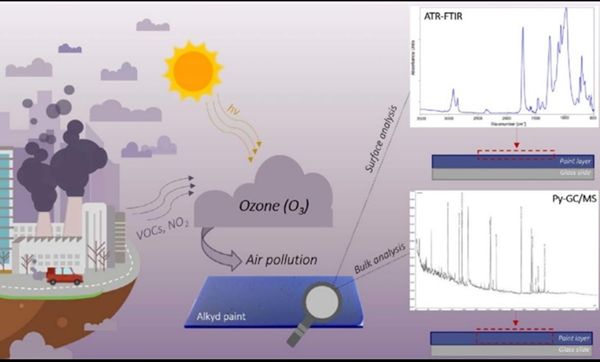
The atmospheric degradation reactions affecting the stability of modern materials are still relevant today. For this reason, a study was carried out in cooperation with the Academy of Fine Arts in Vienna, focusing on the analytical (FTIR and Py-GC/MS) and statistical evaluation of the degradation processes of acrylic, alkyd and styrene-acrylic paints after accelerated exposure to ozone (O3) and relative humidity (RH). From the combination of these results, specific information useful for the prevention and conservation of modern paint films was obtained.
- Pagnin, L.; Zendri, E.; Izzo, F.C. How Can Ozone and Relative Humidity Affect Artists’ Alkyd Paints? A FT-IR and Py-GC/MS Systematic Study. Polymers 2022, 14,1831.
- Pagnin, L.; Calvini, R.; Sterflinger, K.; Izzo, F.C. Data Fusion Approach to Simultaneously Evaluate the Degradation Process Caused by Ozone and Humidity on Modern Paint Materials. Polymers2022, 14, 1787.
The study of polymaterial works: the case of the cels of the Carosello shorts
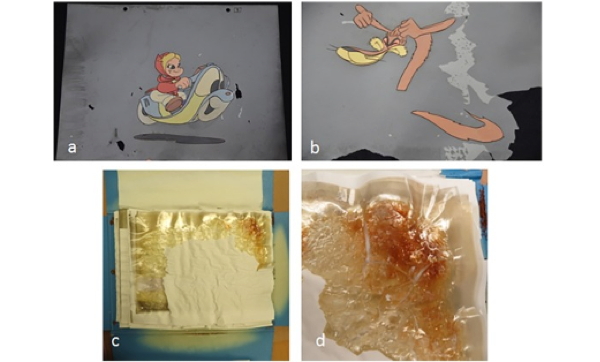
The first scientific study on the cels produced between the 1950s and 1970s for Italian television was conducted in cooperation with the Musil, the Museum of Industry and Labour in Brescia. The cels were transparent sheets on which individual frames were drawn. The main objective was to investigate their composition, to identify the materials used to paint the characters and to assess their state of preservation. The results, which were obtained by means of a non-invasive multi-analytical and microdestructive approach, show that the plastic support consists of nitrocellulose or cellulose acetate, while the pictorial layers - which contain a variety of pigments and dyes - were applied with a mixture of vegetable gum and animal glue or with synthetic resins.
Web references: The Science of Carousels: Ca' Foscari Analyses Gamma Film's Cels, [ITA], The Science of Carousels
- Izzo, Francesca Caterina; Van Keulen, Henk; Carrieri, Alessandra Assessing the Condition of Complex Poly-Material Artworks by Py-GC-MS: The Study of Cellulose Acetate-Based Animation Cels in SEPARATIONS, vol. 9, pages 131, 2022
- Francesca Caterina IZZO, Alessandra Carrieri, Giovanni Bartolozzi, Henk van Keulen, Irene Lorenzon, Eleonora Balliana, Costanza Cucci, Francesco Grazzi, MarcelloPicollo Elucidating the composition and the state of conservation of nitrocellulose-based animation cells by means of non-invasive and micro-destructive techniques in JOURNAL OF CULTURAL HERITAGE, vol. 35, pages 254-262, 2022
Cellulose and protein-based materials for textile, paper, and graphic heritage
Study of Venetian Paper Bindings
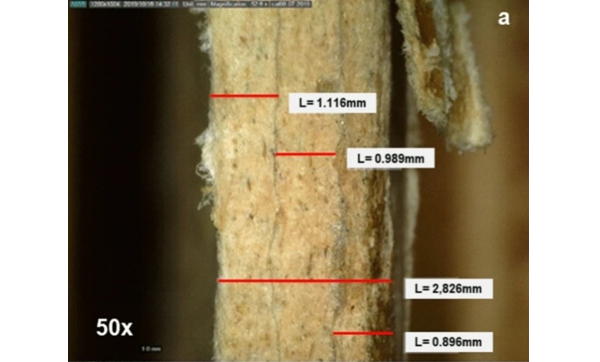
In collaboration with the Biblioteca Nazionale Marciana in Venice, the study investigated a selection of paper bindings produced between the 16th and 18th centuries, helping to highlight the value of a long-neglected heritage. The integration of thickness measurements, ATR-FTIR spectroscopy, Py-GC–MS analysis, and X-ray fluorescence made it possible to characterise their materials and manufacturing techniques. The investigations identified components consistent with the use of linen or hemp rags, gelatine likely used for sizing, and calcium carbonate, as well as waxy substances potentially attributable to undocumented conservation interventions.
Paro, Elisa; Benvestito, Claudia; Pugliese, Silvia; Izzo, Francesca Caterina; Balliana, Eleonora; Zendri, Elisabetta “Study and characterization of paper bookbindings from 16 to 18th stored in the Marciana National Library (Venice)” in HERITAGE SCIENCE, vol. 12 (ISSN 2050-7445), 2024
Characterisation and cognitive monitoring of 15th-17th century printed books from Ateneo Veneto
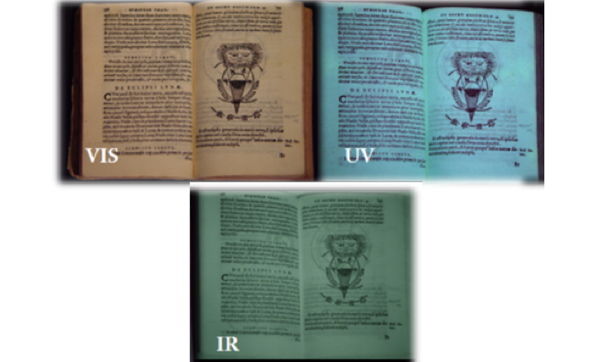
Ateneo Veneto houses a wealth of books pertaining to the technical-scientific field (e.g., astronomy, mathematics, anatomy), which is unique in Venice in terms of the number and variety of book material. Printed books constitute an underestimated field full of open questions concerning the transition from manual and small-scale production to mass production. The study is aimed at gaining knowledge of production technologies in the Italian and European contexts, of the materials used (inks, paper, additives, glues), and at assessing their state of conservation and their relationship with the conservation environment.
Albertin, F.; Balliana, E.; Pizzol, G.; Colavizza, G.; Zendri, E.; Raines, D. (2017), Printing materials and technologies in the 15 th − 17 th century book production: an undervalued research field in MICROCHEMICAL JOURNAL, vol. 138, pp. 147-153 (ISSN 0026-265X)
Formulation and evaluation of protective agents for textiles and papers
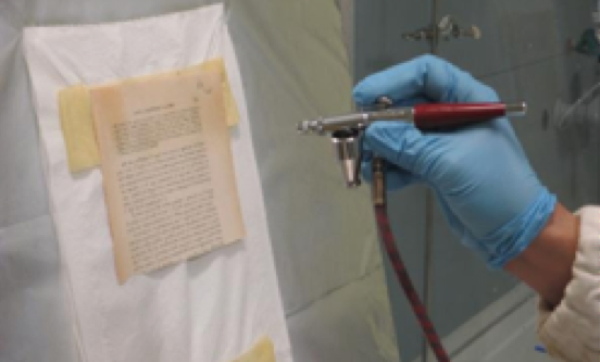
In collaboration with the Smart Materials department of the Italian Institute of Technology in Genoa, water-repellent coatings additivated with nanoparticles were formulated for the protection of cellulose substrates (paper and textiles). The planning of the work by means of factorial experimental design, the characterisation by means of chemical-physical analysis and the analysis of the data obtained by means of statistical methods (ANOVA, normality tests) made it possible to assess the efficacy and compatibility of the products tested on historical and recently produced supports.
Mazzon, Giulia; Zanocco, Irene; Zahid, Muhammad; Bayer, Ilker; Athanassiou, Athanassia; Balliana, Eleonora; Falchi, Laura; Zendri, Elisabetta Nanostructured coatings for the protection of textiles and paper in GE-CONSERVACIÓN, vol. 11, pp. 180-188 (ISSN 1989-8568)
Textile Art and Ariadne's Thread: Study of synthetic fibres in contemporary art and design
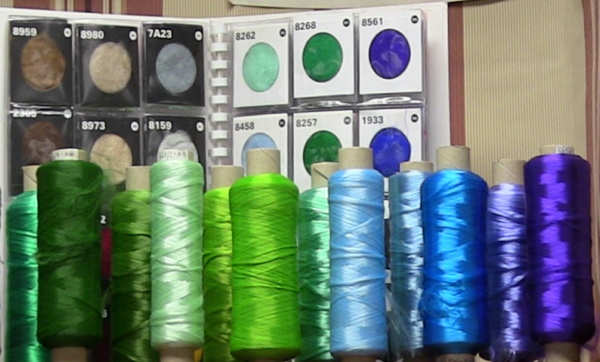
Born out of the collaboration with the BAS Scientific Area Library of Ca' Foscari, which is the repository of the Montefibre fund, the project is aimed at studying and enhancing the fund, which gathers original yarns and documentary archives of the products of the Italian chemical company Montedison Fibre. The materials, in particular polyamide (Nylon) and polyester (PET) matrix technofibre yarns, were characterised and monitored by verifying their stability to natural and artificial light, hygrometric and thermal ageing processes. The results of the research are also functional to the study of the diffusion and impact of synthetic fibres in art and design.
Web references: An 'Ariadne's Thread' links historical techno-fibres, library, research and students [ITA]
Study of architectural heritage
Study of Materials and Methods for the Conservation of Public Art
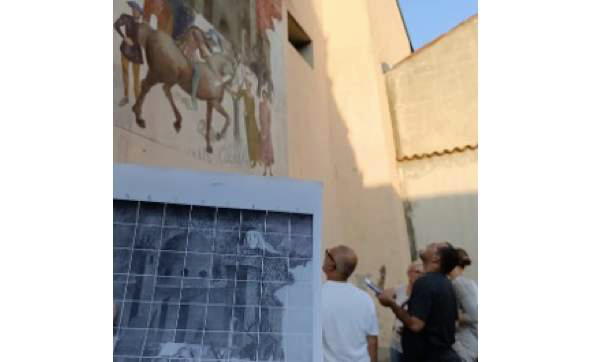
Within the National PhD Programme in Heritage Science, a project is underway on the conservation of public mural paintings exposed to the outdoor environment. The research has two objectives: to find a documentation and monitoring system for the artworks that is rapid and easily manageable even by local communities and administrations; and to identify the best methods for assessing the quality of conservation interventions carried out on the paintings, using non-invasive techniques directly in the field. The project is carried out in collaboration with several major public mural art sites (including Arcumeggia, Calcio, Cibiana di Cadore, Dozza, Maglione, Sarmede, and Tarzo).
Study of the phenomenon of capillary rise in Venetian masonry
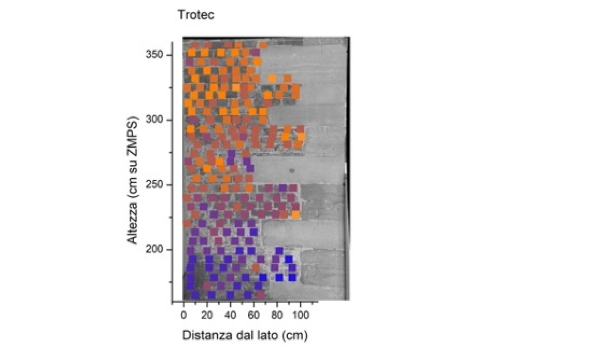
Rising water and saline solutions cause serious damage to masonry subjected to it, with increased humidity, living discomfort, the presence of biological growth, and the deposition and transport of soluble salts that cause efflorescence, sub-efflorescence, detachment, and pulverisation. The phenomenon has been studied by our group on numerous Venetian masonries (including the most recent at Ca' Foscari, Ca' Bottacin, Palazzo Badoer, and Palazzo Malipiero), assessing the extent of the phenomenon at urban level, the severity of the phenomenon in specific historical masonries, and the dynamics of the processes in laboratory studies using masonry built and maintained in a controlled environment and in the field. The group has produced considerable new research in this area over the last 30 years.
- Cimino, Dafne; Falchi, Laura; Corradini, Martina; Lucero Gomez, Paola; Balliana, Eleonora; Zendri, Elisabetta, 2022, Reflectance Spectroscopy as a Non-invasive Technique for Preliminary Characterization of Soluble Salts on Historical Masonries in Osman, A., Moropoulou, A., Advanced Nondestructive and Structural Techniques for Diagnosis, Redesign and Health Monitoring for the Preservation of Cultural Heritage, Springer, vol. 16, pages 28-37 (ISBN 978-3-031-03794-8; 978-3-031-03795-5) DOI - ARCA sheet: 10278/3760229
- M. Corradini, L. Falchi, P. Lucero-Gomez, E. Zendri, 2021 Recent evolution of the rising damp phenomenon in Venetian masonries by visual-based approach , Gli effetti dell'acqua sui beni culturali in SCIENZA E BENI CULTURALI, Venice, Arcadia ricerche publishing house, pages 11-20, Conference: Science and Cultural Heritage (ISBN 978-88-95409-24-5) (ISSN 2039-9790) - ARCA sheet: 10278/3733368
- Laura, Falchi; Debora, Slanzi; Eleonora, Balliana; Guido, Driussi; Elisabetta, Zendri, 2018, Rising damp in historical buildings: A Venetian perspective in BUILDING AND ENVIRONMENT, vol. 131, pages 117-127 (ISSN 0360-1323) DOI - ARCA sheet: 10278/3695853
Study of the atmospheric impact on Istrian stone surfaces in a Venetian environment
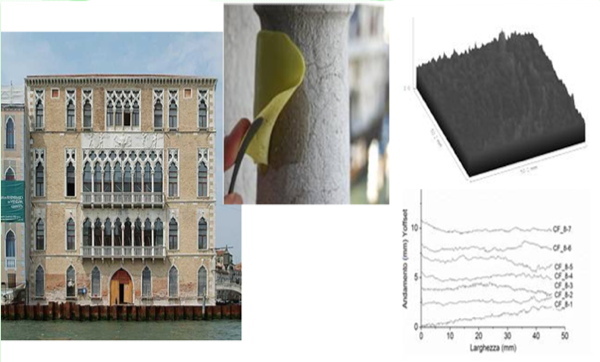
Evaluation of surface vulnerability by means of chemical and physical analysis of products and study of degradation phenomenology in the Venetian buildings Ca' Foscari, Ca' Dolfin, Ca' Bembo, Ca' Bottacin. Study of surface morphology by digitising silicone casts. Degradation processes are related to environmental factors such as rainfall, temperature, humidity, pollutants, particulates.
- Gnemmi, Margherita; Falchi, Laura; Zendri, Elisabetta Non-Invasive-Monitoring Methodology for the Evaluation of Environmental Impacts on Istrian Stone Surfaces in Venice in ATMOSPHERE, vol. 13, pages 1036 (ISSN 2073-4433), DOI - ARCA sheet: 10278/3762151
- Falchi, Laura; Orio, Elisa; Balliana, Eleonora; Izzo, Francesca Caterina; Zendri, Elisabetta Investigation on the relationship between the environment and istria stone surfaces in Venice in ATMOSPHERIC ENVIRONMENT, vol. 210, pages 76-85 (ISSN 1352-2310)DOI - ARCA sheet: 10278/3713950
Study of mortars in the Church of San Lorenzo in Verona
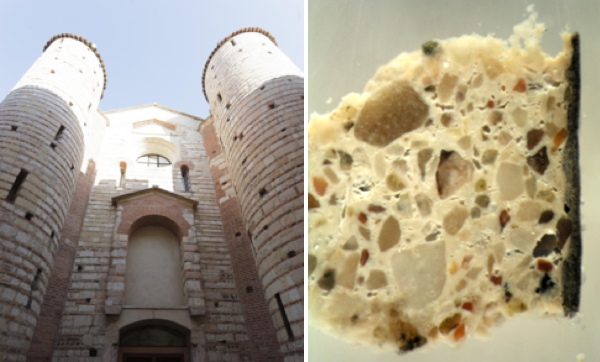
Analysis and characterisation of mortar joints from the Church of San Lorenzo in Verona, using FT-IR spectroscopy, XRD analysis, SEM-EDX optical and electron microscopy, and TG-DSC thermogravimetric analysis. The results highlighted the presence of air lime and weakly hydraulic mortars produced with materials from the Verona area, characterised by limestone with clay impurities and, in some cases, magnesium. The characterisation of the joints allows for the identification of different mixtures linked to different construction phases of the church.
Study and evaluation of protective systems for street art and writing works
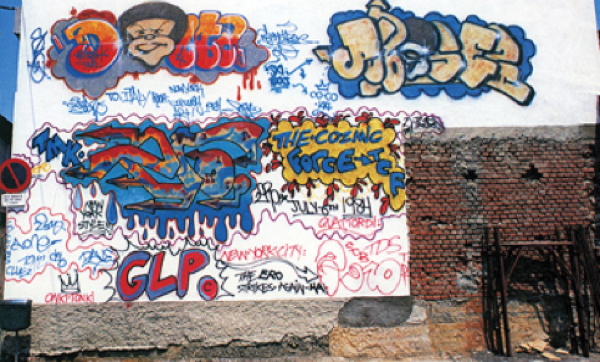
Experiments are underway to evaluate the use of commercial products for the protection of street and urban art and writing works.
A case in point is the writing work realised in 1984 by four artists (Delta 2, Ero, Phase 2 and Rammellzee) invited to Quattordio (Al), of which only a small portion remains visible today.
Alessandra Carrieri, Elena Astolfi, Francesca Caterina Izzo, Austin Nevin Restaurare opere di writing? Restauro di un graffito del 1984 , Supporto e(’) Immagine - Problematiche di consolidamento e di conservazione dei supporti nei dipinti contemporanei, Padua, Il Prato, pages 217-223, (ISBN 9788863365207)
Preventive conservation in Armenia: preliminary study on the state of conservation of the internal surfaces in the Geghard Monastery, a UNESCO heritage site
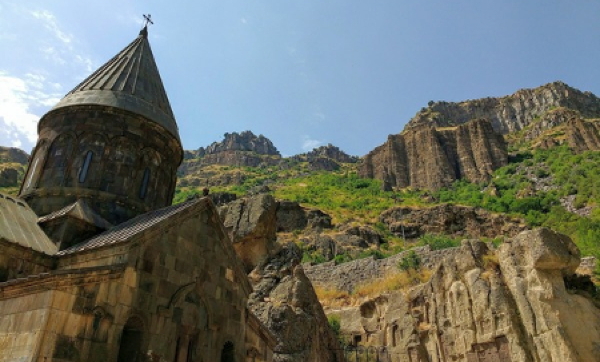
The study, developed in collaboration between the Science and Technologies for the Conservation of Cultural Heritage research group and the National University of Architecture and Construction of Armenia (NUACA) of Yerevan, concerned the assessment of the state of conservation of the Geghard monastery, UNESCO heritage. In particular, this research reports the results of the multidisciplinary investigation on the internal surfaces of the cavity of the "Proshian family hall", belonging to the 13th century. The data collected constitute an essential starting point for the planning and implementation of future conservative interventions.
Veneziano, Matilde; Harutyunyan, Emma; Kalantaryan, Nanar; Driussi, Guido; Morabito, Zeno; Zendri, Elisabetta Preventive Conservation of Cultural Heritage in Armenia: A Preliminary Study of the Internal Surfaces in the Geghard Monastery
The murals in Cibiana di Cadore
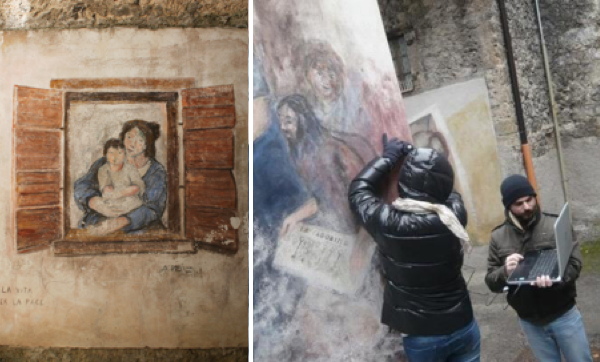
In collaboration with the Municipality of Cibiana di Cadore and the DAIS and DSMN departments, the students of the Master's degree course in Chemical Science for Conservation and Restoration (SCCR) studied the murals of Cibiana di Cadore (BL), describing the materials, execution techniques and state of conservation. For the works studied, conservation and monitoring projects were proposed.
Web references: Ca' Foscari lecture among the murals of Cibiana [ITA]
Technologies for conservation and restoration
Innovative methods for desalinating porous materials
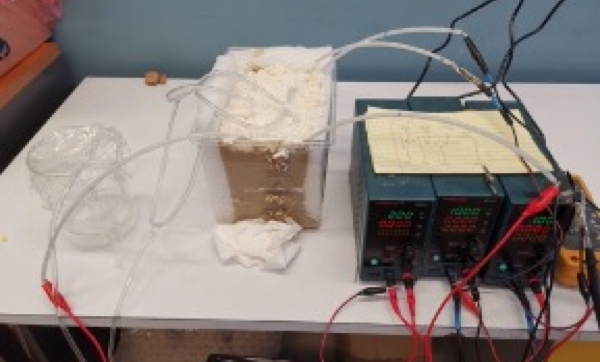
The aim of the project is to develop an electrokinetic method for the desalination of porous materials as an alternative to the more common pack applications. The electrokinetic method combines the movement of fluid (electroosmosis) and ions (electro-migration) under the effect of an applied electric field, which improves the transport of ionic species of salts and their removal rate from the object. The system developed employs four electrodes, which are positioned in pairs on two sides of the sample and embedded in layers of clay and cellulose wrap, through which the current is guided by applied electric fields. The excellent effectiveness was evaluated by comparison with a configuration simulating a traditional wrap.
Development of new plasters for heritage conservation
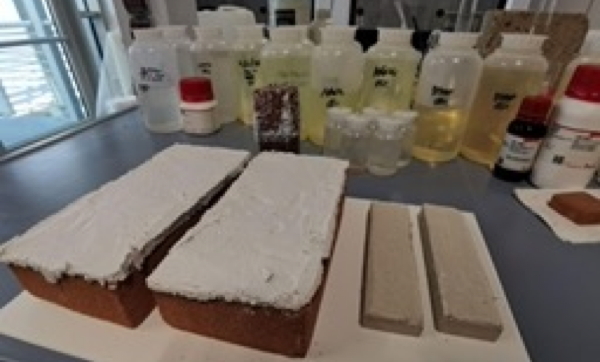
The PhD project, which is in collaboration with Mapei S.p.A., aims at developing new mortars and plasters for the restoration and conservation of historical buildings. Monumental buildings and archaeological areas are characterised by masonry consisting of structural elements (bricks, stones) bonded with mortars and very often covered with plasters. New plasters and mortars are designed using different additives and salt inhibitors to increase durability in coastal environments.
The project also takes sustainability issues into consideration, in terms of compatibility with the present elements, the environment and the effectiveness and durability of the interventions. The sustainability of the new products will also be defined through LCA analysis of the formulations.
Calcium ethoxide Ca(OEt)2 as a new solution for the consolidation of carbonate substrates
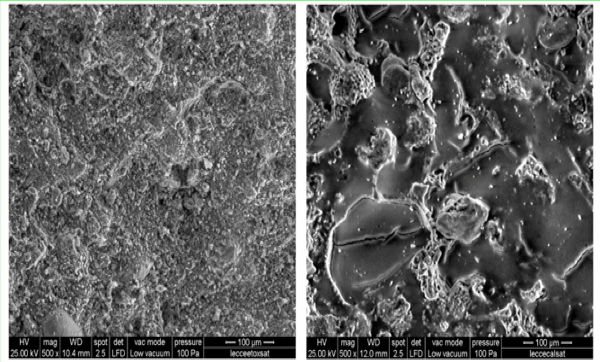
In collaboration with Padua's CNR-ICMATE, the reactivity and kinetics of the carbonation process of calcium ethoxide solutions were studied. The solutions produced are applied and evaluated for the consolidation of carbonate substrates.
Zuena, Martina; Tomasin, Patrizia; Costa, Dória; Delgado-Rodrigues, José; Zendri, Elisabetta Study of Calcium Ethoxide as a New Product for Conservation of Historical Limestone in COATINGS, vol. 8, pp. 103 (ISSN 2079-6412)
Optimisation of restoration plaster formulation by evolutionary experimental design
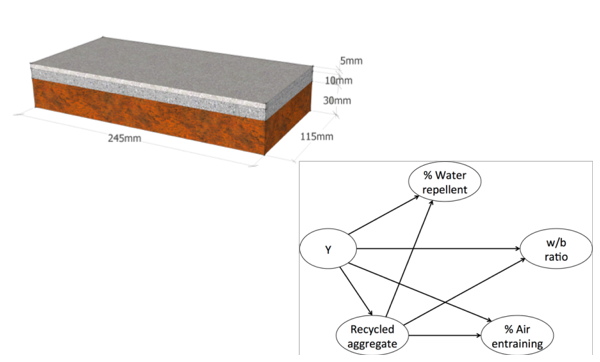
Natural hydraulic lime mortar formulations optimised for the containment of capillary rise processes were produced using evolutionary experimental design statistical methods with Bayesian network models.
The influence of recycled aggregates, bulk water repellents and aerating agents on the performance of formulations exposed to capillary rise of saline solutions was evaluated by assessing the degradation produced (detachment, disintegration, exfoliation, efflorescence).
The experimental design has allowed for a consistent reduction (to 1/3) of the physically produced and tested specimens, with a significant cost and space advantage, and provides reliable information on all possible formulations (even those not physically produced).
L.Falchi; D.Slanzi; L.Speri; I.Poli; E.Zendri Optimization of sustainable, NaCl-resistant and water-repellent renders through evolutionary experimental design in CONSTRUCTION AND BUILDING MATERIALS, vol. 147, pp. 876-889 (ISSN 0950-0618)
Study of bulk water-repellent mortars for the protection of historic masonry
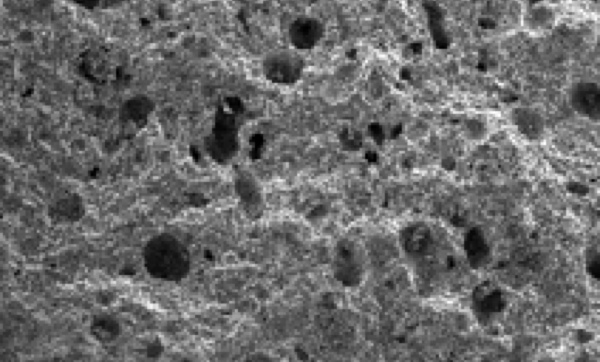
The effect of bulk hydrophobising additives in natural hydraulic lime, cement and lime-pozzolan mortars on the hydration kinetics and chemical-physical properties of fresh and hardened mortars was studied, as well as on the mechanical and water behaviour (capillary rise and rain).
The data was also analysed by means of statistical processing techniques (PCA and linear and non-linear modelling) for a multi-parametric, integrated and easily visualised evaluation of the behaviour of the mortars produced even after accelerated ageing (thermal shock and salt cycles).
L. Falchi; C. Varin; G. Toscano; E. Zendri Statistical analysis of the physical properties and durability of water-repellent mortars made with limestone cement, natural hydraulic lime and pozzolana-lime in CONSTRUCTION AND BUILDING MATERIALS, vol. 68, pp. 260-270 (ISSN 0950-0618)
Archaeometric studies
Etruscan Fired Clay from the Po Delta: Diagnostics Reveals a Possible Building Use
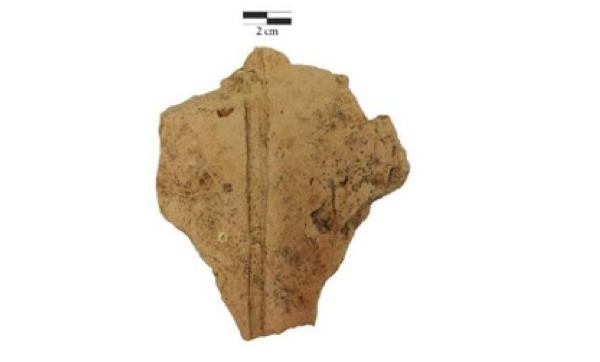
A multi-analytical investigation explored the production techniques and possible functions of distinctive fired clay finds found in the Etruscan settlements of San Basilio di Ariano nel Polesine and Adria, dating back to the 1st millennium BC. By integrating macroscopic observations, FTIR-ATR spectroscopy, SEM-EDS microscopy, and TGA-DSC thermal analysis, the study characterised the composition, porosity, and morphology of the artefacts, obtaining insights into firing temperatures. The results suggest the use of fired clay as a building material, with protective properties suited to the specific environmental conditions of the Po Delta.
Cantelli, M.; Cimino, D.; Facchi, A.; Phaneuf, R.J.; Zendri, E. “Non-Vascular Ceramic Sherds Coming from Two Italian Etruscan Settlements: Peculiarities and Interpretation of Their Possible Use”. Heritage 2022, 5, 1433-1448
Diagnostics of a polychrome bronze statue of Osiris from the Egyptian Museum in Cairo
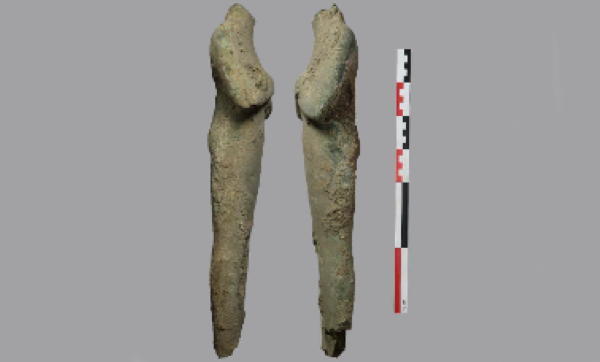
An in-depth diagnostic campaign guided the conservation intervention of a polychrome bronze statue of Osiris housed at the Egyptian Museum in Cairo. Digital microscopy, radiography, and X-ray fluorescence and diffraction revealed its materials, decorative techniques, and degradation processes, providing the basis for a targeted intervention. Mechanical cleaning brought to light hidden details and precious traces of gold, Egyptian blue, and lapis lazuli. A final cleaning with an Nd:YAG laser completed the treatment.
Mertah, Eid; Wafaa Mohamed, Elisabetta Zendri, Andrea Argente Barberán “A Closer Look at a Polychromed Bronze Statue of Osiris from the Basement of the Egyptian Museum, Cairo” in STUDIES IN EGYPTIAN ARCHAEOLOGY AND SCIENCE, vol. 2024 (ISSN 3049-5792)
Archaeometric studies of historical ceramic materials from the German area and Torcello
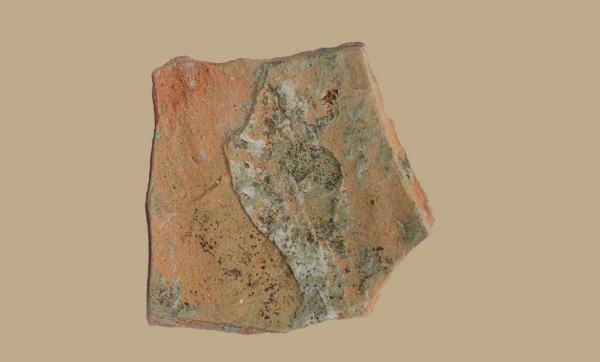
The aim of the research is to define a scientific methodology to correlate production techniques with the chemical and physical characteristics of traditional ceramic materials.
The multi-analytical approach uses traditional archaeometric research techniques combined with innovative methods such as Laser Induced Fluorescence (LIF), Laser Induced Breakdown Spectroscopy (LIBS) and X-ray Computed Microtomography (μ-CT).
Ricci, Giulia; Caneve, Luisa; Pedron, D.; Holesch, Nadine; Zendri, Elisabetta A multi-spectroscopic study for the characterization and definition of production techniques of German ceramic sherds in MICROCHEMICAL JOURNAL, vol. 126, pp. 104-112 (ISSN 0026-265X)
Investigations on the archaeological site of Hegra (Saudi Arabia)
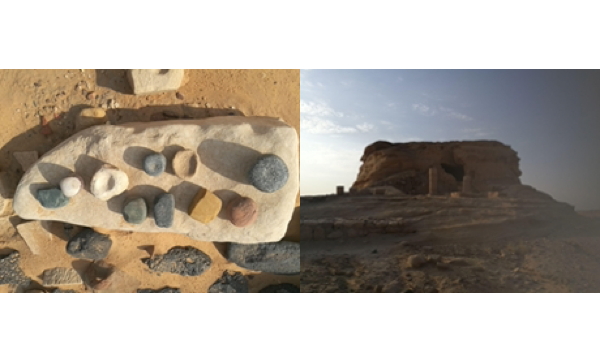
Hegra is located in the western Saudi region of Hejaz and was built by the Nabataeans, rich desert merchants and became the second most important and splendor city after Petra. Since 2008 it has been on the list of UNESCO World Heritage Sites.
The archaeological structures are characterized by the widespread use of raw earth, easily subject to degradation. The project concerns the study of the state of conservation of five areas within the Hegra site and the proposal of conservation methodologies suited to the materials and specific environmental conditions.