

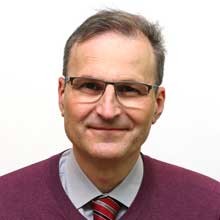
Béla ADAMIK
- Qualifica
- Professore Ordinario
-
bela.adamik@unive.it
- SSD
- Lingua e letteratura latina [LATI-01/A]
- Sito web
-
https://www.unive.it/persone/bela.adamik (scheda personale)
- Struttura
-
Dipartimento di Studi Umanistici
Sito web struttura: https://www.unive.it/dsu
Sede: Malcanton Marcorà
Ricevimento
Gli orari di ricevimento di Béla Adamik sono il lunedì dalle 16:00 alle 18:00, dal 21 settembre al 26 ottobre 2026 (Malcanton Marcorà, primo piano studio 1C11); si prega di fissare un appuntamento scrivendo a bela.adamik@unive.it.
Didattica anno corrente
DIGITAL AND PUBLIC HUMANITIES [FMR11]
Laurea magistrale (DM270)
FILOLOGIA, LINGUISTICA E LETTERATURA ITALIANA [FM40]
Laurea magistrale (DM270)
SCIENZE ARCHIVISTICHE E BIBLIOTECONOMICHE [FMR30]
Laurea magistrale (DM270)
SCIENZE DELL'ANTICHITÀ: ARCHEOLOGIA, LETTERATURE E STORIA [FMR2]
Laurea magistrale (DM270)
Didattica anni precedenti
SCIENZE DELL'ANTICHITÀ: LETTERATURE, STORIA E ARCHEOLOGIA [FM2]
Laurea magistrale (DM270)
FILOLOGIA, LINGUISTICA E LETTERATURA ITALIANA [FM40]
Laurea magistrale (DM270)
DIGITAL AND PUBLIC HUMANITIES [FMR11]
Laurea magistrale (DM270)
SCIENZE DELL'ANTICHITÀ: ARCHEOLOGIA, LETTERATURE E STORIA [FMR2]
Laurea magistrale (DM270)
Attività e competenze di ricerca
- Settore Scientifico Disciplinare (SSD) di afferenza
- Lingua e letteratura latina [LATI-01/A]
- Settore Scientifico Disciplinare (SSD) affine
- Glottologia e linguistica [GLOT-01/A]
- Aree geografiche in cui si applica prevalentemente l'esperienza di ricerca
- Internazionale: Europa
- Lingue conosciute
-
Inglese
(scritto: intermedio parlato: intermedio)
Tedesco (scritto: intermedio parlato: intermedio)
Italiano (scritto: base parlato: base)
Ungherese (scritto: madrelingua parlato: madrelingua)
- Partecipazione a comitati editoriali di riviste/collane scientifiche
-
Advisory Board of the Periodical ‘Studi e Saggi Linguistici’ (member 2020-)
Editorial Board of the Periodical ‘Antik Tanulmányok’ (Studia Antiqua) (member 2014-)
Editorial Board of the Periodical 'Acta Antiqua Academiae Scientiarum Hungaricae' (member 2025-)
- Partecipazione come referees di progetti di ricerca nazionali ed internazionali
- ERC Consolidator Grant 2023
- Principali aree e linee di ricerca del Dipartimento
-
Area:
Filologia e Lingua Linea:
Linguistica storica
Area: Scienze del linguaggio Linea: Dialettologia
- Digital Latin Dialectology (DiLaDi): Tracing Linguistic Variation in the Light of Ancient and Early Medieval Sources
-
- SSD:
- L-FIL-LET/04
- Altri membri del gruppo di ricerca:
-
Elisa D'ARGENIO
Alessandro PAPINI
- Digital Latin Dialectology (DiLaDi): Tracing Linguistic Variation in the Light of Ancient and Early Medieval Sources
-
- SSD:
- L-FIL-LET/04
- Altri membri del gruppo di ricerca:
-
Alessandro PAPINI
- Digital Latin Dialectology (DiLaDi): Tracing Linguistic Variation in the Light of Ancient and Early Medieval Sources
-
- SSD:
- L-FIL-LET/04
- Altri membri del gruppo di ricerca:
-
Alessandro PAPINI
- Digital Latin Dialectology (DiLaDi): Tracing Linguistic Variation in the Light of Ancient and Early Medieval Sources
-
- SSD:
- L-FIL-LET/04
- Altri membri del gruppo di ricerca:
-
Alessandro PAPINI
- Digital Latin Dialectology (DiLaDi): Tracing Linguistic Variation in the Light of Ancient and Early Medieval Sources
-
- Ente finanziatore:
- ERC
- Tipologia:
- HorizonEurope - Excellence Science
- Ruolo nel progetto:
- LD
- Sito di progetto:
- https://pric.unive.it/projects/diladi/home
- Data inizio:
- Anno: 2023 Durata mesi: 60
- Altri membri del gruppo di ricerca:
-
Alessandro PAPINI
Pubblicazioni in evidenza
Adamik, Béla The Transitional Latin Case System of the 8th Century in Tuscany and Alemannia in ACTA ANTIQUA ACADEMIAE SCIENTIARUM HUNGARICAE, vol. 66 (ISSN 0044-5975)
DOI - URL correlato 2026,
Articolo su rivista - Scheda ARCA: 10278/5121108
Bela Adamik The Dialectological Situation of the Latin Language in Late Italy Before and in the Langobard Period as Evidenced in Inscriptions: The Phonological Aspect , Lingue, scritture e società nell’Italia longobarda : Un percorso di sociolinguistica storica, Napoli, FedOAPress, vol. 32, pp. 619-642 (ISBN 9788868871291) (ISSN 2499-4774)
DOI - URL correlato 2026,
Articolo su libro - Scheda ARCA: 10278/5116931
Adamik, Béla The history of the Latin sound system of Etruria (Tuscany) from Augustus to Charlemagne in ACTA LINGUISTICA ACADEMICA, vol. 73, pp. 4-18 (ISSN 2559-8201)
DOI - URL correlato 2025,
Articolo su rivista - Scheda ARCA: 10278/5110372
Adamik Béla Back vowel mergers in Dalmatian Latin and Dalmatian Romance , Varietate delectamur: Multifarious Approaches to Synchronic and Diachronic Variation in Latin: Selected Papers from the 14th International Colloquium on Late and Vulgar Latin (Ghent, 2022), Turnhout, Brepols, pp. 387-403 (ISBN 978-2-503-60680-4)
DOI - URL correlato 2025,
Articolo su libro - Scheda ARCA: 10278/5103557
Adamik B. Vowel mergers in the Latin of the Danubian provinces of the Roman Empire as evidenced in inscriptions in ACTA ANTIQUA ACADEMIAE SCIENTIARUM HUNGARICAE, vol. 63, pp. 459-489 (ISSN 0044-5975)
DOI - URL correlato 2024,
Articolo su rivista - Scheda ARCA: 10278/5078802
Tutte le pubblicazioni
Curriculum vitae
Prof. Dr. habil. Béla Adamik PhD
(Nato nel 1969 a Budapest)
Posizioni ricoperte
2024– Professore ordinario di Lingua e Letteratura latina, Università Ca’ Foscari Venezia, Dipartimento di Studi Umanistici
2015–2024 Consulente scientifico, Centro di Ricerca Linguistica Ungherese, Istituto di Linguistica Storica e Uralica (fino all’11 marzo 2021: Istituto di Ricerca Linguistica dell’Accademia Ungherese delle Scienze, Dipartimento di Linguistica Finnougrica e Storica), Gruppo di ricerca di Linguistica storica e Dialettologia latina (fino al 30 giugno 2021: Gruppo di ricerca Lendület (“Momentum”) di Dialettologia latina computazionale)
2026– Professore onorario, Università ELTE di Budapest, Dipartimento di Latino
2010–2024 Professore associato, Università ELTE di Budapest, Dipartimento di Latino
2008–2010 Ricercatore, Istituto di Ricerca Linguistica dell’Accademia Ungherese delle Scienze, Dipartimento di Linguistica Finnougrica e Storica
2001–2008 Ricercatore universitario, Università ELTE di Budapest, Dipartimento di Lingua e Letteratura latina
1995–2001 Assistente universitario, Università ELTE di Budapest, Dipartimento di Lingua e Letteratura latina
1994–1995 Assistente universitario, Università ELTE di Budapest, Dipartimento di Linguistica indoeuropea
Formazione
Studi post-laurea
Università ELTE di Budapest, Scuola di dottorato in Studi antichi: 1994–1997
Studi universitari
Università ELTE di Budapest, Lingua e Letteratura latina: 1989–1994
Università ELTE di Budapest, Lingua e Letteratura greca antica: 1992–1996
Ha svolto attività di studio e ricerca presso il Dipartimento di Filologia classica dell’Università di Heidelberg, in qualità di borsista della Fondazione Peregrinatio (Ungheria), nel semestre invernale 1993–94 (tutor: Prof. Hubert Petersmann).
Titoli accademici
2000, PhD (Università ELTE di Budapest); tesi di dottorato in ungherese: „Studies on the External History of the Latin Language in the Eastern Part of the Roman Empire. The Problem of the Latin-Speaking Population in Constantinople.” Budapest 1999.
Abilitazione
2009, Dr. habil. (Università ELTE di Budapest); tesi di abilitazione in ungherese: „The History of the Latin Language from the Indo-European Protolanguage up to Classical Latin.” Budapest 2009.
Ambiti di ricerca
Linguistica e dialettologia delle iscrizioni latine dell’età imperiale; storia della lingua latina; politica linguistica e bilinguismo nell’Impero romano.
Progetti di ricerca
ERC-2022-ADG 101098102, Digital Latin Dialectology (DiLaDi): Tracing Linguistic Variation in the Light of Ancient and Early Medieval Sources (2023–2028)
Lendület (“Momentum”) Research Group for Computational Latin Dialectology, Hungarian Academy of Sciences, 2015–2020.
Computerized Historical Linguistic Data Base of Latin Inscriptions of the Imperial Age, National Research, Development and Innovation Office, Ungheria: NKFIH K 135359 (2020–2024), NKFI K 124170 (2018–2021), OTKA (= Hungarian Scientific Research Fund), progetto n. K 108399, 2014–2017, n. K 81864, 2010–2013 e n. K 62032, 2006–2009.
Borsa di ricerca ’Hajdú Péter’, Research Institute for Linguistics of the Hungarian Academy of Sciences (2007): „Studies on the History of the Latin language”.
Progetto OTKA (= Hungarian Scientific Research Fund) n. F 037798 (2002–2005): „History of the official use of Latin language in the Roman Empire”
Borsa post-dottorato ’Magyary Zoltán‘, Foundation for Hungarian Higher Education and Research (2004–2005): „Linguistic Policy and Bilingualism in the Roman Empire”
Borsa di ricerca ’Bolyai János’, Hungarian Academy of Sciences (2001–2004): "Studies on History of the official use of Latin language in the Roman Empire"
Esperienza didattica
Corsi tenuti presso il Dipartimento di Lingua e Letteratura latina dell’Università ELTE di Budapest, 1995–2024, sui seguenti argomenti:
lezioni sulla preistoria e sulla storia della lingua latina dal 1995;
lezioni sul latino volgare dal 2011;
conduzione di esercitazioni di lettura e traduzione di autori romani (Plauto, Terenzio, Sallustio) dal 1999;
conduzione di gruppi seminariali su temi specifici, tra cui testi di latino volgare, linguistica e dialettologia delle iscrizioni latine dell’età imperiale, iscrizioni latine della Pannonia, politica linguistica nell’Impero romano, iscrizioni latine arcaiche, grammatica e stilistica latina, ecc., dal 1998;
insegnamento della lingua latina a studenti non latinisti, 1994–2015.
Corsi tenuti all’estero
Latin inscriptions in Pannonia (28/10–05/11/2013), Introduction in to the Computational Latin Dialectology (03–04/11/2014), Wall inscriptions from Pompeii (3–5/11/2015), Collecting and Recording Data in the Computerized Historical Linguistic Database of the Latin Inscriptions of the Imperial Age (25–26/11/2016), Introduction to bad Latin according to misspelt inscriptions (31/10–02/11/2017), Introduction into the problem of African Latin (30/10–01/11/2018) e Introduction to the problem of linguistic Romanisation and Latinisation of the Roman Empire (29/10–31/10/2019), presso il Department of Classical Studies, Masaryk University, Brno, Repubblica Ceca.
Demonstration of the Computerised Historical Linguistic Database of Latin Inscriptions of the Imperial Age, University of Barcelona, Department of Latin Philology, Barcellona, Spagna (19–22/01/2015, 14–17/03/2016) e Centro de Estudos Clássicos da Universidade de Lisboa, Lisbona, Portogallo (24/11/2016).
Romanisation and Latinisation of the Roman Empire in the light of data in the Computerized Historical Linguistic Database of the Latin Inscriptions of the Imperial Age, Kommission für Alte Geschichte und Epigraphik des Deutschen Archäologischen Instituts, Monaco di Baviera, Germania (06/02/2019); Katedra klasickej a semitskej filológie, Filozofická fakulta Univerzity Komenského v Bratislave, Bratislava, Slovacchia (28/10/2019); Dottorato in Discipline linguistiche e letterature straniere, Università di Pisa, Pisa, Italia (online, 01/04/2021).
The dialectological situation of the Latin language in late Italy before the Langobard period as evidenced in inscriptions: the phonological aspect, Ciclo di seminari online “Lingue, scritture e società nell’Italia longobarda. Un percorso di sociolinguistica storica”, Università di Napoli “Federico II” (online, 29/06/2021).
Partecipazione a convegni con presentazione di una comunicazione
International Colloquium on Latin Linguistics (ICLL): Eichstätt 1995, Amsterdam 2001, Bologna 2003, Brussels 2005, Erfurt 2007, Innsbruck 2009, Uppsala 2011, Rome 2013, Toulouse 2015, Munich 2017, Las Palmas 2019, Santiago de Compostela 2022, Prague 2023, Udine 2025;
International Colloquium on Vulgar and Late Latin (Latin Vulgaire - Latin Tardif, LVLT): Heidelberg 1997, Helsinki 2000, Sevilla 2003, Oxford 2006, Lyon 2009, Bergamo 2012, Oviedo 2014, Uppsala 2016, Budapest 2018, Ghent 2022, München 2024, Verona 2026;
International Workshop on Computational Latin Dialectology (WCLD):
First International Workshop on Computational Latin Dialectology, April 7–8, 2016, Research Institute for Linguistics, Hungarian Academy of Sciences, Budapest;
Second International Workshop on Computational Latin Dialectology, March 30–31, 2017, Research Institute for Linguistics, Hungarian Academy of Sciences, Budapest;
Third International Workshop on Computational Latin Dialectology, March 28–29, 2018, Research Institute for Linguistics, Hungarian Academy of Sciences, Budapest;
Fourth International Workshop on Computational Latin Dialectology, March 28–29, 2019, Research Institute for Linguistics, Hungarian Academy of Sciences, Budapest;
Fifth International Workshop on Computational Latin Dialectology, July 7–8, 2022, Hungarian Research Centre for Linguistics, Budapest;
Sixth International Workshop on Computational Latin Dialectology, July 6–7, 2023, Hungarian Research Centre for Linguistics, Budapest;
Seventh International Workshop on Computational Latin Dialectology, June 13–14, 2024, HUN-REN Hungarian Research Centre for Linguistics, Budapest;
Eighth International Workshop on Computational Latin Dialectology, March 20–21, 2025, Department of Humanities, Ca’ Foscari University of Venice;
Ninth International Workshop on Computational Latin Dialectology, June 11–12, 2026, ELTE Research Centre for Linguistics, Budapest.
Magyar Ókortudományi Konferencia (National Colloquium on Ancient Studies): Pécs 2000, Piliscsaba 2002, Budapest 2004, Debrecen 2006, Szeged 2008, Pécs 2010, Piliscsaba 2012, Budapest 2014, Debrecen 2016, Budapest 2018, Pécs 2022, Esztergom 2024, Budapest 2026;
XVIe Congrès international d’épigraphie grecque et latine, Bordeaux 29.08–02.09.2022.
14th Trends in Classics International online Conference, “Historical Linguistics and Classical Philology”, Thessaloniki, 5–7 March 2021.
‘Law and Society in Times of Change: Theory and Praxis in Roman, Byzantine and Islamic Egypt’, workshop, Humboldt-Universität zu Berlin, 2–4 October 2019.
Nyelvelmélet és diakrónia 5. - Műhelykonferencia (“Linguistic Theory and Diachrony 5 – Workshop”), Pázmány Péter Catholic University, Budapest, 16–17/11/2022;
Nyelvelmélet és diakrónia 3 - Műhelykonferencia (“Linguistic Theory and Diachrony 3 – Workshop”), Pázmány Péter Catholic University, Budapest, 22–23/11/2016;
Nyelvelmélet és kontaktológia 3 - Műhelykonferencia (“Linguistic Theory and Contactology 3 – Workshop”), Pázmány Péter Catholic University, Budapest, 17–18/11/2015;
Nyelvelmélet és dialektológia 3 - Műhelykonferencia (“Linguistic Theory and Dialectology 3 – Workshop”), Pázmány Péter Catholic University, Budapest, 18–19/11/2014.
Műhelykonferencia a 90 éves Ritoók Zsigmond tiszteletére (Workshop in honour of 90-year-old Ritoók Zsigmond), Eötvös Loránd University, Institute of Ancient and Classical Studies, Budapest, 27/09/2019.
Bonae memoriae József Herman: „Du latin épigraphique au latin provincial”; Symposium zur Sprachwissenschaft der lateinischen Inschriften, Budapest 2008;
Symposium Narratologie und Erzähltechnik, 7–8 November 2013, Budapest;
Symposium LYRIK, 1.–3. Juli 2010, Wien;
Antike Ästhetik, Poetik, Rhetorik und ihre Rezeption. Symposium 2007, Budapest;
Symposium Polemik, Parodie, Satire in der griechischen und der lateinischen Literatur, Vienna 2005;
Bollók János Emlékkonferencia (Colloquium in memory of János Bollók), Budapest 2003;
Konferencia Kapitánffy István emlékére (Colloquium in memory of István Kapitánffy), Budapest 1999;
Colloquium on Sociolinguistics in Mannheim ('Soziolinguistentag', organised by the Doctoral Schools of the University Heidelberg and University Mannheim), Mannheim 1994.
Affiliazioni
Hungarian Society for Ancient Studies: membro dal 1993; tesoriere dal 2009;
Société Internationale pour l’Étude du Latin Vulgaire et Tardif: membro dal 2014; vicepresidente dal 2016; presidente dal 2018 al 2022;
Comitato editoriale della rivista ‘Antik Tanulmányok’ (Studia Antiqua): membro dal 2014;
Comitato consultivo della rivista ‘Studi e Saggi Linguistici’: membro dal 2020;
Comitato editoriale della rivista ‘Acta Antiqua Academiae Scientiarum Hungaricae’: membro dal 2025.
Premi e onorificenze
Premio István Hahn, 1993, Hungarian Society for Ancient Studies;
Premio József Révay, 2003, Hungarian Society for Ancient Studies;
Croce di Cavaliere dell’Ordine al Merito della Repubblica d’Ungheria, 2021, conferita in riconoscimento del ruolo di particolare rilievo svolto nella realizzazione della Computerized Historical Linguistic Database of the Latin Inscriptions of the Imperial Age.
Le informazioni riportate sono state caricate sul sito dell'Università Ca' Foscari Venezia direttamente dall'utente a cui si riferisce la pagina. La correttezza e veridicità delle informazioni pubblicate sono di esclusiva responsabilità del singolo utente.