Interview with Carl Wieman, Nobel Laureate in Physics, guest at Ca’ Foscari for a ‘Lectio Magistralis’



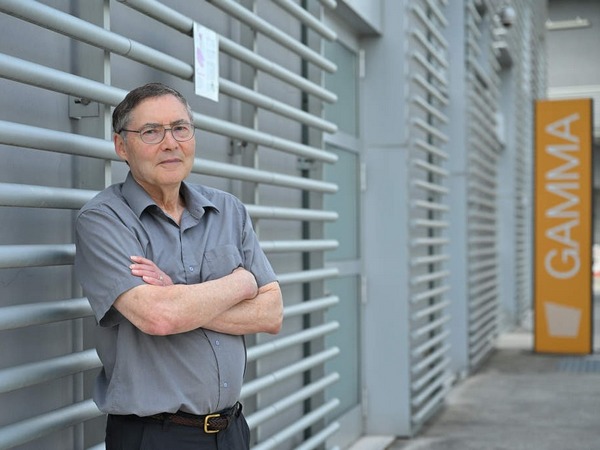
What happens when one of the world’s most brilliant minds in physics decides to apply the scientific method not to atoms, but to the way students learn? Carl Wieman, who won the Nobel Prize for Physics in 2001, addressed this topic on Friday 17 April at Ca’ Foscari University of Venice’s Scientific Campus, with a Lectio Magistralis entitled “Taking a Scientific Approach to Science and Engineering Education”.
The event commenced with greetings from the Deputy Rector, Antonio Marcomini, and was introduced by Professor Stefano Bonetti. Wieman, Emeritus Professor at Stanford University and a global reference point for educational innovation, is not only the scientist who achieved temperatures close to absolute zero to study new forms of matter. Over the past twenty years, he has devoted his career to an equally complex mission: overcoming the traditional model of university teaching, often based solely on passive listening.
The “Wieman method” proposes treating teaching as an experimental science. Using data, interactive technologies, and active engagement in the classroom, the Nobel laureate demonstrates that it is possible to halve dropout rates and double the effectiveness of learning. The aim is to train not only experts but also individuals capable of thinking and solving problems with scientific rigour. His approach is grounded in what modern research reveals about how people learn, transforming the student from a spectator into the protagonist in an active process of inquiry.
Here is how Professor Wieman responded to our questions:
You have developed a learning method based on students actively participating during lectures, marking a complete shift in perspective from traditional teaching approaches. Which aspect of this method are you particularly pleased with, and what, in your opinion, has yet to fully meet its intended objectives?
Generally I have seen the methods work well, in that the data shows students consistently learning more and performing better than with traditional teaching methods. One of the biggest challenges remaining in implementation of these methods has been in group work. These methods typically involve students working and learning together in small groups. Often, with a little guidance, the student groups work together very productively, but that is not always the case. Sometimes the groups do not work well together and learning suffers. We still need to understand better how to ensure that all groups work well together across a range of educational contexts.
In an interview, you stated that “education must help people make better decisions”. As a scholar and observer of the world, which of the major global challenges of our time do you consider to be the most underestimated?
Personally, I believe climate change and the need to switch from fossil fuels to renewable sources of energy is the most important challenge facing society today. There is still far too little recognition of the need to take urgent action to address this.
Female participation in STEM fields remains a minority globally. What specific steps are necessary to close this gap?
While there are things that people in the STEM fields can do to be more open and welcoming to females, I think the more important steps have to come from society at large. It is the messages that the larger society sends as to what fields are appropriate for women that make the biggest difference. For example, in biology and medicine there used to be very few females and now in many, though not all, countries females are equally represented or the majority in those fields. That change was primarily the attitudes of society about females being in those fields, rather than changes in the fields themselves.
As a researcher and educator, what message would you share with your students, and more generally with young people, who will one day be called upon to carry forward the legacy of today’s society?
Science is basically a way of thinking. It is using evidence and experiments to determine what is true and what is not. Humans have many ways of deciding what they believe is true, but history has shown that those other ways are not nearly as useful as science. I hope to give my students a sense of the value of this “scientific thinking” in the decisions they will face in life.
Stefano Bonetti, Professor of Physics of Matter, said: “Hosting Carl Wieman is an honour that goes beyond academic prestige. We have already begun applying his methods in individual courses, with tangible results. We now want to take the next step: to redesign the entire Master’s Degree programme in Engineering Physics in line with his approach, based on scientific evidence of how people learn.” To the best of our knowledge, no one in the world has yet done this on the scale of a whole degree programme. Carl Wieman will support us in this challenge.”
Watch the video of the lecture: