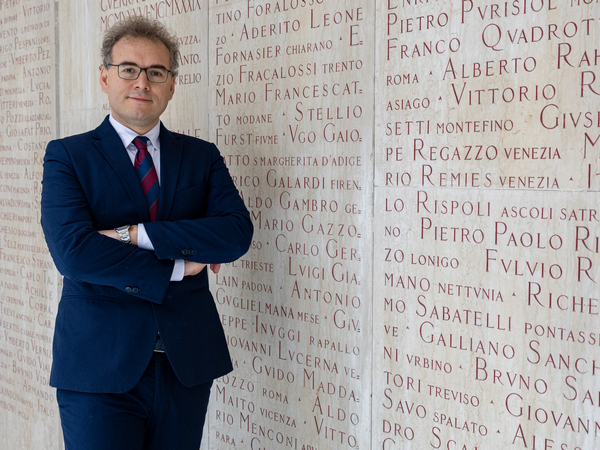

Rector Tiziana Lippiello’s six-year term “We have shown that we are a university rooted in history and always open to innovation”




Two hundred million euros in competitive funding secured over six years, €60 million in NRRP funding for research projects, a 16% increase in the quality of research output as assessed by ANVUR, 2nd place in Italy and 5th in Europe for outbound student mobility, and a rise in international student enrolments (226 to date, compared with 156 last year): these are some of the figures presented today by Tiziana Lippiello, Rector of Ca’ Foscari University of Venice, just a few days before the end of her 2020-2026 term of office.
Rector Tiziana Lippiello said: “I look back on these six years with profound gratitude for the trust placed in me and for the extraordinary collaboration of everyone — academic, technical and administrative staff, and students — who have contributed to the growth of our University. My sincere thanks also go to the institutions, businesses and organisations across society that have shared our vision and supported us on our path of development.”
“Looking at what we have achieved,” she added, “we can proudly say that the foundations for Ca’ Foscari’s future have been laid and that they are solid and secure. We have reached the end of this extraordinary journey. Over these six years, Ca’ Foscari has demonstrated exceptional resilience, inexhaustible intellectual vitality and a remarkable capacity for renewal. We have shown that it is possible to be both a historic university, firmly rooted in its identity, and a place that is constantly open to innovation. I wish the next Rector, Marco Sgarbi, every success in his work and hope that he will safeguard our University’s identity while continuing to innovate and experiment.”
Teaching and student services
The University’s educational programmes have been completely redesigned to meet the challenges of our time, enriching students’ learning experience with flexible, interdisciplinary opportunities: “Minors” (extended across a wide range of subject areas), “Advanced Courses”, and innovation labs such as the “Active Learning Lab” and "Contamination Lab". We have also paved the way for micro-credentials and Open Badges, and in 2025 launched a pioneering pilot project exploring the use of generative Artificial Intelligence and GPT models to support tutoring and teaching.
At the end of the Rector’s term, Ca’ Foscari offers a total of 67 degree programmes, including 15 taught entirely in English and 9 international curricula, as well as 37 Double and Joint Degree agreements with prestigious European and Asian universities. In 2025, the University successfully completed its periodic accreditation process, and the “Buddhism and Asian Religions” degree programme is scheduled to launch in 2027.
The University has focused on strengthening the link between education and the world of work. It has fully digitalised and dematerialised internship management, providing students with a network of more than 11,000 agreements in Italy and over 1,200 abroad. Through sector-specific Career Days, individual career guidance services, and initiatives such as Progetto LEI, which promotes female leadership, support for students entering the labour market has become an integral and ongoing part of their university experience.
In terms of student welfare and the right to education, Ca’ Foscari made a clear and direct commitment. When, in 2024, public funding for scholarships risked leaving some eligible students without support, the University stepped in, allocating €3 million of its own resources over the 2024–2026 period. In 2025, funding was guaranteed for 100% of eligible students, with more than 2,550 scholarships awarded, totalling over €13.3 million. Together with tuition fee exemptions (which currently reduce theoretical tuition fee revenue by more than 46%), 350 student collaboration opportunities each year, rent subsidies and merit awards, the University’s overall financial support system amounts to more than €14 million a year.
In 2025, Ca’ Foscari opened the “Student Health Centre” Venezia — a free local healthcare service for students living away from home — which received an award for management innovation from CODAU, the Association of Italian University Directors General, while also strengthening its counselling service, Spazio Ascolto, and the local mental-health support network. The University has thus become, in every respect, a social infrastructure that provides support and opportunities for growth to its young people.
Internationalisation
Internationalisation has long been a priority and cuts across all areas of the University. Alongside its extensive range of courses taught in foreign languages and Double Degree programmes — including collaborations with institutions such as the Tashkent Institute of Chemical Science — Ca’ Foscari actively participates in the European Universities Initiative through the EUTOPIA Alliance. This participation has enabled a significant expansion of short-term, blended and Erasmus+/Overseas mobility programmes, supported by fully digitalised administrative and management processes. The EUTOPIA Alliance has recently secured additional European funding for the EUTOPIA EDGE project under the 2026 European Universities Initiative. The project will enable us to work towards future European Double Degrees and the European Degree, while further strengthening the Alliance.
Research
During the mandate, Ca’ Foscari attracted €198.67 million in competitive research funding. NRRP resources accounted for 53% of national and regional funding (€59.6 million), supporting participation in five Extended Partnerships, technological infrastructure and research platforms, including green hydrogen, and projects to digitalise cultural heritage.
The University continues to rank among Italy’s leading institutions for attracting European funding, placing 8th in Italy by number of projects and 11th for EU funding secured under Horizon Europe, with a total of 205 individual Marie Curie fellowships. In addition, four Departments received funding under the Departments of Excellence 2023-2027 programme, for a total of €31 million.
The quality of Ca’ Foscari’s research was recognised as among the best in Italy in ANVUR’s fourth Research Quality Assessment exercise (VQR). ANVUR, the Italian National Agency for the Evaluation of Universities and Research Institutes, is responsible for evaluating the Italian university system. Compared with the previous assessment exercise, the evaluation of the quality of Ca’ Foscari’s research output rose by 16% between 2020 and 2024. In addition to research output, ANVUR assessed universities’ ability to attract external funding through European calls and the impact of knowledge valorisation activities (Third Mission). Ca’ Foscari also achieved very positive results in these two areas: the University ranks among the top ten in Italy for attracting competitive funding, while the assessment of the quality of its Third Mission initiatives increased by 31.9%.
The excellent VQR results have affected the allocation of the Ordinary Financing Fund (FFO), particularly its performance-based component, which rose by 15.01% in the latest financial year. Between 2025 and 2026, Ca’ Foscari’s share of the performance-based component rose from 1.18% to 1.34% (+ 0.16 %). As a proportion of the total comprising the basic allocation, performance-based allocation and equalisation funding, Ca’ Foscari’s share of the performance-based component increased from 34.6% in 2025 to 38.6% in 2026, a rise of approximately four percentage points.
University Finances
Despite a challenging macroeconomic environment, characterised by reduced national government funding and rising operating costs, Ca’ Foscari has maintained a stable level of net assets, which have remained at approximately €179 million. Careful cost management and resource optimisation have enabled the University to continue developing its teaching and research mission over the medium to long term.
Buildings and Infrastructure
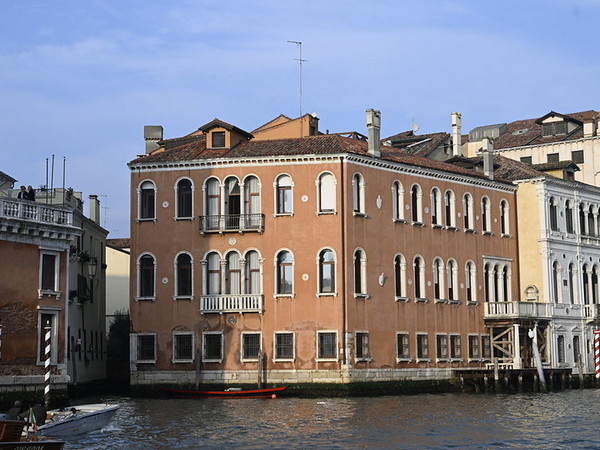
Le infrastrutture sono state al centro degli investimenti di Ca’ Foscari per offrire alla comunità studentesca e al personale spazi e servizi innovativi e integrati. Conclude la Rettrice: “Abbiamo aperto una residenza e messo in funzione un nuovo edificio - Epsilon - al Campus Scientifico di Mestre, riqualificato il Magazzino 4 a San Basilio (11 aule per oltre 1.100 posti); abbiamo restaurato le sedi di Ca' Cappello e San Sebastiano, avviato il progetto di recupero dell'ex Caserma Pepe e Bellemo al Lido dove sorgerà un nuovo studentato, e abbiamo acquisito Palazzo Rio Novo per il polo umanistico. Abbiamo inoltre individuato una nuova sede per il Campus di Treviso, e ancora avviato il progetto di rifunzionalizzazione del complesso «Ai Frari» con ESU e il recupero della Chiesa dello Spirito Santo, destinata a diventare una nuova biblioteca di area linguistica aperta alla città”
Infrastructure has been a crucial part of Ca’ Foscari’s investment, with the aim of providing students and staff with innovative, integrated spaces and services. The Rector concluded: “We opened a student residence and brought a new building (Epsilon) into operation at the Mestre Scientific Campus; redeveloped Magazzino 4 at San Basilio, creating 11 classrooms with more than 1,100 seats; restored the Ca’ Cappello and San Sebastiano buildings; launched the redevelopment project for the former “Pepe and Bellemo barracks” on the Lido, where a new student residence will be created; and acquired Palazzo Rio Novo for our humanities hub. We also identified a new location for the Treviso Campus, launched the project to repurpose the ‘Ai Frari’ complex with ESU, and began the restoration of the Church of the Holy Spirit, which will become a new library for language studies, open to the city.”