
When cinema meets war: how film festivals shape the memory of conflicts



Can a film festival ever be just a film festival? History suggests otherwise. The Venice International Film Festival, established in 1932 in Fascist Italy, soon received the regime’s support and was also used as a platform of propaganda. The Cannes Film Festival, by contrast, was conceived as a democratic response to Fascist influence at the Venice festival. Its first edition, scheduled to open on 1 September 1939, was cancelled following the outbreak of the Second World War.
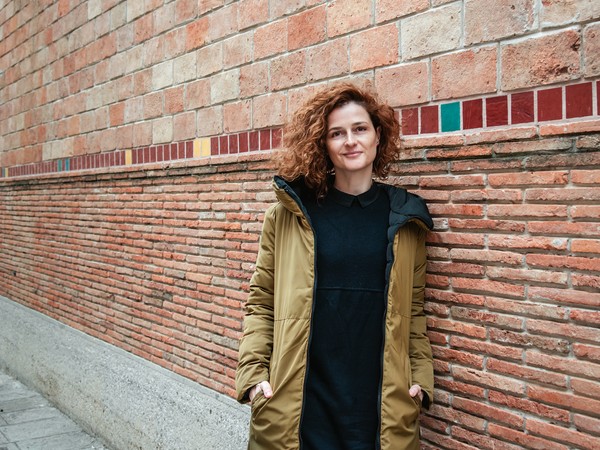
This longstanding relationship between film festivals and political conflict is the starting point for the research of Dr Dunja Jelenković, a researcher at Ca’ Foscari University of Venice and the recipient of the European Marie Skłodowska-Curie Actions (MSCA) fellowship for her project FESTWAR FM – Film Festivals and War: A Fe-Male Perspective (1939-today).
The project investigates how film festivals have contributed to representing conflicts, interpreting them and preserving their memory, while also becoming spaces for political and cultural exchange. Particular attention is paid to women’s roles in this process, not only as directors and on-screen protagonists, but also as jury members, programmers and decision-makers within festival organisations.
More than films: festivals as political spaces
Dunja Jelenkovic’s research is based on the idea that film festivals are highly visible media events that can influence public debate far beyond the cinema auditorium. The films they select, the prominence they give to particular works, and the ways those works are presented and awarded all help shape which stories and interpretations of events reach wider audiences.
“When we view film festivals not only as places where films are screened, but also as spaces where political events are represented, interpreted and remembered, we begin to understand their true scope of influence,” Jelenković explains. Programming choices can convey political messages and help shape collective memories of conflict.
A historical perspective enables tracing how this role has evolved over time, from propaganda and cultural diplomacy in the twentieth century to public statements made by festival guests and organizers at contemporary festivals. The research extends beyond Europe to include North American events such as the Sundance Film Festival and the Toronto International Film Festival.
From twentieth-century propaganda to contemporary expressions of solidarity, film festivals are also spaces where cinema engages with current affairs. At the 2022 Venice Film Festival, actress Tilda Swinton paid tribute to Ukraine with an outfit inspired by the colours of its flag — a gesture that shows how the red carpet can become a platform for public expression.
Who decides which stories are told?
Gender is central to the project. Understanding how war is represented requires more than analysing what appears on screen: it also means asking who decides which films are selected, screened and awarded.
“When we look at the representation of women in films about war, we should also be aware of who made the decisions to screen or award these films,” the researcher points out.
The project therefore examines women both as subjects of cinematic representation and as participants in decisions that shape festival programmes. Its aim is to better understand how women’s presence and roles in decision-making affect the ways conflicts are represented and remembered.
One issue that has particularly drawn Dr Jelenković’s attention is the differing responses of major European festivals to the war in Ukraine and the conflict in Palestine. In a 2026 article published in NECSUS, she examined what she considers inconsistencies in the positions taken by Venice, Berlin and Cannes on these two contexts. This analysis illustrates how comparing festival responses can help interrogate the relationship between culture, politics and contemporary conflicts.
From the history of former Yugoslavia to a global perspective
FESTWAR FM is the third stage in a research trajectory that Dr Jelenković has developed over the past 15 years. Her doctoral thesis examined the history of the Yugoslav Documentary and Short Film Festival in Belgrade (1954-2004), exploring how festival programmes helped shape collective identities and memories of war.
Her subsequent project, CBA TRIESTE (also funded by Marie Sklodowska-Curie Actions, MSCA) investigated the relationship between cinema, borders and conflict in the Northeast Adriatic region, focusing on the Trieste Crisis and Italian and Yugoslav cinematic narratives of the conflict. FESTWAR FM now broadens this perspective by bringing together film festivals operating in different geographical contexts and historical periods.
By comparing the Second World War, the wars in former Yugoslavia, and the war in Ukraine, and by considering contemporary conflicts in the Middle East, the project seeks to understand how film festivals have evolved: have they primarily served as instruments of propaganda, or have they also become spaces for solidarity and engagement with communities affected by war? How do the size and influence of individual festivals shape these dynamics?
These are among the questions the project seeks to address by bringing together history, film studies, festival studies, border studies and gender studies.
A digital archive to preserve and share the research
Alongside its academic outputs, FESTWAR FM will produce a digital archive and database of films, building on the model developed by the CBA TRIESTE project. The aim is to create a resource that remains useful beyond the end of the fellowship in 2028. Jelenković is also working on a new book that will further develop the research findings.
International scholarly exchange is another key component of the project. The symposium Film Festivals: Borders, Identities, Solidarities, founded by Jelenković at Ca’ Foscari in 2024, will hold its second edition at Concordia University in Montreal from 2 to 4 November 2026. The event will bring together researchers from different disciplines, alongside film and festival professionals, to discuss how festivals shape borders, identities and solidarities, with a particular focus on propaganda and festival responses to ongoing wars.
Through historical research and international exchange, FESTWAR FM invites us to view film festivals from a different perspective: not merely as places where stories are shown on screen, but as spaces where decisions are made about which stories gain visibility and how the memory of conflicts is transmitted to future generations.