
Same Climate, Different Outcomes: a 'Marie Curie' Research Project Explores the Inequalities in Climate Adaptation



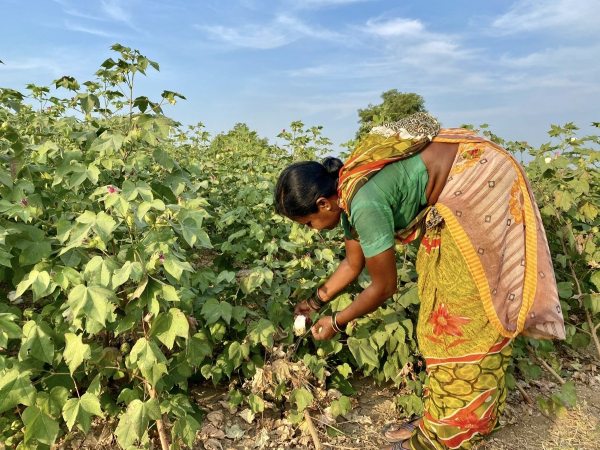
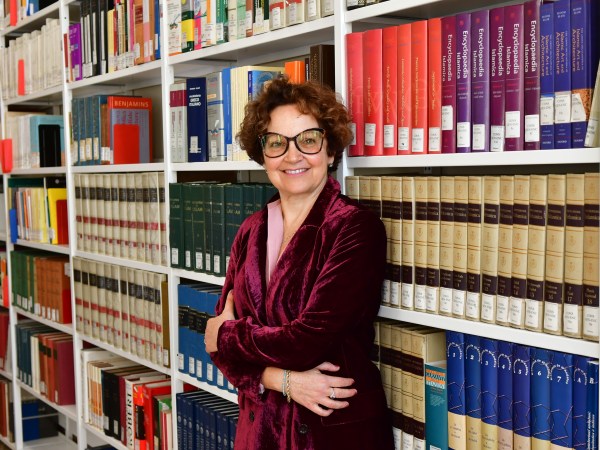
When climate change strikes a community, global reports often treat all residents as if they are in the exact same boat. Through her Marie Skłodowska-Curie Postdoctoral Fellowship project IMUCCA (Interdisciplinary Model for Understanding Climate Change Adaptation) at Ca' Foscari University of Venice, Dr. Maryam Aslany is challenging this assumption. Supervised by Prof. Monica Billio at the Department of Economics, the project investigates how deep-seated social stratifications – such as class, gender, and caste – determine an individual's vulnerability to climatic shocks and shape their ability to adapt.
Dr. Aslany's research centers on the cotton-growing region of Vidarbha in Maharashtra, India, an area heavily impacted by severe biophysical stress, persistent crop failures, and a longstanding agrarian crisis that has tragically resulted in one of the highest rates of farmer suicides in the country. Utilizing an approach that combines quantitative household surveys with qualitative interviews across two rounds of fieldwork, she captures the lived realities of local farmers. Her findings reveal stark social and economic divides: while climatic uncertainty can push some households towards migration and greater reliance on debt, it can create opportunities for accumulation elsewhere in the rural economy, reinforcing existing inequalities. Her work also highlights the growing “feminisation of agriculture.”
By bringing together insights from economic sociology and social ecology, IMUCCA provides an in-depth empirical account of how climate change is reshaping agrarian economies. Such empirical research can inform socially responsive climate policy, supporting the EU’s mission to develop evidence-based solutions for global challenges.
In the following interview, Dr. Aslany discusses her fieldwork in Maharashtra, how she brings quantitative data into conversation with people’s lived experiences, and why Ca’ Foscari’s interdisciplinary environment provides an ideal setting for understanding the complex social and economic dimensions of climate change.
What first showed you that climate change actually hits people in the same community completely differently?
What has become clear through my research is that people can face the same drought, extreme heat or unpredictable rainfall, but experience the consequences very differently. Climate change interacts with inequalities that are already there. A household with more land, irrigation, savings or income outside agriculture may be able to absorb a bad harvest, invest in new ways of farming or diversify its sources of income. A small, rain-fed farmer may instead have to borrow, migrate or take on casual work simply to keep farming.
Climate change can even create opportunities for some. One informal moneylender I interviewed explained that as climatic unpredictability increased crop losses and farming costs, farmers became more reliant on informal credit. As he put it, “The opportunity for profit through lending has increased because of climate change.” This shows how one household’s vulnerability can become another’s opportunity for accumulation.
Over time, households facing the same climatic pressures can follow very different economic paths: some stabilise or accumulate through investment and income diversification, while others become increasingly reliant on seasonal migration, casual labour and debt simply to get by. Climate change can therefore deepen, rather than simply reflect, existing inequalities.
How do things like gender, and wealth stack up against each other during a climate crisis? For example, how does a drought affect a woman versus a wealthy male landowner?
Climate change does not happen outside the social structures of agrarian societies. Economic position is one part of that, but social relations, particularly gender, are equally important in shaping how its impacts are experienced and responded to. This was one of the major findings of my research. As climatic uncertainty increases, male out-migration in search of work elsewhere, particularly among lower-income households, has become an important way of supplementing agricultural income. As a result, women are taking on more of the work of cultivation alongside their existing responsibilities within the household. This means an overall increase in women’s workload and, more broadly, a growing feminisation of agriculture. It is also one example of how gender and economic position interact in the face of climatic uncertainty.
What is striking, however, is that women’s growing role in agricultural production does not necessarily bring greater authority. Women may be managing farms and ensuring that cultivation continues while still having less access to land ownership, credit, markets and agricultural institutions, and less influence over important decisions about climate adaptation at the village level.
What made you choose these specific villages for your study?
India is an important site for studying climate change because agriculture remains central to the livelihoods of millions of rural households. Across large parts of the country, rising temperatures, changing rainfall patterns, biodiversity loss and extreme weather events are already affecting agricultural production and the lives built around it. My research focuses on two villages in the Vidarbha region of Maharashtra, one of India’s major cotton-growing areas. Cotton farming is heavily dependent on rainfall, making farmers particularly exposed to climatic uncertainty. But this is also a region where farmers have struggled for decades with crop failures, debt and uncertain agricultural prices. The most devastating expression of this longer agrarian crisis has been the high rate of farmer suicide. Research has identified environmental stress as one of several factors contributing to these deaths. This history makes Vidarbha a particularly revealing place to examine what happens when growing climatic uncertainty encounters an agrarian economy already under considerable pressure.
You are working to turn personal interviews into a general model. How do you turn a concept like ‘social discrimination’ into data without losing the human element? How can studying rural Indian farmers help the EU solve the world's most pressing climate problems?
For my research, I combined a household survey with in-depth interviews. The survey gave me a broader picture. It enabled me to identify systematic differences in how climate change affects livelihoods across socioeconomic groups, and the different ways in which households respond to climatic uncertainty. The interviews, on the other hand, helped me understand how economic and social inequalities are experienced within households and communities, including questions of gender, household relations and social discrimination that are difficult to capture adequately through a survey.
The aim was to bring different kinds of evidence together: to connect patterns identified across households with people’s lived experiences, and then use that understanding to examine whether what we observe in particular communities applies more widely.
There are also broader practical implications. Research grounded in particular places can tell us a great deal about how adaptation works in practice, who is able to adapt, who benefits from particular interventions, and who may be left behind. These are important questions for climate finance and adaptation programmes. The point is not that solutions from rural India can simply be transferred to Europe, but that understanding these processes can help us design climate policies that reduce vulnerability rather than reinforce existing inequalities.
In recent months, India has experienced devastating, record-breaking heatwaves. How are these active crises manifesting in the villages where you are currently working?
Climate change has become part of everyday agricultural conversation. Extreme heat is certainly part of what farmers are experiencing, but what they describe is broader than rising temperatures alone: a loss of predictability across the agricultural cycle – or climatic uncertainty. The monsoon may arrive late, or suddenly stop, or heavy rain may come just as crops are ready to harvest. Agricultural calendars and practices that farmers have relied on for generations are becoming harder to follow or simply irrelevant. Farmers also speak about declining groundwater, greater pest and disease pressure, and declining yields.
The economic consequences are immediate and significant. Farmers may have to sow more than once, use more agricultural chemicals or invest in irrigation, with no certainty that these additional costs will produce a successful harvest. Several farmers described farming under climatic uncertainty as “gambling”: they can plan carefully, invest their labour and money, and still lose a crop because of unseasonal rain. In this sense, climate change is making ordinary farming increasingly speculative.
The effects also extend well beyond agricultural production. Farmers spoke about psychological distress, concerns about their children’s futures and growing community tensions around land and water.
Farmers are continually finding ways to respond: experimenting with different crops and cultivation practices, improving water and soil management, and looking for supplementary sources of income to support their families and farms. Many of the farmers I spoke to intend to continue farming, not necessarily because they have found ways to adapt successfully, but because there are few viable alternatives. This is one of the central tensions in my research: the persistence of farming should not itself be taken as evidence of successful adaptation. Whether farming continues tells us only part of the story; we also need to understand the economic and social costs involved in keeping it going.
Why was Ca’ Foscari the ideal host institution for your research project?
Ca’ Foscari has been really well suited to my project because it has given me a setting where people from different disciplines are working on many of the same questions that occupy me. My work approaches climate change through economic sociology and extensive field research, while Ca’ Foscari has considerable expertise in areas ranging from modelling and complex systems to environmental economics and environmental science, alongside its collaboration with the CMCC Foundation. Being in such an interdisciplinary environment is very inspiring, and it encourages you to think beyond your immediate area of expertise.
Equally important has been the support around the project. Ca’ Foscari has a strong infrastructure for externally funded research, but also a real emphasis on researchers’ development – whether through learning new skills, building international collaborations and networks, or developing the next research project. Being based in Venice, with its extraordinary cultural and intellectual life, has added another dimension to the experience.