
2026 Nobel Prize in Chemistry awarded to Kagan and Soai for unravelling the mystery of ‘mirror-image’ molecules



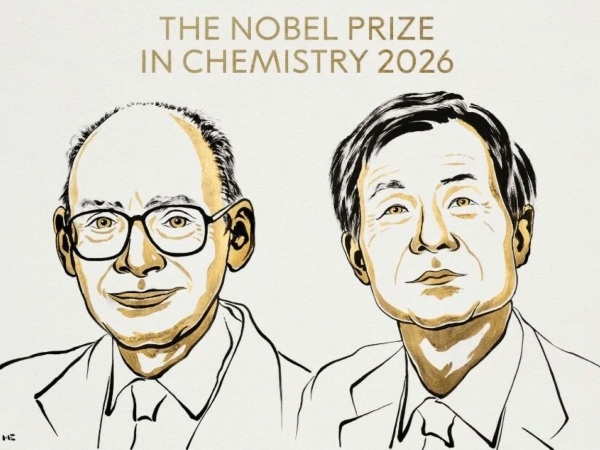
The 2026 Nobel Prize in Chemistry has been awarded to scientists Henri B. Kagan, Professor Emeritus at Université Paris-Sud, and Kenso Soai, Professor Emeritus at Tokyo University of Science, ‘for the discovery of non-linear effects and autocatalysis in asymmetric organic synthesis’. We asked Alessandro Scarso, Professor of Organic Chemistry at Ca’ Foscari’s Department of Molecular Sciences and Nanosystems, to explain the significance of this discovery, which sheds light on one of the greatest mysteries surrounding the origin of life (homochirality in nature), while also making it possible to synthesise increasingly pure and safe medicines.
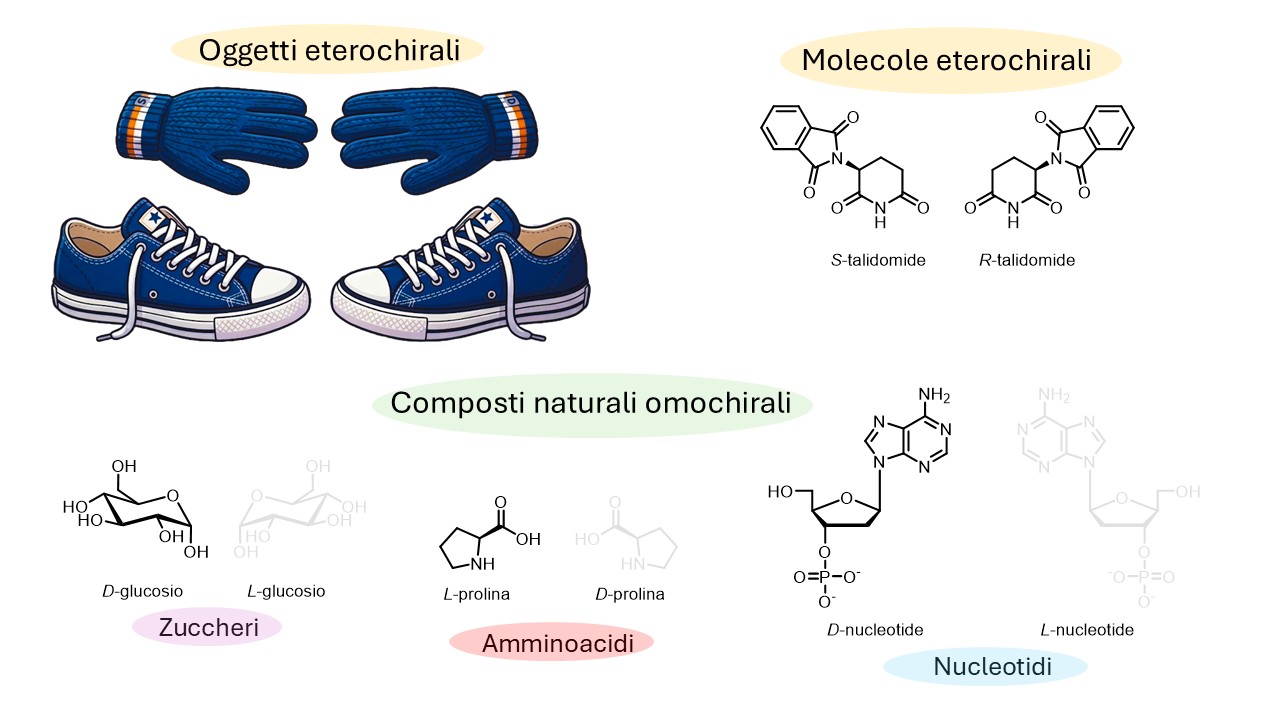
“Like certain objects, some molecules can also be chiral, meaning that they cannot be superimposed on their mirror images and exist in two forms known as enantiomers. Examples include a right-hand glove and its enantiomer, a left-hand glove, or a pair of shoes (a heterochiral pair). In organic synthesis, producing chiral molecules is relatively straightforward. What is more difficult is obtaining just one of the two enantiomers. This might seem like a purely academic issue, but although the two enantiomers have identical macroscopic properties (solubility, melting and boiling points, and spectroscopic properties), they can behave very differently when interacting with living systems.
In the 1950s and 1960s, it was the marketing of thalidomide (a chiral drug containing equal amounts of both enantiomers) and the ensuing scandal, following the birth of children with severe limb malformations attributed to the harmful effects of one of the two enantiomers, that drew chemists’ attention to the synthesis of enantiomerically pure chiral molecules.
Since then, the Nobel Prizes awarded in 2001 to William S. Knowles, Ryoji Noyori and K. Barry Sharpless for asymmetric catalysis, and more recently in 2021 to Benjamin List and David MacMillan for the development of asymmetric organocatalysis [ITA], have demonstrated the enormous progress made in synthesising chiral molecules as single enantiomers.
The 2026 Nobel Prize, recently awarded to Henri B. Kagan, Professor Emeritus at Université Paris-Sud, and Kenso Soai, Professor Emeritus at Tokyo University of Science, once again celebrates research into the synthesis of chiral molecules as single enantiomers.
This time, however, the discovery helps unravel one of the still partly unresolved mysteries surrounding chirality: why are the fundamental molecular building blocks of life, such as sugars, amino acids and nucleotides, and the more complex molecules derived from them, including complex carbohydrates, proteins, DNA and RNA, all chiral and, above all, why do they occur as single enantiomers (homochirality)? Organic chemists struggle to synthesise single enantiomers, whereas in nature the presence of enantiomerically pure molecules is essentially the norm. Through exceptionally meticulous experiments, Kagan and Soai have provided evidence supporting the hypothesis that, during evolution, even small imbalances in the relative amounts of the two enantiomers of certain compounds may have favoured the formation of enantiomerically pure products in some reactions.
More specifically, Kagan investigated the effects of chiral catalysts capable of accelerating certain reactions. He observed that the relative amounts of the two enantiomers of a catalyst were not linearly related to the proportions of the enantiomers in the resulting products. This unexpected finding demonstrates that even when a catalyst contains only a slight excess of one enantiomer, it is possible to obtain a product in which one enantiomer strongly predominates. Soai took this research a step further, developing stereoselective autocatalytic reactions. In these reactions, a reactant A is converted into a chiral product B, which then acts as a catalyst, accelerating its own formation from A and causing the reaction to proceed increasingly rapidly. If a small amount of B, containing a slight excess of one of the two enantiomers, is added at the start of the reaction, the resulting product B, formed very rapidly, will consist almost entirely of a single enantiomer.
Together, these two discoveries provide a foundation for explaining homochirality in nature as the result of stereoselective autocatalytic reactions. These studies have also greatly enhanced our ability to synthesise enantiomerically pure molecules with remarkable efficiency. One example is esomeprazole (used to treat gastro-oesophageal reflux and ulcers), where more than 94% of the desired enantiomer can be obtained even before purification.”