
From Galileo’s telescope to the ice of the South Pole: the 2026 Nobel Prize in Physics explained to us by Ca’ Foscari



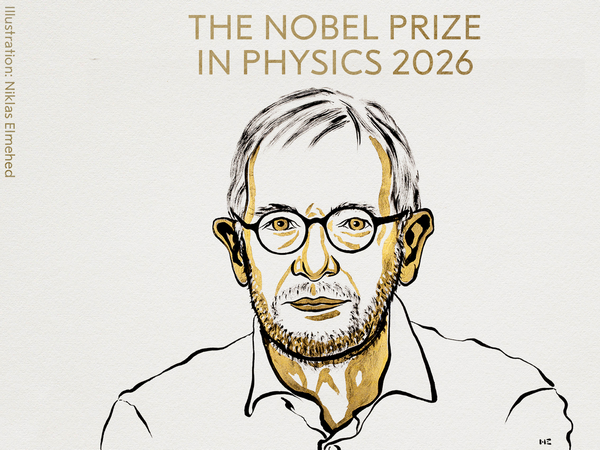
For four hundred years, we have observed the cosmos almost exclusively through the same ‘eyes’: those of light and electromagnetic radiation. When Galileo Galilei perfected the telescope using exceptionally pure Murano crystal glass to study the surface of the Moon and Jupiter’s moons, he ushered in the era of modern astronomy. Today, contemporary physics is making a leap forward in our understanding of the Universe of comparable significance, thanks to the IceCube Observatory and the discovery of high-energy neutrinos originating from deep space. This research earned Belgian physicist Francis Halzen (University of Wisconsin-Madison) the 2026 Nobel Prize in Physics. Alessandro Codello, a physicist and researcher at Ca’ Foscari’s Department of Molecular Sciences and Nanosystems, introduces us to IceCube and Francis Halzen’s scientific legacy, tracing the thread that connects Galileo’s scientific revolution, Murano glass and the secrets of the deep Universe.
Venice, the weak force and Galileo’s legacy
We normally think of Venice primarily as a capital of art and music, but the Lagoon has also left an indelible mark on the history of mathematics and physics. It is no coincidence that Galileo’s Dialogue Concerning the Two Chief World Systems is set in Venetian palaces, or that fundamental works by Euclid and Galileo’s Sidereus Nuncius were first printed here. Galileo realised that the magnifying device brought to Venetian markets by Dutch merchants could be transformed into an astronomical instrument. To achieve this, he needed exceptional optical materials: he travelled to Murano himself to obtain crystal glass, which he then skilfully worked into the lenses needed to capture photons arriving from Jupiter. For almost four centuries, astronomy continued to ‘observe’ the sky by relying exclusively on electromagnetic interactions (visible light, radio waves and gamma rays). Today, we are experiencing another revolution. Ten years ago, we learnt to ‘listen’ to the Universe thanks to the first detection of gravitational waves. IceCube now allows us, for the first time, to ‘feel’ the Universe through the weak interaction, bringing the era of multi-messenger astronomy to maturity. We can now ‘see’ the same cosmic event through light, ‘hear’ it through gravitational waves and ‘feel’ it – as though being gently pricked – through particles.
One cubic kilometre of ice at the South Pole: how IceCube works
Of the four fundamental forces of nature (gravity, electromagnetism, the strong nuclear force and the weak nuclear force), the weak force is responsible for certain nuclear decay processes. These processes can involve the emission of neutrinos: particles with no electric charge and almost no mass, capable of travelling for billions of light years without being deflected or absorbed by matter. Because these particles are so extraordinarily elusive, detecting them requires an enormous detector. Francis Halzen’s Nobel Prize-winning insight was to recognise that building an artificial optical system on such a scale would be impossible, but that nature had already provided one ready for use: the Antarctic ice sheet.
When an extremely high-energy neutrino passes through the ice, it can produce a characteristic flash of light known as Cherenkov radiation: the same faint blue glow that can be seen in the water tanks of nuclear fission reactors. This flash provides a detectable signature of the neutrino’s passage. Between 2004 and 2010, the IceCube team drilled into the ice at the South Pole to depths of up to 2.5 kilometres, installing a three-dimensional array of spherical optical sensors within a cubic kilometre of exceptionally pure ice. Since 2013, the observatory has detected the first extremely high-energy cosmic neutrinos and identified their origins: active galactic nuclei, powered by enormous supermassive black holes at the centres of distant galaxies, where matter is accelerated to extreme energies.
The implications for cosmology and theoretical physics are enormous. Electromagnetic radiation cannot allow us to see beyond the Cosmic Microwave Background (CMB), which dates back to the moment when the early Universe had cooled sufficiently to become transparent to photons. Before then, the Universe was a dense, opaque ‘soup’. Neutrinos and gravitational waves are the only messengers capable of passing through that primordial barrier, potentially allowing us, in the future, to observe the Universe in its earliest infancy.
A Nobel Prize for fundamental physics
At a time when scientific awards are often shared among large research collaborations or recognise technological applications with immediate practical benefits, the decision to award the Nobel Prize to Francis Halzen underscores the value of fundamental research. It is a decision that celebrates physics in its purest form: fundamental, experimental science. Rather than following current trends, it recognises a long-term scientific vision that has opened a lasting new window on our understanding of the Universe.