
The 2026 Nobel Prize in Economics: understanding individual decisions to stabilise the business cycle



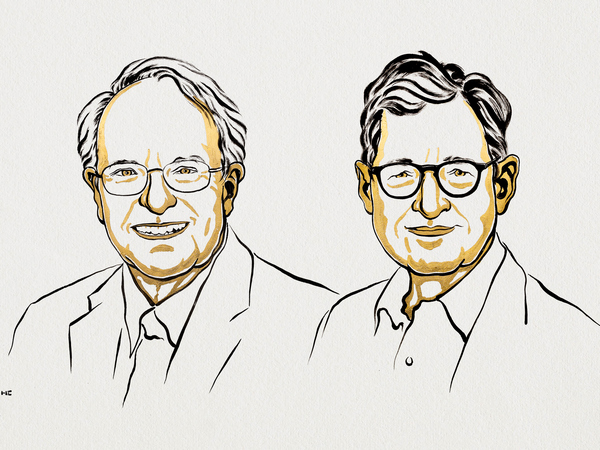
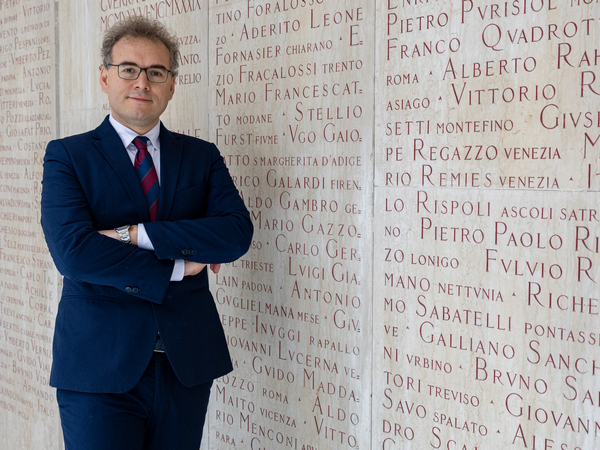
Robert E. Hall (Stanford University) and Michael Woodford (Columbia University) have been awarded the 2026 Sveriges Riksbank Prize in Economic Sciences in Memory of Alfred Nobel. We asked Francesco Pappadà, a lecturer and researcher in Economic Policy at Ca’ Foscari's Department of Economicsv, to explain the significance of this recognition.
For the second consecutive year, the Royal Swedish Academy of Sciences has recognised research in macroeconomics. While the 2025 Nobel Prize was awarded to Aghion, Mokyr and Howitt for their work on the drivers of long-term economic growth, this year's prize highlights Hall and Woodford's contributions "for microeconomic foundations of macroeconomic stabilisation".
Since the work of Knut Wicksell in the late nineteenth century, and subsequently John Maynard Keynes, economists have been interested in policies that could limit fluctuations in the business cycle. Demand for goods and services does not automatically match an economy's productive capacity. If demand is too low, unemployment and stagnation rise. If it is too high, the economy overheats and inflation rises. Demand can therefore be stimulated, much like pressing an accelerator, or restrained, using both monetary and fiscal policy instruments.
To determine how best to use these instruments, traditional models relied on statistical relationships among aggregate variables, such as inflation, unemployment, consumption and output, which were assumed to be stable and approximately linear. The oil crises of the 1970s showed that this was not the case. Inflation rose even as unemployment increased, and the relationship between income and consumption proved less robust than previously thought. A decade of low growth and high inflation followed, leading many to conclude that stabilisation policies did more harm than good.
Hall and Woodford's fundamental contribution was to rebuild a credible framework for studying the business cycle and stabilisation policies. Crucially, this required recognising that relationships between aggregate economic variables change when people's behaviour changes. The only way forward was therefore to develop economic models based on the decisions of millions of households and thousands of businesses.
Hall: consumption and the role of expectations
To understand what determines aggregate demand, it is essential to develop a model that captures households' consumption decisions. Consumption depends not only on current income but also on what households expect to earn in the future, and expectations cannot be observed directly. For years, researchers tried unsuccessfully to identify indicators that could reveal them.
Hall turned the problem on its head. If consumption reflects expectations, it changes only when new information becomes available, and new information is, by definition, unpredictable. Changes in consumption should therefore also be unpredictable. Rather than searching for indicators that could predict these changes, researchers needed to establish that no such indicators existed. The hypothesis stood up to empirical testing, and Hall's 1978 paper became a turning point in consumption research.
In general, consumers prefer to avoid fluctuations in their ability to consume from one period to the next. They therefore use the tools available to them, such as credit, to maintain a stable level of consumption over time. The most interesting findings, however, concern the exceptions. When changes in consumption are predictable, people's behaviour deviates from the theory: for example, when they cannot borrow or have no savings, they are forced to live from day to day.
Woodford: a foundational model for central banks
In his book “Interest and Prices: Foundations of a Theory of Monetary Policy” (2003), Woodford introduced a three-equation model that became the prototype for all subsequent New Keynesian models. It serves as a laboratory for policymakers: what happens to GDP and inflation if interest rates are lowered? How much should rates be raised to curb inflation?
The model incorporates Hall's findings on consumption and adds further elements. Businesses, too, are forward-looking: because changing prices involves costs, when they do adjust them, they take into account their expectations of future costs and competitors' behaviour. It follows that expectations about future interest rates matter for inflation, and that a credible, transparent central bank has an additional tool at its disposal. Clear and credible communication is now an integral part of central banking. Woodford also introduced the concept of the output gap, the difference between actual output and the level that would prevail if prices adjusted freely to demand. He demonstrated that central banks influence the economy by adjusting interest rates rather than by controlling the quantity of money.
Why Hall and Woodford's work matters today
Woodford's focus on interest rate management provided a solid theoretical foundation for the models used today by central banks and governments around the world. The way central bankers respond to macroeconomic shocks, and the instruments they use to address them, are closely rooted in the New Keynesian models developed from Woodford's work.
According to the Academy, these models have helped policymakers navigate the pandemic and recent energy crises without the long-term consequences experienced in the 1970s or a depression comparable to that of the 1930s. Recessions and inflation have not disappeared, but they have become shorter-lived. New Keynesian models are not the final word: research has continued to refine them and will do so in the future. As Olivier Blanchard pointed out immediately after the announcement of the prize, the two laureates have pursued diametrically opposed research approaches: Hall has been driven by curiosity to explore a wide range of topics, while Woodford has devoted himself to the study of monetary policy. Nevertheless, their work shares one fundamental insight: to manage the economy, we must understand how the people who make it up think and make decisions.