
Brazilian elections: Lula’s ‘equity agenda’ wins the day



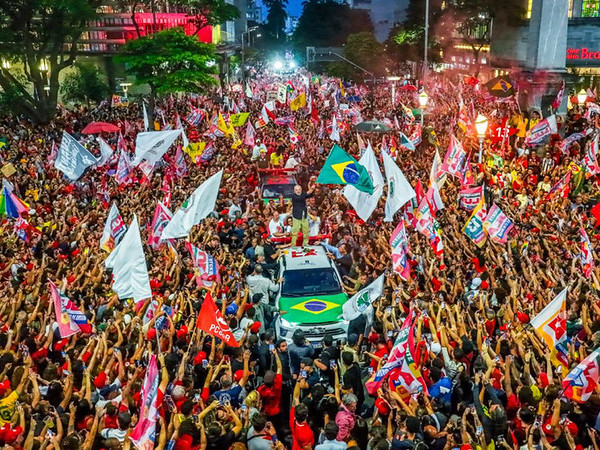
Brazil’s recent presidential election marked one of the most dramatic and decisive turning points for democracy in Latin America’s recent history. In the run-off, Luiz Inácio Lula da Silva secured another term as president with 51.76% of the valid votes, narrowly defeating his challenger Flavio Bolsonaro, who received 48.24%. Coming after a term marked by deep social polarisation and nationalist rhetoric, this result represents far more than a simple change in political leadership.
To understand the deeper reasons behind the vote, the country’s socio-economic divisions and the wider geopolitical implications, we spoke to Luis Fernando Beneduzi, Professor of Latin American History at Ca’ Foscari University of Venice.
Professor Beneduzi, what does Lula’s victory actually mean for Brazil today?
This is not simply a victory for the left, but a victory for the survival of democracy itself. In the final month before the election, we witnessed a widespread appeal to defend democratic institutions. Bolsonaro’s return would have meant strengthening dangerous links between state institutions, militias and drug trafficking networks in urban areas, creating a real risk that the country would be governed by organisations operating outside the state and involved in criminal activity. We should not forget the ongoing investigations, including the Banco Master case, which implicate members of the Bolsonaro family. Flavio Bolsonaro himself had proposed granting pardons to those involved in the attempted coup of 2023, including his own father.
Lula’s victory, however, is neither a blank cheque nor an absolute guarantee. Brazil’s electoral system requires broad, diverse coalitions, resulting in governments that are inherently fragile. With Congress dominated by the right and far right, Lula will need exceptional negotiating skills.
Nevertheless, the alternative would have been disastrous. Another Bolsonaro presidency would have opened the door to direct interference by sections of the American political establishment in Brazil’s political transition, subordinating the country to US interests. Bolsonarism has become more of a family enterprise than a political project, with an extensive network of family connections.
One particularly significant factor was the mobilisation of people who had abstained in the first round, when around 33 million voters stayed away from the polls. One of the emotional triggers that brought people back to vote was a spectacular own goal by Bolsonaro, who mocked Lula during the campaign for his missing finger, referring to his ‘nine fingers’. The attack backfired, generating a powerful wave of solidarity among millions of Brazilians working in physically demanding jobs who identified with Lula as the target of the insult.
What was the winning message of Lula’s campaign, and which sections of the population proved decisive?
The cornerstone of Lula’s victory was his message about defending the rule of law, supported by intellectuals, civic movements and artists. In his first remarks after the election, Lula specifically thanked young and older voters, two demographic groups that turned out in large numbers.
For around a decade, Brazil has been geographically divided. The North and North-East tend to vote for the centre-left, while the South and Centre-West lean towards the far right. This electoral map reflects the country’s socio-economic structure. The North-East is Brazil’s most disadvantaged region, with a predominantly non-white population and a history deeply marked by racism and colonialism. Its people have benefited enormously from Lula’s longstanding redistributive policies, including access to public universities and housing programmes. They identify with a ‘equity agenda’ aimed at guaranteeing equal rights regardless of social background.
By contrast, Lula’s social policies have encountered strong resistance in the industrial and agricultural South, paradoxically the historical birthplace of the ‘Partido dos Trabalhadores’ (Workers’ Party). Policies promoting equality have provoked a backlash among the middle and upper classes, who feel they have lost out. One concrete example is the regulation of domestic work. By introducing rights and protections for domestic workers, these reforms made employing household staff more expensive for the middle classes, fuelling resentment.
How much did the narratives surrounding corruption and the economic crisis influence the election result?
It is essential to distinguish between the actual figures and public perception. Brazil suffers from endemic corruption, but during Lula’s previous administrations, public awareness of the problem increased precisely because there were more investigations, greater judicial independence and more convictions.
Economically, the actual indicators were strong: unemployment stood at 5.1%, GDP was growing by 3%, and both the minimum wage and average incomes were rising. Yet a substantial proportion of voters believed Brazil was in the midst of a severe recession. The way information was managed on social media played a major role in shaping this distorted perception. Meta itself recently acknowledged that its algorithms had disproportionately favoured Bolsonaro’s narrative. During the final month of the campaign, the digital strategy coordinated by André Janones had to create a veritable ‘media army’ to overcome the obstacles posed by Big Tech and push the algorithms to give Lula greater visibility.
How has the international political community reacted, particularly Trump’s United States, and what are the risks of a ‘domino effect’?
A Bolsonaro victory would have strengthened the far-right axis in Latin America, historically aligned with Trump’s political vision. Today, the only major progressive exceptions in the region are Mexico, Uruguay and now Brazil. Brazil is the region’s economic powerhouse — its GDP exceeds that of the rest of South America combined. It is also a founding member of BRICS and maintains crucial strategic partnerships with China and India. Another victory for the right would have enabled the United States to build a barrier against China’s growing influence in Latin America. Lula, by contrast, champions the central role of the Global South and calls for a more equitable international order, a vision fundamentally opposed to Trump’s unilateralism.
There is also the underlying concern about a domino effect. In neighbouring countries such as Argentina, where poverty has reached critical levels, the outcome of the Brazilian election will inevitably influence future electoral dynamics. The contest was shaped by an existential divide rather than simply a political one. The typical Bolsonaro voter was not voting for an economic programme, but voting ‘against Lula’, who was portrayed simply as an enemy to be eliminated. In this clash of identities, the rapid growth of Pentecostal churches in recent years has provided the right with an exceptionally powerful base of political and ideological support.
As I reflected in the final paragraph of my book ‘Brasile. Biografia di una nazione dall’indipendenza a oggi’ (Brazil: A Biography of a Nation from Independence to the Present Day), published by Il Mulino, the Brazilian people’s response to this fundamental choice was clear: to reaffirm that social dignity and democratic safeguards remain the only effective defence against the fragmentation of society.