The Invisible Art of Helping Organizations Evolve
Master's Degree: Business Economics and Management
Today’s organizations are facing continuous transformation: digitalization, new skill requirements, sustainability challenges, evolving ways of working, and increasingly complex markets. In this environment, the ability to lead change has become one of the most strategic capabilities for managers and leaders.
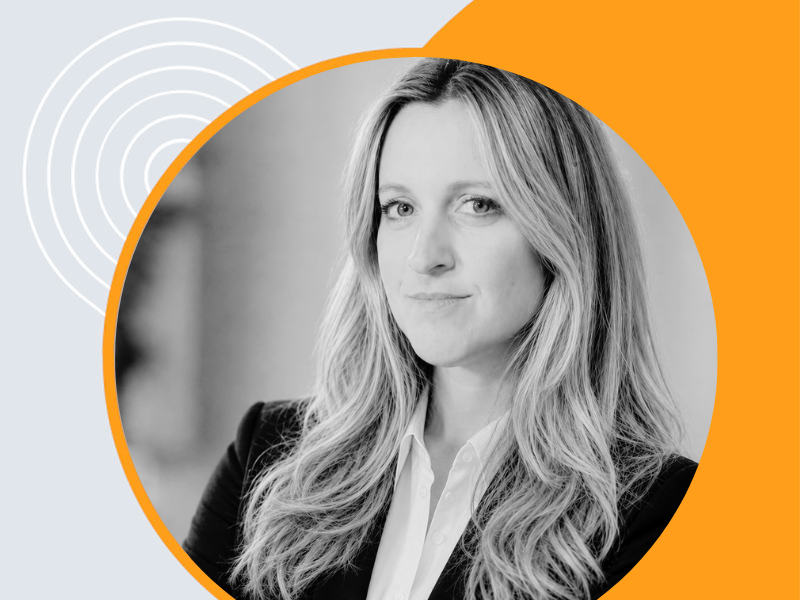
We spoke with Federica Milanese, a graduate in Business Administration and Management from the Venice School of Management and now a manager at Banca Ifis, where she focuses on organizational transformation, change management, and the development of strategic initiatives. Following her experience as a Talent & Organization Consultant at Accenture, Federica built a professional path that has led her to support organizations, people, and processes through major phases of evolution, including mergers and acquisitions, organizational redesign, and innovation initiatives.
In this interview, she reflects on the lessons she still carries with her from her years at the Venice School of Management of Ca’ Foscari University of Venice, how the business landscape has evolved in recent years, and the skills she believes are essential for successfully navigating the future of work.
Looking back at your time at San Giobbe, is there something you learned during your Management studies at Ca’ Foscari that you still use in your daily work today?
Looking back on my years at Ca’ Foscari, one of the most valuable lessons I learned was how to understand organizations in all their complexity. Companies are not simply the sum of numbers, processes, or organizational structures; they are systems in which every element influences the others and contributes to value creation.
During my Management studies, I developed the ability to connect economic, organizational, and strategic dimensions through an integrated perspective. Even today, this multidisciplinary approach remains one of the skills I rely on most in my work. I focus on organizational transformation and business change, and in this context, understanding the interdependencies between people, processes, governance, and strategy is essential to supporting organizations in their evolution.
You began your professional journey at Accenture as a Talent & Organization Consultant before moving to Banca Ifis. What was the biggest difference between supporting change as a consultant and experiencing it daily within an organization?
Consulting gave me the opportunity to work with a wide variety of organizations, tackling complex projects and rapidly developing analytical, problem-solving, and adaptability skills. It was an excellent training ground that provided me with strong foundations and a scalable working methodology that I still carry with me today.
As a consultant, you help design change and support its initial implementation. Moving into a company allowed me to experience change from within, following its entire lifecycle and measuring its concrete impact over time. I came to understand how crucial factors such as listening, employee engagement, consensus building, and maintaining a long-term vision truly are.
If consulting taught me how to manage the complexity of organizational design, working within a company taught me how to make change sustainable and genuinely embedded in organizational culture.
In recent years, the banking sector has undergone significant transformations: digitalization, sustainability, and new ways of working. Which changes have had the greatest impact on people and organizations?
Digital transformation has profoundly changed the way organizations operate. In recent years, we have seen growing demands for agility, innovation, automation, and adaptability, all of which require increasingly advanced technical skills.
At the same time, however, it has become clear that transformation is not just a technological issue. Skills such as collaboration, listening, managing complexity, and continuous learning have become increasingly important. Likewise, topics such as sustainability, employee well-being, and organizational flexibility have become permanent priorities on corporate agendas.
The change I have observed most closely is precisely this: the most successful organizations are those that can evolve technology, processes, and people simultaneously, without treating these dimensions as separate elements.
Is there a piece of advice you received—or gave yourself—early in your career that still guides you today?
There are two pieces of advice that have stayed with me throughout my career.
The first is that we have two ears and one mouth for a reason: listen twice as much as you speak. Very early on, I learned how essential curiosity and genuine listening are for professional growth, forming opinions, and mastering a profession.
The second is never to be afraid of asking questions. Sometimes we worry about appearing unprepared, but my experience has taught me that there are no stupid questions. What truly matters is having the courage to challenge yourself, deepen your understanding, and keep learning. Over time, that mindset makes all the difference.
How important have relationships, encounters, and networking been in your professional journey? How important is it to build and nurture a professional network throughout one’s career?
Relationships have played a fundamental role in my professional journey. The most important connections I have built over time were not driven by networking for its own sake, but by shared values such as commitment, trust, credibility, and mutual support.
I have been fortunate to meet people who helped me grow, challenged me with new perspectives, and supported me during important moments in my career. Many of these relationships continue today, even years later or after our professional paths diverged.
It is often through these connections that the most meaningful opportunities, stimulating exchanges, and long-lasting collaborations emerge.
Even this collaboration with Ca’ Foscari stems from a relationship built over time on mutual respect and trust. It is a concrete example of how authentic professional relationships can create value far beyond the context in which they originated.
What advice would you give to a student or young professional who dreams of building a career in banking and organizational innovation?
First of all, I would encourage them to understand what truly motivates them, which values guide them, and which activities make them feel engaged and passionate. Then, I would tell them to be patient. We live in a world that often pushes us to seek immediate results, but professional growth is a journey made up of experiences, learning, and the gradual development of skills—and it rarely follows a straight line.
I believe it is essential to make the most of the university experience. University provides not only technical knowledge but also analytical tools, methodology, and critical thinking skills that will accompany you throughout your professional life.
In a world that is changing so rapidly, I believe the most powerful combination is to keep learning, remain curious, have the humility to listen, and the courage to seize opportunities when they arise—without waiting until you feel 100% ready.