
Presentation

Why choose this programme
language is the primary human tool for formulating thought, transmitting cultural and technological progress, and expressing emotions and sensory perceptions. Through language, humans build shared knowledge and define individual and social identities
the study of Language Sciences provides a privileged perspective on human cognition and artificial intelligence, language development and text digitization, multilingual education and best practices of reception and inclusion
the wide selection of languages and specialization areas offered in the language sciences allows students to specialize under the guidance of high-profile faculty, alongside international peers, while collaborating on theoretical and applied research projects and developing transferable skills applicable beyond the specific disciplines
Overview
During your study, you will acquire proficiency in the language of specialization selected from the 12 languages offered: Albanian, Czech, French, English, Italian Sign Language (LIS), Modern Greek, Polish, Portuguese and Brazilian, Russian, Serbian and Croatian, Spanish, and Swedish. You will develop research and analytical skills in the language sciences, in a comparative and transdisciplinary perspective, tailored to the specialization area you select in the 5 specialization areas of the curriculum “Scienze del Linguaggio”:
- In Philology and digital editing, you will delve into the historical-diachronic evolution of the language family of your elective language (Germanic, Romance, or Slavic), specializing in philological methods for textual interpretation and editing, including the application of digital and computational tools.
- In Educational Linguistics, you will explore theories, topics, and innovative tools for teaching, planning, and conduct research on foreign languages and Italian as a foreign or second language.
- In Linguistics for Deafness and Language and Learning Disorders, you will delve into multilingualism and multimodality, typical and atypical language acquisition, and accessibility; you will develop practical skills to conduct research and to foster the inclusion of persons with language and communication disorders.
- In Theoretical Linguistics, you will explore the formal aspects of language with a special focus on syntax, developing research skills on qualitative and quantitative analysis of standard and non-standard languages, as well as contact phenomena in multilingual environments.
- In Language Sciences (fully taught in English), you will acquire cross-disciplinary training across the four subject areas identified above, customizing your study plan based on your interests; you will deepen your proficiency in English by interacting daily with peers from international backgrounds and using English as the medium of instruction and communication in both academic and everyday settings.
The curriculum English Linguistics allows you to combine an in-depth study of linguistic disciplines, from both a diachronic and synchronic perspective, with literary and cultural studies, providing an interdisciplinary education conducted entirely in English.
All curricula develop autonomous research and design skills, widen students training in psychological and pedagogical aspects of language, use specific digital tools, apply experimental methods, and conduct quantitative and qualitative analysis of linguistic data.
Opinions

Programme coordinator
“Linguistics allows us to grasp the unity of human language while appreciating its extraordinary variability. It helps us understand how languages can divide and, at the same time, how a responsible and conscious use of language can combat cultural stereotypes, including gender biases. Knowledge of language sciences makes us better people, enhancing our personal well-being and improving the life conditions of those around us.”
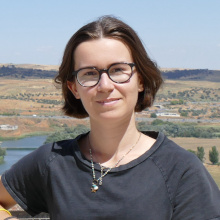
Emma Grasselli
Student
“I chose Language Sciences for its dynamic and innovative teaching environment and the close contact with competent, supportive, and world-class faculty. In addition to an Erasmus exchange at a leading university, the program allowed me to experience an international context in Venice, attending seminars and conferences with internationally renowned scholars. I found the multilingual interaction with Italian and foreign students particularly stimulating, both in the classroom and during sports and cultural activities.”
International network, experience abroad and employment

You can apply to spend part of your curriculum abroad by participating in international programmes organised in collaboration with one or more partner universities and leading to a Double Degree or a Joint Degree.
Current Double Degrees:
- Double Degree in English and American Studies
- Double Degree with Goethe-Universität Frankfurt
- Double Degree with University of Bucharest
- Double Degree with Higher School of Economics - Moscow
In addition, you can spend a study or internship period abroad through Ca’ Foscari’s more than 1,500 agreements with partner institutions worldwide, under programmes such as Erasmus+ and Overseas.
Ca' Foscari's Career Service guides you into the world of work with advice services, CV support, meetings with institutions and companies, and the search for and setup of training internships in Italy and abroad.
After graduation
with a C1 to C2 level of language proficiency in the Common European Framework of Reference for Languages, you will be able to engage at any professional level. You may work, with a high degree of responsibility, in institutions, organisations, and associations involved in lifelong learning, international cooperation, or research, both nationally and internationally
Where
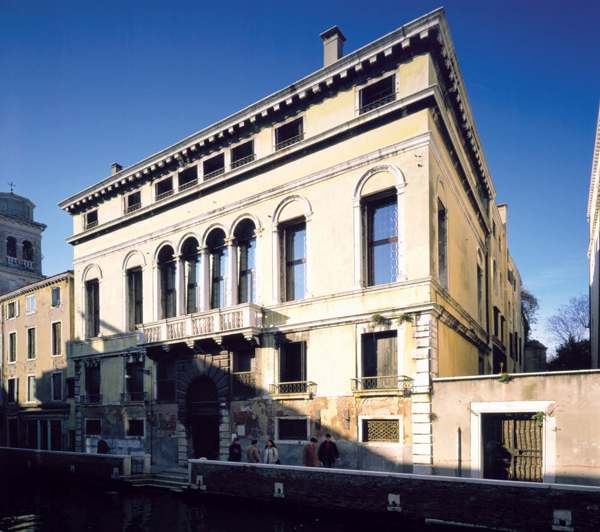
Department of Linguistics and Comparative Cultural Studies
Ca' Bembo, Dorsoduro 1075, Fondamenta Tofetti, 30123 Venice (Italy)



Contacts
Linguistic Campus
ADiSS - Linguistic Campus
Polo didattico San Basilio [ITA], dock no. 5, 30123 Venice (Italy)
Campus services: campus.linguistico@unive.it
Linguistic area internships: stage.campuslingue@unive.it
Information tutors: tutor.campuslingue@unive.it
Degree programme website (permalink): www.unive.it/degree/lm5