The Future of Organisations Remains Human
Bachelor's Degree: Business Administration and Management
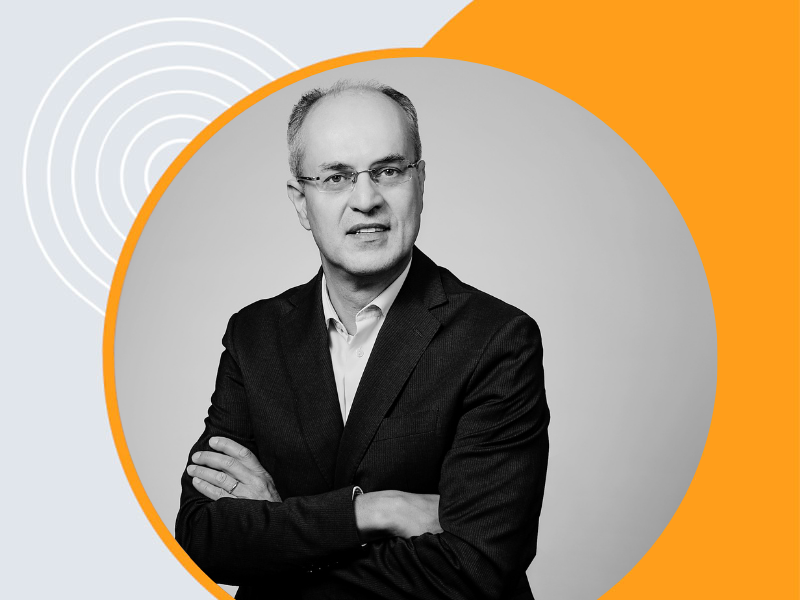
For more than thirty years, Luca Parrella has worked alongside companies, Boards of Directors and management teams, supporting organisational development and helping businesses unlock the value of their human capital. An expert in human resources management and development, he has held positions as Human Resources Director, General Manager and organisational development consultant, helping industrial and service companies translate their business strategies into effective HR policies, processes and organisational models. Specialising in change management, leadership development and the design of innovative organisational models, Parrella has developed a vision in which strategy, organisation and people are closely interconnected. He also brings this approach to his role as CEO and Partner of ConSolutio S.r.l., a management consulting firm specialising in organisational design, organisational transformation and strategic human resources management.
His journey began at Ca’ Foscari, where he graduated in Business Administration in March 1992. The years he spent at Ca’ Bembo and other university buildings across Venice were not merely a period of academic study, but a formative experience that shaped him both personally and professionally. Particularly influential was his encounter with Professor Giovanni Costa, who later supervised his dissertation. His lectures instilled in Parrella a belief that would guide his entire career: people are a company’s true competitive advantage. This insight inspired his vocation for human resources, which was further strengthened by an additional examination in Labour and Social Security Law, an internship in the Human Resources Department of the PAM Group and, years later, a second degree in Employment Consulting.
His relationship with Ca’ Foscari University of Venice and Venice School of Management did not end with graduation. Immediately after completing his studies, Parrella joined ALEA—the Association of Business Administration Graduates, now incorporated into VSM Alumni—recognising it as an important meeting point between the university and the professional world. He remained actively involved for many years, serving two terms as President and co-editing 30+ anni di aziendalisti in Laguna, a volume dedicated to the history of the association and of management studies in Venice. This experience subsequently led him to join the first Board of Directors of Venice School of Management Alumni, helping to oversee the transition from ALEA to the School’s new Alumni community.
In this interview, Luca Parrella retraces the milestones that have shaped his education and career. He discusses the encounter that inspired his professional vocation, the value of the multidisciplinary approach he developed at university and his commitment to building the Alumni community. His words convey a clear vision: the strongest organisations are those capable of developing strategy, structure and people together, while no career can truly flourish without relationships, dialogue and a willingness to share knowledge and experience.
Your journey at Ca’ Foscari began in the classrooms of Ca’ Bembo, Venice’s school of management during the 1980s and 1990s. What do you remember about those years and, above all, what did you learn in the classroom that you still apply in your work today?
I have wonderful memories of that period. Those were years of intense study, but also of enthusiasm, friendships and great expectations. When I began studying Business Administration, Venice was one of the very few leading centres for management education in Italy, alongside Bocconi University. More than a thousand students enrolled every year, and attending lectures was not always easy: I had to leave Padua at dawn, travel by train and then walk across Venice to reach the different university buildings—from Ca’ Bembo and Santa Marta to Cinema Italia and Ca’ Foscari.
Commuting, however, helped create a genuine student community. Our daily journeys became opportunities for discussion, friendship and personal growth. I still remember fondly the feeling of discovering Venice day after day and experiencing an extraordinary city that became an integral part of my education.
From an academic perspective, what influenced me most was the multidisciplinary nature of the degree programme. Economics, law, mathematics and organisation were different disciplines that taught us to understand businesses in all their complexity. It is an approach I continue to apply in my work every day. Indeed, that experience also sparked my interest in Labour Law, which many years later led me to complete a second degree in Employment Consulting. I believe that the ability to integrate different areas of expertise remains one of the most valuable lessons I received at Ca’ Bembo.
Your career has focused on human resources. How did this vocation emerge, and what led you to place people at the heart of your work?
If I had to identify one person who influenced my professional journey, I would say Professor Giovanni Costa without hesitation.
I attended his course, which at the time was called “Personnel Administration and Job Analysis”—a title that anticipated what would later develop into the modern discipline of human resources management. His lectures were engaging, practical and visionary. He shared an idea that has stayed with me ever since: people are a company’s true competitive advantage.
I therefore chose him as my dissertation supervisor and, while preparing my thesis, I also took an additional examination in Labour and Social Security Law. It was another important discovery that would eventually lead me to complete a second university degree.
My transition from university to the workplace happened almost naturally, thanks to an internship in the Human Resources Department of the PAM Group, a company that was at the forefront of people management and development at the time. From that moment on, I never changed direction.
More than thirty years of professional experience have confirmed my belief that excellent organisations emerge when strategy, organisation and people develop together. This conviction continues to guide me in my work as a consultant, Temporary HR Manager and entrepreneur.
You experienced ALEA from the inside, both as a member of its Board and as co-editor of the publication celebrating its thirtieth anniversary. What does the transition from ALEA mean to you, and which aspects of its legacy should be preserved within the new VSM Alumni community?
ALEA has played an important role in both my professional and personal life.
I joined the association immediately after graduating because it represented a natural meeting point between the university and the professional world. Over the years, I had the privilege of serving on its Board and as President for two terms. I also contributed to 30+ anni di aziendalisti in Laguna, a volume celebrating the association’s thirtieth anniversary and the history of management studies in Venice.
ALEA was far more than an alumni association: it was a place for meeting, continuing education and professional networking. Its yearbook reached the desks of HR directors and executive search firms, generating tangible employment and professional development opportunities. For this reason, I do not view the creation of Venice School of Management Alumni as the end of a story, but as its natural evolution. VSM Alumni carries forward ALEA’s legacy, broadens its vision and projects it into a more modern, structured and international context.
The challenge is to preserve the values that characterised ALEA: a sense of belonging, knowledge sharing, mutual support, initiative and a desire to give something back to the university that contributed to our development. I am convinced that these values continue to thrive within VSM Alumni today.
You served on the Board of VSM Alumni for three years, personally contributing to the creation and growth of the community. What motivated you to dedicate your time and experience to the Alumni, and which initiatives or achievements make you most proud?
For me, placing my experience at the service of the new association was a natural choice. I felt a responsibility to support the handover from ALEA to Venice School of Management Alumni, helping to build a community capable of looking towards the future without losing the wealth of relationships developed over the previous forty years.
The first three-year term was primarily devoted to laying the foundations.
We helped establish VSM Alumni as the School’s official Alumni community and developed the tools needed to make it stable and modern: the first integrated Alumni database, a bilingual website, a newsletter, new social media channels and a structured system for engaging former students.
At the same time, we built an international Alumni network, promoted dozens of events, interviews and networking initiatives, and strengthened dialogue with both current students and the business world.
More than the numbers, however, I am proud to have helped create a community designed to endure. Strong organisations cannot be built in just a few months: they require vision, continuity and people willing to devote their time, expertise and enthusiasm to a shared project.
How important is a sense of belonging to an Alumni community over the course of a career? What tangible value can an Alumni network offer today, both to those entering the workplace and to those who are already established professionally?
I believe that no one builds a career alone.
Skills are essential, but relationships are an equally valuable asset. An Alumni community provides opportunities for dialogue, professional development and the exchange of diverse experiences. It also gives people the chance to address challenges together that others in the network may have already faced.
For those beginning their careers, it offers access to professionals who are willing to share their experience, advice and opportunities. For those with more established careers, it provides an opportunity to give something back by supporting younger generations as mentors and trusted points of reference.
This is the true purpose of an Alumni network: to create shared value, build lasting relationships and strengthen a sense of belonging that continues long after one’s university years.
What advice would you give to young people who would like to pursue a career in human resources management?
I would encourage young people not to regard human resources as simply a specialist function, but as a discipline that connects people, organisation and strategy. To become a successful HR professional, it is not enough to understand recruitment and people development processes or Labour Law. You must understand how a company operates as a whole, including its organisational model, corporate culture and the economic dynamics that determine its success.
It is precisely this systemic perspective that makes human resources management one of the most stimulating and strategically important professions for the future of organisations. Only through this broader vision can HR become a genuine management partner, contributing to strategy development, organisational growth and value creation.
At the same time, investing in behavioural skills is essential. Listening, leadership, communication, conflict management, critical thinking and empathy will become increasingly important.
I also believe that the role of human resources will become even more central in the coming years. Digital transformation, the spread of artificial intelligence and the continuous evolution of technology are profoundly changing how we work, the skills we require and the organisational models we adopt. In this context, HR professionals cannot limit themselves to personnel management: they must guide change, help people develop new skills, encourage the adoption of innovation and build organisations capable of combining technology with human value.
Artificial intelligence will make many processes more efficient, but people—with their ability to interpret, decide, collaborate and innovate—will continue to determine the success of businesses. For this reason, I consider HR one of the principal drivers of organisational transformation.
My advice to young people is therefore to continue studying, engaging with others, gaining experience—including internationally—and remaining curious. Technical skills are fundamental, but what will truly make the difference is the ability to keep learning and to guide people through change. It is a demanding profession, but an extraordinarily rewarding one, both professionally and personally.