Degree in Business administration and Management
A career takes shape along the way, through observation and experimentation
When studying Business Administration at Ca’ Foscari, Stefano Rossi had a clear goal: to complete his exams and start working without placing a financial burden on his family. The direction he would take, however, was still to be discovered. It would emerge through the people he met, his experiences and an aptitude for project work that he came to recognise over time.
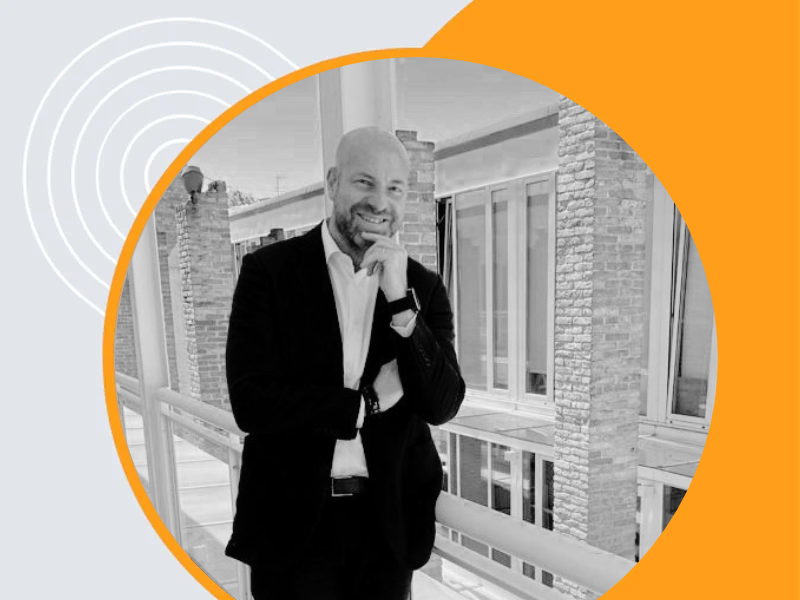
Stefano Rossi spent twenty-five years in the fashion industry, holding senior roles in human resources, organisation and information systems at companies including Benetton, Geox and Replay. His move to H-FARM as Chief Operating Officer brought him into innovation and education, paving the way for a new professional chapter: since 2020, he has worked as an advisor and interim manager. Today, he combines consulting with teaching Human Resource Management at Ca’ Foscari’s Venice School of Management.
In this interview, he looks back on the experiences that shaped his approach to work and reflects on the responsibilities of those who work with people and organisations: understanding the business, building trust and supporting change. For those still studying or just entering the world of work, his message is to experiment, even when the path ahead is not yet clear.
Let’s start with your university days: what kind of student was Stefano Rossi, and what expectations did he have for his professional future?
He was a student with a very practical goal: to finish his exams as quickly as possible and start working, without placing a financial burden on his family, as his father had died when he was still very young. He chose Business Administration with a quantitative specialisation as an alternative to Engineering. In truth, he had no clear vision of what he would do. As he gradually became more familiar with the business world, he imagined himself working in sales, consulting, IT analysis… Very different roles, which he later—much later—realised were connected by his aptitude for project work.
I actually have wonderful memories of that time. Although I studied at a university close to home, I met several different groups of friends, and we are still in touch. Alongside my studies, I did a few odd jobs: I programmed on my Apple IIe, worked as a substitute IT lab teacher at secondary schools, and helped relatives and friends who ran small businesses record their invoices. I also trained in rowing. Honestly, I wasn’t thinking about planning my future.
Which of your university courses most influenced your decision to work in human resources?
That’s a very difficult question! Alongside the quantitative courses—Statistics I and II, Advanced Statistics, Operations Research and Computer Science—the ones I felt most drawn to were Professor Franco Isotta’s Work Organisation course and Professor Giovanni Costa’s Personnel Administration and Job Analysis course. Even so, I never thought of Human Resources as my entry point into the world of work.
Not even when Professor Costa agreed to supervise my dissertation and assigned me a topic in organisation—a project that taught me a great deal. My aptitude for Organisation, and more broadly for Human Resources, began to emerge when I joined Benetton, once again thanks to my professor, who believed in me. There, I worked as a Junior Organisational Analyst in a fantastic team of exceptionally capable people.
The company had expertise in abundance, and work combined professionalism with enjoyment. There was certainly no shortage of tough discussions—sometimes very tough—but they were always constructive. What’s more, Benetton worked with many of the best Italian and international consultants. Being part of the Organisation and Development function and working with those people, whom I can never thank enough, gave me so much, both personally and professionally.
Your career has taken you through companies such as Benetton, Geox, Replay and H-FARM, all very different organisations. What have you learnt from moving between different sectors, cultures and stages of business development?
Yes, my career has given me the opportunity to gain very varied experience, even though I have only changed jobs a few times. I have worked in profoundly different environments and, above all, alongside exceptionally skilled people. Let me give you a few examples.
As I mentioned, my first experience at Benetton laid the foundations. I worked within an organisational model that was highly advanced for its time, led by an extremely capable and well-structured management team. The international scope of the business and its openness to new ideas and experimentation also helped shape the start of my career.
My fifteen years at Geox, on the other hand, gave me the opportunity to test myself. From the outset, I took on a senior leadership role in a company growing rapidly in Italy and abroad: company-owned factories in Eastern Europe, third-party manufacturers in Asia and the southern Mediterranean, sales subsidiaries in Europe, Asia and the United States, and directly operated and franchised stores around the world. Experiencing such rapid growth while overseeing Organisation, Human Resources and Information Systems taught me an enormous amount. I was also able to build the HR function as I felt it should be: perhaps it wasn’t a textbook model, but it had a team of excellent colleagues and, thanks to senior leadership’s commitment, it was genuinely close to the business.
At H-FARM, I had to completely rethink my approach to the company and to work. The key ideas were innovation, a flexible organisation built more around people than processes, openness to new ideas and experimentation. My deep involvement in the Education project, which was “a whole new world” for me, developed my skills further.
For the past few years, I have worked as an advisor and interim manager—something that would never have crossed my mind before my experience at H-FARM. In mid-2019, I decided to resign and “take a leap of faith”, then registered as self-employed in March 2020. In effect, I was starting from scratch. The collaborations of these past few years have taught me to adjust my approach very quickly, adapting it to the context to provide the most effective service. Here too, I have met people and professionals of real substance, with whom I have shared—and continue to share—a very stimulating journey.
So, to return to your question, these varied experiences have, above all, helped me develop the ability to quickly understand a context and manage areas and activities that usually fall outside the scope of Human Resources. They have also taught me to distinguish—with a fairly good success rate—between people who are truly competent and those who are simply good at selling themselves.
Throughout your career, you have worked across human resources, organisation, innovation and technology. How has the HR manager’s role changed since your early professional years?
I would start with what, in my view, has NOT changed: HR is still not as close to the business as it should be. Many people will probably disagree, but I am convinced of this. In fact, the issues that have emerged since the pandemic have contributed to widening that gap. HR increasingly focuses on wellbeing, diversity and inclusion, and, more generally, the softer aspects of people management. Don’t get me wrong: these are all extremely important issues and undoubtedly fall within HR’s remit, but they must be addressed without ever losing sight of the business.
Then add AI, which is transforming processes, organisations and approaches to work, while affecting skills across all generations. Those working in Organisation and Human Resources must support change by helping people develop a methodical approach, critical thinking skills and greater openness to the constant shifts in direction.
Beyond that, HR’s role is also—and above all—to create a climate of trust within the company. Trust comes from clear responsibilities—not necessarily detailed job descriptions—information sharing, valuing the work itself, transparent processes and collaboration on company projects. All of this takes place in complex environments that are constantly changing in response to both business needs and social dynamics.
Ultimately, staying closely connected to the business remains essential, even though HR professionals’ responsibilities now cover many more areas than in the past.
Alongside your management and consulting work, you have returned to the Venice School of Management at Ca’ Foscari University of Venice as a lecturer in Human Resource Management. How does it feel to teach in the classrooms where you were once a student?
Luckily, they’re not the same classrooms, otherwise I’d get sentimental! Joking aside, it has been—and continues to be—a wonderful experience. It is demanding, because I have to fit it around my consulting commitments, but whenever the teaching term comes around, I am always curious to meet the students. It is an honour to pass on what I have learnt throughout my career.
In class, I focus on comparing what the textbooks say with what actually happens in companies, while being careful not to suggest that theory has nothing to do with practice. That would be a simplistic and unhelpful approach. Sometimes I also share anecdotes that matter to me because they marked key stages in my development, and then I wonder whether they were really worth telling: the context has changed, and perhaps the students aren’t interested. Still, in the end, I think it works.
If you could go back to your graduation day and meet the young Stefano Rossi, what advice would you give him? And what message would you like to share with the students and alumni of the Venice School of Management?
I would tell him to trust his instincts, to think more about his own needs, not to be too influenced by others or by his family, and to express his goals, even when they are not yet fully clear. More generally, my advice is to try different things without worrying too much and not to rush to find your path. But you do need to show initiative and take on things that, at first glance, seem to have nothing to do with what you would like to do. Experiment, try things out, watch how others do them, and try again.