
Degree in
Beyond Your Comfort Zone: Shaping Your Path Through Curiosity and Relationships
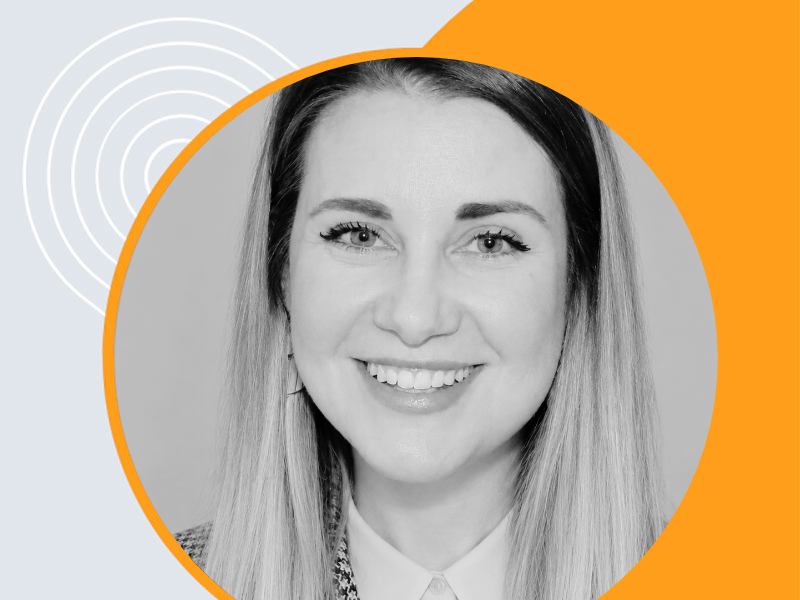
Stepping outside your comfort zone means engaging with different perspectives, questioning what you know and continuing to learn. This mindset runs throughout the career of Cinzia Scarbolo, an alumna of Venice School of Management who is now responsible for brand strategy, digital strategy and customer base management at Fastweb Energia.
With extensive experience in telecommunications, gained at Vodafone in increasingly senior roles across Digital, Marketing and Omnichannel, Cinzia has led digital transformation and channel development projects, bringing together diverse skills and objectives while combining strategic vision, business focus and the ability to work across functions in complex environments. A mother to Brando and Filippo, in this interview she reflects on the lessons of her university years and explores the value of curiosity, networking and exchanging ideas: valuable resources for guiding teams through change and tackling new challenges at work.
Let’s start with your university years: why did you choose to study Management at Ca’ Foscari? And which course or experience proved particularly useful in your management career?
I chose Management to broaden my horizons, including internationally, and to learn from lecturers with interesting professional backgrounds and experiences. I was also drawn to the opportunity to complement my economics education with a grounding in law, which has always been another passion of mine.
One of the courses I remember with particular interest was “Organization and Management”, taught by Professor Anna Comacchio. It taught me something that has proved fundamental throughout my career: the value of networking. Building relationships, nurturing them over time and exchanging ideas with people whose experiences and perspectives differ from my own have been important at various stages of my professional journey.
Telecommunications are part of everyone’s daily life, yet the work behind them often goes unnoticed. What aspect of your work would surprise someone looking at the industry from the outside?
I think people would be surprised by how much complexity lies behind something as seemingly simple and familiar as connecting to the internet. Behind that seamless experience is an intricate ecosystem of technologies, systems, processes and skills that must work together and evolve rapidly.
I find it equally fascinating to bring to market a service that people now take for granted. When a product becomes an integral part of everyday life, marketing and go-to-market activities become particularly stimulating: you have to keep creating value, differentiating your offering and responding to evolving needs, even when the underlying service seems a given.
Working in telecommunications means bringing together technical, commercial and marketing expertise. How do you establish a common language among professionals who approach the same problem from different perspectives?
It is one of the most important challenges, especially in roles like mine that span several functions and require connecting different skills and viewpoints.
I think the key is, on the one hand, never to take anything for granted and to stay curious enough to ask one more question so you can truly understand the other person’s perspective. On the other hand, it is about being transparent about objectives and priorities. People with different areas of expertise may take very different approaches, but when they share the same goal, it becomes easier to find a way to work together.
Ultimately, building a common language means learning to see a problem through other people’s eyes without losing sight of the outcome you want to achieve.
You experienced the Vodafone–Fastweb integration first-hand. When structures, colleagues and priorities change, managers also need to regain their bearings. How do you guide a team through change while you are still trying to understand it yourself?
I believe change should be approached with openness and curiosity, even when it feels particularly difficult or disorienting. These are precisely the situations that challenge us most and give us the opportunity to step outside our comfort zone, question our assumptions and become more adaptable.
Guiding a team through transformation does not necessarily mean having all the answers straight away. It means navigating the process together, maintaining an open dialogue and helping people find new points of reference. Managers are also experiencing the change: acknowledging this, rather than hiding it, can help build trust.
After all, adaptability is one of the great lessons nature teaches us: evolving is a necessary condition for continued growth.
Drawing on your experience as an alumna, how can a community such as Venice School of Management help professionals and students connect and navigate career transitions?
Returning to what I learned during my university years, I believe networking is one of the most valuable things an alumni community can offer.
Connecting professionals across generations, industries and backgrounds helps people broaden their perspectives, discover career opportunities and learn from experiences that can enrich their own journey. This is just as relevant to those entering the workforce as it is to those navigating a career transition after years of experience.
An alumni community can become a space for sharing knowledge, creating opportunities and encouraging mutual mentoring, where everyone has something to learn and something to offer. To me, its greatest value lies in turning relationships into tangible opportunities for personal and professional growth.
What advice would you give to someone entering the workforce today? Which skills would you encourage them to develop to navigate changes, such as artificial intelligence, that will inevitably reshape the way we work?
My advice is to keep thinking for yourself. Artificial intelligence is a powerful tool for enhancing our work, but it cannot replace our ability to reason, ask questions, think critically and make informed decisions.
That is why I believe it is essential to develop a mindset of continuous learning: updating our skills, understanding how professions are evolving and learning to integrate new technologies into the way we work.
Beyond asking which tasks AI will be able to perform for us, we should focus on how it can help us do what we already do better and develop new abilities. The real challenge is learning to use AI as a superpower: a tool to amplify our skills, increase our impact and free up time and energy for activities where the human contribution truly makes a difference.