

PRIN projects
Department of Environmental Sciences, Informatics and Statistics

The PRIN [ITA] - Projects of Relevant National Interest - program is intended to fund public research projects to promote the national research system, strengthen interactions between universities and research institutions, and encourage Italian participation in initiatives related to the European Union's Framework Program for Research and Innovation.
BLUES
Unveiling the hidden role in BLUE carbon Sink of lagoon angiosperm meadows and associated biostructuring biota
Project number: PRIN22 – 20222BHW8Z
Call identifier: Bando PRIN 2022 - DDG n. 104 del 2/02/2022 – LS8
Executive Decree for admission to funding: prot. n. 20426 del 06-11-2024
Funding body: MUR
CUP: H53C24001170006
UNIVE Scientific Director: Annamaria Volpi Ghirardini
UNIVE status: partner
Partnership: University of Ferrara Prof. Michele Mistri, Ca' Foscari University of Venice
Duration: 04/02/2025 - 03/02/2027
Total project cost: € 196.024,00
Budget UNIVE: € 61.757,00
Co-financing: € 9.784,00
UNIVE research group: Annamaria Volpi Ghirardini
The long-term sequestration of atmospheric carbon in “blue carbon” ecosystems is an important strategy for climate change mitigation. Carbon stored in coastal and marine ecosystems, particularly in seagrass meadows, is captured by organisms and stored as biomass and sediments.
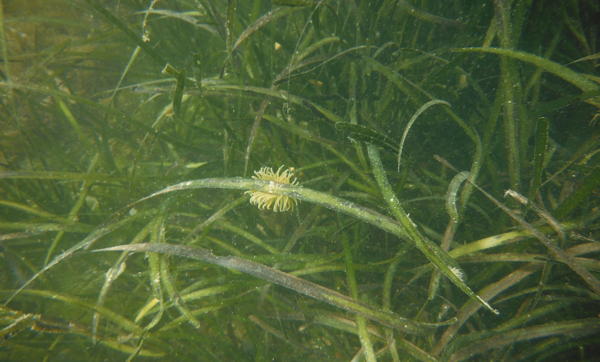
The BLUES project focuses on seagrass meadows in the Northern Adriatic to assess their current and potential capacity to capture and accumulate carbon dioxide in the form of organic and inorganic carbon.
The project will assess carbon sequestration in meadows composed of four different seagrass species and in the biostructuring biota closely associated with these meadows. This biota, made up of various animal and plant organisms, uses carbon dioxide to form shells and external structures and it depends both on the existence of the meadow and on the type of angiosperm that forms the meadows. Furthermore, since the carbon sequestration capacity of seagrass meadows can vary between different species and even within meadows of the same species in different lagoons, it is essential to obtain site-specific carbon storage values.
In order to develop a comprehensive understanding of aquatic seagrass meadows, the project aims to collect data concerning both their spatial extent and ecological condition as well as the ecosystem services related to carbon sequestration and storage. The extent will be determined using high-resolution multispectral imagery to produce multitemporal maps. The condition will be assessed by measuring state metrics and pressure metrics, related to both the water column and sediment, that influence the condition of the meadows. Carbon sequestration and storage will be assessed by quantifying the carbon stored in the plant biomass (leaves, rhizomes and roots) of aquatic seagrasses, in epiphytic organisms (animals and plants) and in sediments considering both organic (microalgae, macroalgae, associated biota and debris) and inorganic (carbonates) forms.
The study sites will be four locations in the Venice Lagoon, characterized by meadows of Cymodocea nodosa, Zostera marina, Zostera noltei and Ruppia cirrhosa, and two locations in the Po Delta lagoons, characterized by meadows of Ruppia cirrhosa (one site with "natural" meadows and one site with meadows "restored" by the Life Transfer project). Aboveground and belowground plant biomass and sediment samples up to 30 cm depth, will be collected quarterly at each site. Whereas, the mobile epifauna within the meadow and the infauna present in the sediments, will be sampled twice a year in the same sites.
INVMED
Investigation of the intrinsic variability of the Mediterranean Sea
Project number: PRIN22 – 2022CH7P3H
Call identifier: Bando PRIN 2022 - DDG n. 104 del 2/02/2022 - PE10
Executive Decree for admission to funding: prot. n. 20437 del 06-11-2024
Funding body: MUR
CUP: H53C24001140006
UNIVE Scientific Director: Angelo Rubino
UNIVE status: lead
Partnership: Ca' Foscari University of Venice, prof. Angelo Rubino; University of Naples "Parthenope", prof.ssa Giannetta Fusco
Duration: 04/02/2025 - 03/02/2027
Total project cost: € 257.889,00
Budget UNIVE: € 133.715,00
Co-financing: € 42.249,00
UNIVE research group: Angelo Rubino
The project aims at identifying aspects of the Intrinsic Oceanic Variability (IOV) in the Mediterranean Sea over a wide range of temporal scales and at assessing the role played by the IOV in shaping known features of the mean state and of the global variability of the Mediterranean Sea circulation.
WatHEMOT
Water - Helmet for EMOTions: A psycho-educational training on emotional preparedness to foster resilience on hydrogeological risk, by engaging children and adolescents in smart thing design
Project number: PRIN22 – 2022X2LCH9
Call identifier: Bando PRIN 2022 - DDG n. 104 del 2/02/2022 - SH4
Executive Decree for admission to funding: prot. n. 20437 del 06-11-2024
Funding body: MUR
CUP: H53C24001330001
UNIVE Scientific Director: Alessandra Melonio
UNIVE status: partner
Partnership: Ca' Foscari University of Venice, prof.ssa Alessandra Melonio; University of Verona, prof. Daniela Raccanello
Duration: 04/02/2025 - 03/02/2027
Total project cost: € 204.810,00
Budget UNIVE: € 64.000,00
Co-financing: n/a
UNIVE research group: Alessandra Melonio
Hydrogeological disasters, such as floods and landslides, can have a significant traumatic impact on the psychological wellbeing of children and teenagers, leading to maladaptive behaviours during emergencies and afterwards. Although there is limited knowledge about interventions aimed at developing emotional competence—the ability to express, understand, and manage emotions—to cope with the psychological trauma from future disasters, research has shown that socio-emotional training can improve this competence, particularly for preparing for natural disasters like earthquakes. However, the study of achievement emotions—emotions related to success in learning—has often been overlooked in these training programmes.
The WatHEMOT project aims to enhance the resilience of primary and lower secondary school students in the face of future hydrogeological disasters by increasing their emotional competence. The project will test a psycho-educational intervention intended to improve understanding of hydrogeological risks, safety behaviours, and emotion regulation strategies. We will involve 400 students from Year 4 and Year 7, assigning them to either an experimental group or a control group in a wait-list design. The intervention will consist of three phases: pre-training, a 10-unit training programme, and post-training, with weekly sessions. Each session will include both knowledge-based activities and smart design activities.
These hands-on activities will help young people reflect on the impact of technology in their lives, aligning with the UN 2030 Sustainable Development Agenda. Additionally, the smart design activities will promote preparedness and resilience by allowing them to engage directly with smart technologies. Statistical analyses will assess the effectiveness of the training and the relationship between achievement emotions and learning outcomes. The project's impact is threefold: (a) academically, by generating new insights into factors that enhance learning about disaster education; (b) technologically/educationally, by improving skills in designing smart technologies; and (c) professionally, by providing guidelines to support the community and reduce costs for mental health interventions.
NiRvAna
Noninterference and Reversibility Analysis in Private Blockchains

Project number: 20202FCJMH
Call identifier: Bando PRIN 2020
Funding body: MUR - Progetti di ricerca di Rilevante Interesse Nazionale
CUP: H73C20000070001
UNIVE Scientific Director: Sabina Rossi
UNIVE status: partner
Partnership: University of Urbino “Carlo Bo”, Ca' Foscari University of Venice, University of Udine
Duration: 03/06/2022 - 02/06/2025
Total project cost: € 622.811,00
Budget UNIVE: € 202.886,08 (of which € 132.007,28 external financing and € 70.878,80 requested co-financing)
UNIVE research group: Sabina Rossi, Andrea Marin, Ivan Malakhov, Daria Smuseva, Lorenzo Benetollo, Dalila Ressi
Distributed computing has by now become a pervasive technology due to the widespread adoption of electronic devices connected by the Internet infrastructure, which are used by individuals, companies, and institutions to perform an increasing number of activities in a digital mode. One of the most prominent examples over the last decade is blockchain technology. This is a distributed ledger that permanently records transactions taking place among untrusted parties in a decentralized and disintermediated environment, which was devised to avoid the double spending problem in virtual currency platforms.
A number of shortcomings affect public, permissionless blockchains, including the excessive energy consumption required by the consensus protocol and conflicts between data immutability and regulations. In the specific case of innovative payment methods, there are also risks of losing monetary sovereignty and undermining financial stability, as witnessed by the fact that many central banks are exploring the issuance of what is called central bank digital currency (CBDC).
Developing complex distributed systems like private blockchains is extremely challenging in terms of guaranteeing high levels of proper functioning, data protection, and quality of service. It even becomes a critical issue in CBDC platforms, where errors, data breaches, and poor performance may have economical and social consequences hard to estimate. This calls for a model-based approach in the early design stages so as to enable system property prediction.
The NiRvAna project is about the use of formal methods for the compositional modeling of functional and non-functional aspects of the behavior and the structure of private blockchains.
ICCC
Impact of Climate Change on the biogeochemistry of Contaminants in the Mediterranean sea
Call identifier: BMIUR - bando PRIN 2018 di cui a DD DD 3728, linea PE10
CUP: H74I17000100005
UNIVE Scientific Director: Gabriele Capodaglio
UNIVE status: partner, coordinator of the National Institute of Oceanography and Experimental Geophysics
Partnership: University of Palermo, CNR, Ca' Foscari University of Venice
Duration: 03/11/2019 - 02/11/2022 (36 months)
Total project cost: € 723.420,00
Budget UNIVE: € 153.800,00
UNIVE research group: Gabriele Capodaglio, Giuseppina Toscano, Marta Radaelli
Global changes are having profound effects on the world’s oceans. Two of the main consequences of the increase in greenhouse concentrations on the marine environment are ocean warming, driven by the atmosphere global warming, and ocean acidification, driven by the dissolution in water of carbon dioxide.
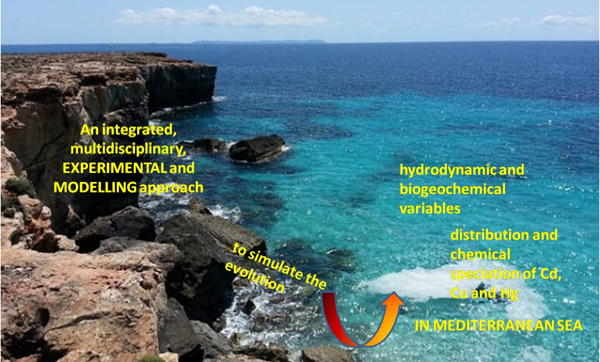
The project Impact of Climate Change on the biogeochemistry of Contaminants in the Mediterranean sea (ICCC) proposes an innovative and systematic investigation on the effects of climate change on i) the Mediterranean circulation and physical properties, ii) the space distributions of plankton, organic matter and main components of C, N, P, Si, biogeochemical cycles, iii) the distribution and chemical speciationof Cd, Cu and Hg, which are metals that could induce toxic effects on the ecosystem when present in their bioavailable forms at relatively high levels of concentration.
An integrated, multidisciplinary,experimental and modelling approach, will be adopted. A wide spectrum of laboratory and in-field experiments will support and constrain high resolution state of the art Mediterranean specific models, which will perform an ensemble of numerical simulations in order to simulate the evolution of the most important basin scale hydrodynamic and biogeochemical variables in the future (2000-2100), and to investigate and quantify the effects of climate change on the space distribution and chemical speciation of Cu, Cd and Hg in seawater.