
COST projects
Department of Environmental Sciences, Informatics and Statistics
The Cost Actions (European Cooperation in Science and Technology) programme aims to enable researchers to develop their ideas in synergy with those of their colleagues, creating networks and joint research initiatives.
LUCES
Supramolecular LUminescent Chemosensors for Environmental Security
Project number: CA22131
Call identifier: COST Action
UNIVE Scientific Director: Elena Badetti
UNIVE status: Member of WG2
Duration: 16/10/2023 - 15/10/2027
UNIVE research group: Elena Badetti
Website: https://lucescostaction.com, https://www.cost.eu/actions/CA22131/
The aim of LUCES is to create a multidisciplinary network, including researchers with complementary expertise from academia, technological centers and industry, to develop luminescent sensors to be used to help resolving environmental risk issues. The Action will gather the leading research groups in the field of supramolecular and environmental chemistry, chemical sensors, (nano)materials, electronics, theoretical calculations as well as experts in different analytical techniques, researchers from industry and interested stakeholders, to fulfil the gaps between fundamental research and the market.
The research group has a strong background on the study of the environmental fate and behavior of (advanced) nanomaterials and in the detection of contaminants from complex environmental matrices. We forecast that this know-how can be useful to the design of innovative safe and sustainable sensors, and to their use in the detection of selected contaminants.
PURPLEGAIN
Fundamentals and applications of purple bacteria biotechnology for resource recovery from waste
Project number: CA21146
Call identifier: COST Action
UNIVE Scientific Director: Cristina Cavinato
UNIVE status: Member of WG2 and WG3, Stakeholders Coordinator
Duration: 10/10/2022 - 09/10/2026
UNIVE research group: Cristina Cavinato
Website: https://purplegain.eu, https://www.cost.eu/actions/CA21146/
The biotechnological development of purple phototrophic bacteria (PPB) focuses on resource recovery from waste sources, contributing to a circular bioeconomy. The technology is being scaled-up. However, technological implementation faces several challenges, as:
- Knowledge transfer from pure to mixed cultures
- Obtaining fundamental knowledge on nutrients uptake pathways
- Developing mechanistic models
- Steering cultures to selective and stable communities
- Defining the targeted waste streams
- Optimizing culture conditions based on light transfer
- Optimizing downstream processing to extract products
- Developing techno-economic, social and environmental life cycle assessments.
A holistic and multidisciplinary approach is required to overcome these bottlenecks. The combined efforts of basic and applied scientists and technologists from the industrial sector improve this emerging technology’s competitiveness in the EU, ultimately leading to technology deployment and product commercialization.
PURPLEGAIN aims to create a European network to share information, facilitating technology and knowledge transfer between the academic and industrial sectors, related to PPB applications for resource recovery from organic waste sources. Resource recovery includes wastewater or organic waste, open or closed environments, in single or chain processes. The network associates fundamental-focused and applied-research groups, improving lab-scale technology optimization through mechanistic modeling. It benefits the technology transfer from applied-research groups to industry, considerably improving process design.
PURPLEGAIN also aims to create a database for techno-economic, social and environmental impacts studies, which facilitates the marketability of both the PPB-based technologies and the products to extract. Some focused products are polyhydroxyalkanoates, single-cell proteins, biomass for energy, biomass as fertilizer, biohydrogen, carotenoids, terpenoids, organic acids, coenzyme Q10, and 5-aminolevulinic acid.
DYNALIFE
Information, Coding, and Biological Function: the Dynamics of Life

Project number: CA21169
Call identifier: COST - European Cooperation in Science and Technology
Funding body: European Union
UNIVE Scientific Director: Marco Salvatore Nobile
UNIVE status: Member of the Working Group 2
Main contact: Diego Luis GONZALEZ (Action Chair)
Duration: 19/09/2022 - 18/09/2026
Budget UNIVE: N/A refunds for upfront costs only
UNIVE research group: Marco Salvatore Nobile
Website: https://www.dynalife.eu
In the mid-twentieth century two new scientific disciplines emerged forcefully: molecular biology and information-communication theory. At the beginning cross-fertilisation was so deep that the term genetic code was universally accepted for describing the meaning of triplets of mRNA (codons) as amino acids. However, today, such synergy has not taken advantage of the vertiginous advances in the two disciplines and presents more challenges than answers. These challenges are not only of great theoretical relevance but also represent unavoidable milestones for next generation biology: from personalized genetic therapy and diagnosis, to artificial life, to the production of biologically active proteins. Moreover, the matter is intimately connected to a paradigm shift needed in theoretical biology, pioneered a long time ago in Europe, and that requires combined contributions from disciplines well outside the biological realm. The use of information as a conceptual metaphor needs to be turned into quantitative and predictive models that can be tested empirically and integrated in a unified view. The successful achievement of these tasks requires a wide multidisciplinary approach, and Europe is uniquely placed to construct a world leading network to address such an endeavour. The aim of the DYNALIFE Action is to connect involved research groups throughout Europe into a strong network that promotes innovative and high-impact multi and inter-disciplinary research and, at the same time, to develop a strong dissemination activity aimed at breaking the communication barriers between disciplines, at forming young researchers, and at bringing the field closer to a broad general audience.
FULLRECO4US
Cross-Border Transfer and Development of Sustainable Resourcw Recovery Strategies Towards Zero Waste
Project number: CA20133
Call identifier: COST Action
UNIVE Scientific Director: Cristina Cavinato
UNIVE status: Member of WG1 and WG2
Duration: 28/09/2021 - 27/09/2025
Budget UNIVE: N/A refunds for upfront costs only
UNIVE research group: Cristina Cavinato
Website: https://www.cost.eu/actions/CA20133/
Waste is being generated as a result of population growth, industrialization, and improvement of human standard of living. In the absence of efficient waste management systems, waste ends in landfills and in the environment (through informal discharges) leading to pollution and to a linear economy. Due to increasing awareness of the deleterious effects on the environment and human health, policies are being gradually implemented to motivate a mindset shift from linear to circular (bio)economies and decouple economic growth from use of resources. Full waste recycling and optimization will play a crucial role in the establishment of sustainable circular (bio)economies. Although waste recycling and optimization strategies have started to be implemented across borders within Europe, their implementation level is not homogenous and harmonization is needed. FULLRECO4US is an answer to this need and will function as a discussion platform centered on holistic approaches to waste recycling and optimization, and on the development of new cross-border interdisciplinary and intersectoral networks. These networks, in turn, will cooperate in the development of feasible and environmentally-friendly resource recovery approaches that can be translated into, e.g., competitive research funding applications and contribute to building research and innovation capacity within Europe and beyond. FULLRECO4US will include a set of networking activities such as Short-Term Scientific Missions, Workshops, Conference and Symposium attendance, supported by Working Groups focused on genesis of holistic approaches for waste recycling and optimization, engagement of stakeholders, and on dissemination and communication of Action’s results to enhance impact, consensus, and harmonization of newly built strategies.
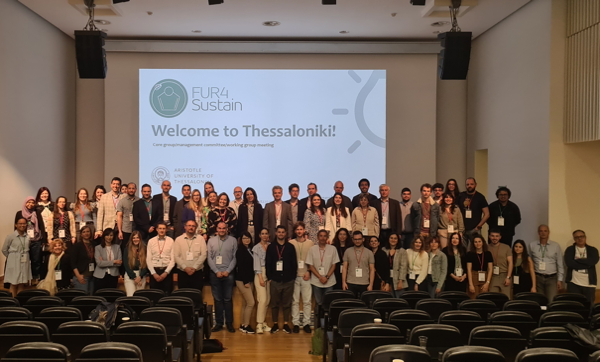
FUR4Sustain
European network of FURan based chemicals and materials FOR a Sustainable development
Project number: CA18220
Call identifier: COST - European Cooperation in Science and Technology
Funding body: European Union
UNIVE Scientific Director: Fabio Aricò
UNIVE status: Member of the Working Group 1
Partnership: more than 50 members
Duration: 05/11/2019 - 04/05/2024
Total project cost: € 500.000,00
Budget UNIVE: N/A refunds for upfront costs only
UNIVE research group: Fabio Aricò
The main objective of this COST Action is to catalyse a synergistic approach for the whole value-chain of 2,5-furandicarboxylic acid and derivatives, aiming concomitantly to boost innovation in the current research & development (R&D) status quo and, moreover, to overcome the scientific, technological and the industrial limitations that hinder the wide deployment of new FDCA products developed in actual market applications.
In a global expansion context of polymers production, but in contrast to a more stagnated European panorama, current opportunities come from the so-called ‘bioplastic industry’. In this view, FDCA is considered as a promising platform chemical and key polymer building block from renewable origin, and many efforts on FDCA production and the ensuing polymers synthesis and characterisation have, indeed, shown its huge potential for being the future ‘bioplastics’.
Hence, a well-organised multidisciplinary network, coordinated through a COST Action is an opportunity to gather for the first time in Europe: FDCA synthesis experts, several polymer scientists and general material developers and chemistry-physics, together with producer and manufacture industrial stakeholders, LCA and techno-economic viability experts, which will identify successful products applications and, in the medium to long term, encourage market introduction within a true sustainable mind-set.