

PNRA and PRA projects
Department of Environmental Sciences, Informatics and Statistics

The PNRA [ITA] projects - funded by the Ministry of Education, Universities and Research (MIUR), scientifically coordinated by the National Research Council (CNR), and logistical coordination by the National Agency for New Technologies, Energy and Sustainable Economic Development (ENEA) - aim to conduct research in Antarctica, with the goal of understanding and interpreting the interaction and connection processes between the different compartments of the Earth system (cryosphere, hydrosphere, atmosphere, biosphere, and lithosphere). Below are the projects in which the Department is involved.
The PRA [ITA] projects - funded by the Ministry of Education, Universities and Research (MIUR) and the Ministry of Foreign Affairs and International Cooperation (MAECI) - aim to achieve the objectives set by the Italian Arctic Strategy and implement the commitments made by Italy in the Joint Declaration of Research Ministers signed at the first Arctic Science Ministerial in Washington on 28 September 2016. Below are the projects in which the Department is involved.
PNRA
EAIIST-phase 2
East Antarctic International Ice Sheet Traverse
Project number: PNRA19_00093
Call identifier: PNRA 2019 Call for Proposals Regulations of the procedures for the submission of research project proposals aimed at deepening knowledge in Antarctica of the Ministry of University and Research (MUR) - General Directorate for the coordination and valorization of research and its results, pursuant to Prot. MUR 20 of 17/01/2020. Line of intervention B. Research projects to be carried out on fixed and mobile platforms in other countries
Funding body: MUR
CUP: H73C24001240005
UNIVE Scientific Director: Mauro Masiol
UNIVE status: partner
Partnership: University of Roma Tre - Department of Sciences, University of Florence - Department of Chemistry "Ugo Schiff", Ca' Foscari University of Venice - Department of Environmental Sciences, Computer Science and Statistics (DAIS), National Institute of Geophysics and Volcanology (INGV), Alma Mater Studiorum - University of Bologna - Department of Civil, Chemical, Environmental and Materials Engineering and National Research Council - Institute of Polar Sciences
Duration: 18/06/2024 - 17/06/2026
Total project cost: € 133.980,00
Budget UNIVE: € 29.000,00
Co-financing required: n/a
UNIVE research group: Mauro Masiol, Barbara Stenni
EAIIST is an international research project involving Australian, French, and Italian scientists as part of the SCAR-ITASE program, which focuses on studying the most remote and unexplored regions of the Antarctic Plateau.
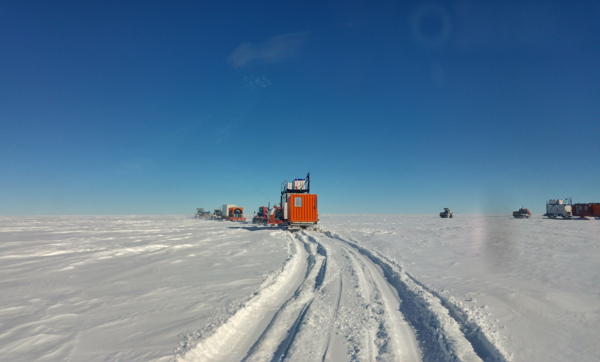
The first phase (November 2019 – January 2020) consisted of a scientific traverse covering more than 1,100 km between the French-Italian Concordia Station (Dome C, 75°06’S, 123°20’E) and the megadune area (80°48’S, 122°11’E), starting from and returning to Dumont D’Urville. During the traverse, unique data and samples were collected to understand the processes governing snow accumulation, megadune formation, and atmosphere–ice surface interactions. These included 18 ice cores up to 180 m deep, snow trenches, and numerous surface snow samples. Automatic stations were also installed to monitor seismic, meteorological, and GPS data.
In the second phase of the project (EAIIST-phase 2), researchers from Ca’ Foscari University of Venice will analyze the isotopic composition of (δ¹⁸O and δ²H) snow and ice samples to reconstruct the origin of air masses and understand post-depositional processes affecting the climate archive. At the same time, the University of Milano-Bicocca will study insoluble dust and its spatial and temporal variations, indicators of changes in atmospheric circulation.
EAIIST will contribute to improving our understanding of the Antarctic climate and ice dynamics, providing valuable insights into the past and future of the Earth’s climate system and addressing many scientific questions about one of the planet’s most unexplored regions.
AIR-FLOC
Accurate surface measurements of different parameters at the InteRface between the atmosphere and ice/snow surface: radiation FLuxes, skin temperatures and precipatiOn at the plateau station Concordia
Project number: PNRA_0000072
Call identifier: PNRA 2022 Call for proposals - DD n. 614 of 08-04-2022
Funding body: MUR
CUP: H73C23000660005
UNIVE Scientific Director: Barbara Stenni
UNIVE status: partner
Partnership: Institute of Atmospheric Sciences and Climate (ISAC) of the National Research Council (Lead), Institute of Applied Physics "Nello Carrara" (IFAC) of the National Research Council (Partner), Ca' Foscari University of Venice, Department of Environmental Sciences, Informatics and Statistics (Partner), Institute of Atmospheric Pollution (IIA) of the National Research Council (Partner), Institute of Polar Sciences (ISP) of the National Research Council (Partner), Institute for Microelectronics and Microsystems (IMM) of the National Research Council (Partner)
Duration: 28/08/2023 - 27/08/2025
Total project cost: € 117.500,00
Budget UNIVE: € 38.300,00
Co-financing required: n/a
UNIVE research group: Barbara Stenni, Mauro Masiol, Giuliano Dreossi
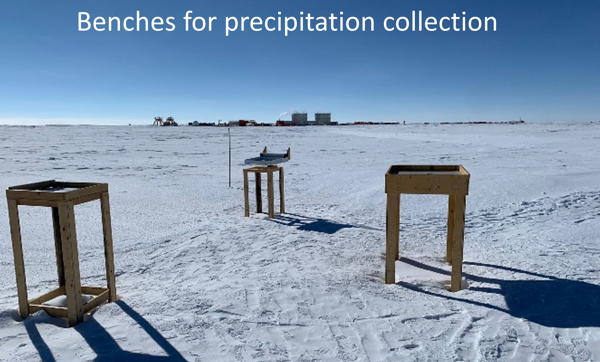
The aim of the AIR-FLOC project is to keep accurate measurements of different physical and geochemical variables characterizing the Antarctic Plateau surface through the facilities implemented at Concordia Station. Precipitation samples are also collected on a daily basis for subsequent analysis of the oxygen and hydrogen isotopic composition. Daily precipitation sampling for isotopic measurements has been continuously carried out at Dome C since 2008. These isotopic data are extremely important for paleoclimatology: assuming the empirical δ-T relationship is valid over time at a specific location, the isotope-temperature slope may be used to quantify past temperature changes based (the so-called “isotopic thermometer”). Another useful application is related to the study of surface snow metamorphism. AIR-FLOC aims to support and enhance the data already collected at Concordia station by maintaining the continuity of this unique temporal series. All in all, Concordia station is the only station in Antarctica hosting this type of observations and sampling. The main goal is to develop and maintain a large dataset of observations that may be useful for the scientific community, such as the glaciological and paleoclimatological communities both at national and international levels.
CATCH-O
Concordia ATmospheric CHemistry - Observatory

Project number: PNRA_0000015
Call identifier: PNRA 2022 Call for proposals - DD n. 614 of 08-04-2022
Funding body: MUR
CUP: H73C23000800005
UNIVE Scientific Director: Marco Roman
UNIVE status: partner
Partnership: Department of Chemistry “Ugo Schiff” DICUS of the University of Florence (Lead), Institute of Atmospheric Sciences and Climate of the CNR (Partner), Department of Chemistry of the University of Turin (Partner), Department of Environmental Sciences, Informatics and Statistics of the Ca’ Foscari University of Venice (Partner)
Duration: 28/08/2023 - 27/08/2025
Total project cost: € 125.300,00
Budget UNIVE: € 6.233,33
Co-financing required: n/a
UNIVE research group: Marco Roman
The CATCH-O project aims to establish a permanent observatory at Dome Concordia to continuously study the chemical composition of the Antarctic atmosphere and its link with climate.
Comparison and validation studies will be conducted between real-time analysis and discrete sampling, followed by laboratory analysis in Italy, on a wide spectrum of variables, paying particular attention to the levels of tropospheric ozone and the chemical properties of atmospheric particulate matter and the snow cover. At the end of the validation activity, the automatic observations carried out at Dome Concordia will replace the current traditional sampling. The information that will not be provided by the new instrumentation (elemental composition, carbon species, amino acids and anhydro-sugars), will be produced by "traditional" sampling (filter collection and subsequent laboratory analysis in Italy), taking advantage of the infrastructures already present at Dome Concordia and at the Institutions participating in CATCH-O.
The results of the project will be valuable not only for better understanding the dynamics of the Southern Ocean climate system, but also for interpreting records of chemical species in paleo-climatic archives (ice cores). The analytical platform developed will also be integrated into major observation networks on a global scale.
TALDEEP
Paleoclimate reconstruction from the deep part of the TALDICE ice core
Project number: PNRA18_00098
Call identifier: PNRA 2018 Call for Proposals
Funding body: MIUR Ministry of Education, University and Research
CUP: H74I18000360003
UNIVE Scientific Director: Barbara Stenni
UNIVE status: partner
Duration: 08/04/2020 - 19/04/2023
Total project cost: € 95.499,99
Budget UNIVE: € 27.280,00
UNIVE research group: Barbara Stenni
Website: Taldice
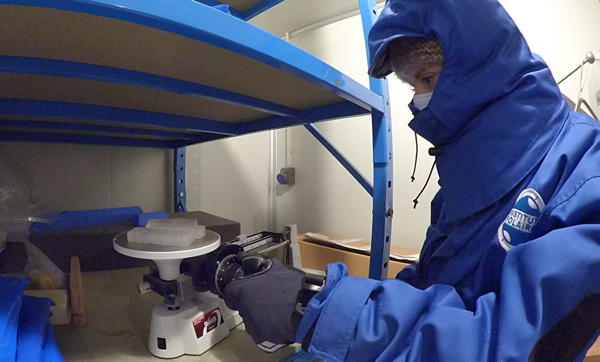
Paleoclimate sequences from deep Antarctic ice cores allow understanding the processes occurring in the climate system and their interaction in response to a variety of external and internal forcings. Here we focus on the deeper portion of the TALDICE (TALos Dome Ice CorE drilling project) ice core, between 1438 and 1620 m depth, where an important part of paleoclimate information is buried. We aim to reconstruct climate variability in the deeper part of the TALDICE, below the lowermost limit of the AICC2012 chronology that is about 153000 years ago at 1438 meters depth. To this end, the chronology of the deep portion, called TALDICE deep1, was obtained through stable water isotope analysis, complemented by analysis of atmospheric δ18O and 81Kr. This new age scale made it possible to extend the previous one to 1548 m depth, reaching an age of 343000 years. Analyses of the content, size and chemical composition of wind mineral dust in TALDICE deep ice indicate that the deep ice can be seen as a “geochemical reactor”, promoting the precipitation and modification of minerals in the ice. The study of processes that may alter the climatic and environmental signals in the deep ice is of great scientific interest, given the renewed interest in deep coring with the European project Beyond Epica Oldest Ice. For this reason, it is necessary to investigate how ice age and depth may alter the climatic and environmental signals trapped in the deep ice at Talos Dome.
LTCPAA
Long Term Measurements of Chemical and Physical properties of Atmospheric Aerosols at Dome C (the second two-year period)
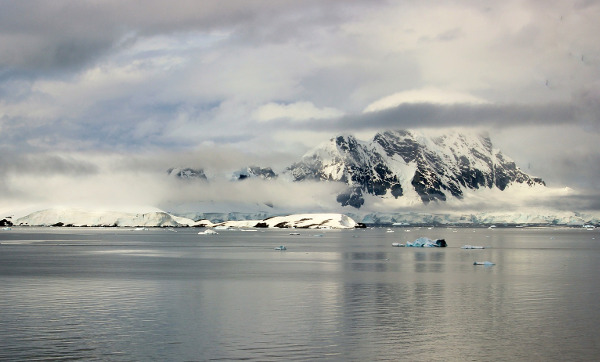
Call identifier: National Antarctic Research Program - MIUR - Call for proposals 2014 - Proposals for intervention line A3 Long-Term Experiments - MIUR - (approved by Ministerial Decree n. 1643 of 24/07/2015); refinanced for the second two-year period by Directorial Decree n. 1178 of 18/06/2019
CUP: H74I15000000005
UNIVE Scientific Director: Andrea Gambaro
Ruolo UNIVE status: partner, coordinator Rita Traversi (UNIFI)
Partnership: UNIFI, CNR-ISAC, UNIGE, UNIVE
Duration: 25/11/2019 - 24/11/2021
Total project cost: € 99.000,00
Budget UNIVE: € 15.229,00
UNIVE research group: Andrea Gambaro
This project aims performing 4-yr continuous measurements of chemical and physical properties of aerosol, superficial snow and selected gas-phase substances at Station Concordia (Dome C, East Antarctica), in order to increase our knowledge on the climate-environment interactions at present and in the past. Direct measurements and sampling activities include: aerosol size distribution; PM10 and multi-stage samplings for the determination of ions, metals, selected organic compounds, halogens, elemental and organic carbon fractions; black carbon, ozone and NOx continuous measurements; neutron and muon counting (Cosmic Rays markers). Besides, the uppermost snow layers will be collected at daily/2-day resolution, in order to study the relationships of selected chemical species at the snow/air interface. Long-term measurements are necessary to improve climatic models and identify reliable seasonal and inter-annual trends of physical properties and chemical components useful as markers of changes in: aerosol-climate forcing and feedback processes; South-Hemisphere atmospheric circulation modes; marine biogenic activity; sea ice extent and persistence; atmosphere oxidising capacity; hydrological conditions in the dust source areas; on-site New Particle Formation. Besides, a better knowledge of present aerosol processes will address toward a more reliable interpretation of paleoclimatic and paleoenvironmental changes, as reconstructed by ice-core stratigraphies of chemical markers.
EvASIon
Lakes Mercer and Whillans: Evolution of an ideologically active subglacial Environment
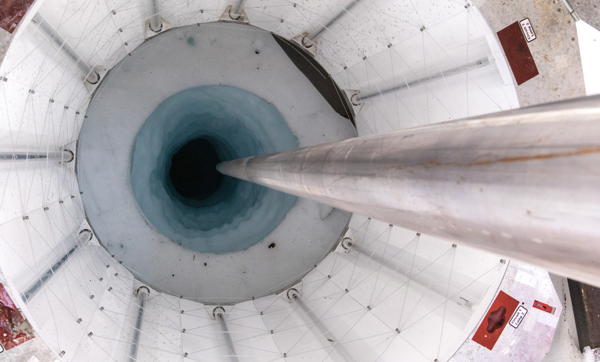
Call identifier: 2016 Call for Proposals - Proposals for intervention line B (Directorate Decree n. 651 of 4 April 2016) - (approved by Ministerial Decree n. 2059 of 4 October 2016)
CUP: B72F16001530001
UNIVE Scientific Director: Dario Battistel
UNIVE status: partner, coordinator Clara Turetta
Partnership: ex CNR-IDPA now CNR-ISP, UNIVE
Duration: 03/11/2017 - 02/11/2019 (24 months) then extended by six months to 02/05/2020, again extended by 6 months due to COVID19 to 02/11/2020
Total project cost: € 42.700,00
Budget UNIVE: € 9.394,00
UNIVE research group: Dario Battistel
Antarctic subglacial lakes are extreme and isolated environments. They represent an important component of the glacial hydrological system, can affect ice sheet dynamics and, potentially, oceanic productivity, geochemistry and circulation, especially in the light of future incoming climate changes. EvASIon is a 2-year project that aims to characterize the geo-biochemical parameters of the subglacial environments. The project includes an international collaboration with the US project SALSA (Subglacial Antarctic Lake Scientific Access), which foresees the sampling of the subglacial lake Mercer, currently unexplored.
GRACEFUL
Geochemical signals in Antarctic Biogenic Carbonates for Paleoceanographic Reconstructions
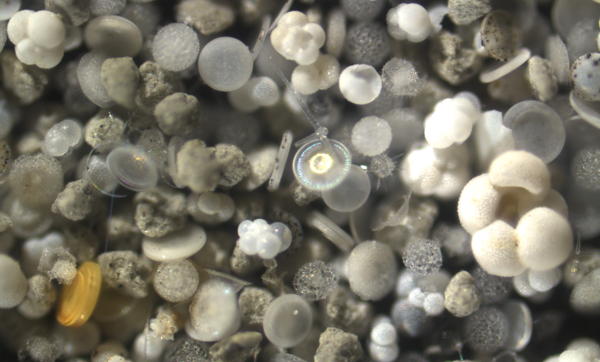
Call identifier: National Antarctic Research Program - Call for Proposals 2016, Department Head Decree n. 651 of 5 April 2016 - Ministry of Education, University and Research
CUP: H74I16000000005
UNIVE Scientific Director: Patrizia Ferretti
UNIVE status: partner, coordinator Paolo Montagna (CNR-ISMAR)
Partnership: CNR-ISMAR, UNIPD, UNIVE, UNITS, ENEA
Duration: 24 months + 6 (project transferred from CNR-IDPA when Ferretti became RTDA). Collaboration agreement signed: 12/07/2019, ending 15/04/2020
Total project cost: € 126.500,00
Budget UNIVE: € 23.945,00
UNIVE research group: Patrizia Ferretti, Warren Raymond LeeCairns, Fabiana Corami
Ocean acidification is related to increasing level of anthropogenic carbon dioxide (CO2) in the atmosphere and causes significant changes in the chemistry of seawater, particularly the carbonate system. The project GRACEFUL aims to investigate different aspects of the carbonate system in the present extreme polar conditions of Antarctica and during specific periods in the Cenozoic. The calcifying species capable to thrive under low temperatures and reduced carbonate saturation state likely own the ability to partly modify the chemistry of the calcifying fluid; most of these aspects, however, remain largely unknown and it is expected that the increasing CO2 uptake will lower the carbonate ion concentration in the Southern Ocean to critical levels for bio-calcification. GRACEFUL aims at improving our understanding of Antarctic carbonates and the impacts of reduced saturation state by combining geochemical and petrographic analyses of calcite and aragonite-precipitating organisms with ambient seawater chemistry. In particular, the project is studying trace elements, stable and radiogenic isotopes in different calcifiers (e.g. scleractinian and gorgonian corals, mollusks, barnacles, bryozoans, ostracods, foraminifera) and seawater to shed new light on elemental uptake mechanisms, isotopic fractionations and vital effects. Finally, these geochemical proxies will be applied to Antarctic Cenozoic record of marine carbonates preserved in sedimentary cores, boreholes and outcrops, in order to reconstruct specific parameters of the water column with special emphasis on temperature, pH, water mass circulation and nutrient content reconstructions.
PRA
SENTINEL
The impact of sea ice diSappearance on highEr North aTlantic climate and atmospheric bromiNe and mErcury cycLes
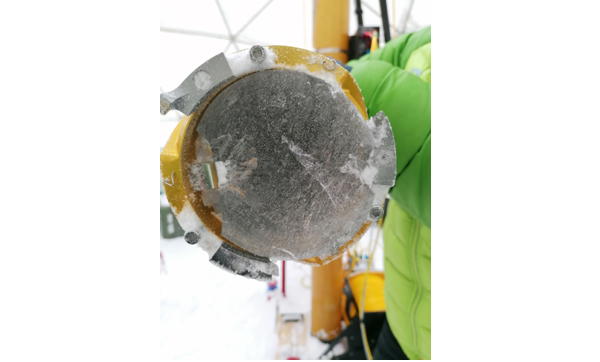
Project number: PRA2019-0011
Call identifier: Call for Proposals for the Arctic Research Programme (PRA) 2019 - Regulations for the submission of proposals for specific research projects aimed at deepening knowledge of the Arctic (prot. AMMCNT n. 0074442/2019 of 28/10/2019)
CUP: H75F20000700006
UNIVE Scientific Director: Barbara Stenni
UNIVE status: partner, coordinator of the Institute of Polar Sciences of the National Research Council (ISP-CNR)
Partnership: ISAC-CNR, ISP-CNR, ENEA, Ca’ Foscari University of Venice
Duration: 21/07/2021 - 20/01/2025 The activities are considered to have started on 06/11/2020
Total project cost: € 178.750,00 (of which € 143.000,00 of external financing and € 37.500,00 of co-financing)
Budget UNIVE: € 26.548,75 (of which € 21.239,00 of external financing and € 5.309,75 of co-financing)
UNIVE research group: Barbara Stenni
The disappearance of sea ice in the Barents Sea and the changing sea ice conditions in the Fram Strait impact the heat exchanges between the sea surface and the atmosphere. These in turn could also trigger feedback mechanisms on mercury deposition rate and the ozone atmospheric lifetime through changes in the amount of bromine radical release from first sea ice surface. This project aims to shed light on this phenomenon combining field data, atmospheric and climate modelling and instrumental data. The research unit of Ca’ Foscari will measure the oxygen (d18O) and hydrogen (dD) isotopic composition of fine samples coming from an ice core that has been drilled at Holthedalfonna. The co-isotopic analysis will allow the definition of the deuterium excess which is an integrated proxy of the hydrological cycle. The d18O and dD data, being proxies for local temperature, will permit, through seasonal variability, a dating of the Svalbard ice core. The isotopic records are sensitive to changes in both temperature and atmospheric transport pathways, so they will be used to understand recent sea-ice changes in the study area. The isotopic values will be compared with meteorological and model data and will be interpreted with the help of back-trajectory model data analysis.
A-PAW
Air Pollution in the Arctic Winter (A-PAW): an Italian contribution to the ALPACA field experiment
Project number: PRA2019-0069
Call identifier: Call for Proposals for the Arctic Research Programme (PRA) 2019 - Regulations for the submission of proposals for specific research projects aimed at deepening knowledge of the Arctic (prot. AMMCNT n. 0074442/2019 of 28/10/2019)
CUP: H75F20000710006
UNIVE Scientific Director: Andrea Gambaro
UNIVE status: partner, coordinator Institute of Atmospheric Sciences and Climate of the National Research Council (ISAC-CNR)
Partnership: ISAC-CNR, ISP-CNR, Ca’ Foscari University of Venice
Duration: 06/04/2021 - 05/10/2024 The activities are considered to have started on 06/11/2020
Total project cost: € 116.250,00 (of which € 93.000,00 of external financing and € 23.250,00 of co-financing)
Budget UNIVE: € 26.070,00 (of which € 20.856,00 of external financing and € 5.214,00 of co-financing)
UNIVE research group: Andrea Gambaro
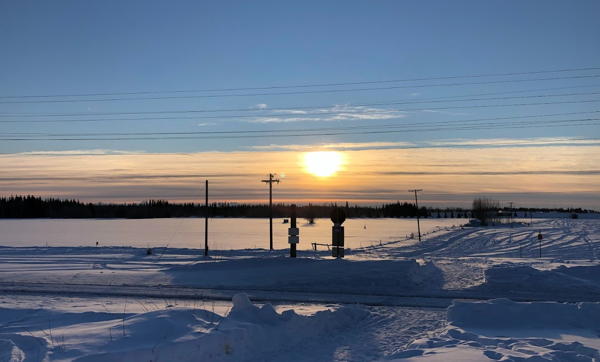
A-PAW (“Air Pollution in the Arctic Winter) leverages advanced expertise at CNR and Ca’ Foscari University of Venice on anthropogenic combustion aerosols, Arctic boundary layer meteorology and snow chemistry. The objectives of A-PAW are:
- The determination of toxicological proxies for oxidative stress in PM2.5 samples collected both at ground level and in aloft aerosol layers.
- To assess the effects of anthropogenic emissions (e.g., residential heating, power plants) and meteorological factors (boundary layer dynamics) to aerosol composition and toxicological properties.
- To constrain aerosol sinks by wet depositions (snow) and provide information on the content of toxic compounds in the snowpack downwind Fairbanks.
The detailed assessment of anthropogenic pollutants and toxicological proxies, together with the measurements targeting multiple matrices (urban air and the snowpack in downwind areas) provide opportunities for integrating human health studies with the investigation of possible impacts on ecosystems.
Abrupt climate change and Greenland ice cover in a high-resolution ice core record
Project number: PRA2021-0009
Call identifier: PRA-2021 Call for Proposals "Rules for the Submission of Proposals for Specific Research Projects Aimed at Furthering Knowledge in the Arctic" (prot. AMMCNT n. 0003288/2021 ofl 18/01/2021 and prot. AMMCNT n. 0006223/2021 of 27/01/2021)
Funding body: National Research Council (CNR)
CUP MASTER: B84I17000060001
CUP UNIVE: H73C21000160006
UNIVE Scientific Director: Pascal Bohleber
UNIVE status: coordinator
Partnership: Ca’ Foscari University of Venice, University of Milan-Bicocca
Duration: 25/07/2022 - 24/07/2024
Total project cost: € 129.099,00 (of which € 103.279,20 PRA funding and € 25.819,80 co-financing by institutions)
Budget UNIVE: € 81.533,00 (of which € 65.266,40 PRA funding and € 16.306,60 UNIVE co-funding)
UNIVE research group: Pascal Bohleber, Mauro Masiol
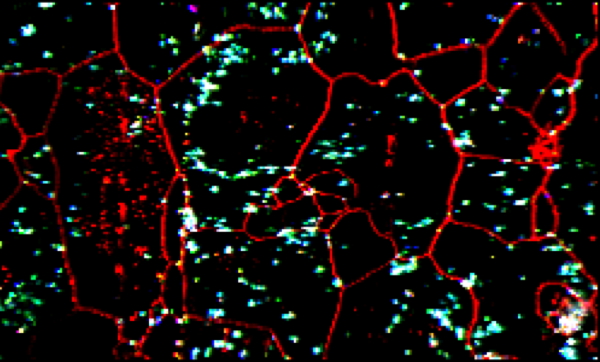
Understanding past abrupt climate change (ACC) in the Arctic is key for managing future warming, yet the underlying processes remain to be fully understood. Greenland ice cores record in their glacio-chemical stratigraphy proxies for sea-ice extent, atmospheric circulation, continental aridity and snow accumulation down to the sub-seasonal scale. In this project, the anatomy of ACC will be deciphered at unprecedented temporal detail, with a special focus on the role of dust-related signals. Following micro-destructive laser ablation inductively-coupled plasma mass spectrometry (LA-ICP-MS) analysis at Ca’Foscari University of Venice, the same ice samples will be analyzed at the University of Milano-Bicocca for total insoluble particle concentration and grain size distribution by Coulter Counter (CC) measurement as well as multi-elemental composition of minerals by Low-Background Instrumental Neutron Activation Analysis (LB-INAA). With our combination of techniques, we will be able to disentangle dust source and transport changes that simultaneously leave an imprint in the ice core record. In so doing, the project will advance the understanding of how to interpret ice core geochemistry at high-resolution, which can be employed also in future ice core projects. This especially concerns the analogue potential provided by the highly compressed layers in the Greenland core for a future “Oldest Ice Core” to be obtained from Antarctica.
IRIDYA
Integrated Reconstruction of Ice sheet DYnamics during late Quaternary Arctic climatic transitions
Project number: PRA2021-0012
Call identifier: PRA2021 - Arctic Research Programme (PRA) - Guidelines for submitting proposals for specific research projects aimed at deepening knowledge of the Arctic (prot. AMMCNT-CNR0006223/2021 of 27/01/2021)
CUP: H75F21001340005
UNIVE Scientific Director: Patrizia Ferretti
UNIVE status: project partner, coordinator National Institute of Oceanography and Experimental Geophysics - OGS
Duration: 13/07/2021 - 17/05/2024
Total project cost: € 144.987,00
Budget UNIVE: € 16.222,50 (of which € 3.244,50 co-financing)
UNIVE external funding contribution to be received: € 12.978,00
UNIVE research group: Patrizia Ferretti, James Rolfe
Website: IRIDYA
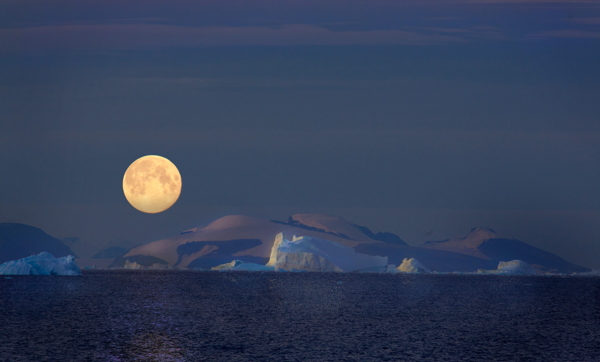
The North Atlantic and Arctic Oceans are major players in the climatic evolution of the Northern Hemisphere. Many uncertainties remain about the establishment, evolution, and role of the northern North Atlantic-Arctic Ocean circulation in relation to the opening of the Fram Strait, and its impact on the Earth’s global climate during the major climatic transitions. IRIDYA aims to provide high-resolution, sub-centennial reconstruction of the palaeoceanographic and palaeoclimatic changes occurred around the Fram Strait during the last 60 ka and evaluate their impact on the paleo Svalbard-Barents Sea Ice Sheet (SBSIS) dynamics. The reconstruction of the paleo SBSIS is critical as it is considered the best available analogue to the West Antarctic Ice Sheet, whose loss of stability is presently the major uncertainty in projecting global sea level in response to present-day global climate warming. Glacial terminations will be specifically targeted, together with other climatic fluctuations responsible for meltwater events, as direct evidence of the ice sheet feedback to climate warming.
The key scientific objectives of IRIDYA are:
- the development of a high-resolution chronostratigraphic record of the late Quaternary;
- the generation of multi-proxy datasets to identify rapid climate variations and possible associated meltwater events;
- the reconstruction of the trigger mechanisms of past meltwater events;
- the evaluation of impacts and feedbacks of past sediment-laden prominent meltwater events on water masses properties, ocean circulation (e.g. surface- and deep-water characterisation prior/during/after meltwater events);
- the assessment of the time lag between palaeoclimate changes recorded at the Earth's surface (ice cores) and in the marine environment (sediment cores) useful for defining/modeling the response times of the polar ice sheets to the present global warming.