

Horizon 2020 projects
Department of Environmental Sciences, Informatics and Statistics
Horizon H2020 is the European funding programme for research and innovation activated from 2014 to 2020. It places a focus on excellent science, industrial leadership, and addressing societal challenges. The aim is to ensure that Europe produces world-class science, remove barriers to innovation, and facilitate collaboration between the public and private sectors, bringing great ideas from the lab to the market. Approximately 80 billion euros have been made available for these objectives.
Collaborative
REST-COAST
Large Scale RESToration of COASTal ecosystem through rivers to sea connectivity
Project number: Grant Agreement n. 101037097
Call identifier: H2020-LC-GD-2020 / H2020-LC-GD-2020-3
CUP: H73C21000140006
UNIVE Scientific Director: Andrea Critto
UNIVE status: Third Party CORILA "Consorzio per il coordinamento delle ricerche inerenti al sistema lagunare di Venezia"
Duration: 01/10/2021 - 31/03/2026
Total project cost: € 17.823.756,00
Budget UNIVE: € 130.000,00
UNIVE research group: Andrea Critto, Fabio Pranovi
Website: https://rest-coast.eu
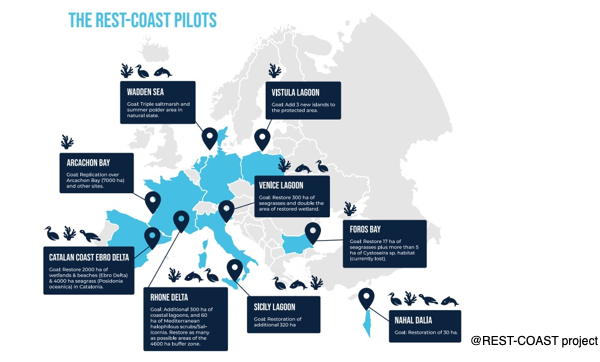
By overcoming present technical, economic, governance and social barriers to restoration upscaling, REST-COAST will develop the large-scale river-coast connectivity and increase the nearshore accommodation space for the resilient delivery of coastal ecosystem services (ESS). The selected ESS (risk reduction, environmental quality and fish provisioning) touch urgent coastal problems such as the erosion/flooding during recent storms or the accelerating coastal habitat degradation that seriously affects fisheries and aquaculture. By enhancing these ESS under present and future climates at 9 Pilots that represent the main EU regional seas (Baltic, Black, North, Atlantic and Mediterranean) we shall increase the commitment of citizens, stakeholders and policy makers for a long-term maintenance of restoration. Such commitment will go together with a transformation of governance and financial structures, supported by evidence-based results on restoration benefits for the welfare of coastal societies and assets. This transformation will build upon the results from hands-on restoration at the Pilots, steered by the multidisciplinary project advances.
Within the REST-COAST project, UNIVE will participate in the review of indicators useful to monitor the performance of Nature-Based Solutions (NBS) in terms of biodiversity and ecosystem services benefits for the Venice lagoon pilot, and in the identification of opportunities for the scaling up and out of coastal restoration activities (WP1). Moreover, UNIVE will apply environmental risk assessment approaches for assessing the impact of climate change and other anthropic pressures on water quality and related ecosystem services (WP2). Finally, UNIVE will analyse and compare the performance of selected NBS measures in the Venice Pilot areal, to support the design of a methodology for NBS upscaling (WP4).
RePAIR
Reconstructing the Past: Artificial Intelligence and Robotics Meet Cultural Heritage
Project number: Grant Agreement n. 964854
Call identifier: H2020-FETOPEN-2018-2020 / H2020-FETOPEN-2018-2019-2020-01
CUP: H79C20000950006
UNIVE Scientific Director: Marcello Pelillo
UNIVE status: coordinator
Duration: 01/09/2021 - 31/10/2025
Total project cost: € 2.244.675,00
Budget UNIVE: € 586.066,00
UNIVE research group: Marcello Pelillo, Sebastiano Vascon, Sinem Aslan, Luca Palmieri, Marina Khoroshiltseva, Raffaella Lioce
Website : https://www.repairproject.eu
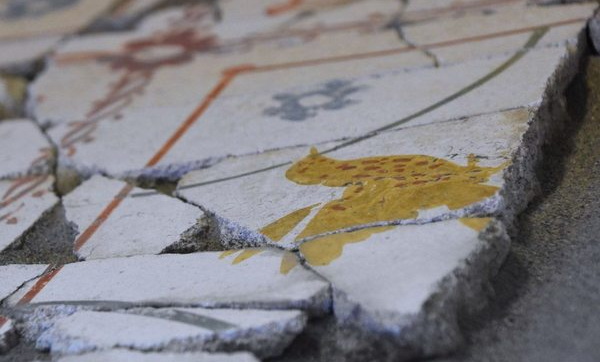
The goal of the RePAIR project is to develop a ground-breaking technology to virtually eliminate one of the most labour-intensive and frustrating steps in archaeological research, namely the physical reconstruction of shattered artworks. By developing and integrating novel technologies in the fields of robotics, computer vision and artificial intelligence, we envisage a future where archaeology can deal effectively with reconstruction problems at an unprecedented scale and be able to bring back to life ancient artworks and masterpieces which would otherwise remain broken into pieces forever. Specifically, we aim to develop an intelligent robotic system which will autonomously process, match and physically assemble large fractured artefacts at a fraction of the time it takes humans to do. Our system will be tested over iconic case studies from the UNESCO World Heritage site of Pompeii, and one tangible outcome of the project will be to restore two world-renowned frescos which are now shattered into thousands of fragments and forgotten in storerooms.
MYRIAD-EU
Multi-hazard and sYstemic framework for enhancing Risk-Informed mAnagement and Decisionmaking in the E.U.
Project number: Grant Agreement n. 101003276
Call identifier: Horizon 2020 Call: H2020-LC-CLA-2018-2019-2020 (Building a low-carbon, climate resilient future: climate action in support of the Paris Agreement) Topic: LC-CLA-03-2018
CUP: H75F21002180006
UNIVE Scientific Director: Andrea Critto
UNIVE status: Third Party of CMCC
Duration: 01/09/2021 - 31/08/2025
Total project cost: € 499.9802,50
Budget UNIVE: € 30.000,00
UNIVE research group: Andrea Critto
Website: https://www.myriadproject.eu
MYRIAD-EU (Multi-hazard and sYstemic framework for enhancing Risk-Informed mAnagement and Decision-making in the EU) is an EU-Horizon2020 funded project started in September 2021 that will run until 2025. It is conducted in collaboration with 17 partners from research institutes, NGOs, industry, and stakeholder representatives from all over Europe.
MYRIAD-EU’s vision is to catalyse the paradigm shift required to move towards a multi-risk, multi-sector, systemic approach to risk management. Our aim is that by the end of MYRIAD-EU policy-makers, decision-makers, and practitioners can develop forward-looking disaster risk management pathways that assess trade-offs and synergies across sectors, hazards, and scales.
UNIVE will develop risk analysis approaches based on machine learning methods for the assessment of environmental risks associated with the collection of water resources and climate change in the Veneto Region, in collaboration with the partner CMCC (Euro-Mediterranean Center on Climate Change).
BEYOND EPICA
Beyond EPICA Oldest Ice Core: 1,5 Myr of greenhouse gas - climate feedbacks
Project number: Grant Agreement n. 815384
Call identifier: H2020-LC-CLA-2018-2
CUP: H74I19001240006
UNIVE Scientific Director: Barbara Stenni
UNIVE status: Third Party of CNR
Duration: 01/06/2019 - 31/05/2025
Total project cost: € 10.999.942,00
Budget UNIVE: € 30.000,00
UNIVE research group: Barbara Stenni, Dario Battistel
Website: https://www.beyondepica.eu/en/
The aims of the European Beyond EPICA Oldest Ice Core project are:
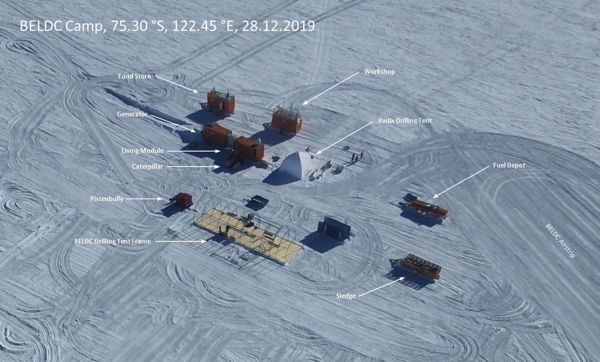
- Retrieve a continuous ice core to bedrock in Antarctica, covering the climate history of the Mid Pleistocene Transition and beyond (1.5 million years), where glacial/interglacial cycles changed from a 40,000 to a 100,000 year cyclicity.
- Derive first high-resolution climate and CO2 records over the time interval older than 700,000 BP.
- Use the new climate records to constraint the cause of the MPT and long-term carbon cycle-climate feedbacks.
The optimal drill site, identified with geophysical surveys, is located at Little Dome C, 40 km away from Concordia Station at Dome C (3233 m a.s.l.), the Italian-French base on the high East Antarctic Plateau.
SUNSHINE
Safe and sUstainable by desigN Strategies for HIgh performance multi-component NanomatErials
Project number: Grant Agreement n. 952924
Project title: H2020-NMBP-TO-IND-2018-2020-NMBP-16-2020 (II stage)
CUP: H79C20000800006
UNIVE Scientific Director: Antonio Marcomini
UNIVE status: coordinator
Duration: 01/01/2021 - 31/12/2024
Total project cost: € 3.722.757,12
Budget UNIVE: € 401.625,00
UNIVE research group: Antonio Marcomini
Website: https://www.h2020sunshine.eu
Social profiles: Linkedin Sunshine, X Sunshine
The four-year SUNSHINE European project aims at developing and validating Safe by Sustainable Design (S&SbD) strategies for products that incorporate multi-component nanomaterials (there are already over 1000 on the market), to facilitate their implementation on an industrial scale. This will involve studying the potential impacts on both the synthesis processes and on the performance of the final product, as well as the potential risks to human health and the environment over the entire life cycle.
The S&SbD strategies, which will be based on methods such as doping, coating, surface passivation and functionalization of the selected products, will be validated through specific case studies, including the construction, agri-food, medical, energy and automotive sectors. The most effective strategies in reducing risks along the entire life cycle of the targeted products, while ensuring product performance and economic feasibility, will therefore be proposed for implementation on an industrial scale.
EMERGE
Evaluation, control and Mitigation of the EnviRonmental impacts of shippinG Emissions
Project number: Grant Agreement n. 874990
Call identifier: Horizon 2020 - Work Programme 2018-2020 Smart, green and integrated transport MG-BG-02-2019 - EMERGE
CUP: H74I19001300006
UNIVE Scientific Director: Antonio Marcomini
UNIVE status: partner
Duration: 01/02/2020 - 31/01/2024
Total project cost: € 7.493.885,00
Budget UNIVE: € 402.267,50
UNIVE research group: Antonio Marcomini, Elena Semenzin, Elisa Giubilato
Website: https://emerge-h2020.eu
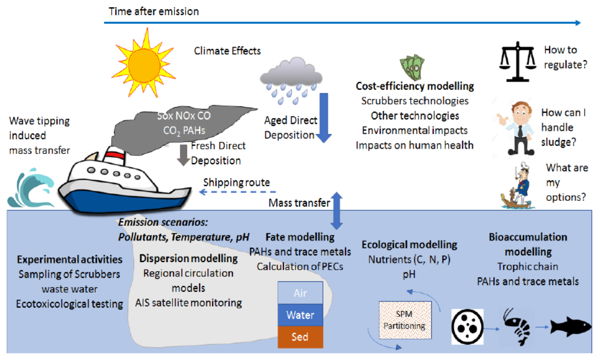
The EMERGE project aims to comprehensively quantify and evaluate the effects of several potential emission reduction technologies for shipping in Europe and provide recommendations and guidance on the most suitable, effective and cost-beneficial options to significantly reduce marine pollution. This activity will include the collection of experimental data and the development of an integrated modelling framework to assess the combined impacts on the aquatic and atmospheric environments of air emissions and waste streams of ships equipped with several potential emission control technologies.
ERC - European Research Council
GEODAP
GEOarchaeology of DAily Practices: extracting bronze age lifeways from the domestic stratigraphic record
Project number: Grant Agreement n. 101001839 / Amendment Reference No AMD-101001839-1
Call identifier: ERC-2020-COG/ERC-2020-COG
CUP: H75F21002050006
UNIVE Scientific Director: Dario Battistel
UNIVE status: partner of the University of Padua
Duration: 01/10/2021 - 30/09/2026
Total project cost: € 1.987.141,00
Budget UNIVE: € 80.000,00
UNIVE research group: Dario Battistel
Social profiles: Facebook GEODAP
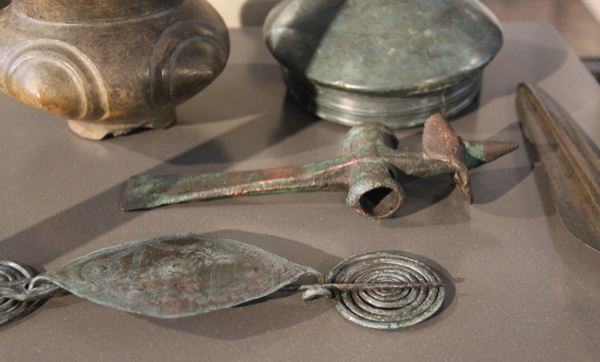
What was daily life like in the European Bronze Age? In contrast to large-scale narratives based on artefacts, often prestige items from funerary contexts, this project focuses on the practices of daily domestic life, recorded in the sediments upon which it took place. These constitute the domestic stratigraphic record. This project, therefore, shifts the scale and the object of archaeological investigation, and aims at bringing interdisciplinary scientific analyses into dialogue with anthropological understandings of lifeways and households. Its main objective is the formulation of an innovative narrative of the Bronze Age addressing social, economic, and environmental aspects of a culturally interconnected region of Europe. The daily practices and life histories of bronze age people will be the pixels of this new picture that challenges previous depersonalized narratives relying on material culture. The region between the Carpatho-Danubian basin, the Balkans, and northern Italy was selected due to its important cultural interactions during the Bronze Age. Ten key archaeological sites in six European countries constitute the project’s database. Its innovative interdisciplinary approach integrates geoarchaeology (micro-stratigraphic analysis), organic chemistry (biomarkers) and archaeo-botany (phytoliths, seeds, fruits, and charcoal) to reconstruct with unprecedented accuracy the daily practices from domestic stratigraphy. This information will be compared with the story told by material culture and integrated with local paleo-environmental records. The project, in fact, challenges also previous reconstructions that called in environmental mega-events (volcanic eruptions, glacial advances, aridity events) to aprioristically explain broad cultural phenomena of the Bronze Age. Their inherent complexity can only be faced by crystallizing detailed micro-histories and site-specific environmental reconstructions into a broader synthesis based on hard scientific data.
MSCA - Marie Skłodowska-Curie Actions
PIONEER
OPen WIreless OzoNe SEnsor NEtwoRk for smart environmental monitoring of remote areas: crossing the Alps along the 12th east meridian on the trail Munich Venice
Project number: Grant Agreement n. 844526
Call identifier: H2020-MSCA-IF-2018, Type of Action: MSCA-IF-EF-ST, Global Fellowship
CUP: H79C20000750006
MSCA Fellow: Federico Dallo
UNIVE Scientific Director (Supervisor): Carlo Barbante
Duration: 15/01/2021 – 14/01/2024
Total project cost: € 251.002,56
Budget UNIVE: € 251.002,56
UNIVE research group: Federico Dallo, Carlo Barbante
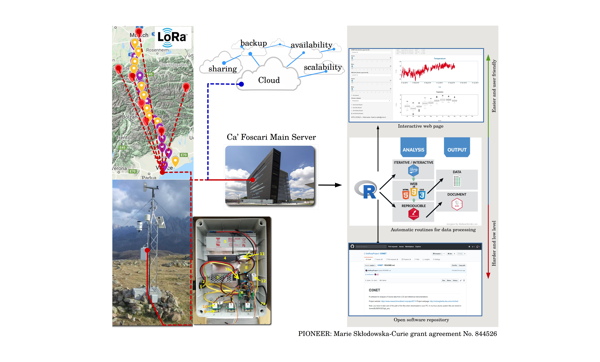
The PIONEER project will develop innovative low-cost quantitative analytical methods for the assessment of air pollution in remote areas, focusing on tropospheric ozone. The aim of the project is the development of a low-cost sensor network for the study of transboundary transport phenomena of pollutants crossing the Eastern Alps. The project will be developed with the University of Berkeley and with the Institute of Atmospheric and Climate Sciences of the CNR of Bologna, under the supervision of Prof. Carlo Barbante at the Department of Environmental Sciences of the Ca' Foscari University of Venice.