

Other national and regional projects
Department of Environmental Sciences, Informatics and Statistics
This section lists the research projects in which the Department is involved and which are funded in various capacities by ministerial, regional, and other national public bodies. For further details, please refer to the institutional websites of the individual ministries, regions, and various funding lines.
BioMOON
Low Gravity Biorefinery Platform
Project number: Agreement between UNIVE and VERITAS for research collaboration within the scope of the "BioMOON - Low Gravity Biorefinery Platform" project, Rep. n. 208/2024, Prot. n. 126583 of 06/06/2024
Call identifier: ASI DC-DSR-UVS-2022-375 call for proposals: funding for the development of scientific projects/experiments for the moon
CUP: F73D24000020001
UNIVE Scientific Director: Cristina Cavinato
UNIVE status: partner
Duration: 06/05/2024 - 05/05/2027
Total project cost: € 839.489,18 (of which € 319.940,15 co-financing requested)
Budget UNIVE: € 221.638,62 (of which € 175.251,54 external financing and € 46.387,08 co-financing requested)
UNIVE research group: Cristina Cavinato, Francesco Valentino
The BioMOON project falls under "THEME C: Bioregenerative and waste recycling systems for the Moon" and specifically in the area of interest related to "Development of biotechnologies for the treatment and recycling of liquid and solid waste, including food and plant waste." The project focuses on developing a third-generation biorefinery capable of producing food, energy, and chemicals from renewable sources and organic substrates such as CO2 or waste, through the use of integrated and sustainable technological and biotechnological processes. The application and optimization of the proposed technologies is a research field that will address the effects of climate change: the difficult management of water resources, the scarcity of raw materials, and the growing need for food production. The proposed solutions, designed for the terrestrial environment, are even more important for confined environments such as permanent stations on the lunar surface. In these stations, in situ resource regeneration will be essential. The experimentation of bioregenerative systems based on groups of microorganisms belonging to different metabolic groups and their functional integration in a dual "biorefinery" context (potentially applicable in both reduced gravity environments and terrestrial), is the foundation of the BioMOON Project.
A new face: Biodiversity in the quarry
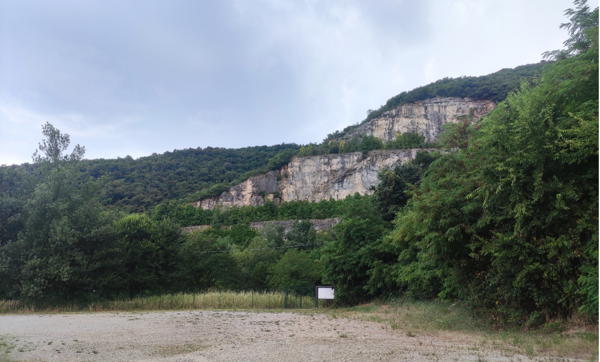
Project number: Agreement for a research collaboration for the implementation of the project: "A new face: Biodiversity in the quarry" (2023.0300 - ID 54075) - "Capitale Naturale Cariverona 2023" Call for Proposals, signed between Ca' Foscari University of Venice - Department of Environmental Sciences, Computer Science and Statistics and the Municipality of Longare (VI), Rep n. 526/2025 Prot. n. 319532/2025 of 12/17/2025
Call identifier: Fondazione Cariverona - Bando Capitale Naturale 2023
CUP: C14J24000160009
UNIVE Scientific Director: Gabriella Buffa
UNIVE status: partner
Duration: 17/12/2025 - 07/02/2027
Total project cost: € 325.000,00 (of which the assigned contribution is equal to € 260.000,00 and € 65.000,00 of co-financing from the participating bodies)
Budget UNIVE: € 31.140,00 (of which € 14.640,00 of external contribution and € 16.500,00 of co-financing)
UNIVE research group: Gabriella Buffa, Edy Fantinato
The project supports the Nature Restoration Law by defining guidelines to assess habitat conditions and set restoration targets through biodiversity indicators and beta-diversity analysis.
The project aims to support the implementation of the Nature Restoration Law, which promotes environmental restoration while introducing specific obligations for EU Member States in tackling biodiversity loss and the associated decline in ecosystem services. Given the flexibility allowed by the current regulatory framework, there is a need to develop operational guidelines, planning procedures, and a clear decision-making methodology to effectively guide restoration actions.
The project addresses two key operational challenges:
- producing an accurate description of the current state of habitats, essential for identifying suitable restoration interventions; and
- defining restoration objectives through the establishment of a reference state, representing the expected ecological trajectory of the ecosystem.
To characterise existing ecological conditions, the project will employ commonly used biodiversity indicators and indices derived from vegetation data. Subsequently, beta-diversity analysis will be applied to assess the ecological dissimilarity between current habitats and the defined reference state. The proposed approach will be tested in an area adjacent to an abandoned quarry in the municipality of Longare (VI).
The integration of conventional biodiversity metrics with beta diversity analysis is expected to be effective in providing information to guide the planning and implementation of restoration interventions and best practices across different habitats.
MODSEN
MODel of Saving electric ENergy from organic waste fermentation
Project number: Project n. MODSEN – System Search CSEAB_00364
Call identifier: Call for tenders for research projects pursuant to art. 10, paragraph 2, letter b) of the decree of 26 January 2000, as provided for in the 2019-2021 Three-Year National Electricity System Research Plan - Ministerial Decree of 7 December 2020, of the Ministry of Economic Development - Directorate-General for Infrastructure and Security of Energy and Geomineral Systems (DGISSEG)
CUP: H73C21000110006
UNIVE Scientific Director: Cristina Cavinato
UNIVE status: partner
Duration: 22/08/2022 - 21/08/2025
Total project cost: € 1.046.567,00
Budget UNIVE: € 177.807,00 (of which € 133.355,00 ministerial contribution)
UNIVE research group: Cristina Cavinato, Francesca Mazzolini
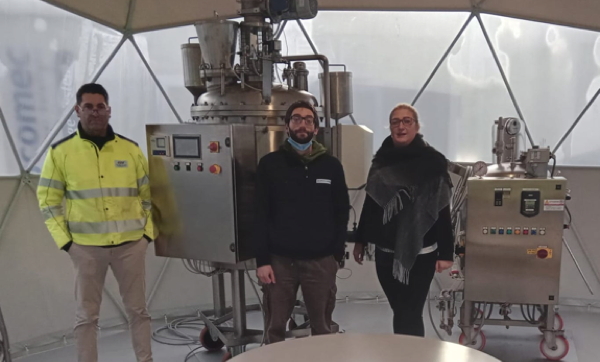
The research project aims to develop and integrate several technologies (two-phase anaerobic digestion, membranes separation, innovative storage systems, etc.), for the conversion of organic waste (organic fraction solid urban waste and sewage sludge) into hydrogen, methane and subsequently to electricity. The Ca' Foscari research group together with VERITAS spa (lead partner) and the University of Padua, will study and optimize the biological fermentation process for the hydrogen production maximization, through batch and semi-continuous tests. The results will be used for the prototype design and development that will be implemented at the VERITAS GPLab and integrated with separation, storage and conversion systems of gases into electricity.
Formare cHI V’informa
Consolidate the knowledge of communication experts in the field of HIV and U=U for accurate and stigma-free information

Call identifier: Public notice for expressions of interest in an intervention project to combat the spread of the HIV epidemic
CUP: H73C22001960001
UNIVE Scientific Director: Fabiana Zollo
UNIVE status: partner, coordinator University of Pisa
Duration: 08/12/2022 - 09/05/2024
Total project cost: € 115.911,00
Budget UNIVE: € 25.000,00
UNIVE research group: Fabiana Zollo
In line with the international recommendations promoted by UNAIDS and WHO regarding communication on HIV and people living with HIV and considering it important to produce actions that counteract language that still produces stigma towards people living with HIV, the aim is to analyze the communication methods used by national media in the narration of HIV, particularly regarding the U=U evidence. The volume of activity, contents, the language used, and reactions from the public will be analyzed using data from major social media platforms to acquire information about the state of HIV communication in Italy in recent years. A specific focus will be dedicated to messages disseminated by the media on World AIDS Day (WAD) during the analysis period. Specifically, the period preceding the COVID-19 epidemic, coinciding with the emergence of the U=U concept in the Italian context, as well as the pandemic and post-pandemic periods, will be analyzed. The research results will be used to structure training directed towards journalists and communication professionals with the intention of providing technical and theoretical elements that promote the use of correct and "people first" language in communication activities, as well as basic scientific knowledge related to HIV infection, prevention, and care, with particular emphasis on the U=U evidence.
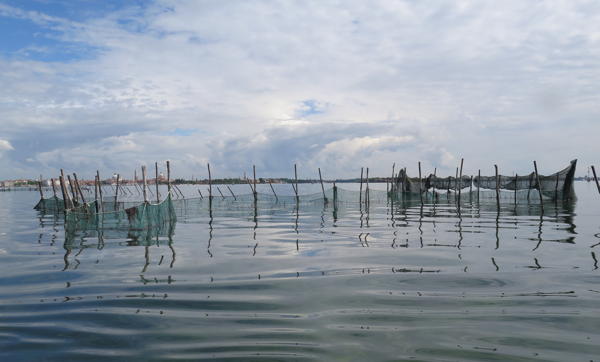
Assessing and improving the environmental sustainability of artisanal fishing in the Natura 2000 sites of the Venice lagoon



Project number: 02/AIRBC/18/VE
Call identifier: FEAMP Italia 2014-2020 Operational Program - Regional Government Decision No. 973 of July 6, 2018 (BUR n. 82 of 26 July 2018) - Operational Program FEAMP 2014-2020. Regulation (EU) n. 508/2014. Call for proposals implementing art. 40, par. 1, lett. a), b), c), d), e), f), g), i) – DGR n. 973/2018. Priority n. 1 - Promoting environmentally sustainable, resource-efficient, innovative, competitive, and knowledge-based fisheries. Measure 1. 44, par. 6: Inland fishing and inland fauna and flora. Management, restoration, and monitoring of Natura 2000 sites; restoration of inland waters; construction, modernization, and installation of fixed or mobile structures to protect aquatic fauna and flora
CUP: H74I19001670004
UNIVE Scientific Director: Piero Franzoi
UNIVE status: coordinator
Duration: 10/03/2020 - 11/08/2021 extended to 11/12/2021
Amount of financial support from the EU: € 44.837,07
UNIVE research group: Piero Franzoi
The project aimed to promote the environmental sustainability of artisanal fishing and protect biodiversity in the Venice lagoon. Overall, the project highlighted the potential of traditional fishing in the Venice lagoon, not only as a sustainable exploitation of the lagoon's biological resources, but also as an activity that can effectively contribute to environmental management aimed at conserving lagoon habitats and biodiversity.
More details and reference materials can be found on the page on the European Maritime, Fisheries and Aquaculture Fund (FEAMPA) 2021-2027 [ITA].
EXCHANGE II
Assessment of the importance of sea-lagoon biomass exchange for the maintenance of fish stocks subject to commercial exploitation
Project number: 02/RBC/18/VE
Call identifier: FEAMP Italia 2014-2020 Operational Program - Regional Government Decision No. 973 of July 6, 2018 (BUR n. 82 of 26 July 2018) - Operational Program FEAMP 2014-2020. Regulation (EU) n. 508/2014. Call for proposals implementing art. 40, par. 1, lett. a), b), c), d), e), f), g), i) – DGR n. 973/2018. Priority n. 1 - Promoting environmentally sustainable, resource-efficient, innovative, competitive, and knowledge-based fisheries. Measure 1.40 - Protection and restoration of biodiversity and marine ecosystems and compensation schemes in the context of sustainable fisheries
CUP: H74I19001320005
UNIVE Scientific Director: Fabio Pranovi
UNIVE status: coordinator
Duration: 19/12/2019 - 02/12/2020 extended to 23/06/2021
Amount of financial support from the EU: € 87.917,00
UNIVE research group Fabio Pranovi
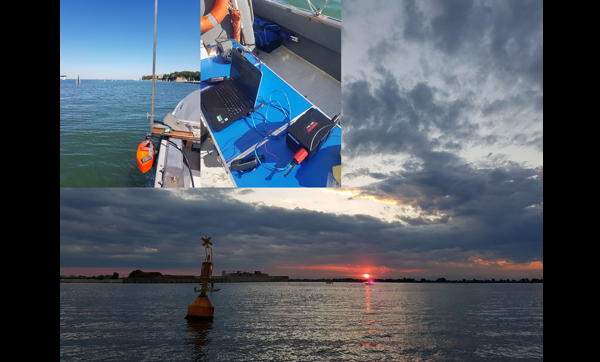
To improve the management of fish stocks of species that migrate in and out of the Venice lagoon during their life cycle, through the quantification and characterization of biomass flows through the lagoon inlets, thus contributing to ensuring the sustainability of fishing, to protect and restore biodiversity and the lagoon/coastal ecosystem. The project aims to extend and integrate the knowledge base produced with the EXCHANGE project (01/RBC/2017), applying the innovative bioacoustic monitoring methodology, tested in that context, to all three lagoon inlets, and to the surrounding canals. The data collected will provide the basis for the preparation of the guidelines necessary for updating the lagoon fisheries management plan, with the aim of ensuring the sustainability of fishing over time, and promoting the resilience of the lagoon system.

ViVe VR-Boat
Ville Venete Virtual Reality Boat
Project number: ViVe VR-Boat PSC MIMIT 2014-2020
Call identifier: PSC MIMIT 2014-2020 - Public Notice of 17.03.2023 - DM 21.11.2022 - Funding for Axis II of the 5G Emerging Technologies Support Program
Funding body: Fondo di Sviluppo e Coesione (FSC)
CUP: H73C23000710004
UNIVE Scientific Director: Andrea Albarelli
UNIVE status: coordinator
Partnership: Iuav, Invisible Cities, Strategy Innovation Srl, Il Burchiello e Tiscali Italia
Duration: 10/10/2023 - 09/10/2024
Total project cost: € 1.516.128,07 (of which € 1.156.607,81 from the Development and Cohesion Fund FSC)
Budget UNIVE: € 221.697,20 (of which € 177.357,76 from the Development and Cohesion Fund FSC)
UNIVE research group: Andrea Albarelli, Filippo Bergamasco
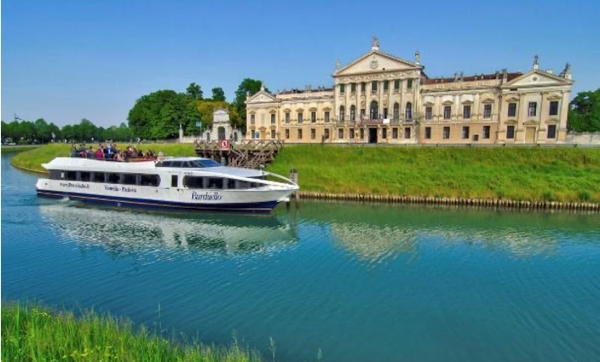
The idea behind Ville Venete Virtual Reality Boat (ViVe VR-Boat) is the result of the perfect mix between research interests, the development of new technologies and the specific territorial needs around which universities, startups have gathered and the companies that form the partnership. The objectives pursued by ViVe VR-Boat fall within the scope of the valorisation of the national cultural heritage, through the use of skills, techniques and technologies relating to both the audiovisual and gaming sectors. The tangible result of the project will in fact be an absolutely new service for the use of places of cultural interest, adaptable to the vast plurality of contexts that the Italian artistic, natural, architectural and monumental heritage offers. The place chosen for the experimentation will be the famous Venetian Villas and Palladian Villas which overlook the banks of the Brenta. Visitors will live an experience that is absolutely unprecedented on a global level, extremely immersive and inclusive, and which will offer a new point of view on the places and the history that has passed through them. All of this will be made possible thanks to the application of new technologies including, first and foremost, Artificial Intelligence, Internet of Things (IoT) and Virtual and Augmented Reality. These will interact and communicate on a 5G network infrastructure, using the Edge Computing paradigm to process some data that will make the experience unique and, above all, unforgettable.