

Research
Publications catalogue
The publications catalogue of the Department collects the information from ARCA [ITA], the institutional open-access archive of Ca’ Foscari scientific production.
It is also accessible from cerCa, the Ca’ Foscari bibliographic platform.

Working in research

PhD Degree is the highest level of academic education. It is a limited admission degree programme and lasts for at least three years. It allows graduates to develop methods and skills to pursue highly qualified research.

Short-term research fellowships allow Master’s Degree graduates to pursue short-term research (less than 12 months normally) including them in existing projects and research groups.
Research grants allow Master’s Degree graduates and PhDs to pursue research activities at the university or in the projects offered to the candidates.
In this section also a list of the ongoing research grants and topics [ITA], including the area research fellowships and the research fellowships on specific projects.
Discover all the other opportunities of international recruitment at Ca’ Foscari: our University is highly committed in achieving excellence in research, developing international partnerships and funding new talents.
Research areas
The Department’s interdisciplinary calling is expressed through five thematic areas where different competences, methods and research traditions dynamically converge:
- Interculturality;
- Heritage, history and memory;
- Innovation, culture and training;
- Cultural and life practices. Feeling, making, acting, producing;
- Current categories and tools of knowledge: philosophy, human and social sciences as critical and interpretive tools of contemporary processes.
Archives
The Department of Philosophy and Cultural Heritage has scientific archives coming from three respected art historians: Antonio Morassi, Sergio Bettini and Giuseppe Mazzariol. These collections of documents and photographs reflect the researches that were then carried out: they mainly deal with painting from the fifteenth to the eighteenth century with a special emphasis on Veneto, Medieval and byzantine art and modern and contemporary architecture.
The archives and other collections (Diateca, digital images Archive and mediatheque) are managed by the Cultural heritage Laboratory which permits consultation, manages projects to preserve, enhance and disseminate materials.
Research projects
ERC Research Projects

P-AGE - Social Defence. Uncovering the Transnational Epistemology of the Punitive Age
Principal Investigator: Xenia Manuela Chiaramonte; Length: 60 months (from 1 June 2025); Grant: € 1.499.049,00 (Horizon Europe ERC-2024-STG)
Why punish? Around this fundamental question the P-AGE project, “Social Defense: Uncovering the Transnational Epistemology of the Punitive Age” will be developed. This question is at once legal, theoretical and political. The justification commonly offered in support of the right to punish, generally shared by both experts and laypersons, is that punishment ultimately serves nothing but to defend society. But what does it mean to defend society and where does this idea come from? Curiously, while constituting the fundamental justification of the right to punish, social defense is an implicit paradigm, that is, one that is neither based on a written norm nor possesses a clear historical basis. It is thus that, despite its profound impact on people's lives and freedoms, the criminal justice system operates without a clear normative foothold. P-AGE’s objective is therefore to analyse the long-term discourse on social defence and its current transnational relevance, with the ultimate goal of understanding how and why punishment came to be perceived as an adequate response to various societal issues.
UnMaP - The Uncharted Margins of Philosophy: An AI-Enhanced Material History of Arabic Logic Across Time (12th-19th c.) and Frontiers (from Spain to India)
Principal Investigator: Silvia Di Vincenzo, Length: 60 months (from 1 March 2025), Grant: € 1.417.204,00 (Horizon Europe ERC-2024-STG)
Contrary to a deeply rooted prejudice — according to which philosophy in the Arabic tradition entered a rapid decline around the twelfth century CE — philosophical reflection in Arabic continued to flourish for many centuries, in forms that remain largely unexplored. Arabic philosophical manuscripts attest to this vitality through an extraordinary wealth of textual and graphic annotations left by students, teachers, and intellectuals who, for generations, continued to select, copy, teach, and transmit philosophical texts at least until the nineteenth century. This vibrant intellectual activity has nevertheless remained, with few exceptions, confined both to the physical margins of the manuscripts and to the symbolic margins of the global history of philosophy. UnMaP was created with the aim of bringing these contributions back to the center of philosophical debate. Through the analysis of paratextual annotations found in 207 manuscripts of the Logic section of Avicenna’s Book of Healing (980–1037) — a tradition spanning seven centuries and three continents — the project seeks to broaden the horizons of the global history of philosophy, drawing on cutting-edge technologies, including the analysis of handwritings in Arabic manuscripts supported by artificial intelligence algorithms.

I-STREAM - Islands in the Stream: Climate-related Disasters and the Rhythms of Caribbean Music
Principal Investigator: Ofer Gazit, Length: 60 months (from 1 November 2024), Grant: € 1.302.500,00 (Horizon Europe ERC-2023-STG)
The I-STREAM project aims to understand the impact of climate-related disasters on the rhythms of musical activity in three tourism-dependent cities in the Caribbean: San Juan (Puerto Rico), Kingston (Jamaica), Havana (Cuba). To achieve this, the project will combine ethnographic research with the analysis of online videos of live concerts, examining the locations, frequency, and content of live music performances. The research will provide valuable insights into processes of change and recovery in the wake of climate-related disasters, complementing on-the-ground studies and incorporating feedback from local stakeholders.
The project will achieve this objective by focusing on the following questions:
- What is the relationship between the temporalities of climate disasters and the long-term rhythms of musical activity in Caribbean music scenes?
- How do live music performances intersect with processes of privatization and touristification following climate disasters, and how do these processes shape the types of music performed and how they are experienced?
- How do changing spatial, temporal, and sonic configurations of live music performances in disaster-affected contexts affect their accessibility to local, diasporic, and tourist populations?
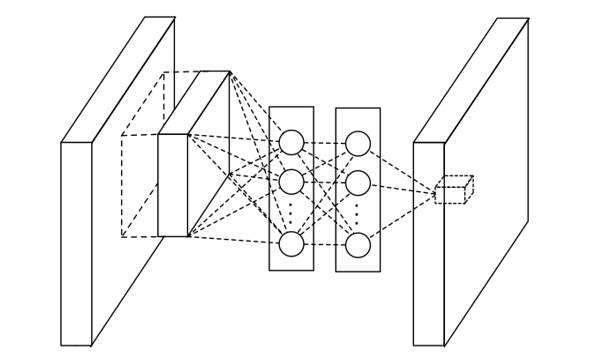
AIMODELS - The Culture of Algorithmic Models: Advancing the Historical Epistemology of Artificial Intelligence
Principal Investigator: Matteo Pasquinelli; Length: 60 months (from 1 January 2024); Grant: € 1.927.573,00 (Horizon Europe ERC-2022-COG)
The ERC project AIMODELS investigates the combined socio-technical history of contemporary AI models and models of intelligence. The project pursues three main objectives:
- Writing a new history of AI as a history of the definitions and metrics of intelligence that would highlight the key role of translation practices as much as technical models (in particular algorithmic models) in the evolution of statistics, computer science, digital humanities, and the current AI models of AI.
- Building a comparative epistemology of AI that engages with the psychology of learning and development, the historical epistemology of science and technology, and the role of mental models, technical models, and models of the mind in the work of scientists, computer scientists, psychologists and educators.
- Evaluating the impact of the current large multi-purpose AI models (DALL-E, ChatGPT, etc.) on knowledge production, creativity, education, translation, and cultural heritage at large.

PregDaT - Pregnancy Dating Challenges: Technologies and Unequal Geographies of Abortion and Childbirth Care
Principal Investigator: Giulia Zanini, Length: 60 months (from 1 September 2023), Grant: € 1.497.984,00 (Horizon Europe ERC-2022-STG)
The PregDaT project aims at exploring the sociotechnical and political components of pregnancy and reproductive time by focusing on the investigation of the process of gestational age assessment in four different European countries. Research will be carried out through ethnography and other qualitative and cooperative methods and will invite the participation of women, pregnant people, professionals, and advocates in the field of reproductive and maternal health. It will shed light on the consequences of gestational age assessment protocols, practices and discourses on abortion and childbirth care and map the subjectivities that emerge during the process. The analysis of different case studies will expose the contextual features of gestational age assessment and the perceptions and experiences by pregnant people in different locations, and allow the research team to elaborate a new theoretical approach to reproductive time and some recommendations for care.

Polyphonic Philosophy - Investigating Logical Commentaries from the Long Twelfth Century (c. 1070-1220)
Principal Investigator: Caterina Tarlazzi; Length: 60 months (from 1 September 2022); Grant: € 1.498.215,00 (Horizon Europe ERC-2021-STG)
The project aims at an interdisciplinary, manuscript-based approach to Latin logical commentaries from the Long Twelfth-Century (c. 1070-1220). The contention behind the project is that this little-explored topic presents us with a unique “polyphonic philosophy” that can open up a new horizon in our understanding of philosophical commentaries, on the one hand, and help to reshape some core ideas in the history of philosophy, on the other. The project requires a combination of expertise, including digital medieval studies, textual criticism, codicology, paleography, the history of education, the history of literacy, the social history of logic, the history of philosophy, and the historiography of philosophy.

HealthXCross - Remaking Health in a Microbial Planet by Crossing Space, Time, Species and Epistemic Cultures
Principal Investigator: Roberta Raffaetà, Length: 60 months (from 1 September 2021), Grant: € 1.367.062.00 (Horizon 2020 - ERC-2020-STG)
The microbiome is the ecological community of bacteria and viruses that live in, on and around us humans. Microbes affect human health by connecting humans with their environment. HealthXCross will ethnographically explore how microbiome research is reconfiguring concepts and practices of health, analyzing how scientists innovate through open data platforms that aggregate data beyond conventional categorizations of time, space and species. HealthXCross has a participatory design with scientists, engaging them in defining what it means to be human on an interdependent planet in times of profound ecological, socio-technical and health transition.
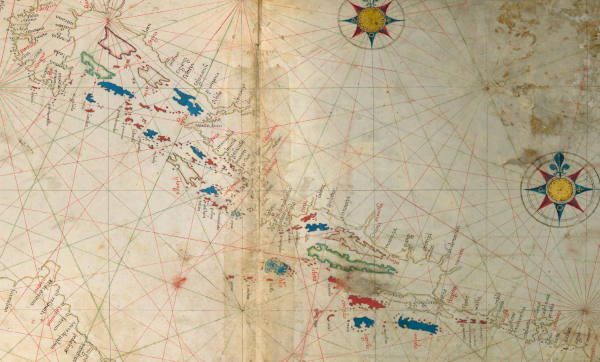
AdriArchCult - Architectural Culture of the Early Modern Eastern Adriatic
Principal Investigator: Jasenka Gudelj, Length: 60 months (from 1 September 2020), Grant: € 1.999.750,00 (Horizon 2020 - ERC-2019 - COG)
Between the 15th and 18th c. the Eastern Adriatic, partitioned between Venetian and Dubrovnik Republics, the Kingdom of Hungary-Croatia and Habsburg and Ottoman Empires, has been politically transformed into a vast archipelago, even mainland coastal towns divided from the hinterland. This process triggered the formation of fluctuating and floating architectural market functioning within a multilingual and multiconfessional context. The aim of the AdriArchCult project is an overall study of the architectural culture of the region, examining its political, religious, cognitive and practical sphere, and thus overcoming the divisions of historiographies in different languages and traditional approaches based on the national or centre/periphery paradigm. The result will be an innovative and dynamic vision of the architectural production of a region that connects the various faces of European culture.
MSCA Projects
DemSupPra - Democracy Support Practice After the Third Wave: Adapting to Change?
Researcher: Stefan Szwed Length: 36 months (from January 15th 2023), Grant: € 269.002,56 (HORIZON 2020)
International election observation is increasingly contested. Critics argue that it has lost credibility, as flawed elections are too often endorsed and observation applied inconsistently across political contexts. Autocrats, meanwhile, accuse observers of double standards compared to established democracies. This backlash coincides with ‘crises of democracy’ developments, including (1) technological change, (2) autocratic “social learning” and fake compliance, and (3) rising populism and polarisation that can turn elections into instruments of democratic backsliding. The project examines how these developments reshape election observation, how observer organisations adapt, and whether observation remains fit for purpose. Using a mixed-methods approach, it identifies pathways to restore the credibility and effectiveness of election observation in the twenty-first century.

FESTWAR FM - Film Festivals and War: A Fe-Male Perspective (1939–present)
Researcher: Dunja Jelenkovic Length: 36 months (from February 1st 2025), Grant: € 280.202,88 (HORIZON EUROPE)
FESTWAR FM investigates film festivals’ evolution as places of memory in conflict situations with a specific focus on women’s position within this process. It centres on three armed conflicts that have occurred in Europe since the creation of the first film festivals: WWII (1939-1945), Yugoslavia (1991-1999), and Ukraine (2014-present). The influence of other major conflicts is also taken into account, most notably the war in Palestine (since 2023). By including global and local, historical and contemporary perspectives, FESTWAR FM will provide new knowledge on the way film festivals have been producing contested memories of war, through the first comprehensive, gender-oriented study of film festivals’ responses to armed conflicts. In doing so, the project aims to, for the first time in scholarship, historicise and theorise women’s role in film festivals action in response to war.
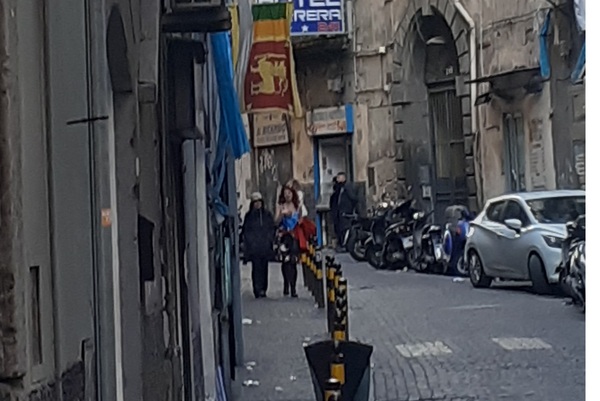
DoingDOM - Embodied intersectionality in paid migrant domestic and care work: theoretical developments and policy recommendations based on the study of Sri Lankan migrant workers in Naples, Italy
Researcher: Wasana Sampath Handapangoda, Length: 24 months (from August 15th 2025), Grant: € 193.643,28 (HORIZON EUROPE)
DoingDOM is about paid migrant domestic and care workers (PMDCWers), both women and men, who are people of colour from working-class, minority migrant communities that remain ‘invisible’ in the country where they work and live. The results will contribute to a non-mainstream perspective on PMDCW, elucidating the dynamic, diverse and embodied lived experiences of PMDCWers from more than one standpoint. Wasana Handapangoda will carry out her research at the Department of Philosophy and Cultural Heritage (DFBC) under the supervision of Prof. Sabrina Marchetti.

VandPW - Virtue and Practical Wisdom in Aristotle's Eudemian Ethics
Researcher: Giulio Di Basilio Length: 24 months (from September 1st 2025), Grant: € 209.483,28 (HORIZON EUROPE)
To the question as to how one should live, Aristotle famously replied thus: one should live virtuously and wisely. ‘Virtue and Practical Wisdom in Aristotle’s Eudemian Ethics’ (VandPW) aims at developing the first comprehensive reconstruction of Aristotle’s doctrine of virtue in the Eudemian Ethics. Werner Jaeger, one of the most important classical scholars of the 20th century, has called Aristotle’s Eudemian Ethics ‘the original ethics’, and it deserves this appellation for two reasons: on the one hand, it is the first ethical treatise written by Aristotle, prior to his better-known Nicomachean Ethics; on the other, it is the first philosophical treatise in the history of Western thought devoted to the question as to how one should live. However, for a long time the Eudemian Ethics has been relegated to a juvenile project later abandoned in favour of the Nicomachean Ethics. VandPW aims at remedying this state of affairs by producing a book-length examination of the topic of virtue and wisdom in Aristotle’s Eudemian Ethics. The project will be carried out in the Department of Philosophy at Ca’ Foscari, Venice under the supervision of Professor Francesca Masi.
AI INFLUENCE - Automating authenticity: Probabilistic storytelling and AI influencers on social media
Researcher: Alexandra Deem Length: 24 months (from October 1st 2025), Grant: € 193.643,28 (HORIZON EUROPE)
The project investigates the convergence of generative AI, influencer culture, and the logic of authenticity on social media from an ethnographic perspective. It focuses on how people perceive and produce AI-generated personas and content (often referred to as slop). While social media have long functioned to extract and profit from user data, user participation and experience have been compelled by a neoliberal logic of authenticity that privileges individual self expression, personalization, and parasocial connection. The project explores how this animating force of the Web 2.0-era attention economy is reinterpreted in the age of AI. It contributes not only to the anthropological study of AI personas and slop cultures, but also to understanding how these phenomena are shaping and shaped by the political dimensions of contemporary platform capitalism.

GYNODICY - GYNODICY: gender-egalitarian fictions of origin in European philosophical culture (1673-1751)
Researcher: Natalia Lorena Zorrilla Sirlin Length: 24 months (from September 1st 2024), Grant: € 187.248,96 (HORIZON EUROPE)
This project aims at producing the first comprehensive study of the philosophical problem of “gynodicy”, that is, the incompatibility of, on one hand, a rational defence of women as naturally equal in capacities and in rights to men and, on the other, their factual subjection to men. GYNODICY concentrates on gender-egalitarian texts from the early modern period that circulated within European philosophical culture and specifically on the gender-egalitarian fictions of origin these texts put forth with the objective of arguing against the naturalisation of women’s submission to men. The project seeks to propose a new narrative that recovers a body of literature comprised of both printed works and unedited manuscripts, which has hitherto received scanty attention, and to promote a transnational approach to the circulation of gender-egalitarian ideas from an interdisciplinary perspective.
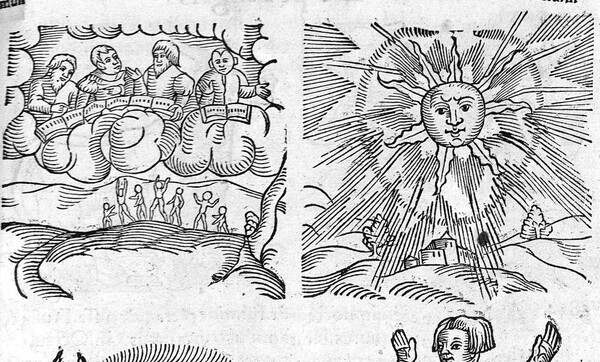
GARZONI - Tommaso Garzoni's Encyclopaedia of Wonders and the European Debate on Superstition and Marvels of the late Renaissance
Researcher: Valentina Serio Length: 36 months (from January 15th 2025), Grant: € 265.099,20 (HORIZON EUROPE)
This interdisciplinary project aims to provide the analysis of Tommaso Garzoni’s understudied encyclopaedic work on wonders Il serraglio degli stupori del mondo (1613) within the context of late Renaissance debate on marvels. The Protestant denial of Purgatory ignited a heated debate over the spiritual status of ghosts, sprites and spirits, which were understood as diabolical manifestations. This debate spread over time, engulfing other forms of preternatural phenomena, and yielded an epistemology of wonders. By analysing the Serraglio within the broader context of the European vernacular debate on marvels, the GARZONI project will provide new insights into the circulation of scientific knowledge among non-specialist audiences, investigate the intermingling of learned culture and popular creeds and analyse the debate’s scientific and epistemological impact.

POPINLAT - Populism and institutions in Latin America. A comparative assessment between Ecuador and Argentina
Researcher: Samuele Mazzolini Length: 36 months (from December 20th 2024), Grant: € 260.939,52 (HORIZON EUROPE)
POPINLAT scrutinises the oft-contested and under-theorised relationship between populism and institutions through a comparative analysis of the recent left-wing processes in Ecuador (2007-2017) and Argentina (2003-2015). This research innovatively brings into the analysis also the post-populist phase in order to assess the embeddedness of the institutionality left behind by the populist rule and, as a result, allows to theorise on the possibility and conditions of emergence of a “republican populism”. POPINLAT is situated at the crossroads of different disciplines, namely political theory, comparative politics and institutional analysis, thus using and integrating diverse methodologies.

DEVELOP-MENTALITIES – Islamic and Islamist Views of State, Society, and Economics in Yemen
Researcher: Victor Willi Length: 24 months (from December 15th 2024), Grant: € 188.590,08 (HORIZON EUROPE)
This project examines the question of how international development actors can transition from humanitarian aid to economic development in a war-torn country such as Yemen. The project analyzes interpretations on these questions as prevailing among Yemen's three main Islamist groups: Ansar Allah (the Houthis), the Salafis and the Yemeni Congregation for Reform (al-Islah). It adopts an innovative methodology that combines Oral History with concepts from economics, development finance and anthropology and it is desiged towards highly pragmatic policy outcomes, aiming to provide actionable recommendations while adding a critical view to international development strategies. As a second-order outcome, the project will generate new networks that can be effectively leveraged towards a track II economic diplomacy dialogue.

TESCCO - Teaching science in the Colonial Era: knowledge weaponization and cultural integration from Europe to the Jesuit missions
Researcher: Mattia Brancato Length: 36 months (from October 1st 2024), Grant: € 288.859,20 (HORIZON EUROPE)
The TESCCO project aims to offer a comparative study on the methods for teaching science implemented by the Jesuits at the end of the 17th century during their missions in China and North America, to show that the harmonization between religious motives and motives connected to cultural dissemination found in their activities couldn't have been possible without a serious and wider philosophical reassessment of the role of science and its teaching throughout Europe. This study will cast a new light on the domination strategies adopted during the Colonial Era, connecting consistently for the first time the scientific developments of the early modern period with the many attempts of subjugation and cultural appropriation made at that time on behalf of a (supposed) superior and exclusive knowledge. The interdisciplinarity of this project, which combines the history of science and science teaching, history of philosophy, and sociology is further complemented by a theoretical part that aims at raising awareness of the overlooked connection between the foundation of science and how it is taught to others. By promoting a healthy distinction between raw scientific data and the historical context in which it has been collected, the TESCCO project has the ambition of becoming relevant nowadays as a starting point for a discussion on the role of science as a by-product of the European culture and on how this assumption is seen in the exchanges with other cultures. This project is hosted by Ca' Foscari University of Venice in collaboration with the Department of Philosophy at Harvard University.

NATOEUINNOCLIMAX - NATO and EU towards a common strategy against Russia hybrid warfare. The case for energy-resources-climate security nexus and the possible use of EDTs
Researcher: Maurizio Geri Length: 36 months (from January 15th 2024), Grant: € 205.699,19 (HORIZON EUROPE)
In the relentless geopolitical tensions of great powers competition, the hybrid warfare tactics employed by Russia have posed an intricate challenge for NATO and the EU. The energy-resources-climate security nexus becomes the battleground for strategic competition. The NATOEUINNOCLIMAX project will harness emerging disruptive technologies (EDTs) and provide innovative strategic solutions for decoupling from Russian energy dependence while addressing climate change challenges. This interdisciplinary endeavour aims to reshape the future of security in the face of evolving threats. The project will provide an analysis of NATO-EU adoption of EDTs for enhancing energy-resource-climate security and countering strategic rivals, to include China in the near future, exploring potential strategic avenues for NATO–EU collaboration in harnessing dual use technologies.
HICAMA - HIstory of CAre in the MAghreb. Infectious diseases, healthcare infrastructures and international aid
Researcher: Martina BIONDI Length: 36 months (from September 1st 2024), Grant: € 288.859,20 (HORIZON EUROPE)
HICAMA explores the consolidation of healthcare in the Maghreb region by examining the historical interactions among national sanitary institutions, civic experiences of health outreach, and international institutions involved in global health preservation. Drawing on a variety of sources, the project conceptualizes the fight against infectious diseases as a first and yet enduring test for healthcare systems’ viability in the region. HICAMA adopts a multilayered perspective to assess local, national, and international implications of the phenomenon, considering Algerian, Moroccan, and Tunisian sanitary endeavors, the role of international donors, and taking into account the local and gendered practices of care implemented by associations active for decades to promote outreach programs against infectious diseases. Martina Biondi will carry out her research at the Department of History of the University of Maryland under the supervision of prof. Peter Wien, while the returning period will take place at the Ca’ Foscari University of Venice with prof. Matteo Legrenzi.

TFNMPC - Transnational Fatherhood, Negotiating Masculinity and Parental Care in the Digital Communication Era
Researcher: Syed Imran HAIDER Length: 24 months (from September 15th 2024), Grant: € 188.590,08 (HORIZON EUROPE)
This project will investigate the relationship between transnational fatherhood, negotiation of masculinity, and parental care practices among Pakistani migrant men in Italy. It will explore how transnational fathers navigate their roles across family, work, and society and use digital communication tools to maintain family connection from distance. Guided by an intersectional perspective the project focuses on the experience of migrant men to understand interplay between migration, masculinity, emotions, and transnational fatherhood. It will also analyse how digital communication technologies have influenced fatherhood and care practices in current times. The project will be conducted at Ca' Foscari's Department of Philosophy and Cultural Heritage under the supervision of Prof. Francesco Della Puppa.

SECRETS - The Academia Secretorum Naturae: Magic, secrets and instruments of Experimental Science in the Sixteenth Century Naples
Researcher: Donato Verardi, Length: 24 months (from September 1st 2024), Grant: € 172.750,08 (HORIZON EUROPE)
The aim of SECRETS is to provide the first, complete historical-philosophical reconstruction of the Academia secretorum naturae, one of the earliest Societies in Europe, to explore in an innovative way the “secrets of nature”. The Academia secretorum naturae was founded in Naples in 1560 by Giambattista Della Porta (1535-1615), one of the leading figures of the Italian Renaissance in natural philosophy. The Academy was the crossroads of an erudite but also applied knowledge, where scientists and philosophers interacted with artisans, breaking the boundaries between high and low culture, and overcoming gender barriers. A study on the experimentalism promoted in Naples by the Academia secretorum naturae, which is at the core of the project, will significantly influence our understanding of the Italian Renaissance and its contribution to the so-called Scientific Revolution/rise of experimentalism.
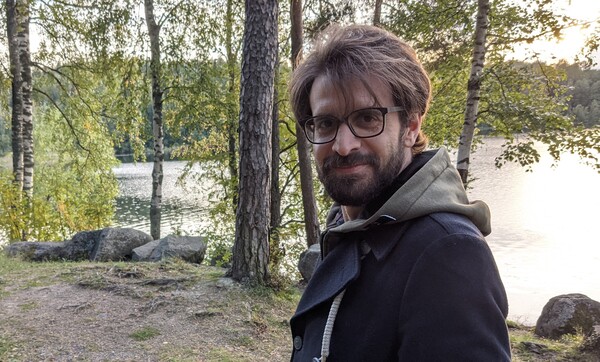
MC-EuCon - Margaret Cavendish (1623-1673) in the history of European ideas of consciousness
Researcher: Marrama Oberto, Length: 27 months (from September 1st 2023), Grant: € 188.590,08 (HORIZON EUROPE)
Questions about consciousness, its origin and nature, which dominate current debates in philosophy of mind and neurosciences, arose during the 17th century. The MC-EuCon project investigates Margaret Cavendish’s philosophy (1623-73), to provide a detailed interpretation of her theory of consciousness. Cavendish argued for a wholly material, yet wholly thinking universe. It is unclear whether her theory also implies the presence of consciousness throughout nature – in ways which anticipate present-day panpsychism. By targeting one of the earliest and most original responses to Descartes’s dualist theory, the project aims to develop our understanding of how problems about conscious life evolved and were addressed in Europe in the early modern period. The project is carried out at the Department of Philosophy and Cultural Heritage of Ca’ Foscari, supervised by Prof. Pietro Daniel Omodeo.
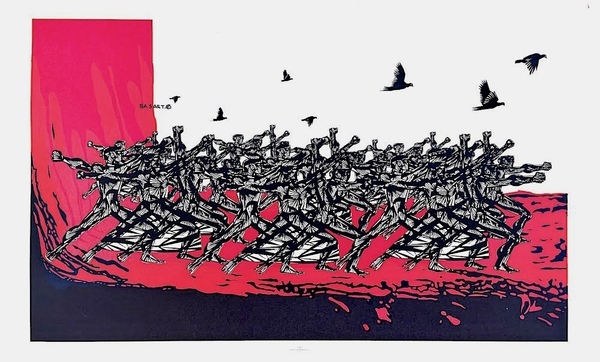
PYC- Palestinian Youth at the Crossroad: comparative perpsectives on Palestinian transnational youth politics
Researcher: Mjriam Abu Samra, Length: 36 months (from July 15th 2023), Grant: € 288.859,20 (HORIZON EUROPE)
Palestinian Youth at the Crossroads (PYC) is an interdisciplinary project that explores the political potential of contemporary Palestinian transnational youth activism in the United States and Europe. PYC aims at assessing the capacity and future perspectives of youth politics by providing a comprehensive mapping of youth and student experiences in the U.S. and Europe and looking at the socio-cultural dynamics that characterize youth initiatives, the way narratives and discourses are articulated and the social and political frameworks that shape their strategies. Mjriam completed her PhD in International Relations at the University of Oxford, UK and will undertake her outgoing research phase at the Department of Anthropology at UC Davis with Professor Suad Joseph.
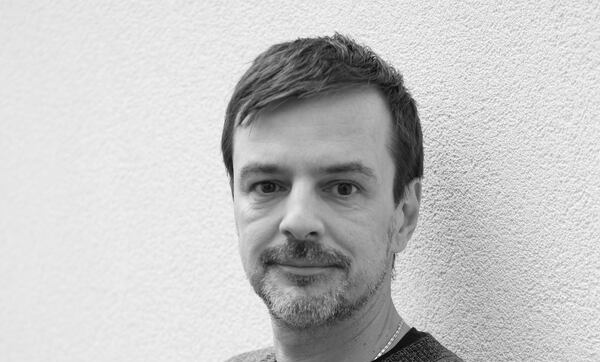
Identifications - Identifications - A Psychoanalytic/Political Study of Performances Countering intra-European Cultural Racism
Researcher: Goran PETROVIC, Length: 24 months (from September 1st 2023), Grant: € 172.750,08 (HORIZON EUROPE)
The EU's expansion to Central and Eastern Europe brought with it the rise of right-wing parties. Factors like the European debt crisis, austerity measures, and a migrant influx spurred the institutionalization of these parties. Blaming immigrants and refugees for the economic decline, they foster citizen identification through discriminatory discourse. This project delves into the complex relationship between immigration, discrimination and performance. It investigates how civic and artistic performances mobilize identifications around anti-discriminatory discourses that can uphold democratic institutions. The study uses archival work and qualitative methods, informed by performance studies, critical race theory, psychoanalysis, political philosophy, and discourse theory, to explore identification processes challenging cultural racism, discrimination, and intolerance.

INTERPHIL - The international congresses and the transnational shaping of philosophy (1900-1948) Spaces – Struggles – Identity – Knowledge
Researcher: Giuseppe Bianco, Length: 36 months (from January 1st 2023), Grant: € 255.768,00 (HORIZON 2020)
The project tackles the issue of philosophy’s disciplinary identity by studying the first ten international congresses in philosophy (1900-1948), relating them to the emergence in Europe of a new academic space. INTERPHIL adopts an inter-disciplinary and multi-scalar approach to the congresses in order to explain the constitution of a European philosophical space, the progressive formation of a idea of Europe and the creation of international institutions. The project will isolate the scientific networks tied to the congresses, study intra/inter-national, intra/inter- disciplinary struggles to define philosophy from the other disciplines, problematize the clash between universalistic claims and situated epistemologies and, finally, localize the main features of the internationally legitimated philosophical corpus.
Other International Research Projects
Maqām - Beyond Nation
Local coordinator: Giovanni De Zorzi; Length: 48 months (from 18/04/2024); Funded by: EPSRC - Engineering and Physical Sciences Research Council, UKRI Engineering and Physical Sciences Research
Council Maqām Beyond Nation explores a field of music-making that stretches from North Africa to Central Asia; a set of historically fluid and inter-connected creative practices which were transformed under 20th century nationalisms into fixed repertoires. The project seeks to understand the major changes which are now weakening these nationalist models. We attend to the musical materials and their potential for new creativity, and to the social: how a focus on expressive culture can further our understanding of the aesthetics of religious revival and cultural responses to the experience of forced migration. Our case studies are fault lines across the maqām world – among them the former Soviet-Chinese border, and the border between Iran and Azerbaijan – key spaces where shared traditions of music-making were split apart by the formation of new nation states. To understand these spaces, we draw on archival, analytical and ethnographic research, as well as practice- based creative collaboration. Our findings will be shared through an exciting programme of workshops and conferences, publications and films, collaborative performances and compositions.

LeTs-Care - Learning from long-Term Care practices for the European Care Strategy
Principal Investigator: Barbara Da Roit; Length: 54 months (from 01/04/2024); Grant: € 565.425 (European Commission, Horizon Europe, HORIZON-CL2-2023-TRANSFORMATIONS-01)
LeTs-Care combines the analysis of territorial indicators with qualitative/ethnographic approach to provide a new, in-depth, reflexive understanding of LTC challenges and their diversity across 7 European countries. Our mission is to disentangle the meanings of taken-for-granted LTC concepts and illuminate how , e.g., “care” or “integrated care” have different meanings in different contexts. We will produce new evidence and a novel approach to territorial inequalities in LTC, their drivers and interdependencies.The project’s commitment to Open science will maximise its impact and inform care policies in the agenda in the years to come.The project is led by Ca’ Foscari University of Venice, Italy, with seven participating partners from The Netherlands, Spain, Lithuania, Denmark, Portugal, Austria, and Belgium. European societies find themselves in a window of opportunity for the advancement of LTC policies and practices. The COVID-19 pandemic has made clear that there is a need for accessible, affordable and quality services, more equality, protection and inclusion for people in need of care, informal caregivers and care workers, and sustainability. To meet these goals, policy makers, stakeholders and researchers need to comprehend the challenges ahead, the patterns and drivers of inequalities in LTC, the potential contribution of emerging practices and the development of contextualised sustainable practices.

Posting.STAT 2.0 - Enhancing the collection and analysis of national data on intra-EU posting 2.0
Principal Investigator: Fabio Perocco; Length: 24 months (from 01/04/2024); Grant: € 51.009,04 (European Commission, European Social Fund, ESF-2023-POW-UDW)
POSTING.STAT 2.0 aims to complement the data collected on intra-EU posting at European level by bringing together a research consortium from the main sending and receiving Member States (Austria, Belgium, France, Germany, Italy, the Netherlands, Lithuania, Poland, Slovakia, Slovenia, and Spain). Following up from Posting.STAT 1.0, the goal of the second project is to increase the level of empirical evidence on intra-EU posting through the collection and analysis of national administrative data related to research questions that remained unexplored, such as data on third-country national posting, temporary work agency posting, subcontracting chains and monitoring and infringements. The consortium, coordinated by KU Leuven, consists of 14 beneficiaries – including 1 affiliated partner - (mainly research institutes and universities) and 4 associated partners (social partners and a public authority).
The first main objective of the proposal is to collect administrative (micro)data from the competent public authorities to obtain more detailed information on the scale, characteristics, and impact of intra-EU posting, both in the main receiving and sending Member States. Furthermore, the aim is to get a better view on the enforcement of the posting rules, by reporting data collected from the national labour inspectorates. Results of this exercise will be reported in 11 country-specific reports and 4 thematic papers.
The second main objective is to stimulate the discussion about intra-EU posting and to disseminate the results of the data collection. In that regard, 11 country-specific webinars and 4 thematic-specific webinars will be organised. Finally, the results will be discussed at a closing conference in Leuven as well as at other conferences (e.g., by organising a panel discussion at the European Labour Mobility Congress in Krakow).

MORE - Motivations, Experiences And Consequences Of Returns And Readmissions Policy: Revealing And Developing Effective Alternatives
Principal Investigator: Fabro Perocco; Length: 36 months (from 01/10/2023); Grant: € 221.875 (European Commission, Horizon Europe, HORIZON-CL2-2022-TRANSFORMATIONS-01)
Over the past two decades, the European Union, its Member States, and the United Kingdom have adopted multiple return and readmission policies which have not resulted in an increase in the number of people returned, but have instead led to a deterioration in the living conditions of migrants. The three-year MORE project focuses on return and readmission policies at both European Union and national levels. It undertakes a systematic mapping and analysis of return and readmission policies across different levels of governance, examining their content as well as the ways in which return and readmission policies and practices intersect.
In doing so, the project incorporates the knowledge, experiences, and perspectives of the actors affected by these policies, first and foremost undocumented migrants. The overall objective of the MORE project is to provide a critical, detailed, and in-depth analysis of national (Italy, Spain, Belgium, Germany, Slovenia, Greece, Sweden, and the United Kingdom) and regional (EU) return and readmission policies, as well as to examine their consequences, development, and implementation within the EU, its Member States, the UK, and selected third countries. Building on this analysis, the MORE project aims to identify possible alternatives for addressing situations of irregularity among migrants in the European Union.
GEtCoheSive - Governance Enhancement for Cohesive Societies
Principal Investigator: Francesca Campomori; Length: 36 months (from 01/04/2023); Grant: € 424.358,18 (INTERREG Central Europe)
A cohesive society is one in which people who experience economic and social disadvantage are also able to participate fully in public life. But how can groups that are usually marginalised—among them people with a migrant background and refugees—be genuinely involved? The GEtCoheSive project addresses these questions through an action-research approach involving 12 public and private organisations from Italy, Austria, Germany, and Slovenia.
GEtCoheSive is funded by the Interreg Central Europe programme and will run for three years. The project will map experiences of participatory governance in four cities (Berlin, Parma, Vienna, and Ljubljana) and will subsequently design and implement new practices of deliberative and participatory democracy.
These pilot actions will focus on two policy areas for discussion and deliberation: access to local welfare policies and climate-change-related policies, in particular eco-welfare policies, understood as the social dimension of environmental policies.
EXIT - Exploring sustainable strategies to counteract territorial inequalities from an intersectional approach
Local coordinator: Fabio Perocco, Duration: 36 months (start 01/11/2022; extended until 31/03/2026), Grant: € 228.791,25 (European Commission, Horizon Europe, HORIZON-CL2-2021-TRANSFORMATIONS-01)
The EU-funded EXIT project aims to explore the manifestations, root causes and implications of socioeconomic inequalities within and between regions that are often referred to as left behind. The three-year project - involving seven universities and four civil society organizations from eight countries – will also propose ways to tackle such inequalities through a rigorous programme of cross-disciplinary and multi-actor research with communities on the ground. The project will explore, from an intersectional perspective, how inhabitants, institutions and organizations in these areas perceive, experience and counteract inequalities. The comprehensive programme of research and dissemination will enable knowledge sharing and best practice transfer between countries and communities in order to restrategise their sustainable development and enhance social inclusion.
